This Week: Rearming Fast, Striking Deep, Buying Foreign
Ukraine and Russia bombed each other's fuel and rocket plants, the Pentagon raced to scale missile output, and allies bought around US-built systems.

U.S. Navy photo by Mass Communication Specialist 2nd Class Taylor DiMartino, DVIDS, public domain
Two armies spent the week bombing each other’s factories instead of the front line, the Pentagon put a number on how far behind its missile production has fallen, and three US allies built around Washington’s combat systems while a fourth, in the same week, beat an American prime inside its own competition.
Both sides are now bombing production lines, not just the front
Six stories out of Ukraine and Russia this week shared a target type: industrial chokepoints, not fielded weapons or troops. Ukraine’s FP-5 Flamingo struck Savasleyka airbase and the Progress Rocket Space Center in Samara in one night, hitting the base that hosts MiG-31K Kinzhal carriers and the plant building Soyuz-2 rockets for Russia’s Rassvet satellite constellation. Days later, ATACMS and Storm Shadow hit the Kamensky Combine propellant plant, a repeat target that alone fuels four Russian rocket families: Uragan, Smerch, Tornado-S, and Iskander-M.
The refinery campaign followed the same logic. The AVT-6 unit at Bashneft-UNPZ in Ufa was hit for the second time in three weeks, and Ukraine then struck the TANECO refinery in Tatarstan, roughly 1,200 kilometers in, among the deepest strikes of the war. NASA satellite imagery independently showed fresh heat anomalies there afterward; Tatarstan’s government claimed air defenses “helped avoid casualties,” a state claim not independently verified.
Russia mirrored the shift. A strike on Izmail, Ukraine’s largest Danube export port, came alongside a jet-powered Shahed-238/Geran-3 hitting an Odesa shopping center, fast enough to outrun interceptor drones built for slower Shaheds; Russia’s Defense Ministry called the Izmail target a “military cargo terminal,” a claim Reuters said it could not verify. In rural Kharkiv, a $100,000 Chinese-turbojet-powered S8000 Banderol killed 10 people at a road crossroads, built to exhaust Ukrainian interceptor stocks through sheer quantity, the same logic behind the sub-$750,000 US interceptor discussed below.
The US industrial base is racing to scale, and it keeps hitting the same wall
Five American procurement stories this week named the identical bottleneck unprompted: solid rocket motors. The Army’s request for 133,014 GMLRS rockets by 2034, a sustained 19,002 a year, sits 36% above the roughly 14,000-a-year rate Lockheed Martin only just reached, and flags competition for “the same motor casings, propellant, and specialized manufacturing capacity that Patriot, THAAD, and other interceptor programs are also trying to scale up.” The Navy’s $22.9 billion, seven-year Raytheon contract targets a jump from roughly 60 to 1,000 Tomahawks a year, citing the same “subcomponent supply chains, especially solid rocket motors.”
Lockheed’s Next Generation Interceptor cleared two Stage-2 motor tests, retiring the risk behind an 18-month slip disclosed in April. The Missile Defense Agency’s $10.9 million Phase 2 award to X-Bow bets in-house, additive-manufactured motors can push a working interceptor under $750,000 a round, and the Navy’s $311 million Naval Modular Missile new-start bets on one shared terminal-stage interceptor across four booster configurations, an industrial-consolidation play as much as a new-capability one.
This week's largest single missile-defense figure was not a contract value, it was this gap: 17 to 37 times separates what the US pays per shot today from what MDA is betting a non-traditional builder can deliver by 2027, the same cost-asymmetry logic Russia's $100,000 Banderol exploits from the other side of the war.
A sixth story is the counterweight. Roughly 97% of the $17.5 billion Golden Dome request for next year depends on a reconciliation bill that does not currently exist, and a plain continuing resolution cannot fix that, because Golden Dome’s money never ran through the ordinary appropriations process. Gen. Michael A. Guetlein, the program’s director, put it plainly earlier this month:
“We’ve got to figure out as a nation a different way of funding Golden Dome, at least for ‘27. If they don’t figure it out, there is no Golden Dome because there is no funding,” said Gen. Michael A. Guetlein, director, Golden Dome for America, speaking at the Space and Missile Defense Symposium in Huntsville, Alabama (Air & Space Forces Magazine, Aug. 11, 2026).
That warning has only sharpened. Defense One reported Aug. 21 that the Golden Dome Congressional Caucus chair called securing fiscal 2027 funding a “tough slog,” with House and Senate lawmakers showing little appetite for the reconciliation package the program needs.
Allies are buying around Washington, and one bought into it
Three procurement stories this week showed US allies indigenizing away from American-controlled combat systems, while a fourth ran the opposite direction. Poland’s ORP Wicher, the first hull of its Miecznik-class frigate, floated out built to a UK Arrowhead 140 design, replacing 1980s American-built Oliver Hazard Perry frigates as program cost nearly doubled, roughly 8 billion to 15 billion Polish zloty. South Korea’s Hanwha Ocean won a $5.7 billion contract for the KDDX destroyer, the first Korean destroyer built to replace Lockheed’s Aegis Combat System and AN/SPY-1D(V) radar with indigenous versions, a contest Hanwha won by 0.5867 points over HD Hyundai.

Australia and Japan went further, deepening cooperation with each other rather than Washington. The two countries’ Boobook laser system is their first-ever co-developed defense system, paired with a decade-long deal letting Japan test hypersonic missiles on Australian ranges and a A$70 million Mitsubishi Electric plant in Rydalmere. That story’s own coverage set this expansion against the same week’s scaled-back Ulchi Freedom Shield exercise, discussed below.
The mirror case belongs to Hanwha again, on American soil. The Army picked South Korea’s wheeled K9 Mobile Howitzer over incumbent BAE Systems for its new Mobile Tactical Cannon program, starting at $100.3 million and growing to $262.9 million across potentially 500 systems, beating a company that builds both the M777 and M109A7 inside the Army’s own competition. Hanwha Defense USA’s chief operating officer, Mike Smith, framed the win as an industrial-base argument.
“Battles are won through platforms and combat capability, but wars are won by industrial capacity,” said Mike Smith, chief operating officer, Hanwha Defense USA (DefenseScoop, Aug. 19, 2026).
The Gulf unravels, and Washington overrules its own experts
Three straight days in the Gulf ran an identical pattern: a stabilizing mechanism lapsed or a gesture was made, and something worse happened on the water within 48 hours. The June 17 US-Iran memorandum on the Strait of Hormuz expired Aug. 17 with neither side seeking an extension, while Trump simultaneously claimed Hormuz mines had been cleared and insisted the blockade remained in “full force effect,” a contradiction no outlet has confirmed either half of. He also threatened to “bomb the s*** out of” Oman over an Iranian state-media claim of a bilateral shipping arrangement, itself unverified.
One day later, an unidentified projectile disabled a vessel’s engine room outbound through Hormuz, the second such unattributed strike in under three weeks; transits remain down from 130-plus a day to single digits, and no attribution has emerged. Two days after that, the UAE imposed an indefinite trade embargo on Iran after alleging two ballistic missiles targeted its shipping, one landing in its own waters, which Iran’s Foreign Ministry called a “false flag operation,” a state claim not independently verified. Dubai has carried roughly a third of Iran’s imports, more than China or Turkey individually, though the UAE already reversed a similar suspension once this year.

A lighter-touch pattern ran alongside it: presidential preference overruling uniformed advice on two unrelated programs, both against the institution’s own prior warning. Trump ordered Defense Secretary Hegseth to “substantially reduce” US participation in Ulchi Freedom Shield hours before the drill began, citing cost and his relationship with Kim Jong Un. The drill was cut short, ending a week early; Kim Yo-jong, Kim Jong Un’s sister, mocked Seoul for “canceling ‘war games’ it liked very much,” a regime statement read as framing, not fact, while Pyongyang’s official line, per PBS, is that the scale-back “changes nothing.” Separately, the Navy is studying moving the Ford-class carrier’s island roughly 140 feet forward to match Trump’s preference for a WWII-era silhouette, a move the Navy already studied once before and found would cost billions and delay the program; General Atomics says production on the affected hull is already about 50% complete, and named analysts including Bryan Clark of the Hudson Institute call the redesign disruptive and costly.
Sources
- Golden Dome caucus chair says building support, funding missile shield a 'tough slog' — Defense One, Aug 21, 2026
- North Korea shrugs off Trump's scaled-back drills with South Korea, saying it 'changes nothing' — PBS NewsHour, Aug 21, 2026
- NK leader's sister mocks Seoul for being forced to scale back war games — The Korea Times, Aug 20, 2026
- Budget instability: Golden Dome's Guetlein warns — Air & Space Forces Magazine, Aug 11, 2026
Systems mentioned
Every system named in this story, with its photo and, where available, a video. Tap a card to open the full spec sheet.
Compare these side by side →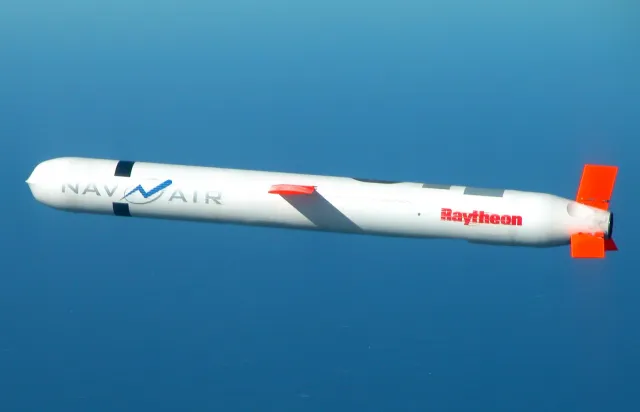
Missile
Tomahawk Block V
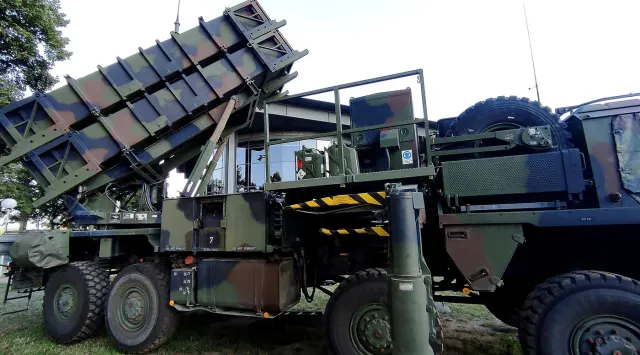
Air defense system
Patriot PAC-3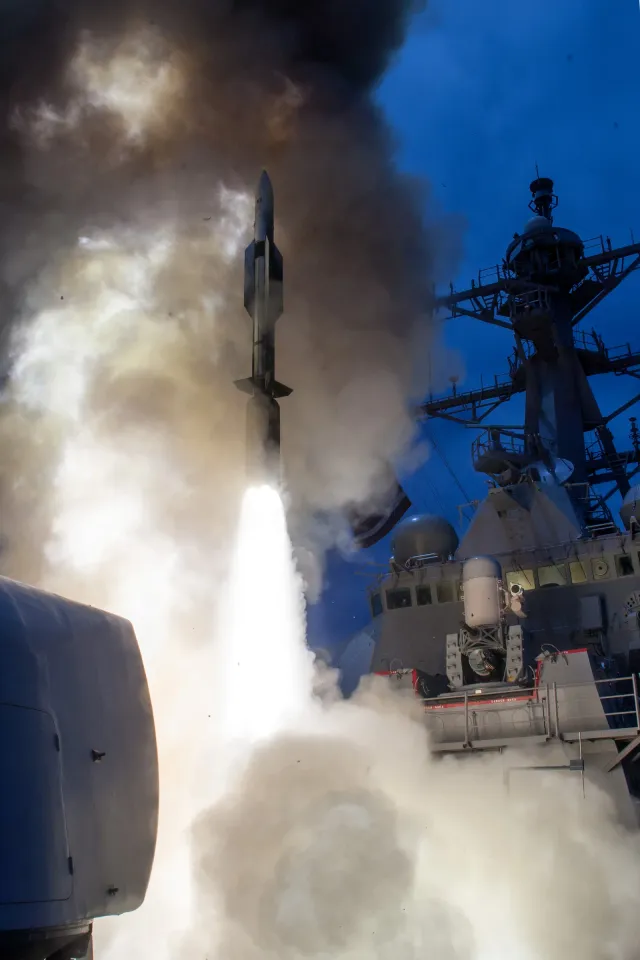
Missile
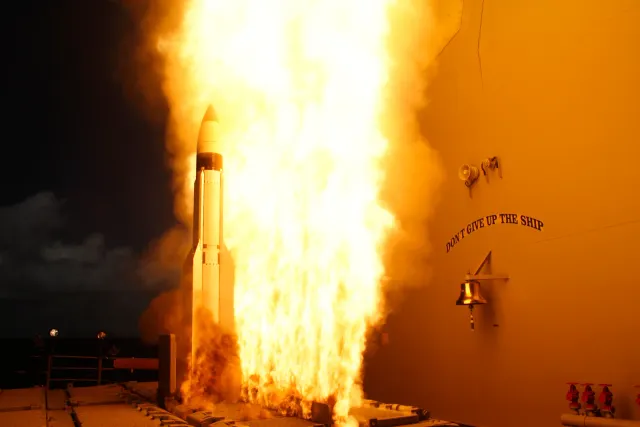
SM-3 Block IIAFrequently asked questions
What was the single biggest development this week? +
Two candidates are worth weighing against each other. The Navy's $22.9 billion, sixteenfold Tomahawk production scale-up is the biggest dollar figure of the week. But Gen. Michael Guetlein's warning that Golden Dome halts Oct. 1 without new funding is the more urgent deadline, since Congress has shown little appetite for the reconciliation bill Golden Dome needs, as of Aug. 21.
Why do both Ukraine and Russia keep hitting refineries and rocket-fuel plants instead of just launchers or troops? +
A launcher or a stored missile is a fixed, already-built asset. A fuel or propellant plant is future production capacity for an entire family of weapons at once. This week alone, Ukraine hit a single Russian plant, Kamensky, that supplies four separate rocket and missile systems, and hit the same Russian refinery unit twice within three weeks.
Is the US solid-rocket-motor shortage really behind all these separate programs? +
Yes. It is named explicitly and independently in the GMLRS, Tomahawk, X-Bow, and NGI coverage this week, all describing the same narrow set of US motor manufacturers as the constraint on how fast any of these programs can scale, regardless of how much money Congress or the Pentagon commits.
What should readers watch next week? +
Industry's Sept. 1 GMLRS capacity responses to the Army, whether Congress moves on Golden Dome's reconciliation funding before the Oct. 1 cliff, whether the UAE's Iran trade embargo holds longer than March's reversed one did, and whether North Korea responds to the shortened Ulchi Freedom Shield drill with more than rhetoric.
More news


