Ukraine's Flamingo Missiles Hit Russia's Kinzhal-Carrier Base
A Ukrainian Flamingo cruise-missile strike hit the Savasleyka airbase housing MiG-31K Kinzhal carriers and Samara's Progress rocket plant, Zelensky says.
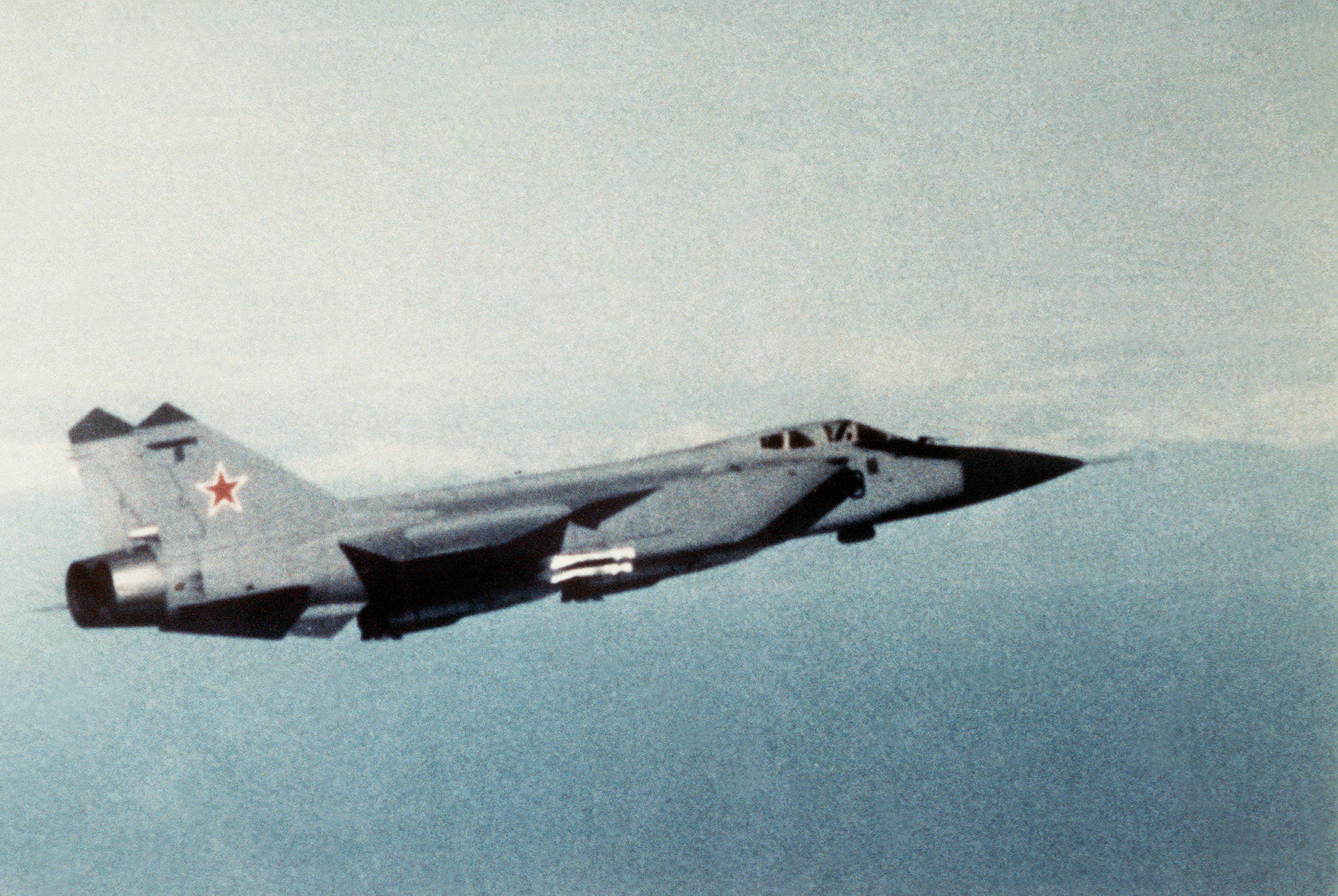
US Air Force/DoD public domain, via Wikimedia Commons, dated Aug. 26, 1988.
Ukraine struck Russia’s Savasleyka airbase, home to the MiG-31K jets that carry Kh-47M2 Kinzhal missiles, and the Progress Rocket Space Center in Samara overnight on Aug. 14-15 using domestically built Flamingo cruise missiles, President Volodymyr Zelensky said, hitting both targets roughly 700 and 900 kilometers inside Russian territory.
Targeting the launch platform, not the incoming missile
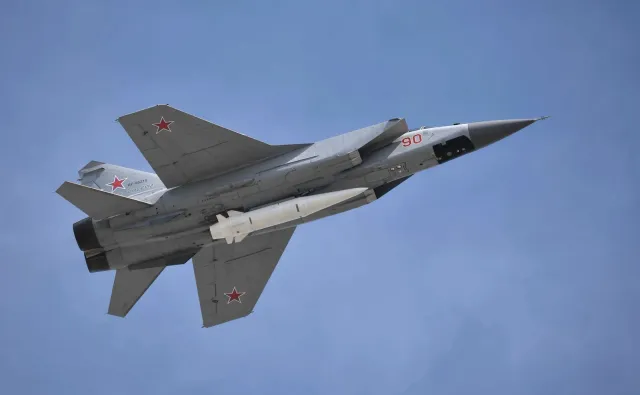
Savasleyka airbase, about 700 km inside Russia, hosts the MiG-31K aircraft that carry the Kh-47M2 Kinzhal, an air-launched ballistic missile Russia claims reaches Mach 10, a state claim, not independently verified, with a 2,000 km range and a 480 kg warhead that has been used repeatedly against Ukrainian cities. Hitting the base where those aircraft are stationed represents a different logic than intercepting a Kinzhal already inbound: it aims at the launch platform itself, a “left of launch” approach that, if it degrades Savasleyka’s ability to generate sorties, reduces the number of Kinzhal launches Ukraine’s air defenses have to face in the first place rather than trying to catch every missile after it is already in the air.
“The Savasleyka airfield, where the carriers of Russian missiles that strike our cities and villages are based, was also reached by our long-range sanctions,” said Volodymyr Zelensky, President of Ukraine (Kyiv Independent, Aug. 15, 2026).
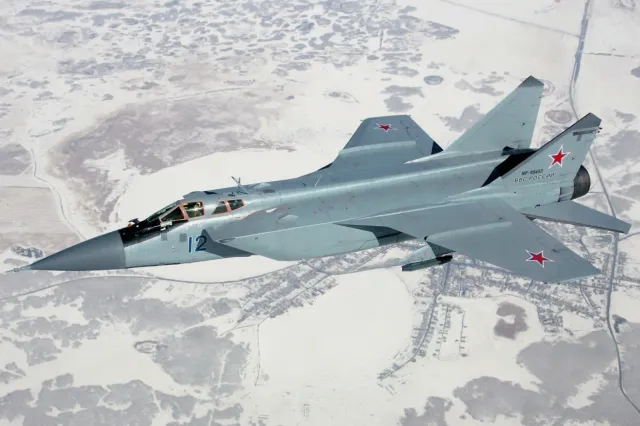
The MiG-31, a Soviet-designed high-speed interceptor adapted to carry the Kinzhal externally beneath its fuselage, has functioned in this role since Russia began Kinzhal strikes against Ukraine in 2023. A successful hit against the aircraft’s home base does not need to destroy every jet on the ramp to matter: damage to runways, fuel infrastructure, or maintenance facilities can degrade sortie generation for weeks even if most of the airframes themselves survive.
The weapon: a Ukrainian missile built to reach this far
The strike used the FP-5 “Flamingo”, a Ukrainian-built cruise missile from the domestic manufacturer Fire Point with a 14-meter carbon-fiber airframe, an AI-25TL turbofan engine, and a stated range beyond 3,000 km. Its 1,150 kg warhead is roughly three times the payload of Russia’s own Kh-101 cruise missile, and it uses satellite and inertial navigation with a low-altitude flight profile intended to limit radar detection. WeaponSpecs’ own systems database lists Flamingo’s specifications as verified:false pending independent confirmation, a caveat consistent with how young the program is: Flamingo has only been publicly tied to a handful of confirmed deep-strike missions since mid-2026, including a July 24 strike on the Avitek ejection-seat plant in Kirov, roughly 1,200 km inside Russia. Reaching both Savasleyka and Samara in the same operation, at 700 and 900 km respectively, sits comfortably within the missile’s stated envelope.

Samara: a briefer, secondary target
The second target, Progress Rocket Space Center in Samara, about 900 km inside Russia, is Russia’s sole assembly site for the Soyuz-2 rocket family. Zelensky said the plant “was involved, among other things, in producing electronics” and confirmed it was hit, per the Kyiv Independent:
“The Progress center, which was involved, among other things, in producing electronics, was hit,” said Volodymyr Zelensky, President of Ukraine (Kyiv Independent, Aug. 15, 2026).
WeaponSpecs covered Progress’s role in Russia’s Rassvet satellite program in detail in an earlier piece on the Rassvet broadband constellation; the short version is that Progress can build up to 20 rockets a year but is currently producing only 6 to 8, well below the roughly 18 Soyuz-2.1b launches Russia needs to fully deploy its planned 288-satellite constellation. Any further damage to the plant would deepen a production bottleneck that already exists independent of this strike.
Neither side’s damage claim is confirmed
“The extent of the damage could not be independently verified,” the Kyiv Independent reported, a caveat that applies to both targets. Samara Oblast Governor Vyacheslav Fedorishchev acknowledged a strike on an unnamed “industrial facility” without naming Progress specifically or detailing the damage, a Russian government statement that is itself a state claim, not independently verified, and should not be read as confirmation of Ukraine’s account of what was hit or how badly. Absent satellite imagery or third-party damage assessment, readers should treat both the scale of destruction and the operational impact on either site as unresolved.
Part of a widening long-range campaign
This strike extends a pattern Ukraine has built through 2026: using indigenous long-range weapons, Flamingo chief among them, to reach targets several hundred kilometers deeper inside Russia than earlier in the war, hitting airbases, defense-industrial sites and now a rocket assembly plant with clear dual-use ties to military satellite communications. The Savasleyka strike in particular signals an intent to keep pressuring the launch infrastructure behind Kinzhal attacks rather than relying solely on Patriot and other interceptors to stop missiles already in the air, a strategy that depends on Flamingo’s still-unverified range and reliability holding up under repeated real-world use.
Sources
- Ukraine hits key Roscosmos facility with Flamingo missiles, strikes Savasleyka airbase, Zelensky says — Kyiv Independent, Aug 15, 2026
- Ukraine attacks Russia's Samara industrial site as Kyiv ramps up long-range strikes — AP via KELOLAND.com, Aug 15, 2026
- Ukraine says it hit Russian rocket center linked to satellite network — CNBC, Aug 15, 2026
- Ukraine says it has struck Russian rocket and space centre — Euronews, Aug 15, 2026
Systems mentioned
Every system named in this story, with its photo and, where available, a video. Tap a card to open the full spec sheet.
Compare these side by side →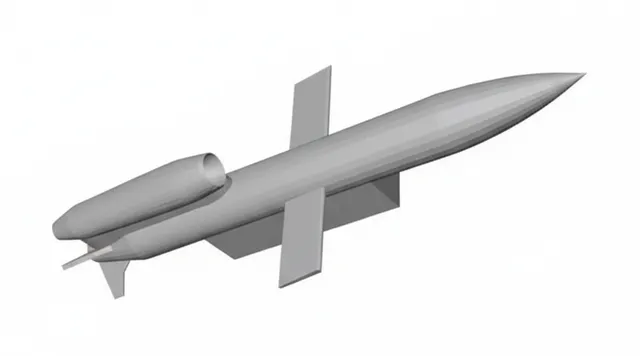
Frequently asked questions
What missile did Ukraine use in this strike? +
The domestically built FP-5 'Flamingo' cruise missile, made by the Ukrainian company Fire Point. It carries a stated range beyond 3,000 km and a 1,150 kg warhead, roughly three times the payload of Russia's Kh-101, though WeaponSpecs' database lists it as verified:false pending independent confirmation of its published specifications.
Why does hitting Savasleyka matter beyond the immediate damage? +
Savasleyka hosts the MiG-31K aircraft that carry Russia's Kh-47M2 Kinzhal missiles used repeatedly against Ukrainian cities. Striking the airbase targets the launch platform itself rather than an inbound missile, a 'left of launch' approach distinct from intercepting weapons already in flight.
Was the damage to either target confirmed? +
No. The Kyiv Independent reported that the extent of the damage could not be independently verified. Samara Oblast Governor Vyacheslav Fedorishchev acknowledged a strike on an unnamed 'industrial facility' without confirming the target, a Russian government statement that is itself a state claim, not independently verified.
What is the Progress plant's connection to Russia's satellite ambitions? +
Progress Rocket Space Center in Samara is Russia's sole assembly site for the Soyuz-2 rocket family. It can build up to 20 rockets a year but is currently producing only 6 to 8, well short of the roughly 18 Soyuz-2.1b launches Russia needs to fully deploy its planned 288-satellite Rassvet broadband constellation, a bottleneck this strike would worsen if the damage is confirmed.
More news


