A $2,000 Drone Now Undercuts Every UAV We Track
The Pentagon's Drone Dominance Program targets a $2,000 drone, undercutting all 19 priced UAVs in WeaponSpecs' 101-system database, some by 45x.

Fire Point FP-1 on display at Eurosatory 2026, Paris, photo courtesy of Ukrainska Pravda (pravda.com.ua)
The Pentagon’s Drone Dominance Program is chasing a $2,000 unit price for one-way attack drones, a figure that undercuts every one of the 19 UAVs in WeaponSpecs’ own 101-system database that publish a unit cost, including the cheapest loitering munition already in service anywhere. Neros Technologies just became the first Gauntlet I vendor to earn a bonus order, 2,000 more Archer FPV drones stacked on its original 2,400, for being first to complete delivery and pass government acceptance while several rivals were still working through their original batches months later. That is a company-level story. The structural story underneath it is that nothing currently priced in WeaponSpecs’ UAV database comes close to the Pentagon’s target, and whether $2,000 is a real, sustainable production price or a competition winner’s early number has not been settled yet.
What did Neros actually win, and why?
Defense Secretary Pete Hegseth’s Drone Dominance Program (DDP) launched with a request for information on December 10, 2025 and a request for solutions a week later, structured as a $1.1 billion, four-phase “Gauntlet” competition meant to scale domestic low-cost, attritable one-way-attack drone manufacturing toward more than 200,000 units by 2027 (DefenseScoop).
Gauntlet I, evaluated in February and March 2026 at Fort Benning, Georgia, produced $150 million in delivery orders for 30,000 one-way attack drones, split across the top 11 of more than 25 competing vendors and delivered over five months to 17 military units starting that March (DefenseScoop). The UK’s Skycutter, paired with Ukraine’s Skyfall, topped the leaderboard with 99.3 points and an order for 2,560 drones. Neros placed second at 87.3, about 12 points back, with an original order for 2,400 Archer FPV drones (DefenseScoop).
Finishing second didn’t matter much once actual deliveries started. A June 2026 status check found Neros had shipped all 2,400 of its Archers, with 1,040 already accepted by the government, while every other Gauntlet I vendor combined had shipped only 560 drones, none yet accepted (Breaking Defense). Being first to finish delivery and pass government acceptance earned Neros a bonus order of 2,000 more Archers, reported August 14, 2026, bringing its Gauntlet I total to 4,400 drones. Several competitors still had not completed their original delivery months after the competition ended (Defense Daily).
That bonus is separate from a much larger figure attached to Neros this year. On June 30, 2026 the Army awarded Neros a $500 million IDIQ (indefinite-delivery/indefinite-quantity, a spending ceiling rather than a guaranteed order) under the Purpose-Built Attritable System (PBAS) program, targeting up to 10,000 Archer drones a year at an explicit unit-price requirement under $2,000 (GovConWire). The Gauntlet I order (4,400 drones, drawn from that original $150 million/30,000-drone DDP batch) and the PBAS IDIQ ($500 million ceiling, a separate Army contract vehicle) are two different contracts. Adding their headline dollar figures together would overstate what has actually been committed to Neros so far. The company also closed a $250 million Series C round this month, co-led by Sequoia Capital and the American Strategic Technology Fund, valuing it at $2.5 billion, a sign investors are betting the DDP pricing model outlasts the Gauntlet I competition itself (Defense Daily).
How cheap is $2,000, really?
Divide the Gauntlet I numbers and a gap appears immediately. $150 million across 30,000 drones works out to a $5,000 blended average per drone across all 11 winning vendors, a figure this analysis calculated from the two sourced totals above, not a number any agency has published on its own. The Pentagon’s stated goal is to push further still, to roughly $2,000 per drone over the lifetime of the effort.
“We’re using actual purchases and the entrepreneurial spirit and capital of American industry to drive unit prices down while scaling production volumes up, ensuring that our forces have the quantity of consumable drones required for modern conflict,” said Travis Metz, DOD’s Drone Dominance Program Manager and Defense Innovation Unit Deputy Director/COO (DefenseScoop, March 5, 2026).
WeaponSpecs tracks 101 systems classified as UAVs, and only 19 of them (18.8%) publish a unit cost at all. Narrow that further to systems flying the same one-way-attack, loitering-munition mission as an Archer, and only five remain.
| System | Country | Unit cost (USD) | Note |
|---|---|---|---|
| Lancet-3 | Russia | $35,000 | Russian manufacturer/state figure, not independently verified |
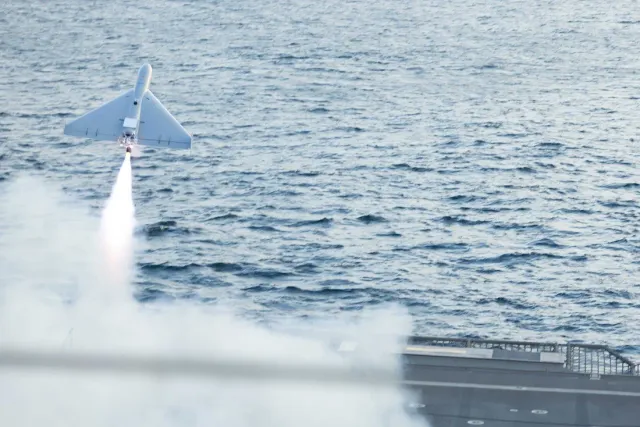
| Shahed-136 | Iran | $50,000 | Iranian manufacturer/state figure, not independently verified |
| Switchblade 300 | United States | $52,914 | Published US program cost |
| Fire Point FP-1 | Ukraine | $55,000 | Published Ukrainian program cost |
| Switchblade 600 | United States | $90,000 | Published US program cost |
Every one of those five costs at least 17.5 times the DDP’s $2,000 target price. Lancet-3, the cheapest of the five, sits at $35,000 against that $2,000 target, a 17.5x gap, and $35,000 against the DDP’s current $5,000 blended average still works out to 7x. At the other end, Switchblade 600’s $90,000 unit cost runs 45 times the $2,000 target and 18 times the $5,000 average. Lancet-3 and Shahed-136 are Russian and Iranian manufacturer/state figures respectively, and both should be read as claims, not verified numbers, the way any Moscow- or Tehran-sourced cost figure needs to be treated.
Lancet-3 and Shahed-136 (marked *) are Russian and Iranian manufacturer/state figures, not independently verified. Every bar in this chart, the cheapest included, still costs at least seven times the DDP's current $5,000 blended average and at least 17.5 times its $2,000 target.
One system deserves a caveat of its own before moving on: the RQ-11 Raven ($35,000) is the cheapest UAV of any kind in WeaponSpecs’ full 101-system database, tied dollar-for-dollar with Lancet-3. But the Raven is a reusable, hand-launched reconnaissance drone recovered after every flight, not a one-way attack munition, so its sticker price matching Lancet-3’s is a coincidence of category, not a like-for-like comparison to a DDP Archer. It’s exactly the kind of mismatch a headline price comparison could produce by accident, which is why it sits outside the five-system table and chart above rather than inside them.
Why does an MQ-9 Reaper still cost 16,000 times more?
The MQ-9A Reaper costs roughly $32,000,000 per airframe, about 16,000 times the DDP’s $2,000 target price. That comparison sounds like an indictment of the Reaper’s price tag until you look at what each dollar actually buys. A Reaper is reusable across years of service, carries a sensor-fused ISR and strike payload, and is designed to fly hundreds of sorties over its service life, with maintenance, satellite datalinks, and trained aircrew built into that cost. A DDP Archer is designed to fly once. Its entire value is spent the moment it hits a target or is shot down.
A $32 million Reaper isn’t overpriced for what it does; it’s a persistent, multi-year platform amortized over hundreds of missions, while a $2,000 drone’s cost is spent entirely in a single flight. These are different currencies, not two points on the same value curve, and comparing them on a per-unit basis the way the table above compares Archers to Lancets would mislead more than it clarifies.
Is $2,000 a real price, or a competition prize?
The honest caveat is that $2,000 has not been proven as a sustained, at-scale, quality-controlled price. Right now it is a program goal and a single contractual requirement, not a track record. Several Gauntlet I vendors still hadn’t completed their original delivery months after the competition ended, while Neros had already shipped its full original batch and gotten more than 1,000 units accepted (Defense Daily; Breaking Defense). Going from a winning prototype’s price at a single evaluation event to 200,000-plus units a year at consistent quality across a dozen vendors is a very different production problem, and it’s the one the DDP hasn’t solved yet.
The Army’s PBAS IDIQ underscores the same uncertainty from a different angle. Its $500 million figure is a ceiling, the maximum the Army could spend, not a guaranteed order, and its sub-$2,000 unit-price requirement still has to hold up across up to 10,000 drones a year in real production, not just in a Fort Benning evaluation (GovConWire). A $2,000 Archer that exists at one vendor’s competition-winning best is a real result. A $2,000 Archer that exists at 200,000-unit annual scale, across a dozen vendors, with consistent quality control, remains an open question.
Where every WeaponSpecs-tracked UAV price actually falls
Zoom out from the attack-drone category and the spread across WeaponSpecs’ full UAV database gets wide fast, wide enough that a single bar chart can’t show it honestly. Of the 101 systems classified as UAVs in the database, only 19 (18.8%) publish a commercial.unitCostUSD figure at all. Ranked cheapest to priciest, here is every one of them.
| # | System | Country | Unit cost (USD) | Type |
|---|---|---|---|---|
| 1 | RQ-11 Raven | United States | $35,000 | Reusable reconnaissance |
| 2 | Lancet-3 | Russia | $35,000 | One-way attack (state/manufacturer claim) |
| 3 | Shahed-136 | Iran | $50,000 | One-way attack (state/manufacturer claim) |
| 4 | Switchblade 300 | United States | $52,914 | One-way attack |
| 5 | Fire Point FP-1 | Ukraine | $55,000 | One-way attack |
| 6 | Switchblade 600 | United States | $90,000 | One-way attack |
| 7 | Wing Loong I | China | $1,000,000 | Reusable MALE UAS |
| 8 | CH-4 (Caihong-4) | China | $4,000,000 | Reusable MALE UAS |
| 9 | MQ-1 Predator | United States | $4,000,000 | Reusable MALE UAS |
| 10 | Bayraktar TB2 | Turkey | $5,000,000 | Reusable MALE UAS |
| 11 | ANKA-S | Turkey | $15,000,000 | Reusable MALE UAS |
| 12 | Wing Loong II | China | $15,000,000 | Reusable MALE UAS |
| 13 | MQ-1C Gray Eagle | United States | $17,000,000 | Reusable MALE UAS |
| 14 | MQ-9B SkyGuardian | United States | $25,000,000 | Reusable MALE/HALE UAS |
| 15 | X-BAT | United States | $27,000,000 | Reusable VTOL UAS |
| 16 | Bayraktar Akinci | Turkey | $30,000,000 | Reusable HALE UAS |
| 17 | MQ-9A Reaper | United States | $32,000,000 | Reusable MALE UAS |
| 18 | RQ-4 Global Hawk | United States | $140,000,000 | Reusable HALE ISR |
| 19 | MQ-4C Triton | United States | $300,000,000 | Reusable HALE ISR |
That spread, from a $35,000 hand-launched reconnaissance drone to a $300 million high-altitude ISR platform, is the market the Pentagon’s $2,000 target doesn’t compete inside at all. It aims to sit in a new pricing tier underneath the whole curve, which is a bigger story than any single vendor’s bonus order this week, even if that bonus order is the reason to notice it now.
Track live pricing across every UAV in WeaponSpecs’ database, or run your own procurement profile against these price tiers, with the Advisor.
Sources
- DOD Placing First Drone Dominance Orders This Week
- British Company Tops Leaderboard for Pentagon's Drone Dominance Program
- Pentagon Unveils Drone Dominance Program With 'Gauntlets'
- Neros Awarded $500M Army IDIQ for Archer Attritable Drones
- Under 'Drone Dominance' Push, Pentagon Begins Receiving Small Drones
- Defense Watch: Neros Raise and Bonus Drone Order
Systems in this comparison
Every system covered above, with its photo and, where available, a video. Tap a card to open the full spec sheet.
Compare these side by side →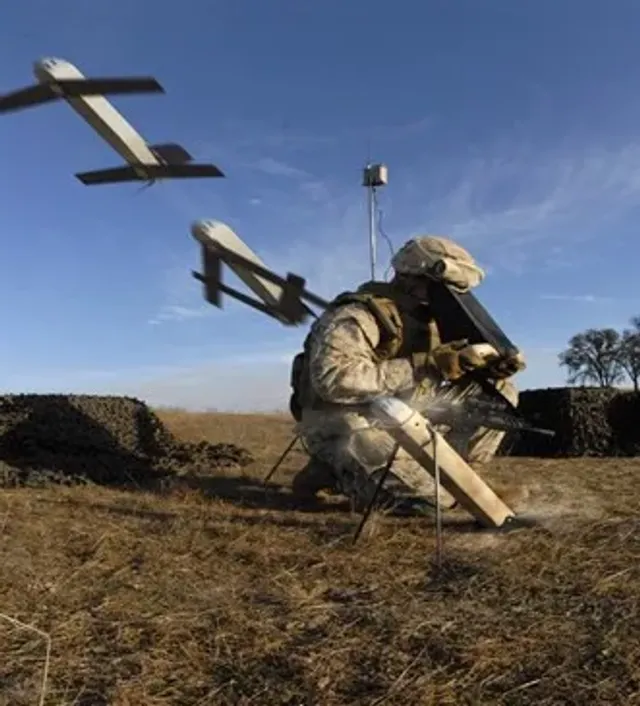
UAV / drone
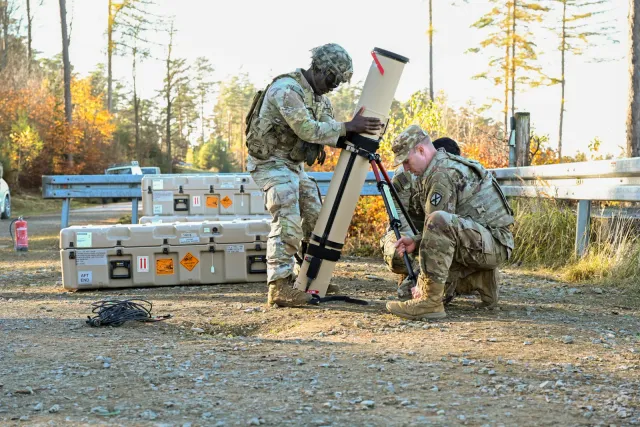
Switchblade 300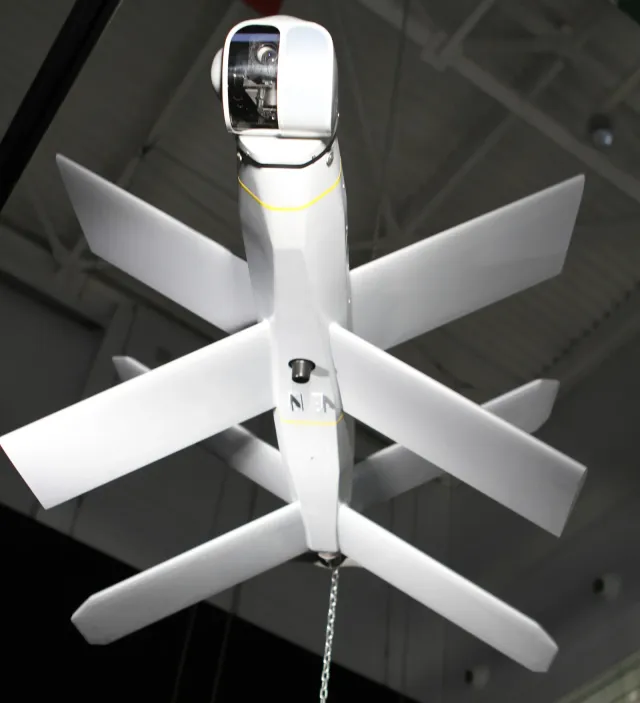
UAV / drone
Shahed-136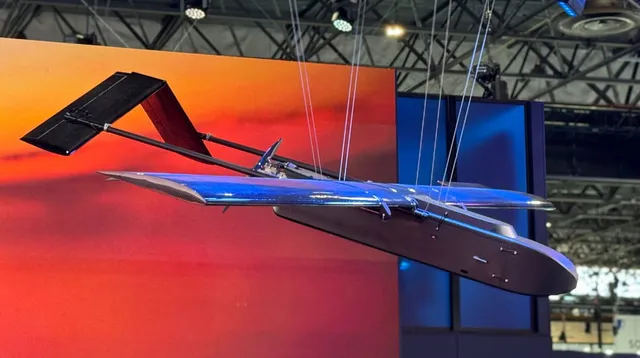
UAV / drone
Switchblade 600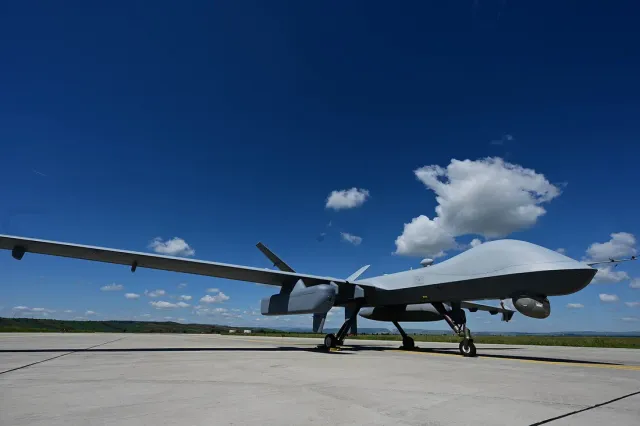
UAV / drone
MQ-9A ReaperFrequently asked questions
What is the Pentagon's Drone Dominance Program? +
The Drone Dominance Program (DDP) is a $1.1 billion Pentagon initiative launched by Defense Secretary Pete Hegseth in December 2025 to rapidly scale domestic low-cost, attritable one-way-attack drone production through a four-phase 'Gauntlet' competition, aiming for more than 200,000 drones by 2027.
Why did Neros receive a bonus order of 2,000 more Archer drones? +
Neros was the first Gauntlet I vendor to complete delivery of its original order and get its drones accepted by the government. A June 2026 status check found Neros had shipped all 2,400 of its Archers, with 1,040 already accepted, while every other Gauntlet I vendor combined had shipped only 560, none yet accepted. The Pentagon rewarded that lead with a 2,000-drone bonus order, bringing Neros's Gauntlet I total to 4,400.
Is $2,000 the current price of an Archer drone, or a future target? +
It is a target, not a confirmed current production price. The Pentagon has stated $2,000 per drone as its goal over the lifetime of the effort, and the Army's separate PBAS contract with Neros sets a sub-$2,000 unit-price requirement, but neither figure has been demonstrated yet at the 200,000-plus-unit annual scale the program is aiming for.
How does the DDP's price floor compare to other attack drones already in service? +
Every one of the five one-way attack drones tracked in WeaponSpecs' database with a published unit cost costs at least 17.5 times the DDP's $2,000 target. The cheapest, Russia's Lancet-3, is $35,000 (a state/manufacturer claim), followed by Iran's Shahed-136 at $50,000 (also a state claim), the US Switchblade 300 at $52,914, Ukraine's Fire Point FP-1 at $55,000, and the US Switchblade 600 at $90,000.
Why do platforms like the MQ-9 Reaper cost so much more than a small FPV attack drone? +
An MQ-9A Reaper costs about $32,000,000, roughly 16,000 times the DDP's $2,000 target, because it is a reusable, multi-year platform with sensor-fused ISR and strike capability flown across hundreds of sorties. A DDP Archer is a one-way munition whose entire value is spent in a single flight, so the two are priced on different bases rather than compared on one cost curve.
Related reading


