Only 4 of 57 Air Defenses Claim to Reach Space
Of 57 air-defense systems that publish an altitude ceiling, only 4 claim to reach above the Kármán line, the internationally recognized edge of space.

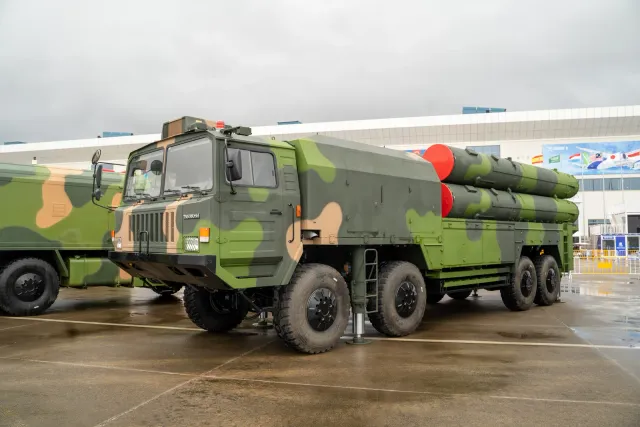
Via Wikipedia, HQ-19 (shown for identification)
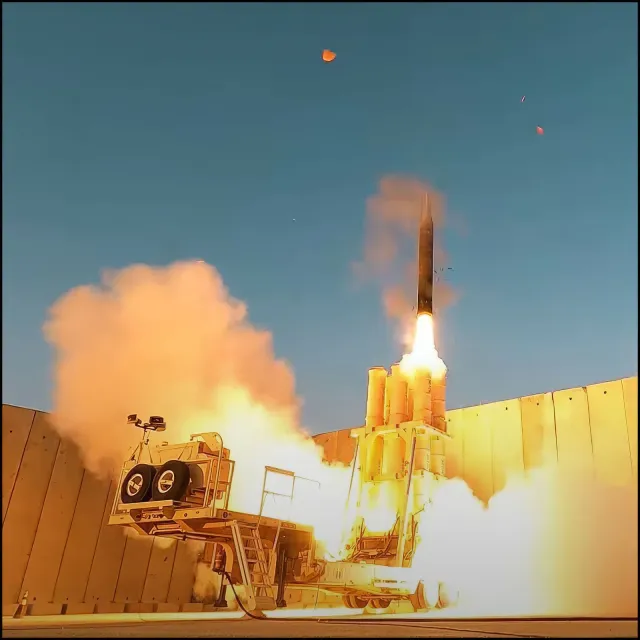
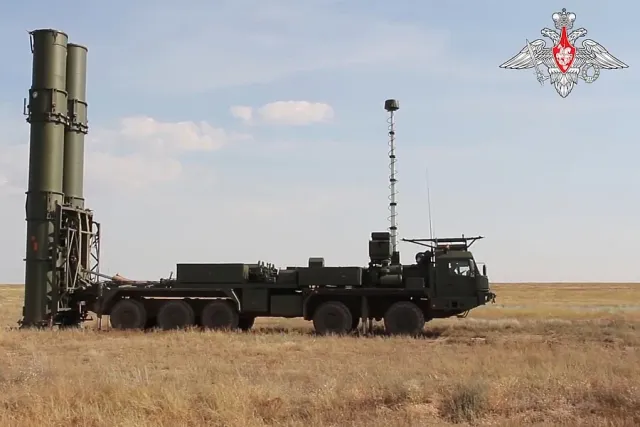
WeaponSpecs’ database holds 76 air-defense systems, and 57 of them publish an engagement altitude ceiling, the vertical height their interceptor, gun, or laser can actually reach. Of those 57, only 4 claim to reach above 80,000 m, the loose threshold this analysis treats as “exo-atmospheric,” and all 4 clear the internationally recognized Kármán line at 100,000 m: Russia’s S-500 Prometheus, China’s HQ-19, the United States’ THAAD, and Israel’s Arrow 3. Two of those four numbers are unverified state claims. Two have flight-test and combat records behind them.
How high can an air-defense system actually shoot?
Engagement range gets most of the attention in air-defense marketing because it’s the easiest number to put on a map. Altitude gets less coverage, but it answers a different and arguably more consequential question: not how far a system can shoot, but how high up it can catch something before that something reaches the ground.
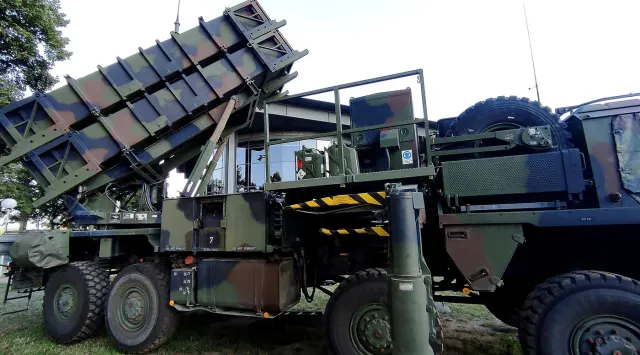
Sorting the 57 systems in our database that publish performance.engagementAltitudeM produces three clean bands. At the top, 4 systems (7.0%) claim an exo-atmospheric ceiling of 80,000 m or more. In the middle, 41 systems (71.9%) sit in what we’re calling the stratospheric band, 10,000 to 79,999 m, a range that covers everything from Patriot and the S-400/S-300 family down to David’s Sling and NASAMS. At the bottom, 12 systems (21.1%) are capped below 10,000 m, point-defense work built for a completely different threat picture.
The overwhelming majority of fielded air defense lives in that middle band. Reaching space is rare by design, not by accident, and reaching only a few thousand meters is just as deliberate a choice as reaching 200 km. Nineteen of the 76 air-defense systems in our database don’t publish an altitude figure at all, and the pattern among them is consistent: mostly modern gun and laser CIWS or counter-drone systems (Phalanx, Skyranger, RapidFire, Millennium Gun, Coyote, Drone Dome) plus one pure command-and-control system, Northrop Grumman IBCS, which has no interceptor of its own and so has no altitude ceiling to publish in the first place.
The middle band is the story: more than seven in ten systems that publish an altitude figure are built for the broad stratospheric fight, while the two extremes, space-capable interceptors and airliner-height point-defense, are both small minorities carved out for narrow missions.
For general background on the category, see WeaponSpecs’ air-defense systems overview, which covers the full 76-system roster this altitude analysis draws from.
Which systems claim to reach the Kármán line?
The Kármán line, set at 100 km (100,000 m) above sea level, is the internationally recognized edge of space. Four systems in the database publish an engagement altitude at or above the 80,000 m mark this analysis uses as its exo-atmospheric cutoff, and all four clear the Kármán line itself.
Russia’s S-500 Prometheus tops the list at a claimed 200,000 m, twice the Kármán line. China’s HQ-19 follows at 150,000 m, matching the same figure published for the United States’ THAAD. Israel’s Arrow 3 rounds out the group at 100,000 m, exactly the Kármán threshold. The S-500 and HQ-19 numbers are Russian and Chinese state and manufacturer figures with no independent test data behind them, the kind of number this column treats as a claim, not a fact, until proven otherwise. THAAD and Arrow 3 stand on different ground: THAAD has a documented flight-test record and was used in actual combat in 2022 and again in the 2026 Iran war, while Arrow 3 has intercepted Iranian ballistic missiles in combat repeatedly, in April and October 2024, during the 12-Day War in June 2025, and again during Operation Epic Fury in March 2026.
All four bars already clear the 100 km Kármán-line threshold by definition of the tier, but half the group's numbers are unverified state claims, and it's the two shorter bars, THAAD and Arrow 3, that carry the actual combat record.
None of this means one system covers every threat by itself. Real missile-defense architecture is layered, and the Missile Defense Agency’s own director has said as much directly.
“By networking the Aegis, Terminal High Altitude Area Defense (THAAD), and U.S. Patriot systems using the Command and Control, Battle Management and Communications (C2BMC) software, MDA provides an integrated layered defense against ballistic missiles and unmanned aerial systems,” said Lt. Gen. Heath A. Collins, director of the Missile Defense Agency, in written testimony before the House Armed Services Committee’s Strategic Forces Subcommittee (April 15, 2026).
That layering is the point of the three-tier breakdown above. THAAD and Aegis cover the exo-atmospheric slice, Patriot covers a lower tier, and neither system is meant to do the other’s job. A lower altitude ceiling isn’t a weaker system, it’s a system built for a different slice of the sky.
Why does intercept altitude matter more than the number on a brochure?
An altitude figure carries a second, harder consequence beyond engineering reach: it determines where the wreckage lands. Intercepting a ballistic-missile warhead exo-atmospherically, outside the atmosphere entirely, means any resulting debris, including from a warhead carrying a chemical, biological, or nuclear payload, falls across a wide, largely unpopulated stretch of upper atmosphere rather than raining down over or near the area the system is defending, according to an analysis of THAAD’s terminal-phase intercept design published by Military Machine. A low-altitude intercept, the kind Patriot performs around 15,000-25,000 m, puts that same debris cloud close to the ground, near the people the battery exists to protect.
That’s the real reason the exo-atmospheric tier gets built at all, despite being the smallest and most expensive slice of the market: to move the point of failure as far from the defended population as physically possible, not to set an altitude record.
Does a longer engagement range mean a higher ceiling?
Not reliably. Across the 57 systems in our database that publish both engagementRangeKm and engagementAltitudeM, the correlation between the two figures comes out to a Pearson r of 0.635, a moderate positive relationship, not a tight one. Altitude ceiling and horizontal range track each other loosely, but they are genuinely two different engineering axes, not the same capability restated in different units.
David’s Sling makes the point cleanly. Israel’s system publishes a 300 km engagement range, longer than most of the stratospheric tier, but only a 15,000 m altitude ceiling. Russia’s Buk-M3 runs the opposite way: a state-claimed 70 km of range, a fraction of David’s Sling’s reach, paired with a 35,000 m ceiling, more than double. A system optimized to reach far horizontally is not automatically the one that reaches highest. David’s Sling is built as terminal and point defense, catching something coming nearly straight down over a wide horizontal footprint. Buk-M3 is tuned for a lower, wider engagement band. Neither design choice is a mistake, they’re answering different questions.
Why do 12 systems cap out below where an airliner cruises?
A commercial airliner cruises at roughly 10,000-12,000 m. Every one of the 12 point-defense systems in our database, VL MICA, IRIS-T SLS, HQ-7, Crotale NG, HISAR-A+, 9K33 Osa, RBS 70, 9K35 Strela-10, Gepard, Iron Beam, Korkut, and Skynex, has a published altitude ceiling at or below that line. None of them is physically capable of engaging anything flying at normal airliner cruise height.
That reflects the mission these systems were built for, not a design flaw. These are gun, short-range missile, and laser systems designed against cruise missiles, drones, and helicopters, threats that fly low by nature, not against high-altitude aircraft or ballistic warheads descending from above. Buying a point-defense system and expecting it to reach airliner altitude would be like buying a shotgun and being surprised it can’t hit something a mile out; it was never the tool for that job.
The full ranked list
| System | Country | Engagement altitude | Engagement range | Tier |
|---|---|---|---|---|
| S-500 Prometheus | Russia | 200,000 m* | 600 km* | Exo-atmospheric |
| HQ-19 | China | 150,000 m* | 3,000 km* | Exo-atmospheric |
| THAAD | United States | 150,000 m | 200 km | Exo-atmospheric |
| Arrow 3 | Israel | 100,000 m | 2,400 km | Exo-atmospheric |
| L-SAM | South Korea | 60,000 m | 150 km | Stratospheric |
| Arrow 2 | Israel | 51,000 m | 90 km | Stratospheric |
| Sky Bow III | Taiwan | 45,000 m | 200 km | Stratospheric |
| Buk-M3 | Russia | 35,000 m* | 70 km* | Stratospheric |
| Arman | Iran | 30,000 m* | 180 km* | Stratospheric |
| S-300V4 | Russia | 30,000 m* | 400 km* | Stratospheric |
| S-350 Vityaz | Russia | 30,000 m* | 120 km* | Stratospheric |
| S-400 Triumf | Russia | 30,000 m* | 400 km* | Stratospheric |
| 15th Khordad | Iran | 27,000 m* | 120 km* | Stratospheric |
| Bavar-373 | Iran | 27,000 m* | 300 km* | Stratospheric |
| HQ-22 | China | 27,000 m* | 100 km* | Stratospheric |
| HQ-9 | China | 27,000 m* | 200 km* | Stratospheric |
| Khordad-3 | Iran | 27,000 m* | 75 km* | Stratospheric |
| S-300PMU2 Favorit | Russia | 27,000 m* | 195 km* | Stratospheric |
| Barak MX | Israel | 25,000 m | 150 km | Stratospheric |
| Buk-M2 | Russia | 25,000 m* | 45 km* | Stratospheric |
| Patriot GEM-T | United States | 24,000 m | 150 km | Stratospheric |
| Patriot PAC-2 | United States | 24,000 m | 160 km | Stratospheric |
| Patriot PAC-3 | United States | 24,000 m | 60 km | Stratospheric |
| SİPER | Turkey | 24,000 m | 150 km | Stratospheric |
| Akash-NG | India | 20,000 m | 70 km | Stratospheric |
| Barak LR | Israel | 20,000 m | 150 km | Stratospheric |
| IRIS-T SLM | Germany | 20,000 m | 40 km | Stratospheric |
| Cheongung II (KM-SAM Block II) | South Korea | 20,000 m | 40 km | Stratospheric |
| SAMP/T (Aster 30) | France | 20,000 m | 120 km | Stratospheric |
| Akash | India | 18,000 m | 30 km | Stratospheric |
| HQ-16 | China | 18,000 m* | 40 km* | Stratospheric |
| Pantsir-SM | Russia | 18,000 m* | 30 km* | Stratospheric |
| Barak 8 | Israel | 16,000 m | 150 km | Stratospheric |
| SPYDER | Israel | 16,000 m | 35 km | Stratospheric |
| David’s Sling | Israel | 15,000 m | 300 km | Stratospheric |
| HISAR-O | Turkey | 15,000 m | 25 km | Stratospheric |
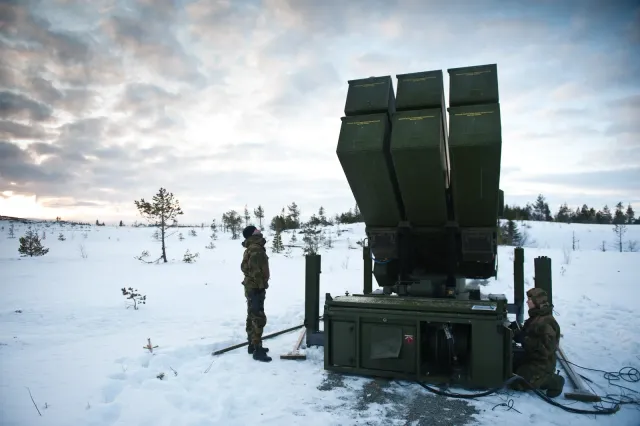
| NASAMS | Norway | 15,000 m | 25 km | Stratospheric |
| Pantsir-S1 | Russia | 15,000 m* | 20 km* | Stratospheric |
| Azarakhsh | Iran | 12,000 m* | 25 km* | Stratospheric |
| C-Dome | Israel | 10,000 m | 25 km | Stratospheric |
| CAMM-ER | United Kingdom | 10,000 m | 45 km | Stratospheric |
| Land Ceptor (CAMM) | United Kingdom | 10,000 m | 25 km | Stratospheric |
| Iron Dome | Israel | 10,000 m | 70 km | Stratospheric |
| Sky Sabre | United Kingdom | 10,000 m | 25 km | Stratospheric |
| Tor-M2 | Russia | 10,000 m* | 16 km* | Stratospheric |
| VL MICA | France | 9,000 m | 20 km | Point-defense |
| IRIS-T SLS | Germany | 8,000 m | 12 km | Point-defense |
| HQ-7 | China | 6,000 m* | 15 km* | Point-defense |
| Crotale NG | France | 6,000 m | 11 km | Point-defense |
| HISAR-A+ | Turkey | 5,000 m | 15 km | Point-defense |
| 9K33 Osa | Russia | 5,000 m* | 10 km* | Point-defense |
| RBS 70 | Sweden | 5,000 m | 8 km | Point-defense |
| 9K35 Strela-10 | Russia | 3,500 m* | 5 km* | Point-defense |
| Gepard | Germany | 3,000 m | 6 km | Point-defense |
| Iron Beam | Israel | 3,000 m | 10 km | Point-defense |
| Korkut | Turkey | 3,000 m | 4 km | Point-defense |
| Skynex | Germany | 3,000 m | 4 km | Point-defense |
*Russia, China, or Iran state/manufacturer figure, not independently verified.
What’s missing from the picture?
Nineteen of the 76 air-defense systems in our database publish no engagement altitude at all, including Phalanx CIWS, RAPIDFire, the Oerlikon Millennium Gun, Skyranger 30, Coyote Block 2, and Drone Dome. Most of the group are modern gun, laser, or counter-drone systems, and one, Northrop Grumman’s Integrated Battle Command System (IBCS), is a pure command-and-control system with no interceptor of its own to publish a ceiling for. The gap is worth noting, not a mystery worth forcing a theory onto.
Engagement altitude, engagement range, and radar range are three separate measurements: altitude is vertical reach, range is horizontal reach, and radar range only tells you how far a system can see, never how far it can shoot. Our own look at the gap between what a system can see and what it can shoot covers that detection-versus-engagement distinction; this piece adds a third, separate axis on top of both, how high the shot itself can actually go.
Run your own layered-defense comparison in the Advisor, or line systems up side by side directly in Compare before deciding which altitude band actually matches your threat picture.
Sources
- Kármán line, Wikipedia
- Terminal High Altitude Area Defense, Wikipedia
- Arrow 3, Wikipedia
- S-500 missile system, Wikipedia
- HQ-19, Wikipedia
- THAAD, Missile Threat, CSIS Missile Defense Project
- THAAD: The Only Missile Defense System That Intercepts Warheads Outside the Atmosphere, Military Machine
- Statement of Lt. Gen. Heath A. Collins, Director, Missile Defense Agency, before the House Armed Services Committee Strategic Forces Subcommittee, April 15, 2026
Systems in this comparison
Every system covered above, with its photo and, where available, a video. Tap a card to open the full spec sheet.
Compare these side by side →
Frequently asked questions
What is the Kármán line, and why does an air-defense spec sheet reference it? +
The Kármán line is the internationally recognized boundary of space, set at 100 km (100,000 m) above sea level. WeaponSpecs uses it as the threshold for the 'exo-atmospheric' tier in this analysis: any published engagement altitude at or above that figure counts as a claim to reach space, everything below it is atmospheric intercept work regardless of how high it goes.
Which air-defense systems in the database claim to reach that altitude? +
Four: Russia's S-500 Prometheus (200,000 m), China's HQ-19 (150,000 m), the United States' THAAD (150,000 m), and Israel's Arrow 3 (100,000 m). The S-500 and HQ-19 figures are state and manufacturer claims with no independent verification. THAAD and Arrow 3 have real flight-test and combat records behind their numbers.
Does a longer engagement range mean a system can also reach a higher altitude? +
Only loosely. Across the 57 systems that publish both fields, the correlation between range and altitude is a Pearson r of 0.635, a moderate relationship, not a tight one. David's Sling publishes a 300 km engagement range but a 15,000 m altitude ceiling, while Buk-M3 publishes just 70 km of range but a 35,000 m ceiling. Horizontal reach and vertical reach are separate engineering choices.
Why do some air-defense systems have a ceiling below where an airliner cruises? +
Because they were never built to fight anything at that height. A commercial airliner cruises around 10,000-12,000 m, and 12 systems in the database, mostly short-range gun and missile systems like Iron Beam, Skynex, and Gepard, cap out at or below that line. Their job is cruise missiles, drones, and helicopters flying low, not high-altitude aircraft or ballistic warheads.
How is engagement altitude different from a system's engagement range or radar range? +
Engagement altitude is how high the interceptor, gun, or laser can physically reach. Engagement range is how far out it can reach horizontally. Radar range is neither, it only measures how far the system can detect a target, not shoot at one. We've covered that detection-versus-shot gap before in [our own look at the gap between what a system can see and what it can shoot](/articles/radar-range-vs-engagement-range-air-defense/); this piece is a fresh axis on top of both, vertical ceiling rather than horizontal reach or sensor range.
Related reading


