Radar Range vs. Engagement Range in Air Defense
44 air-defense systems publish both a radar range and an engagement range. The gap spans 10x to a reversed 0.3x, showing which batteries fight alone.

Amit Agronov, CC BY-SA 3.0
Of the 78 air-defense systems in the WeaponSpecs database that publish an engagement range, 44 also publish a separate radar detection range. On average, the radar sees more than twice as far as the interceptor can reach. Israel’s Iron Beam is the extreme case: a 100 km detection radar feeding a laser that only works to 10 km, a 10x gap. Arrow 3 runs the opposite direction, claiming a 2,400 km engagement range on a radar credited with roughly 800 km, a reversed 0.3x ratio that only makes sense once outside sensors enter the picture.
What’s the difference between a radar’s range and a system’s engagement range?
WeaponSpecs tracks these as two separate fields for a reason. sensors.radarRangeKm is how far a system’s own radar can detect and track a target. performance.engagementRangeKm is how far the interceptor, missile, gun, or laser that radar feeds can actually travel to destroy that target. They describe different hardware doing different jobs, a sensor and a shooter, and a spec sheet that only prints one of them lets a reader assume the other matches, which the data below shows is often wrong by a wide margin.
This is a distinct question from an earlier WeaponSpecs analysis on what engagement range itself means, which found that field alone spans point-defense, area-defense, and strategic exo-atmospheric interceptors under one label. This piece holds engagement range fixed and asks a different question: when a system also publishes a radar range, how well does the sensor’s reach match the shooter’s?
Which air-defense systems see the farthest beyond what they can shoot?
Horizontal axis is a log scale in kilometers, since the values span roughly 3 to 2,400 km. David's Sling has no connecting line because its two published figures are identical. Arrow 3's line is highlighted because it runs backward, its engagement range sits to the right of (beyond) its own radar range, the only reversed case among these ten.
Iron Beam’s 10x gap is the widest in the entire 44-system dataset, but it is not a sign of a mismatched or padded spec. Iron Beam is a laser weapon, not a missile, and a laser’s engagement range is limited by beam power dropping off with distance and atmospheric scattering, a completely different physics constraint than a missile’s fuel and guidance limit. The 100 km radar exists to detect and start tracking a threat well before the 10 km beam is anywhere near able to engage it, giving the system time to point and focus before the target is close enough to burn.
Skyranger 30 (6.7x) and Korkut (6.0x) show the same pattern for a different reason: both are short-range gun-and-missile counter-drone systems built to intercept only in the final few kilometers, while their radars cast a much wider net for early warning and track handoff to other layers of a defense.
Why does THAAD’s radar reach 1,000 km when its own interceptor only flies 200 km?
THAAD’s radar, the AN/TPY-2, is credited with a detection range up to 1,000 km in the WeaponSpecs database, five times its own 200 km engagement range. That is not wasted sensor capacity. According to the CSIS Missile Defense Project, the AN/TPY-2 can run in a “forward based mode,” positioned near a likely launch area, where it “provides missile tracking and discrimination information to other assets through the [Missile Defense Agency]‘s C2BMC interface,” feeding data downstream to other interceptor systems rather than only its own battery.
That is not a hypothetical capability. CSIS documents a 2013 flight test in which a forward-based AN/TPY-2 “provided cueing data to support Aegis and THAAD intercepts,” and a 2020 demonstration in which the same radar directed a Patriot missile intercept. A single THAAD radar, in other words, can hand a target off to Aegis ships and Patriot batteries that never detected it themselves.
That is the point of building the radar wider than the interceptor beneath it. Tom Karako, director of the CSIS Missile Defense Project, described the doctrine behind that design choice in a 2018 CSIS Defense360 analysis:
“The Army has prudently advanced the ‘any sensor, best shooter’ vision, integrated fire control via the Integrated Air and Missile Defense Battle Command System (IBCS), and other near-term interoperability improvements,” said Tom Karako, director of the CSIS Missile Defense Project (CSIS Defense360, December 21, 2018).
A radar reaching five times farther than the interceptor it sits next to is, by that logic, the network working as designed, not a spec sheet exaggerating what one battery can do alone. Karako’s own piece adds a caveat worth carrying into any procurement read of these numbers: “integration is no substitute for a fire unit fighting effectively on its own,” since data from a supporting sensor is not guaranteed to arrive in time or good enough quality for every engagement.
Which system claims to reach farther than its own radar can see?
Only two of the 44 systems run the ratio in reverse, a published engagement range longer than the system’s own radar range. Russia’s S-300V4 is a marginal case, 400 km engagement against a 350 km radar (0.9x), a gap small enough to fall inside normal rounding on two separately sourced state-published figures, flagged here as an unverified Russian manufacturer claim like every S-300V4 figure on this site.
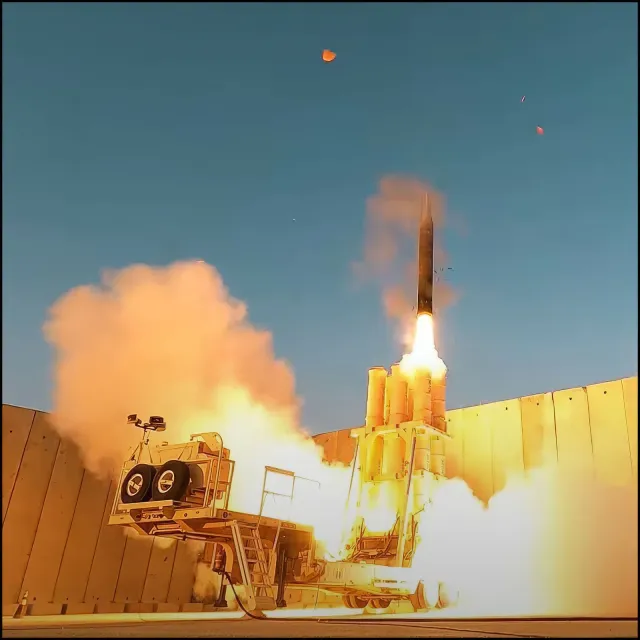
Israel’s Arrow 3 is not marginal. It claims a 2,400 km engagement range on a radar credited with 800 km, a 0.3x ratio, meaning the interceptor’s stated reach is nearly three times longer than what its own dedicated radar can see. According to Wikipedia’s entry on Arrow 3, the system’s detection depends on “integration with early-warning satellites and NATO’s Aegis missile defense system, whose data are shared among Alliance members,” not the Green Pine family radar alone. Airforce Technology’s project profile puts a number on how much that outside help extends the picture: target detection range runs from roughly 900 km using Israel’s own EL/M-2080 Super Green Pine radar up to roughly 1,900 km when cued by an allied AN/TPY-2, the same radar family that gives THAAD its networking role above.
Arrow 3’s 2,400 km figure, in other words, is not describing what one Arrow 3 battery and its own radar can independently detect and destroy. It is describing what the interceptor can kinematically reach once satellites or an allied radar hand it a track from farther out than its own sensor could ever see on its own. That distinction matters for a buyer: a country fielding Arrow 3 without access to that outside cueing network should not expect the full 2,400 km figure to hold.
Which systems have their radar and engagement range nearly matched?
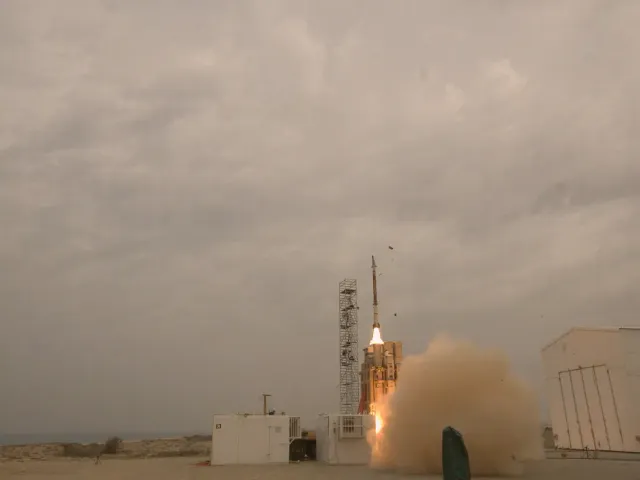
At the other end, David’s Sling publishes an identical 300 km for both fields, a 1.0x ratio and the tightest match of any system in the dataset. Patriot PAC-2 sits close behind at 170 km radar against 160 km engagement (1.1x), and Patriot GEM-T, SPYDER, and Iran’s Arman (an unverified state claim) all cluster around the same ratio.
These are the systems where the published numbers describe one self-contained shooter rather than a sensor built to serve a wider network. That does not make David’s Sling or Patriot inherently better than THAAD or Arrow 3, a battery designed to fight without outside cueing is answering a different requirement than one built as a networked node, but it does mean a buyer reading these two fields together can trust that the radar and the interceptor were sized to match each other, without needing to ask what other radar or satellite has to be present for the headline number to hold.
Full dataset: radar range vs. engagement range across 44 air-defense systems
| System | Country | Radar Range (km) | Engagement Range (km) | Ratio |
|---|---|---|---|---|
| Iron Beam | Israel | 100 | 10 | 10.0x |
| Skyranger 30 | Germany | 20 | 3 | 6.7x |
| IRIS-T SLM | Germany | 250 | 40 | 6.3x |
| Korkut | Turkey | 24 | 4 | 6.0x |
| Arrow 2 | Israel | 500 | 90 | 5.6x |
| Skynex | Germany | 20 | 4 | 5.0x |
| THAAD | United States | 1,000 | 200 | 5.0x |
| Land Ceptor (CAMM) | Multi-national | 120 | 25 | 4.8x |
| NASAMS | Norway | 120 | 25 | 4.8x |
| C-Dome | Israel | 100 | 25 | 4.0x |
| 9K33 Osa | Russia (claim) | 40 | 10 | 4.0x |
| HQ-16 | China (claim) | 150 | 40 | 3.8x |
| Drone Dome | Israel | 10 | 3 | 3.3x |
| Barak 8 | Israel | 470 | 150 | 3.1x |
| Barak LR | Israel | 470 | 150 | 3.1x |
| Barak MX | Israel | 470 | 150 | 3.1x |
| Buk-M2 | Russia (claim) | 140 | 45 | 3.1x |
| Patriot PAC-3 | United States | 170 | 60 | 2.8x |
| Gepard | Multi-national | 15 | 5.5 | 2.7x |
| Cheongung II (KM-SAM Block II) | South Korea | 100 | 40 | 2.5x |
| Pantsir-SM | Russia (claim) | 75 | 30 | 2.5x |
| Azarakhsh | Iran (claim) | 50 | 25 | 2.0x |
| HQ-22 | China (claim) | 200 | 100 | 2.0x |
| Tor-M2 | Russia (claim) | 32 | 16 | 2.0x |
| Crotale NG | France | 20 | 11 | 1.8x |
| Pantsir-S1 | Russia (claim) | 36 | 20 | 1.8x |
| Buk-M3 | Russia (claim) | 120 | 70 | 1.7x |
| S-300PMU2 Favorit | Russia (claim) | 300 | 195 | 1.5x |
| HQ-9 | China (claim) | 300 | 200 | 1.5x |
| S-400 Triumf | Russia (claim) | 600 | 400 | 1.5x |
| Iron Dome | Israel | 100 | 70 | 1.4x |
| Khordad-3 | Iran (claim) | 105 | 75 | 1.4x |
| HQ-7 | China (claim) | 20 | 15 | 1.3x |
| S-500 Prometheus | Russia (claim) | 800 | 600 | 1.3x |
| 15th Khordad | Iran (claim) | 150 | 120 | 1.3x |
| S-350 Vityaz | Russia (claim) | 150 | 120 | 1.3x |
| SAMP/T (Aster 30) | Multi-national | 140 | 120 | 1.2x |
| SPYDER | Israel | 40 | 35 | 1.1x |
| Patriot GEM-T | United States | 170 | 150 | 1.1x |
| Arman | Iran (claim) | 200 | 180 | 1.1x |
| Patriot PAC-2 | United States | 170 | 160 | 1.1x |
| David’s Sling | Israel | 300 | 300 | 1.0x |
| S-300V4 | Russia (claim) | 350 | 400 | 0.9x |
| Arrow 3 | Israel | 800 | 2,400 | 0.3x |
Eight of the 52 systems in the database that publish a radar range are not weapons at all, they’re pure sensors (early-warning and airborne radars like GlobalEye AEW&C and Giraffe 4A, an EW jammer, a few Anduril counter-drone sensor nodes) with no engagement range field because they were never meant to shoot anything. That is a cleaner version of the same lesson: a wide radar range is not automatically a claim about a wide kill zone, sometimes the radar is the entire product.
What does this mean for reading an air-defense spec sheet?
A published radar range on its own tells you almost nothing about how far a system can actually kill something. Read it next to the engagement range, and a large gap in either direction is informative rather than a red flag by default: a radar reaching well past its own interceptor usually means the system is built to feed a wider network (THAAD, Patriot, the short-range gun systems watching for inbound drones), while an engagement range that outruns the system’s own radar, as with Arrow 3, is a sign the headline number assumes outside cueing that may or may not be available to every operator of that system.
Browse every published radar and engagement figure across the full air-defense database, line up two systems side by side in the Compare tool, or run a threat profile through the Advisor to see which sensor-to-shooter tradeoffs actually matter for a specific defended area.
Sources
Systems in this comparison
Every system covered above, with its photo and, where available, a video. Tap a card to open the full spec sheet.
Compare these side by side →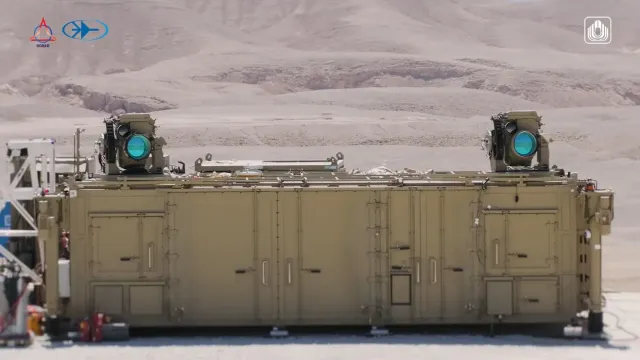

Air defense system
David's Sling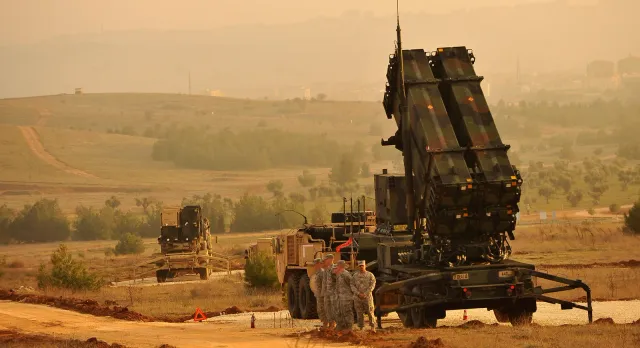
Air defense system
Patriot PAC-2
Air defense system
S-400 TriumfFrequently asked questions
What's the difference between an air-defense system's radar range and its engagement range? +
Radar range (WeaponSpecs field sensors.radarRangeKm) is how far the system's sensor can detect and track a target. Engagement range (performance.engagementRangeKm) is how far the system's own interceptor, missile, gun, or laser can actually fly or reach to destroy that target. A radar spotting something does not mean the weapon attached to it can hit it there.
Which air-defense system has the biggest gap between what it can see and what it can shoot? +
Israel's Iron Beam, in the WeaponSpecs database, publishes a 100 km radar detection range but only a 10 km laser engagement range, a 10x gap, the widest of the 44 systems that publish both figures. The gap reflects laser physics (beam power drops off with distance and atmosphere), not a flaw in the radar.
Why does THAAD's radar reach 1,000 km if its own interceptor only flies 200 km? +
THAAD's AN/TPY-2 radar can operate in a forward-based mode that feeds tracking data to other missile-defense systems, including Aegis and Patriot batteries, through the US Missile Defense Agency's C2BMC network, not just to THAAD's own interceptor. The wide radar range is built to support a networked defense, not a single battery.
Why does Israel's Arrow 3 claim a longer engagement range than its own radar's published range? +
Arrow 3's Green Pine/Super Green Pine radar is credited with roughly 800 km in the WeaponSpecs database, but Arrow 3's stated 2,400 km engagement range depends on cueing from other sensors, including early-warning satellites and allied AN/TPY-2 radars, according to Wikipedia and Airforce Technology reporting. The published engagement figure describes what the interceptor can kinematically reach with outside help, not what Arrow 3's own radar alone can detect and hand off.
Which air-defense systems have a radar range that closely matches their engagement range? +
David's Sling publishes an identical 300 km for both fields in the WeaponSpecs database, the tightest match in the dataset. Patriot GEM-T and Patriot PAC-2 sit close behind at roughly a 1.1x ratio. These are systems whose own sensor and own interceptor appear built as one matched pair, without depending on an outside radar to reach their full range.
Related reading


