Pentagon Bypasses Primes, Inks Direct Deals to Quadruple THAAD Output
New framework agreements with Northrop Grumman and L3Harris target rocket motors and structural parts directly, a break from prime-contractor-only procurement.

Missile Defense Agency photo by Leah Garton, via DVIDS, public domain (FTT-18 THAAD flight test, Pacific Spaceport Complex Alaska, July 11, 2017)
The Pentagon has signed roughly $3 billion in new framework agreements directly with component suppliers Northrop Grumman and L3Harris, bypassing the usual prime-contractor-only procurement path to fund rocket motors, structural parts and propulsion hardware for the Patriot and THAAD interceptor lines, part of a push to triple PAC-3 production and quadruple THAAD output.
A new layer of direct contracting
This morning, WeaponSpecs covered the Army’s $58.6 billion multiyear contract with Lockheed Martin to triple PAC-3 MSE interceptor production by 2030, the largest Patriot-related contract ever awarded. That deal runs through the traditional channel: the Department of War pays a prime contractor, which manages its own supply chain underneath it. What was announced August 3 is different in kind, not just scale. The Pentagon signed separate framework agreements directly with Northrop Grumman, worth about $2 billion for solid rocket motors and safety devices for PAC-3 and roughly $1 billion for THAAD structural components such as mid-body shells, muzzle covers and rail car assemblies, plus a seven-year framework with L3Harris to quadruple THAAD propulsion output, covering solid rocket boost motors and attitude control hardware. L3Harris calls it the largest THAAD propulsion award in company history, though it has not disclosed a dollar figure for its share.
Contracting directly with component suppliers rather than exclusively through the prime is a structural shift, not a paperwork change. Northrop Grumman and L3Harris are not the household names tied to either missile system: THAAD’s prime contractor and interceptor builder is Lockheed Martin, and Patriot’s PAC-3 interceptor is likewise Lockheed’s, with RTX’s Raytheon business building the Patriot system itself, the radar, launchers and battle-management software. Northrop Grumman and L3Harris sit a tier below, as motor and structural-component suppliers feeding Lockheed’s assembly lines. By writing checks straight to that tier, the department is trying to relieve a bottleneck a prime-only contract cannot reach: a subcontractor with no direct government funding has less incentive, and often less capital, to build out tooling ahead of demand.
The production math behind the deals
The targets attached to these agreements are steep. THAAD interceptor production is meant to roughly quadruple, from about 96 units a year to a targeted 400 a year, a figure Lockheed Martin itself put on record in a January 2026 framework announcement covering the interceptor side of the same production push. PAC-3 output is targeted to triple. The THAAD figure is the more solidly sourced of the two, coming from Lockheed’s own release rather than trade-press estimation. The PAC-3 tripling target circulates in secondary reporting without a matching primary confirmation of the underlying baseline, so it is worth treating as a directional goal rather than a locked-in figure until a manufacturer discloses its own numbers the way Lockheed did for THAAD.
Michael P. Duffey, Under Secretary of War for Acquisition and Sustainment, framed the component-level deals as necessary to hit those numbers at all.
“Vital to accelerating the tripling of PAC-3 and quadrupling of THAAD interceptor production,” said Michael P. Duffey, Under Secretary of War for Acquisition and Sustainment, adding that “Building the Arsenal of Freedom requires robust, dynamic supply chains” at all industrial tiers (GlobalSecurity.org, Department of War Signs Framework Agreements With Northrop Grumman to Ramp Production of PAC-3, THAAD Components, August 3, 2026).
This is the THAAD interceptor figure alone, primary-sourced to Lockheed Martin's own January 2026 release. A parallel PAC-3 production target circulates in trade press but lacks a matching primary-sourced baseline, so it is left off this chart rather than presented with the same confidence.
Anchoring that 400-a-year target to something concrete matters more than the raw multiple. THAAD batteries are a finite, high-value asset, there are only seven in the US inventory, and each interceptor is a single-use round fired at a single incoming threat. Quadrupling from 96 to 400 a year is the difference between a battery that can only be restocked at a trickle after an intense engagement and one that can be meaningfully refilled within a year. Whether that math plays out on schedule depends on Northrop Grumman and L3Harris actually standing up the tooling these framework agreements fund, not on the dollar figures alone.
Why the stockpile is under strain
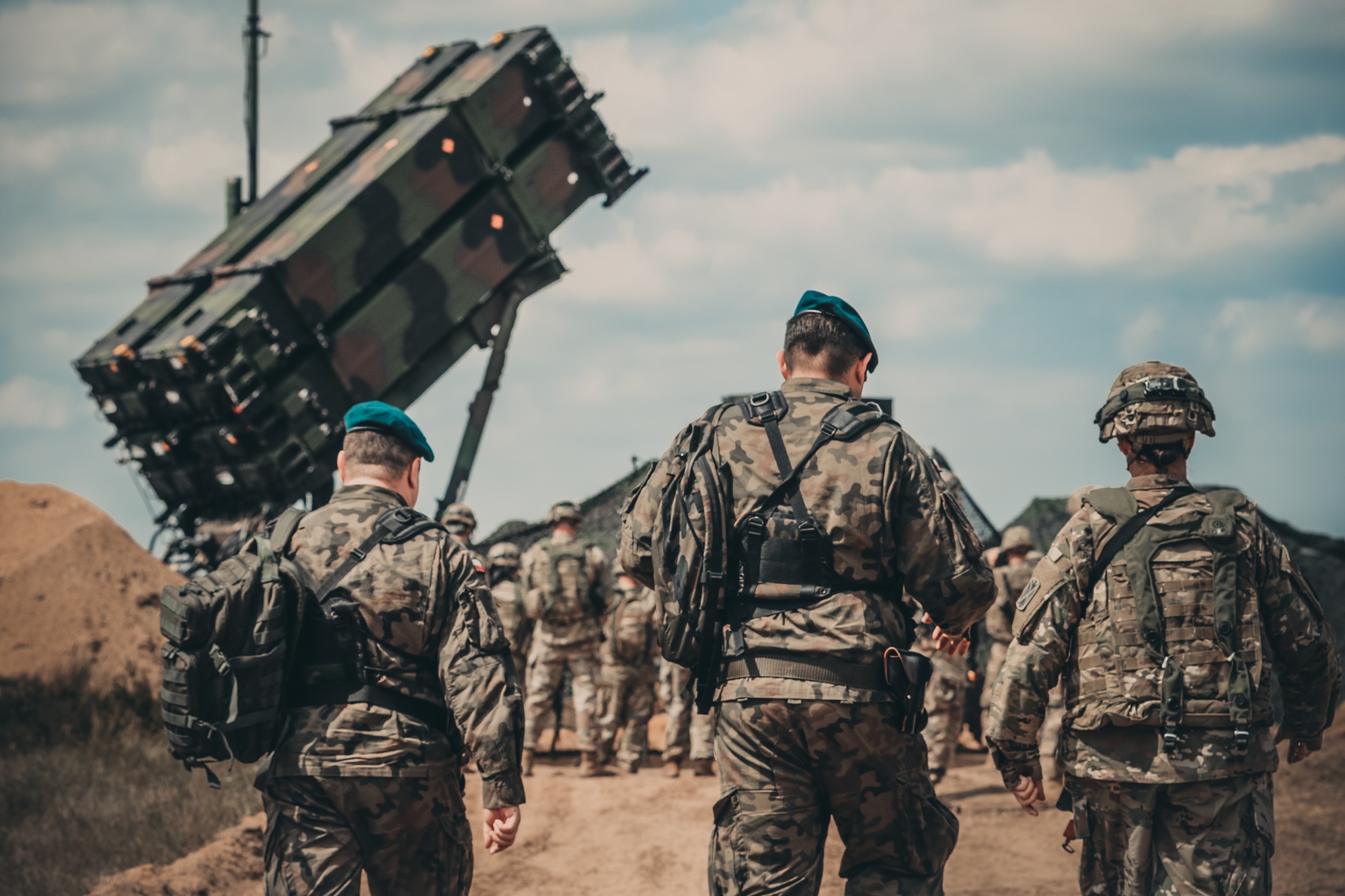
The urgency behind these deals traces to the same story WeaponSpecs has been tracking since Ukraine’s Patriot shortage became acute in early August. CSIS estimates the United States has expended roughly a third of its Patriot interceptor stockpile and about half its THAAD inventory since the Iran war began in 2026, a drawdown compounded by sustained Patriot transfers to Ukraine drawing on the same finite production pipeline. That estimate comes from a Western think tank, not an official Pentagon inventory disclosure, but it lines up with the pattern of emergency contracting the department has pursued since invoking the Defense Production Act for munitions in June 2026. The department has framed this broader effort, encompassing both this morning’s Lockheed deal and today’s component-level agreements, as its Acquisition Transformation Strategy, which it has publicly called the most significant overhaul of US defense procurement in decades, its own characterization, not an independent assessment.
Not yet money in hand
Not everyone is treating these agreements as settled funding, and the Pentagon’s own contracting language reflects that caution. Tom Karako, director of the Missile Defense Project at the Center for Strategic and International Studies, has been blunt in public comments about what a framework agreement actually is and isn’t.
“These are not contracts; they are agreements to agree,” said Tom Karako, director of the Missile Defense Project at the Center for Strategic and International Studies.
A framework agreement establishes the terms, pricing and production commitments both sides intend to operate under, but it does not obligate Congress to appropriate the money required to execute it. That distinction is not a technicality: it is the difference between Northrop Grumman and L3Harris pouring concrete for new tooling and simply holding a signed document that says they could, if Congress follows through. Given how central munitions production has become to both the Ukraine war and the Iran-conflict aftermath, that appropriations step is likely to draw real scrutiny rather than pass as a formality.
Sources
- Pentagon boosts Patriot, THAAD interceptor output amid stockpile strain — Al Jazeera, Aug 3, 2026
- Pentagon inks $3B framework agreement for Patriot, THAAD components — DefenseScoop, Aug 3, 2026
- Pentagon expands Patriot, THAAD production amid shortage concerns — Stars and Stripes, Aug 3, 2026
- L3Harris Signs Framework to Quadruple THAAD Propulsion Production — L3Harris, Jul 27, 2026
- Lockheed Martin and U.S. Department of War Sign Framework Agreement to Quadruple THAAD Interceptor Production Capacity — Lockheed Martin, Jan 29, 2026
- Department of War Signs Framework Agreements With Northrop Grumman to Ramp Production of PAC-3, THAAD Components — GlobalSecurity.org (DoD release mirror), Aug 3, 2026
Systems mentioned
Every system named in this story, with its photo and, where available, a video. Tap a card to open the full spec sheet.
Compare these side by side →
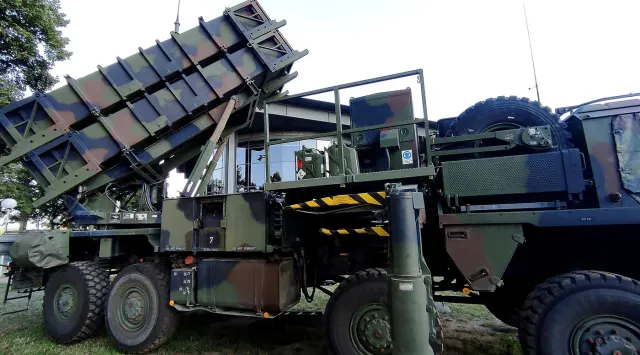
Air defense system
Patriot PAC-3Frequently asked questions
Is this the same as the Patriot $58.6B contract WeaponSpecs covered this morning? +
No. This morning's story covered Lockheed Martin's missile-production contract, a seven-year, $58.6 billion multiyear deal to build PAC-3 MSE interceptors. This is a separate set of framework agreements, worth roughly $3 billion combined, in which the Department of War is contracting directly with Northrop Grumman and L3Harris for individual components, rocket motors, structural parts and propulsion hardware, rather than routing that money only through prime contractors.
Why is the Pentagon going around its prime contractors to sign deals with suppliers? +
The Department of War says the bottleneck isn't final missile assembly but component-level capacity, especially solid rocket motors, so it is investing directly in tooling, facility modernization and workforce at the subcontractor level under its Acquisition Transformation Strategy.
How depleted are U.S. Patriot and THAAD stockpiles right now? +
CSIS estimates roughly a third of the Patriot inventory and about half the THAAD inventory have been expended since the 2026 Iran war began, on top of sustained Patriot transfers to Ukraine, though these are outside estimates from a Western think tank, not official DoD inventory disclosures.
Is this money actually appropriated and guaranteed? +
Not yet in full. CSIS missile-defense expert Tom Karako has publicly cautioned that these are "agreements to agree," not binding contracts, and Congress still has to appropriate the funds before the production targets become real deliveries.
More news


