Ukraine and Raytheon agree to co-produce Patriot interceptors
Zelensky announced an in-principle deal to jointly manufacture Patriot interceptors with Raytheon, a step toward closing Ukraine's chronic missile-supply gap.

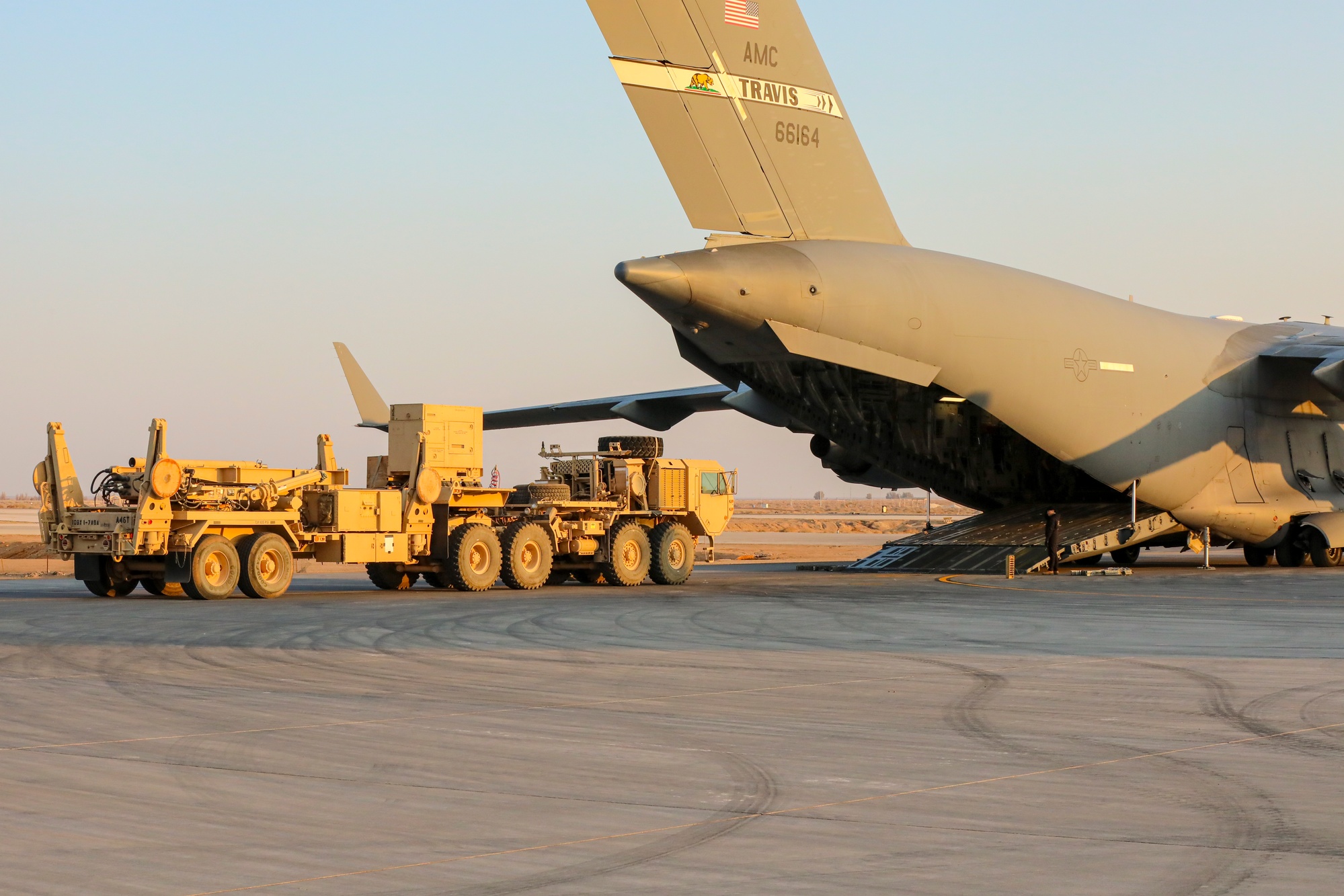
U.S. Army photo, DVIDS, public domain
Ukraine and Raytheon have agreed in principle to jointly manufacture Patriot interceptor missiles, President Volodymyr Zelensky announced July 23 after meeting a Raytheon delegation led by company vice president Joseph DeAntona. It is not yet a signed manufacturing contract, but it is the clearest sign yet that Washington and Kyiv intend to treat Ukraine’s Patriot shortage as a production problem to be solved on Ukrainian soil, not just a supply line to be topped up from American and allied stockpiles.
The announcement follows directly from a July 8 NATO summit in Ankara, where President Trump authorized licensed Patriot production for Ukraine. Zelensky tied the two events together explicitly, saying the co-production initiative had been discussed with Trump in Turkey before Raytheon’s delegation arrived in Kyiv to work out what it would actually look like.
“Ukraine will jointly produce with Raytheon one of the most critical air defense systems, interceptors for the Patriot system,” said Volodymyr Zelensky, President of Ukraine (Kyiv Independent, July 23, 2026).
The gap this is meant to close
The number that makes this announcement matter is not a dollar figure, it is a monthly burn rate. Ukrainian air defense expends roughly 60 to 70 PAC-2 and PAC-3 interceptors in an ordinary month fending off Russian ballistic and cruise missiles, and that climbs to 150 to 180 during the concentrated barrages Russia has increasingly favored this year, when dozens of missiles are launched in a single overnight wave to overwhelm what defenses are up. Every one of those interceptors currently comes from outside Ukraine, produced on production lines that also have to supply the U.S. Army and every other Patriot operator worldwide.
Lockheed Martin, which builds the PAC-3 MSE interceptor used against Russia’s more capable ballistic threats, produced roughly 500 of them in 2024 and 620 in 2025. Scale that against Ukraine’s own consumption: even without a single barrage month, sustaining Ukraine’s Patriot defense alone at the low end of its normal usage would require 720 to 2,160 interceptors a year if Ukraine had to be fully self-sufficient, a figure that dwarfs total U.S. output and makes clear why Kyiv has spent years on a waiting list behind NATO allies and the Pentagon’s own reserve requirements. Co-production does not immediately close that gap, first because it starts from zero manufacturing capacity in Ukraine, but it is the first mechanism proposed that could eventually let Ukraine build interceptors instead of only requesting them.
What “co-production” likely means in practice
Building a Patriot interceptor from scratch is not something Ukraine, or almost anyone besides the existing U.S. supply chain, can do end to end in the near term. The PAC-3’s guidance seeker and rocket motor are among the hardest parts of the missile to manufacture and are unlikely to be the first pieces built outside the United States. A more realistic first phase, consistent with how earlier Patriot co-production arrangements with other allies have started, would put Ukraine to work on mechanical structures, wiring harnesses, and final assembly, using imported seekers and motors until a fuller domestic or shared supply chain matures. Separately, Ukraine would likely still need its own arrangement with Lockheed Martin, the PAC-3’s actual maker, since Raytheon builds the Patriot’s ground equipment and the older GEM-T interceptor variant rather than the PAC-3 itself.
That Raytheon-Lockheed distinction matters for what to expect next. The U.S. Army awarded Raytheon a $441.6 million contract in April 2026 for GEM-T interceptor production, a separate and older interceptor design than the PAC-3 MSE, plus a distinct $3.7 billion order tied specifically to Ukraine’s missile needs. Those existing contracts are the infrastructure this new co-production initiative would have to plug into or build alongside, rather than starting from an empty factory floor.
The Greek and Russian sides of the equation
Ukraine is not waiting on co-production alone to close the gap. Kyiv has separately asked Greece for up to 200 PAC-2 interceptors, older-generation munitions Greece has held in inventory for roughly two decades, which would arrive faster than any newly built missile but carry less capability against maneuvering ballistic targets than the PAC-3.
On the other side of the ledger, Western and Ukrainian defense analysts estimate Russia is producing roughly 40 to 50 9K720 Iskander-M ballistic missiles and about 10 Kh-47M2 Kinzhal air-launched hypersonic missiles per month, figures that come from open-source and intelligence-adjacent analysis rather than any Russian government disclosure, and should be read with that provenance in mind. If those estimates are even roughly right, Russia’s monthly ballistic missile output alone is comparable to or exceeds Ukraine’s entire monthly PAC-2/PAC-3 interceptor consumption, a ratio that explains why interception rates during the largest barrages have fallen even as total interceptor numbers have grown, and why a production deal, however preliminary, reads as more consequential than another one-off delivery.
Whatever comes of the manufacturing talks, they arrive against a backdrop of strained Patriot stockpiles across the alliance, not just in Ukraine. Related coverage on this desk has tracked both the licensing framework Ukraine has been building toward and Lockheed Martin’s own push to field a cheaper PAC-3 variant aimed at easing exactly this kind of supply pressure, as well as how depleted Gulf-state and Ukrainian Patriot stocks have already shaped recent interception rates. The full Patriot PAC-3 system profile on this site has the interceptor’s engagement range and other published specifications for readers who want the underlying numbers.
Sources
- Ukraine to Co-Manufacture Patriot Interceptor Missiles With Raytheon — Kyiv Independent, Jul 23, 2026
- Ukraine, Raytheon to jointly produce Patriot interceptor missiles — Army Recognition, Jul 24, 2026
- Ukraine to jointly produce Patriot interceptors with Raytheon, Zelenskyy announces — United24 Media, Jul 24, 2026
Systems mentioned
Every system named in this story, with its photo and, where available, a video. Tap a card to open the full spec sheet.
Compare these side by side →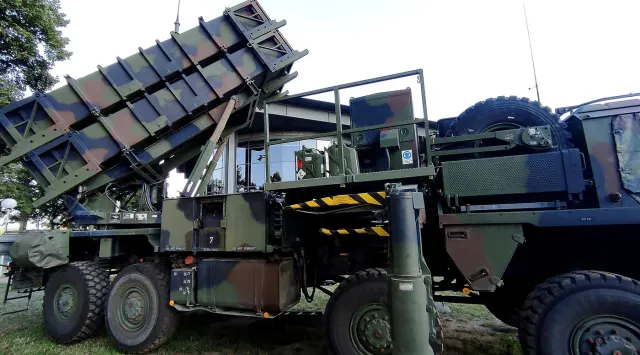
Air defense system
Patriot PAC-3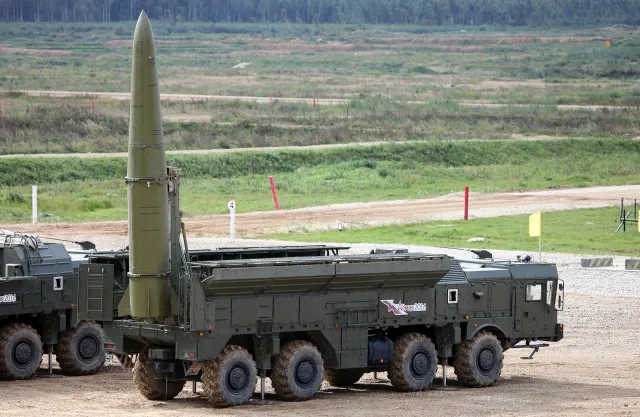
Missile
9K720 Iskander-M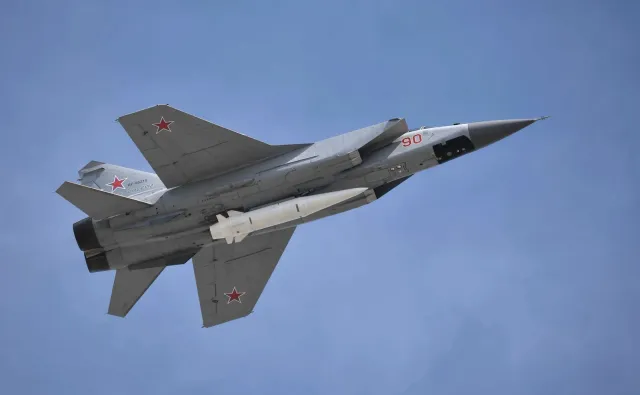
Missile
Kh-47M2 KinzhalFrequently asked questions
How many Patriot interceptors does Ukraine actually use? +
Ukrainian air defense expends roughly 60 to 70 PAC-2 and PAC-3 interceptors in a normal month, and 150 to 180 during concentrated Russian missile barrages, according to figures cited in coverage of the agreement.
When did the U.S. authorize this kind of production? +
President Trump authorized licensed Patriot production for Ukraine during a NATO summit in Ankara on July 8, 2026. The July 23 announcement with Raytheon builds directly on that authorization.
Is this a signed manufacturing contract? +
No. As of July 23 to 24, 2026, this is an agreement in principle. President Zelensky said government and private-sector teams on both sides would work out the operational details, including where production would happen and which interceptor variant would be built.
What kind of missile is the PAC-3, and why does that matter here? +
The PAC-3 is a hit-to-kill interceptor, meaning it destroys an incoming missile through direct kinetic impact rather than a proximity-fused warhead, which is part of why it is prioritized against Russia's maneuvering ballistic missiles and is expensive and slow to build.
More news


