Anti-Ship Missiles: 4,000km Claims vs a 300km Kill
China's DF-26 claims a 4,000km anti-ship range, longest of 41 tracked missiles. The only confirmed combat kill came from Ukraine's Neptune, ranged at 300km.
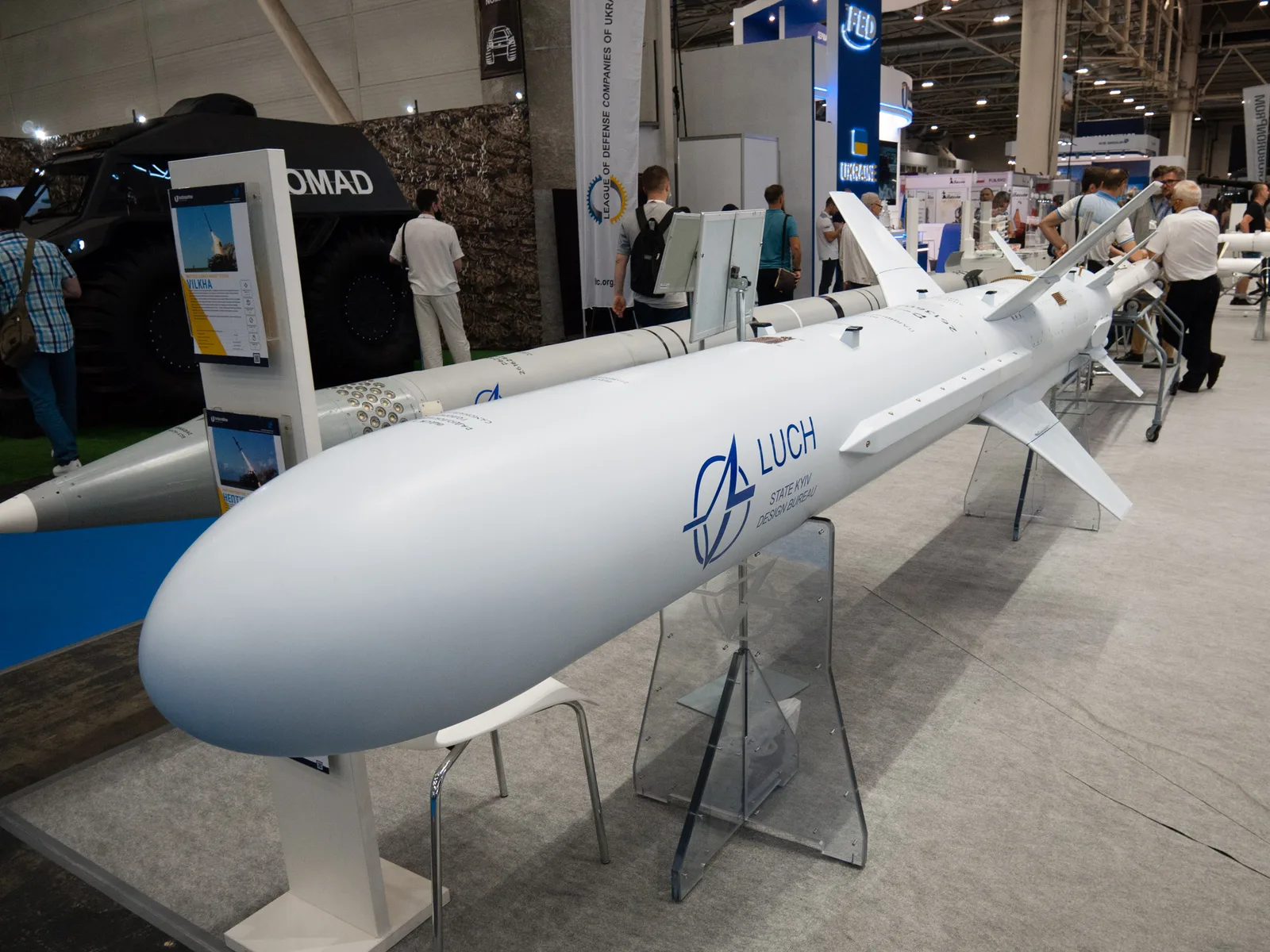
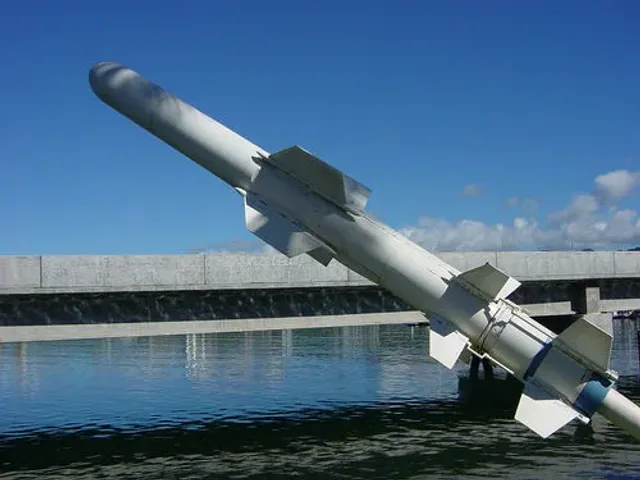
Via Wikipedia, R-360 Neptune (shown for identification)
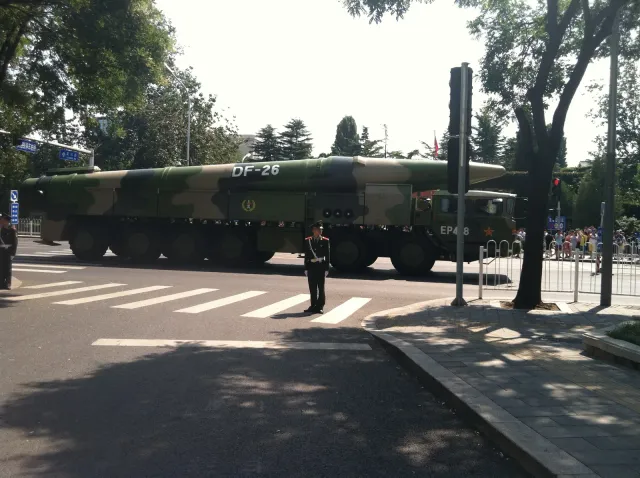
China’s DF-26 carries a claimed anti-ship range of roughly 4,000 km, the longest published figure among the 41 anti-ship missiles in the WeaponSpecs database1. That is a Chinese state and manufacturer figure, not independently verified against a moving target, and it is roughly 13 times the range of the only missile in the entire database with a confirmed real-world anti-ship kill: Ukraine’s R-360 Neptune, ranged at 300 km. The Neptune is the missile the US Department of Defense confirmed struck and helped sink the Russian Black Sea Fleet flagship Moskva on 14 April 2022, the largest Russian warship lost in wartime since World War II4. Every confirmed anti-ship combat hit in this database, all three of them, came from a missile ranged at 300 km or under. Nothing longer-ranged has ever hit a moving warship. This is a story about the gap between what a missile is claimed to reach and what one has actually done.
Which anti-ship missile has the longest claimed range?
The WeaponSpecs database currently tracks 1,038 systems. Forty-one of them are dedicated anti-ship missiles that publish a range figure. (Two entries that surface in a naive keyword search, the RIM-116 Rolling Airframe Missile and the Sea Viper/Aster family, are ship point-defense interceptors built to shoot anti-ship missiles down, not anti-ship weapons themselves, and are excluded here.) At the top of that list sits the DF-26, a Chinese road-mobile intermediate-range ballistic missile Western commentary nicknamed the “Guam Killer,” credited with a 4,000 km range1. It has never been used in combat. Its only public demonstration against a moving target was a live-fire exercise in the South China Sea in August 2020, alongside its shorter-ranged sibling, the DF-21D2.
Both star-marked missiles with a confirmed kill sit at the bottom of this list; the ten longer-ranged systems above them, including the 4,000 km DF-26, have never hit a moving ship in combat.
Bar widths above use a square-root scale, not a linear one, so the shortest bars stay visible next to the DF-26’s; the printed numbers are the real range figures. The two gold bars, marked with a star, are the only missiles in this set with a confirmed combat kill. Everything above them, everything with a longer claimed range, has never sunk or struck a moving ship.
Why do China’s “carrier killer” missiles claim 3 to 13 times the range of everything else in the database?
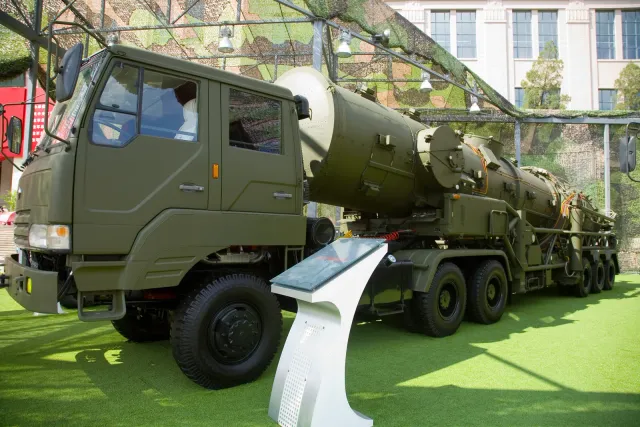
The DF-26 and DF-21D are not cruise missiles skimming toward a target at low altitude. They are ballistic missiles, launched on an arcing trajectory and, in the anti-ship role, retargeted in flight toward a moving vessel using onboard sensors. That geometry is why their claimed range dwarfs the rest of the field: a ballistic missile trades a cruise missile’s stealthy low-altitude approach for altitude and speed, covering far more distance before it has to find and correct onto a moving target. Kalibr (2,500 km claimed) and the Tomahawk Block V’s Maritime Strike variant (1,600 km claimed) sit well below the Chinese ballistic pair for a related reason: both are fundamentally land-attack cruise missile families with an anti-ship mode added on, and neither has been used in that anti-ship role in actual combat. Russia has fired Kalibr missiles at land targets extensively since 2015; none of that combat use has been against a ship. The Tomahawk’s anti-ship mode is a relatively recent addition to a missile with a five-decade land-attack pedigree.
The pattern holds down the list. Russia’s 3M22 Zircon (1,000 km claimed) is a scramjet-powered hypersonic cruise missile with no confirmed anti-ship combat kill. The US JASSM-ER (925 km claimed) and AGM-158C LRASM (370 km claimed) are the newest entries in the American anti-ship arsenal and have not been used in anger. None of these systems is lying, necessarily. But none of them has been tested the only way that matters: against a real ship that was trying not to be hit.
Which anti-ship missile has an actual confirmed combat kill?
Ukraine’s R-360 Neptune, and it is not close. Two Neptune missiles struck the Russian cruiser Moskva on 14 April 2022; a senior US defense official confirmed the strike, and the ship sank the following day after a fire and explosions aboard45. It was the largest Russian warship lost in wartime since World War II, sunk by a subsonic, sea-skimming cruise missile derived from the Soviet Kh-35 lineage, with a published range of 300 km. That figure is roughly one-thirteenth of the DF-26’s claimed maximum, and it is the only anti-ship range figure in this entire 41-missile database attached to a confirmed kill of a major warship.
Have any other anti-ship missiles in the database scored a real hit?
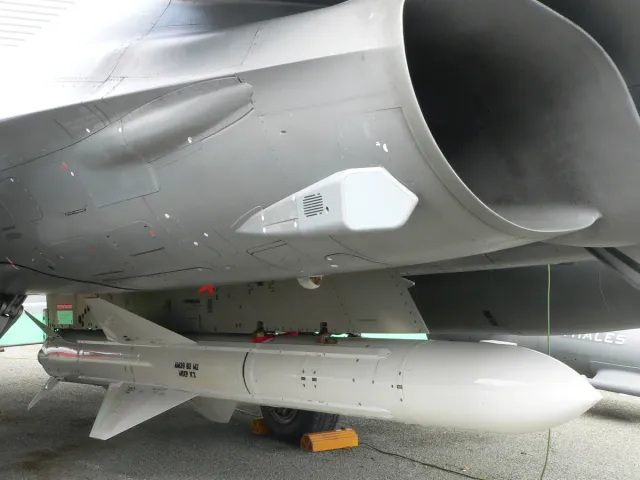
Two more, and both are older, shorter-ranged systems than anything at the top of the chart above. France’s Exocet AM39, an air-launched variant with a published range of just 70 km, sank Britain’s HMS Sheffield during the 1982 Falklands War6 and struck the American frigate USS Stark in 1987, killing 37 US sailors; the Stark survived and was later repaired7. On 14 July 2006, a Chinese-designed C-802-derivative missile, the same lineage as this database’s Noor and C-802AK entries (estimated 110 to 180 km range), struck the Israeli Sa’ar 5 corvette INS Hanit, killing four sailors and crippling its propulsion; the ship survived and returned to port under its own power8. Worth flagging precisely: the exact variant Hezbollah fired at Hanit was never conclusively identified as one specific database entry, so this is a C-802-family hit rather than a confirmed strike from either named system.
So the full list of confirmed anti-ship kills in the database is three engagements across four decades: 1982, 1987, 2006, 2022. Every one of them involved a missile ranged at 300 km or under. Not one involved a ballistic missile, a hypersonic missile, or anything claiming four-figure range.
What does the range-vs-combat-record split actually tell a buyer?
Range and combat exposure are not the same measurement, and conflating them is exactly the mistake a spec sheet invites. The missiles with confirmed kills all came out of genuine naval combat between forces with warships or coastal defense actually at stake: the Falklands War, the 2006 Israel-Hezbollah conflict, the Russian invasion of Ukraine. Those are sporadic events, and none of the world’s newest, longest-range anti-ship systems has been fielded in a comparable engagement. The DF-26 and DF-21D belong to a military that has not fought a peer naval war in the missile age. Kalibr’s operator has fired thousands of the missiles at land targets and none, on record, at a ship. The newest Western systems, LRASM and Maritime Strike Tomahawk, are simply too new to have a combat record yet.
None of that proves the longer-ranged missiles would fail if used. It does mean a 4,000 km figure and a 300 km figure are not evidence of the same kind. One is a demonstrated outcome against a target that was moving and shooting back. The other is a number on a data sheet. A buyer evaluating anti-ship capability should weight those very differently, and should treat every Chinese, Russian, or Iranian range figure in the table below as a claim rather than a spec until it is shown otherwise.
Every ranged anti-ship missile in the database, sorted by claimed range
| Missile | Country | Claimed Range (km) | Combat Record |
|---|---|---|---|
| DF-26 | China | 4,000 | Claim only, no combat use |
| Kalibr | Russia | 2,500 | No confirmed anti-ship kill |
| Tomahawk Block V | United States | 1,600 | No confirmed anti-ship combat use |
| DF-21D | China | 1,500 | Claim only, no combat use |
| 3M22 Zircon | Russia | 1,000 | No confirmed kill |
| Abu Mahdi | Iran | 1,000 | Claim, unverified |
| Kh-32 | Russia | 1,000 | Claim, unverified |
| JASSM-ER | United States | 925 | No confirmed combat use |
| Kh-22 | Russia | 600 | Claim, unverified |
| P-800 Oniks | Russia | 600 | Claim, unverified |
| YJ-18 | China | 540 | Claim, unverified |
| BrahMos | India | 450 | No confirmed combat use |
| YJ-12 | China | 400 | Claim, unverified |
| AGM-158C LRASM | United States | 370 | No confirmed combat use |
| Khalij Fars | Iran | 300 | Claim, explicitly unverified |
| R-360 Neptune | Ukraine | 300 | CONFIRMED: sank cruiser Moskva, April 2022 |
| RBS-15 | Sweden | 300 | No confirmed combat use |
| Sea Breaker | Israel | 300 | No confirmed combat use |
| Kh-35 Uran | Russia | 260 | No confirmed kill |
| Atmaca | Turkey | 220 | No confirmed combat use |
| Exocet MM40 | France | 200 | No confirmed combat use (this variant) |
| Gabriel | Israel | 200 | No confirmed combat use |
| Qader | Iran | 200 | Claim, unverified |
| Type 12 SSM | Japan | 200 | No confirmed combat use |
| YJ-83 | China | 200 | Claim, unverified |
| Naval Strike Missile | Norway | 185 | No confirmed combat use |
| C-802AK | China | 180 | Family linked to 2006 INS Hanit hit |
| SSM-700K Haeseong | South Korea | 180 | No confirmed combat use |
| Teseo/Otomat | Italy | 180 | No confirmed combat use |
| ASM-2 | Japan | 170 | No confirmed combat use |
| CM-400AKG | China | 150 | Claim, unverified |
| Hsiung Feng III | Taiwan | 150 | No confirmed combat use |
| Joint Strike Missile (JSM) | Norway | 150 | No confirmed combat use |
| Harpoon Block II | United States | 124 | No confirmed kill despite wide fielding |
| Noor | Iran | 120 | Family linked to 2006 INS Hanit hit; claim |
| Kh-31 | Russia | 110 | Claim, unverified (Kh-31A variant) |
| YJ-91 | China | 110 | Claim, unverified |
| Marte | Italy | 100 | No confirmed combat use |
| Exocet AM39 | France | 70 | CONFIRMED: HMS Sheffield 1982, USS Stark 1987 |
| Exocet SM39 | France | 50 | No confirmed combat use (submarine-launched) |
| Sea Venom | United Kingdom | 20 | No confirmed combat use |
That table is the whole argument in one place. Scan the Combat Record column from top to bottom and the pattern is immediate: every “claim only” and “no confirmed use” entry sits above 70 km, and every confirmed kill sits at 300 km or under. For a broader look at how anti-ship systems stack up against everything else in the database, browse the full missile category, or run a Harpoon Block II vs Exocet AM39 comparison to see how a widely-fielded, never-blooded system stacks up against one with two confirmed kills on record.
Run your own comparison
A published range figure is a starting point, not a verdict, especially once you sort by who published it. If you’re evaluating anti-ship options for a real procurement question, the WeaponSpecs Advisor walks through mission profile, target class, and launch platform to surface systems that fit, flagging state and manufacturer claims the same way this article does. Or go system to system yourself in Compare and weigh the DF-26’s 4,000 km claim directly against the Neptune’s 300 km and one confirmed kill.
Sources
Systems in this comparison
Every system covered above, with its photo and, where available, a video. Tap a card to open the full spec sheet.
Compare these side by side →
Frequently asked questions
Which anti-ship missile has the longest range? +
China's DF-26, credited with roughly 4,000 km. That figure is a Chinese state and manufacturer claim, not independently verified against a moving target, and the DF-26 has never been fired at a ship in combat.
Has China's DF-21D or DF-26 ever sunk a ship in combat? +
No. Neither missile has been used in combat against a moving vessel. Both have only appeared in tests and exercises, most notably a 2020 live-fire test of both missiles in the South China Sea.
What is the only confirmed anti-ship missile kill in the WeaponSpecs database? +
Ukraine's R-360 Neptune. A senior US defense official confirmed two Neptune missiles struck and helped sink the Russian cruiser Moskva in April 2022, the largest Russian warship lost in wartime since World War II. Its published range, 300 km, is roughly one-thirteenth of the DF-26's claimed range.
Have any other anti-ship missiles in the database scored a real combat hit? +
Yes. France's Exocet AM39 sank HMS Sheffield in the 1982 Falklands War and struck USS Stark in 1987. A C-802-family missile, the same lineage as this database's Noor and C-802AK entries, struck the Israeli corvette INS Hanit in 2006.
Why do the longest-range anti-ship missiles have no combat record? +
Real anti-ship hits have come from sporadic naval engagements four decades apart (1982, 2006, 2022), all involving shorter-range missiles. The newest, longest-range systems mostly belong to militaries that have not fought a peer naval war recently, or are too new to have been fired at a moving target yet. Range and combat exposure are not the same thing.
Related reading