The Apache Isn't Even a Top-15 Attack Helicopter by Speed
The AH-64E Apache Guardian ranks 18th of 29 attack helicopters in the WeaponSpecs database by published top speed. The Army built a faster one, then cancelled it.
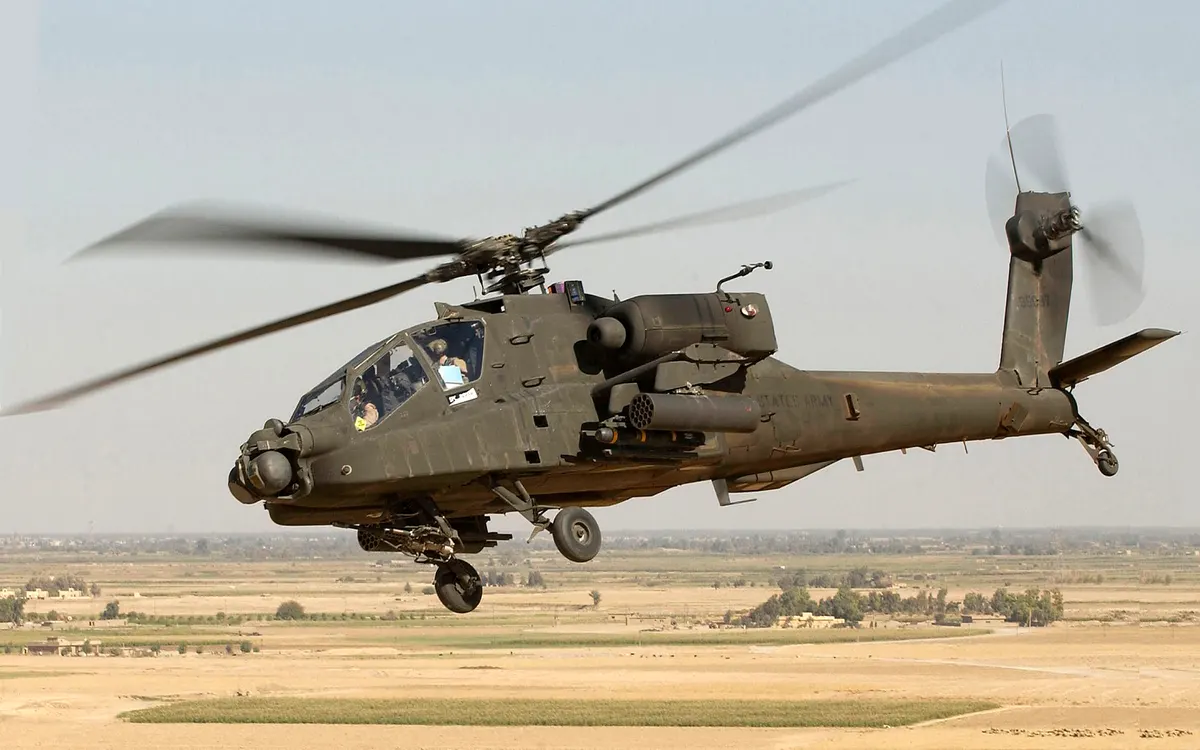
Boeing, official product image, background removed
The AH-64E Apache Guardian, the world’s most widely exported attack helicopter, ranks 18th of 29 dedicated attack-role helicopters in the WeaponSpecs database by published maximum speed: 293 km/h. The older AH-64D Apache Longbow variant ranks 27th of 29 at 265 km/h. The US Army spent roughly a decade trying to field something faster, and in February 2024 it cancelled that program without ever fielding a replacement.
Key takeaways:
- The AH-64E Apache Guardian publishes a 293 km/h top speed, 18th of 29 dedicated attack-role helicopters in the WeaponSpecs database.
- The AH-64D Apache Longbow, still in service with several export operators, publishes 265 km/h, 27th of 29, second-slowest in the ranked field.
- The Bell AH-1Z Viper leads the ranking at 411 km/h, 118 km/h faster than the Apache Guardian.
- The Army’s Future Attack Reconnaissance Aircraft (FARA) program required a cruise speed above 180 knots (about 330 km/h) from its finalists, roughly 65 km/h faster than the Apache’s published 265 km/h cruise speed.
- FARA was cancelled on February 8, 2024, after both finalist prototypes, the Bell 360 Invictus and Sikorsky Raider X, reached flight-test stage but never reached fielded service.
Where does the Apache actually rank?
Attack helicopters carry a reputation for aggressive performance that the published numbers don’t back up, at least not for speed. Of the 47 systems tagged systemType: helicopter in the WeaponSpecs database, 29 carry an “anti-armor” or “close-air-support” application tag, meaning they’re built and fielded specifically for the attack role rather than transport, reconnaissance, or utility work. Sorted by published maximum speed, the Apache Guardian sits in the middle of the pack, not the front.
The dashed line marks 330 km/h (180 knots), the cruise-speed floor the Army required of FARA's prototypes before cancelling the program in February 2024. Sixteen of the twenty-nine attack helicopters in the database already clear that line; the two Apache variants that actually got built and fielded do not.
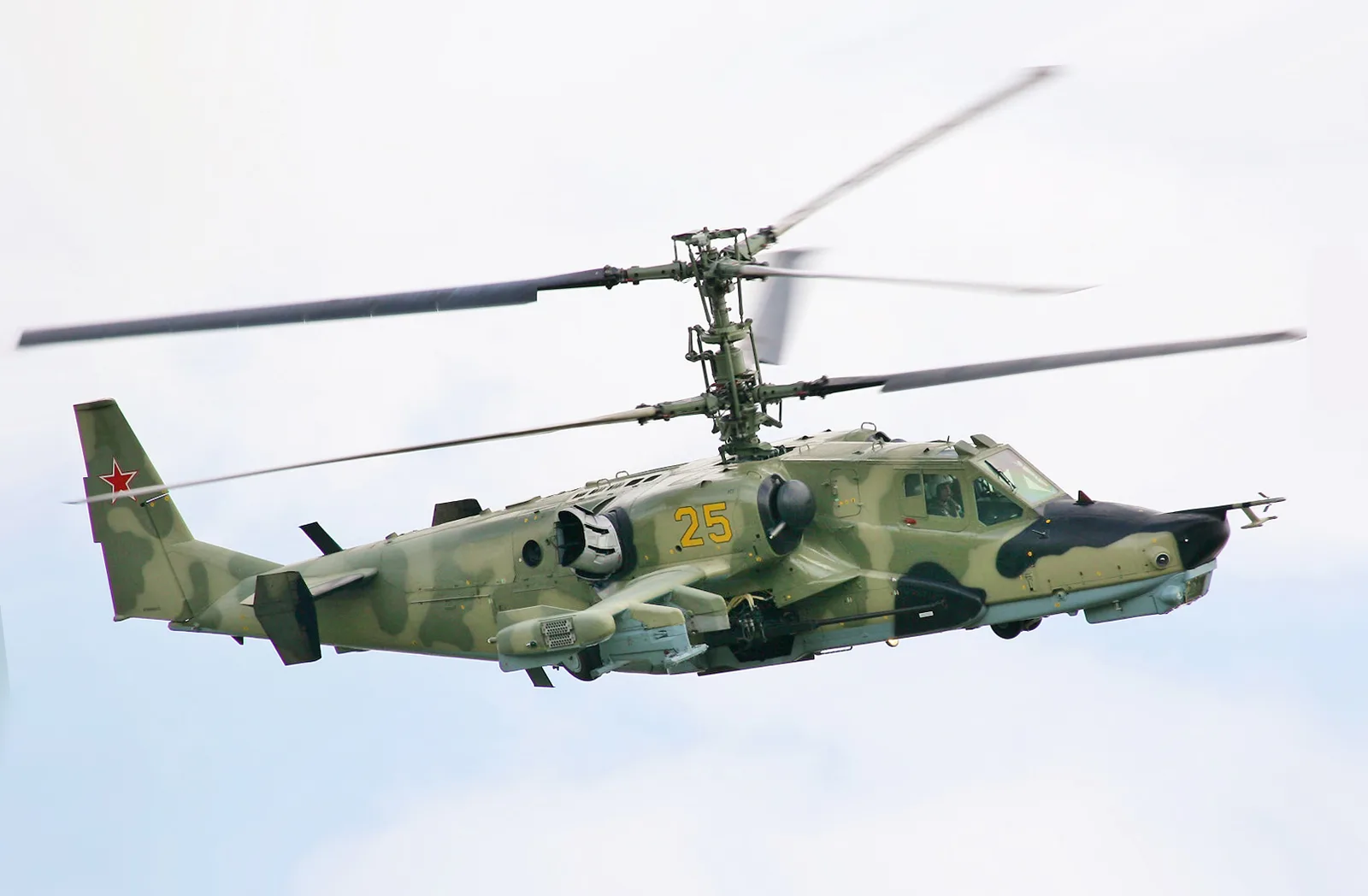
Both American entries near the top of that chart, the Bell AH-1Z Viper (411 km/h) and the older AH-1W Super Cobra (352 km/h), are Marine Corps helicopters, not Army ones, and both are lighter airframes than the Apache. The Russian entries clustered in the 300-335 km/h band (Mi-24 Hind, Mi-24P, Mi-28NM, Ka-50, Mi-35M, Ka-52, Ka-29, all Russian Helicopters products) are manufacturer or state-published figures that have never been independently flight-tested by a Western evaluator, so treat them as claims, not verified performance. The Chinese entries (Z-19, Z-9, Z-10, AVIC products) carry a lighter version of the same caveat: state-affiliated manufacturer figures, unverified but generally less disputed than the Russian numbers.
One number that belongs in this database but not in this ranking: the V-22 Osprey shows a 565 km/h maximum speed, far above every helicopter on this list. It isn’t included because it’s a tiltrotor, cruising in airplane mode on fixed wings once it transitions out of vertical flight, not a true rotorcraft comparison against dedicated attack helicopters. It’s worth knowing it exists in the database so nobody emails in confused about why the “fastest helicopter” isn’t in a helicopter-speed ranking.
Every one of the 47 helicopters in the database, attack-role or not, publishes both a maximum speed and a range figure. That’s unusually complete disclosure for a WeaponSpecs system category, most classes have real gaps in what manufacturers are willing to put on a spec sheet. Speed and range for a helicopter, unlike radar cross-section or unit cost, are numbers everyone seems willing to publish.
What was the Army trying to build instead?
The Apache’s mid-pack ranking wasn’t an accident nobody noticed. The US Army ran the Future Attack Reconnaissance Aircraft (FARA) program for roughly a decade specifically to field something faster, an armed scout helicopter meant to survive in contested airspace partly through speed and agility rather than relying entirely on standoff weapons and low-altitude flying.
| System | Status (2026) | Published/required cruise speed |
|---|---|---|
| AH-64E Apache Guardian | Fielded, in service since 2011 | 265 km/h (143 kt) |
| Bell 360 Invictus (FARA) | Prototype only, program cancelled Feb 2024 | >330 km/h (180 kt) required, never met in a fielded aircraft |
| Sikorsky Raider X (FARA) | Prototype only, program cancelled Feb 2024 | >330 km/h (180 kt) required, never met in a fielded aircraft |
FARA’s program requirement called for its finalists to cruise above 180 knots, roughly 330 km/h (Bell 360 Invictus), about 65 km/h faster than the Apache’s published cruise speed. Two designs made it to the prototype stage chasing that number: the Bell 360 Invictus and the Sikorsky Raider X, a coaxial-rotor compound design that leaned on the same rigid-rotor approach Sikorsky had already flown on its X2 and S-97 Raider demonstrators (Future Attack Reconnaissance Aircraft). Neither aircraft ever flew with its intended production engine, and neither was fielded before the program ended.
Why didn’t the faster helicopter ever get built?
On February 8, 2024, the Army cancelled FARA entirely. The reasoning, as Army leadership explained it, wasn’t that the speed requirement was wrong or unreachable, it was that the mission itself had changed. “We are learning from the battlefield, especially in Ukraine, that aerial reconnaissance has fundamentally changed. Sensors and weapons mounted on a variety of unmanned systems and in space are more ubiquitous, further reaching, and more inexpensive than ever before,” said Gen. Randy George, Army Chief of Staff, in the February 2024 announcement (Breaking Defense, Feb. 8, 2024).
That’s a doctrine argument, not a speed argument. Cheap drones had made the specific job FARA was built for, manned armed reconnaissance flying ahead of ground formations, look like a worse bet than it did when the program launched. A later assessment noted the cancellation left real capability gaps unfilled rather than solved by some other program (National Defense Magazine, April 2026), which is a useful reminder that “we cancelled the expensive thing” and “we solved the problem” are not the same sentence.
The practical result for anyone tracking the spec sheets: no one has built and fielded a helicopter faster than the Apache to replace it. The 265-293 km/h band the Apache family has occupied since the 1980s is still, as of today, the fastest attack helicopter the US Army actually flies.
Does an attack helicopter even need to be fast?
Not by the Apache’s own design logic. Its survivability case has always rested on nap-of-the-earth flying (staying low and using terrain to break line of sight), sensor fusion across the crew, and standoff missiles that let it engage before it’s in range of most air defenses, not on outrunning anything. That’s arguably why decades of Apache variants have sat in the bottom half of this ranking without ever being pulled from service over it: the design philosophy never treated raw airspeed as the thing keeping the aircraft alive.
Whether that philosophy still holds up against the drone-saturated battlefield Gen. George was describing is a separate and much harder question, one FARA’s cancellation didn’t actually answer, it just removed the program that was supposed to test a faster alternative.
Run your own comparison in the Compare tool, which puts the Apache Guardian spec-for-spec against Russia’s Ka-52 Alligator, or browse the full helicopter class page to see where the rest of this ranked field, from the AH-1Z Viper down to the KAI LAH, lands on payload, range, and cost. For a mission-specific read on which airframe actually fits a given requirement, the Advisor weighs these tradeoffs directly. Every system named in this piece sits in the Boeing AH-64E Apache Guardian system profile with its full spec sheet and sourcing attached.
Sources
Systems in this comparison
Every system covered above, with its photo and, where available, a video. Tap a card to open the full spec sheet.
Compare these side by side →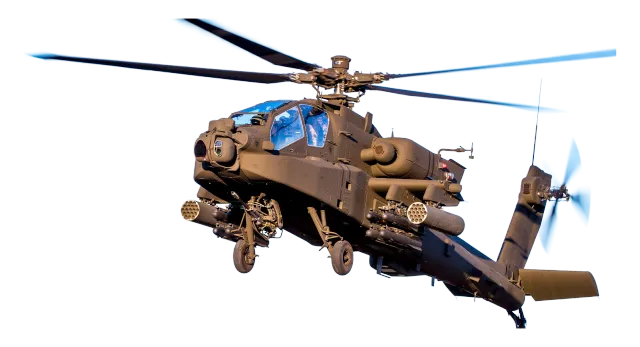
Helicopter
AH-64E Apache Guardian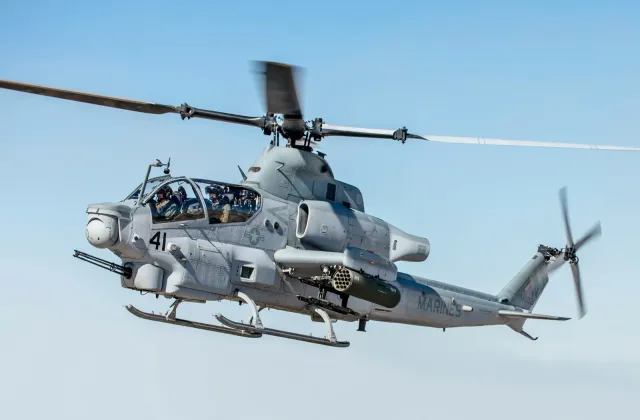
Helicopter
AH-1Z Viper Helicopter
AH-64D Apache Longbow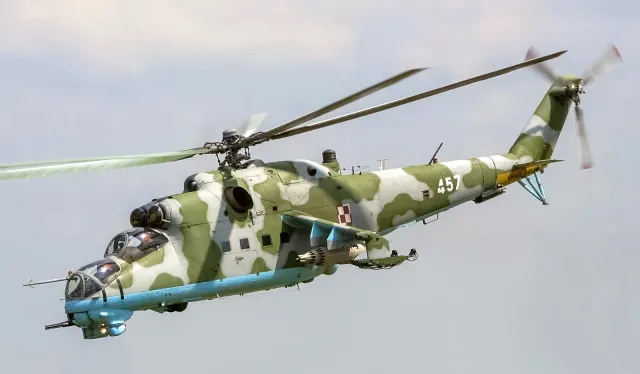
Helicopter
Mi-24 Hind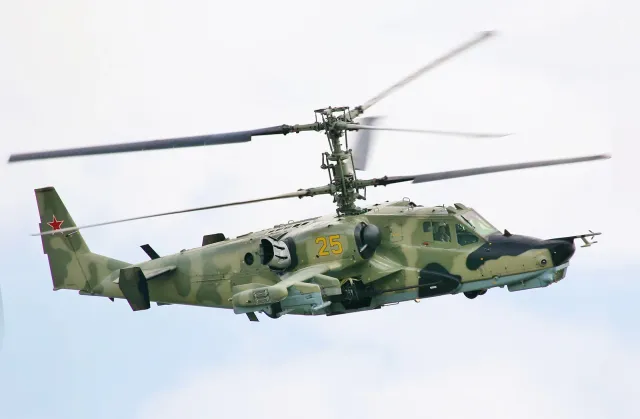
Helicopter
Ka-52 AlligatorFrequently asked questions
Is the AH-64 Apache the fastest attack helicopter in service? +
No. Published top speed data places the AH-64E Apache Guardian 18th of 29 dedicated attack-role helicopters in the WeaponSpecs database at 293 km/h, well behind aircraft like the Bell AH-1Z Viper (411 km/h) and Russia's Mi-24 Hind (335 km/h, manufacturer figure).
Why did the US Army cancel the FARA program? +
Army Chief of Staff Gen. Randy George cited lessons from the Russo-Ukrainian war, arguing that cheap unmanned systems had made the kind of manned armed-reconnaissance mission FARA was designed for less essential than it was when the program began.
How fast was the FARA replacement helicopter supposed to fly? +
The program required its finalist prototypes, the Bell 360 Invictus and Sikorsky Raider X, to cruise above 180 knots (about 330 km/h), well past the Apache's published 265 km/h cruise speed. Neither aircraft was fielded before cancellation.
Is the V-22 Osprey the fastest helicopter? +
By raw published speed, yes (565 km/h), but it's a tiltrotor cruising in airplane mode, not a true helicopter, so it isn't a fair comparison against rotorcraft designs.
Does an attack helicopter need to be fast to survive? +
Not by design intent. The Apache's survivability doctrine leans on nap-of-the-earth flying, sensor fusion, and standoff missiles rather than raw airspeed, which is part of why decades of Apache variants have stayed in the bottom half of the database's speed ranking without being retired for it.
Related reading