Arleigh Burke vs Type 055 vs Sejong the Great
South Korea's Sejong the Great carries 128 VLS cells, more than China's Type 055 or the US Navy's Arleigh Burke, but the number hides three tradeoffs.

Via Wikipedia, Arleigh Burke-class destroyer (shown for identification)
South Korea’s Sejong the Great-class destroyer carries 128 vertical launch system cells, more than any other destroyer in the WeaponSpecs database, ahead of China’s Type 055 at 112 and the US Navy’s workhorse Arleigh Burke-class at 96. It does this on the lightest hull of the three, 10,000 tons full load against the Type 055’s 13,000 tons and the Burke’s 9,700 tons. On a bare cell count, Sejong wins outright. But that single number hides three separate tradeoffs: a launcher architecture split across two incompatible systems, a radar performance claim that no outside analyst has actually confirmed, and a cost picture that has moved since WeaponSpecs’ own database was last updated. Each one changes what “128 cells” actually buys a navy.
Which destroyer actually carries the most missile cells?
The raw numbers aren’t in dispute. What’s worth comparing is how each navy got to its total, and what it cost in tonnage to do it.
| Class | Country | Full-load displacement | VLS cells | Cells / 1,000t | Radar |
|---|---|---|---|---|---|
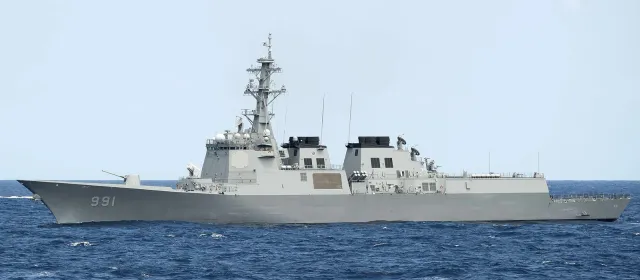
| Sejong the Great | South Korea | 10,000 t | 128 (80 Mk 41 + 48 K-VLS) | 12.8 | AN/SPY-1D(V) (Aegis) |
| Arleigh Burke (Flight III) | United States | 9,700 t | 96 | 9.9 | AN/SPY-1D Aegis |
| Type 055 | China | 13,000 t | 112 | 8.6 | Type 346B dual-band AESA |
Those density figures, 12.8, 9.9, and 8.6 cells per 1,000 tons, were computed and published in an earlier WeaponSpecs piece, warship-missile-density, and are reused verbatim here rather than recalculated. That analysis is the place to go for the full fleet-wide ranking and the methodology behind the ratio; this piece narrows the lens to just these three hulls.
Sejong packs the highest cell density on the lightest hull of the three, while the heavier, higher-count Type 055 rests entirely on unverified Chinese state figures.
*Chinese displacement and cell-count figures are manufacturer/state-sourced claims, not independently verified.
Full spec sheets for each hull are in the WeaponSpecs database: Arleigh Burke-class destroyer, Type 055 destroyer, and Sejong the Great-class destroyer. For a wider ranking of how destroyer tonnage translates into cell count across more hulls, see best-destroyers-2026, which places these same three ships against the Zumwalt and Chungmugong Yi Sun-sin classes.
Why does Sejong the Great need two different launcher systems to get there?
Sejong the Great’s 128 cells are not one magazine. They’re two, built to different standards, loaded with different missile families, and reloaded through different logistics chains.
The first is a conventional 80-cell Mk 41 vertical launch system, split 48 cells forward and 32 aft, the same US-designed launcher family the Arleigh Burke uses. It fires SM-2 Block IIIB surface-to-air missiles, giving Seoul direct compatibility with the US Navy’s missile supply chain and combat doctrine. The second is a separate 48-cell Korean-built K-VLS, a domestically designed launcher carrying the Hyunmoo III land-attack cruise missile and the K-ASROC “Hong Sang-uh” anti-submarine rocket, both sovereign South Korean weapons with no US equivalent loaded into the same cells. Eighty plus 48 is 128, the number in the database, but it’s two separate systems bolted onto one hull, not one launcher scaled up (Naval Technology’s Sejong the Great project page).
The ship also carries 16 SSM-700K Hae Sung anti-ship missiles, 21 RIM-116 RAM point-defense missiles for close-in defense, two triple mounts of K745 Blue Shark lightweight torpedoes, and a 127mm/L62 Mk 45 Mod 4 gun capable of 16 to 20 rounds a minute out to 24 kilometers.
That split-launcher architecture is a genuine engineering tradeoff, not a design accident. Running Mk 41 alongside K-VLS buys South Korea two things at once: interoperability with US-standard missiles and doctrine through the Mk 41 side, and a fully sovereign strike capability through the K-VLS side that doesn’t depend on Washington’s export approval for a weapon like Hyunmoo III. The cost is maintaining two separate magazine families, two reload logistics chains, and two sets of maintenance and munitions-handling procedures on a single hull, where a Burke or a Type 055 only has to sustain one. A higher cell count on a spec sheet doesn’t show that complexity. It’s real, and it’s the price Seoul pays for not simply buying an all-American or all-Chinese magazine.
What does the Type 055’s radar actually see?
The Type 055 mounts the Type 346B, a dual-band active electronically scanned array with four S-band panels for long-range search and four smaller X-band panels for engagement-quality tracking, a genuine technical step up from the single-band Type 346A carried on the older Type 052D destroyer.
Here’s what independent analysis actually supports and what it doesn’t. Janes’ own OSINT review of the system found that the Type 346B’s S-band panels are “assessed to be around 40 percent larger” than the Type 052D’s Type 346A array, which implies greater transmit power and sensitivity (Janes, “More details emerge about detection capabilities of Type 055 destroyer’s radar”). That is the extent of the confirmed finding. It is not a confirmed detection range in kilometers. No independently verified range figure exists for the Type 346B, despite specific range numbers that circulate in open-source discussion online. Treat any such figure as an unverified claim, not a spec.
The same caution applies to the Type 055’s weapons load: the HHQ-9B long-range surface-to-air missile, the YJ-18 anti-ship missile, the CJ-10 land-attack cruise missile, and the Yu-8 anti-submarine rocket. All four are Chinese state and manufacturer-sourced figures, consistent with how WeaponSpecs treats every Russian, Chinese, and Iranian state-linked spec elsewhere on the site, including in warship-missile-density and su-57-vs-f-35-vs-j-20: published, not independently verified.
What does each destroyer actually cost?
Cost transparency splits these three ships almost as cleanly as their launcher architecture does.
| Class | Disclosed unit cost | Source status |
|---|---|---|
| Sejong the Great | ~$923 million | Disclosed, South Korean program figure |
| Arleigh Burke (Flight III) | ~$2.1B historical budget estimate, now running close to $2.5B; 30-year plan projects $2.7B average | Disclosed and publicly tracked, rising |
| Type 055 | Undisclosed | ”Unit cost not publicly disclosed” |
Sejong the Great is the only one of the three with a clean, fully disclosed unit cost, around $923 million. The Arleigh Burke Flight III picture is messier, in a way worth stating plainly rather than smoothing over. The Navy’s own historical budget estimate put the Flight III around $2.1 billion per hull. Current reporting, per the Congressional Budget Office, has that figure running close to $2.5 billion per hull, with delivery delays across the class ranging from six to 25 months, and the Navy’s own 30-year shipbuilding plan now projects a $2.7 billion average across the remaining 23 Flight IIIs still to be built (TWZ, “Cost Of Navy’s Newest Flight III Arleigh Burke Destroyers Is Ballooning”; Naval Technology, “US Navy discloses cost of construction of Flight III Arleigh Burke destroyers”).
Here’s the part WeaponSpecs should own rather than quietly fix: our own database currently carries an approximate $1.9 billion figure for the Arleigh Burke Flight III. That number is now dated against the reporting above, and it understates where the program actually sits. It’s the same kind of drift our published-range-vs-reality piece documented for range specs, brochure numbers that were accurate when recorded and stale by the time anyone reads them, except here it’s a cost figure, not a range figure, showing the same decay. The fix is the same too: flag it, cite the newer source, and correct the record rather than let an old number keep circulating as current.
China has never disclosed a Type 055 unit cost at all. That’s not a data gap WeaponSpecs failed to fill; it’s the same price-transparency gap the site has documented across Chinese, Russian, and Iranian systems generally. A program that won’t publish what the ship costs is rarely one that will let outside analysts confirm its radar range either, and the Type 055 sits at the undisclosed end of both columns.
Which magazine actually has a combat record?
Cell count, launcher architecture, and cost all matter to a buyer, but none of them answer whether a system has actually worked under fire. Here the comparison isn’t close.
Only the Arleigh Burke class has a confirmed combat-employment record among these three. Starting October 19, 2023, Arleigh Burke-class destroyers used SM-2 and SM-6 missiles to intercept dozens of Houthi missiles and drones fired from Yemen into the Red Sea and Gulf of Aden. USS Carney’s opening engagement that day downed four cruise missiles and 15 drones in a single action. On December 26, 2023, USS Gravely used an SM-6 to shoot down anti-ship ballistic missiles, the first confirmed combat intercept of an anti-ship ballistic missile by any Arleigh Burke-class ship, and by most public accounting the first such intercept by any warship (TWZ, “Navy Has Fired Around 100 Standard-Series Missiles At Houthi Drones, Missiles: Report”).
Neither of the other two has anything comparable. Sejong the Great’s K-VLS-launched weapons, the Hyunmoo III cruise missile and the K-ASROC rocket, have no confirmed combat engagement. The Type 055’s magazine, HHQ-9B, YJ-18, CJ-10, and Yu-8 alike, has never been fired in combat either. Both remain fully specified on paper and entirely untested in the one environment that actually validates a warship’s systems. The same claimed-versus-audited gap shows up outside warships too: our su-57-vs-f-35-vs-j-20 comparison found the identical pattern in fifth-generation fighter procurement, one combat-tested, exported, and audited program standing next to two with brochure numbers and no comparable outside scrutiny.
Run your own side-by-side of these three hulls in the Compare tool, browse the rest of the fleet in the warship category, or see more claim-skeptical, original-data breakdowns like this one in the Articles archive.
Systems in this comparison
Every system covered above, with its photo and, where available, a video. Tap a card to open the full spec sheet.
Compare these side by side →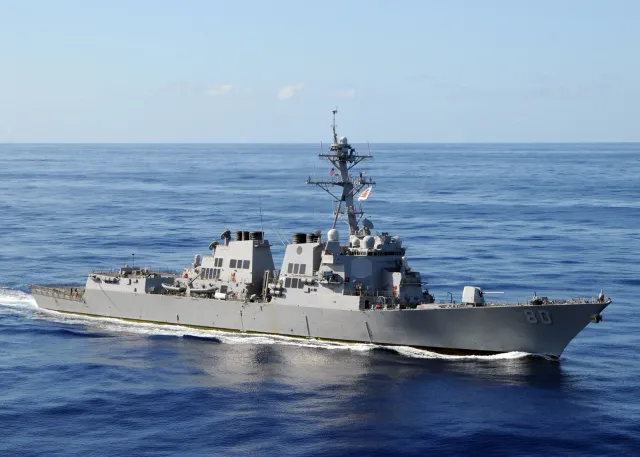
Warship
Arleigh Burke-class Destroyer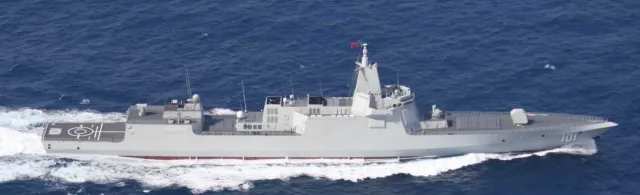
Frequently asked questions
Which destroyer has the most VLS cells: Arleigh Burke, Type 055, or Sejong the Great? +
South Korea's Sejong the Great-class leads at 128 VLS cells, ahead of China's Type 055 at 112 and the US Navy's Arleigh Burke-class at 96. Sejong is also the lightest of the three at 10,000 tons full load, versus Type 055's 13,000 tons and Burke's 9,700 tons.
Why does Sejong the Great need two different missile launcher systems? +
Sejong the Great splits its 128 cells across an 80-cell Mk 41 system, 48 forward and 32 aft, for US-standard SM-2 Block IIIB missiles, plus a separate 48-cell Korean K-VLS for domestically built weapons like the Hyunmoo III land-attack cruise missile. That gives Seoul both US interoperability and a sovereign strike capability, at the cost of maintaining two separate launcher logistics chains on one hull.
How far can the Type 055's radar actually detect targets? +
No independently verified detection-range figure exists. Janes' OSINT analysis of the Type 346B dual-band AESA system found only that its four S-band panels are assessed to be about 40 percent larger than the Type 052D's Type 346A array, implying greater power and sensitivity, not a confirmed range in kilometers. Any specific detection-range number circulating online is a claim, not a verified figure.
How much does each destroyer actually cost? +
South Korea's Sejong the Great is the only one of the three with fully disclosed pricing, at roughly $923 million. The Arleigh Burke Flight III was once budgeted around $2.1 billion per hull but is now running close to $2.5 billion, with the Navy's 30-year shipbuilding plan projecting a $2.7 billion average for the remaining Flight IIIs. China has never disclosed a Type 055 unit cost.
Which of the three has an actual combat record? +
Only the Arleigh Burke class. Its SM-2 and SM-6 missiles intercepted dozens of Houthi missiles and drones in the Red Sea from October 2023 onward, including the first-ever combat intercept of an anti-ship ballistic missile, by USS Gravely in December 2023. Neither Sejong the Great's K-VLS-launched weapons nor the Type 055's magazine has a confirmed combat engagement to date.
Related reading


