China fires JL-3 SLBM in Pacific, breaking 2-year silence
PLA Navy's first publicly acknowledged SLBM test since 2024 demonstrates intercontinental reach; Japan, Australia and New Zealand were notified in advance, then protested.

Via Wikipedia, Type 094 submarine (shown for identification). Shows the Type 094 Jin-class SSBN, the platform class used in this test.
By the numbers

Infographic: WeaponSpecs News Desk
China’s navy fired a submarine-launched ballistic missile into the Pacific on the morning of July 6, the PLA Navy’s first publicly acknowledged strategic SLBM test in roughly two years, according to Army Recognition. The missile, a JL-3 fitted with a dummy warhead, was launched from a submerged Type 094 Jin-class SSBN at approximately 12:01 local time and impacted an international maritime zone after advance notice to regional governments, per CNN. Japan, Australia and New Zealand confirmed receiving that notice, then protested the test as destabilizing.
The test matters less for the single missile fired than for what it demonstrates end to end: that China can take a boat to sea, submerge, launch a live SLBM, and have it fly a realistic intercontinental-range profile into an ocean impact zone, the full sequence that constitutes a credible maritime second-strike capability. A land-based ICBM silo test shows a missile works. A submarine launch shows the boat, the crew, the missile and the command-and-control chain linking a deployed, hidden submarine back to Beijing all work together, which is the harder and more strategically significant thing to prove.
What is the JL-3, and why does the launch platform matter?
The JL-3 is China’s third-generation, solid-fuel submarine-launched ballistic missile, first associated with active Type 094 deployment around 2022 and intended to eventually equip the next-generation Type 096 SSBN, according to WeaponSpecs’ own system database. Chinese state and state-adjacent sources put its range at roughly 10,000 to 12,000 kilometers with an estimated three-warhead MIRV payload, a figure that would put the continental United States within reach from Chinese coastal or near-shore waters rather than requiring the submarine to sail deep into the Pacific first. That range figure, along with the warhead count, is a Chinese state claim and a Western intelligence estimate rather than independently verified data, and is presented here as such.
The Type 094 Jin-class submarine that carried the missile is China’s second-generation nuclear-powered ballistic-missile submarine, a roughly 11,000-ton boat with 12 vertical launch cells, according to WeaponSpecs’ system database, six of which have entered service since the mid-2000s. It replaced the single Type 092 Xia as the PLA Navy’s operational strategic-deterrent platform and forms the sea-based leg of what China describes as its nuclear triad, alongside land-based ICBMs and air-delivered weapons. Until this test, the Jin-class’s deterrent value rested largely on the assumption that it could do this; July 6 is the first time China has let the world watch it happen in the open ocean rather than assert it as a state claim.
How does this compare to the last Pacific missile test?
The last comparable event was in July 2024, when China fired a land-based intercontinental ballistic missile into the Pacific, its first such test since 1980, a 44-year gap that itself drew significant regional attention at the time. Two years later, the July 6 SLBM test extends that same signaling logic from land-based systems to the sea-based leg of the arsenal specifically. Where the 2024 test told the region “our silos work,” this one tells the region “our submarines, and the missiles they carry, work too,” a materially different and arguably more consequential claim because submarines are mobile and difficult to track, unlike a fixed silo whose location is generally known in advance.
Two of these three ranges, the JL-3's and the Bulava's, are unverified state claims, yet both land in the same broad tier as the independently credited Trident D5.
For scale, the U.S. Navy’s Trident II D5, carried aboard Ohio-class SSBNs, is credited with roughly 11,300 kilometers of range, and Russia’s Bulava, aboard Borei-class boats, with roughly 9,000 kilometers, itself a Russian state figure and not independently verified. All three sit in the same broad intercontinental-range tier; the meaningful difference between them is less raw range than fleet size, patrol tempo and warhead loadout, none of which this single test resolves.
Why did Japan, Australia and New Zealand protest despite getting advance notice?
Japan’s objection centers on the missile’s trajectory, which reportedly passed near Japanese airspace and its exclusion zone, a proximity concern distinct from any question about the test’s legality, according to The Japan Times. Australia and New Zealand grounded their protests in the 1986 Treaty of Rarotonga, which established the South Pacific Nuclear Free Zone, arguing that a nuclear-capable weapon test conducted in or near the region runs against the treaty’s underlying purpose even when the specific impact point falls in international waters outside the treaty’s strict legal boundary, per NBC News.
That combination, advance notice paired with a formal protest anyway, is a familiar pattern in strategic-missile diplomacy: notification satisfies a basic safety and transparency norm meant to avoid the test being mistaken for an attack, but it does not by itself resolve the underlying dispute over whether the test itself is destabilizing. China’s 2024 ICBM test followed a similar shape, notice given, protests lodged anyway.
What to watch next
The test likely accelerates two things worth tracking. First, whether China moves toward more frequent, less exceptional SLBM testing now that it has broken a roughly two-year silence, which would itself be a signal about how confident Beijing is in the JL-3’s reliability. Second, whether Japan, Australia or New Zealand respond with any concrete policy shift, additional missile-defense investment, diplomatic protest at a multilateral forum, or simply a one-off statement that fades within the news cycle, will indicate how seriously regional governments weigh a single test versus a sustained pattern.
Sources
- China Conducts Submarine-Launched Ballistic Missile Test in the Pacific — Army Recognition, Jul 6, 2026
- China tests submarine-launched ballistic missile, rattling regional neighbors — CNN, Jul 6, 2026
- China conducts rare long-range missile test, rattling U.S. allies — NBC News, Jul 6, 2026
- China's submarine missile test in Pacific draws protests — The Japan Times, Jul 6, 2026
Systems mentioned
Every system named in this story, with its photo and, where available, a video. Tap a card to open the full spec sheet.
Compare these side by side →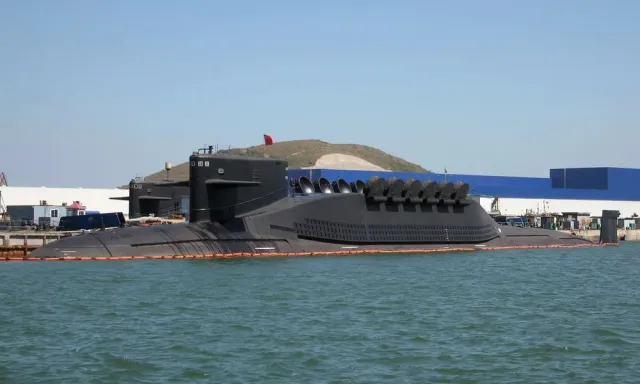
Submarine
Type 094 JinFrequently asked questions
What is the JL-3 missile? +
The JL-3 is China's third-generation, solid-fuel submarine-launched ballistic missile, estimated by Western analysts at a 10,000 to 12,000 kilometer range with an estimated three-warhead MIRV payload. It arms the Type 094 Jin-class SSBN and is intended for the future Type 096. These figures are Chinese state or state-adjacent claims and estimates, not independently verified.
Why are Japan, Australia and New Zealand upset about advance notice of a test? +
Japan raised concern that the missile's trajectory passed near its airspace and economic zone. Australia and New Zealand cited the 1986 Treaty of Rarotonga, which established the South Pacific Nuclear Free Zone, arguing a nuclear-capable missile test in the region undercuts the treaty's spirit even with warning given.
Did China give advance notice of the test? +
Yes. Japanese, Australian and New Zealand defense ministries independently confirmed receiving advance notification through official channels before the missile was fired, which several of them then followed with formal protests calling the test destabilizing.
How often does China test its submarine-launched ballistic missiles in the Pacific? +
This is the first publicly acknowledged strategic SLBM test China has conducted into the Pacific since 2024, an 18 to 24 month gap. The closest comparable event was a land-based ICBM test into the Pacific in July 2024, itself China's first since 1980.
More news


