India Approves $5.46B Procurement Led by Counter-Drone System
India's Defence Acquisition Council cleared roughly 52,000 crore rupees in indigenous weapons buys, headlined by the Akash Tarang counter-drone system and layered air defense missiles.

Via Wikipedia, Akash (missile) (shown for identification)
By the numbers

Infographic: WeaponSpecs News Desk
India’s Defence Ministry announced on July 3 that its Defence Acquisition Council, chaired by Defence Minister Rajnath Singh, has cleared capital acquisition proposals worth approximately 52,000 crore rupees, roughly $5.46 billion, for a package of indigenous weapons systems headlined by Akash Tarang, the country’s first dedicated counter-drone platform, according to The Week’s reporting on the DAC session. The clearance covers six categories of hardware in total, but the counter-drone system is the genuine departure: India has fielded surface-to-air missiles for decades, yet has not previously had a purpose-built system for defeating small unmanned aircraft at scale.
What Akash Tarang actually does
Akash Tarang works by electronic warfare rather than kinetic intercept. It uses radio-frequency detection to locate a drone, then jams either its GPS navigation link or its control-signal link back to an operator, severing the aircraft from guidance rather than destroying it in flight, per Army Technology’s coverage of the program. That distinction matters operationally: a kinetic interceptor consumes a missile per engagement and risks debris falling on friendly territory, while a jamming-based system can in principle disable multiple drones in sequence within its effective range, provided the target drones rely on radio-frequency links rather than fully autonomous, pre-programmed navigation immune to jamming.
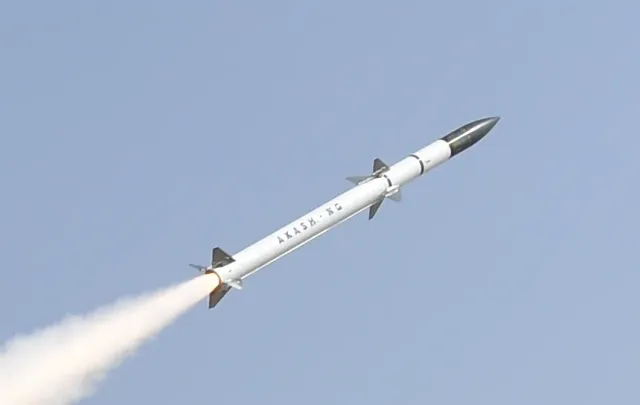
The system is being developed by India’s Defence Research and Development Organisation together with Bharat Electronics Limited and a network of private micro, small and medium enterprises, and it is built as a modular architecture, deployable on a vehicle, at a fixed site, or in a man-portable configuration depending on the threat environment. It is worth being precise about naming here: Akash Tarang is a distinct new counter-UAS platform, not a variant of the existing Akash surface-to-air missile, which has been in Indian service since 2014 with an engagement range of roughly 30 kilometers against manned aircraft and, more recently, larger unmanned threats. India has also continued developing that base system into the extended-range Akash-NG variant, so the DAC’s approval effectively expands India’s layered air defense on two separate tracks at once: a modernized kinetic SAM family, and now a dedicated electronic counter-drone layer sitting alongside it.
The rest of the package
Beyond Akash Tarang, the DAC clearance includes the indigenous Man-Portable Anti-Tank Guided Missile, intended to give infantry units a lighter, shoulder-fired anti-armor option than vehicle-mounted systems allow. It also covers the Medium-Range Surface-to-Air Missile, MRSAM, which extends India’s layered air defense architecture beyond the shorter-range Akash family, and a Very Short Range Air Defence System, or V-SHORADS, aimed at multi-spectral, close-in point defense against low-altitude threats. Rounding out the approval are an Active Protection System for tanks, designed to intercept incoming anti-tank projectiles before they reach the vehicle’s armor, and a jet-powered kamikaze drone system, according to OverT Defense’s reporting on the session.
Taken together, the six categories read less like a single weapons buy and more like a coordinated attempt to close specific capability gaps across several branches simultaneously: air defense against drones and aircraft, anti-armor at the infantry level, and armored-vehicle survivability. That breadth is consistent with a modernization push India has sustained at roughly 2% of GDP in defense spending, set against continuing regional tension with Pakistan and China along contested borders.
Why the drone-defense emphasis, and why now
Indian defense planners have pointed directly to drone-swarm tactics observed in the war in Ukraine as the catalyst for prioritizing Akash Tarang within this package, per The Week’s sourcing on the DAC’s rationale. Cheap, expendable unmanned aircraft, often launched in numbers rather than as single high-value assets, have proven difficult for air defense architectures designed around manned aircraft and ballistic missiles to counter economically: firing a multimillion-dollar interceptor at a low-cost drone is a poor cost exchange, which is precisely the gap an RF-jamming system like Akash Tarang is built to close.
All of this is entirely indigenous procurement, developed and built within India rather than imported, which fits a broader “Atmanirbhar Bharat,” or self-reliant India, defense policy that has run for several years now. The approval does not by itself confirm production timelines, unit quantities per system, or which specific units will receive Akash Tarang first; the DAC clearance is the acquisition-council approval stage, which precedes contract signing and delivery schedules.
Sources
- Akash Tarang, EW system, anti-tank guided missiles and more: Why DAC's 52,000 crore push is a major deal for armed forces — The Week, Jul 3, 2026
- Indian Defence Acquisition Council approves capital acquisition proposals worth $5.5 billion — OverT Defense, Jul 7, 2026
- India DAC clears defence procurement package — Army Technology, Jul 6, 2026
Systems mentioned
Every system named in this story, with its photo and, where available, a video. Tap a card to open the full spec sheet.
Compare these side by side →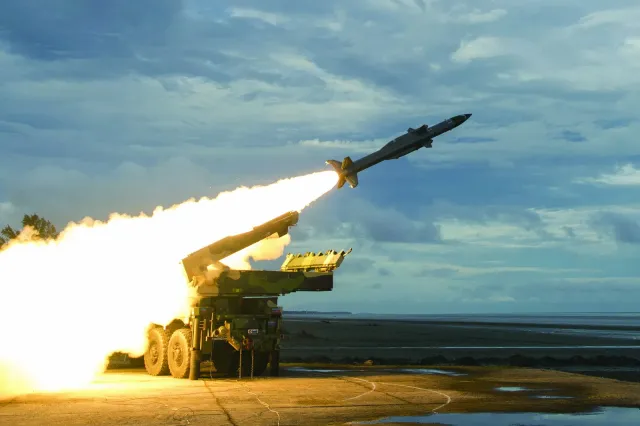
Frequently asked questions
What is Akash Tarang and how is it different from the existing Akash missile? +
Akash Tarang is a new, separate counter-unmanned-aerial-system platform, not a missile upgrade to the in-service Akash surface-to-air missile. It uses electronic warfare, radio-frequency detection paired with GPS and control-signal jamming, to sever a hostile drone's link to its operator rather than shooting it down kinetically. The existing Akash is a roughly 30-kilometer-range medium-altitude SAM that has been in Indian service since 2014.
How much did India's Defence Acquisition Council approve, and for what systems? +
The DAC, chaired by Defence Minister Rajnath Singh, cleared capital acquisition proposals worth about 52,000 crore rupees, roughly $5.46 billion, on July 3, 2026. The package spans Akash Tarang counter-drone systems, the Man-Portable Anti-Tank Guided Missile, the Medium-Range Surface-to-Air Missile, a Very Short Range Air Defence System, an Active Protection System for tanks, and a jet-based loitering munition.
Why is India prioritizing counter-drone systems now? +
Indian defense planners have pointed to drone-swarm tactics observed in Ukraine as a driver for fielding a dedicated counter-UAS capability, rather than relying on air defense systems designed primarily against manned aircraft and ballistic threats. The timing also sits inside India's continuing modernization push, budgeted around 2% of GDP, amid persistent tension with Pakistan and China.
More news


