UK Commits £298B to Defense, Doubling Munitions Output by Decade
Britain announces major military overhaul with £15B new funding, targeting 16-fold shell production and hypersonic missiles by the 2030s.

Via Wikipedia, Eurofighter Typhoon (shown for identification). The Eurofighter Typhoon is operated by the Royal Air Force and represents the kind of platform the Defence Investment Plan's funding is intended to sustain.
By the numbers

Infographic: WeaponSpecs News Desk
The UK government published its Defence Investment Plan on June 30, committing £298 billion over four years and adding £15 billion in new funding, with £11 billion of that earmarked specifically for munitions production, according to the Ministry of Defence’s own announcement. The centerpiece industrial commitment is a 16-fold increase in 155mm artillery shell output at a new BAE Systems facility in South Wales, timed to come online by summer 2026, a scale of expansion that goes well beyond incremental restocking and reflects how badly Western munitions stockpiles were depleted by the pace of consumption in Ukraine.
The plan raises UK annual defense spending from roughly £54 billion under the previous government to approximately £80 billion by 2029, according to Naval Today’s reporting on the announcement. That is close to a 50% real increase over four years, arriving one week ahead of the NATO Ankara summit, where allies are collectively pushing toward a 5%-of-GDP target by 2035. The timing is not incidental: London appears to be positioning its own announcement as evidence it is already moving in the direction NATO is asking of every member, rather than waiting to be pressed on it in Turkey.
Why munitions specifically, and why 16 times the baseline?
The war in Ukraine has repeatedly demonstrated that modern high-intensity conflict consumes artillery shells, missiles and interceptors at rates that outstrip peacetime industrial capacity built for decades of lower-tempo operations. The UK’s response is a new explosive-filling facility at BAE Systems’ Glascoed site in South Wales, using continuous-flow processing technology rather than the older batch-based methods that dominate legacy Western shell-filling plants. Continuous-flow processing matters here for a specific technical reason: it reduces reliance on nitrocellulose and nitroglycerin, both of which have become scarce, contested inputs as Western nations and Ukraine alike have scaled up shell demand simultaneously, according to the Defence Investment Plan itself.
That single facility is meant to be operational by summer 2026, but the plan goes further, committing to six new energetics factories built out through 2030 using the same continuous-flow approach. The logic is straightforward: a single 16-times facility fixes an immediate capacity bottleneck, but six factories built on the same process represent an attempt to permanently restructure how the UK produces the explosive fill for its munitions, rather than treating the current shortage as a one-off surge to be built past.
What is the rest of the £298 billion buying?
Beyond munitions, the plan allocates £190 million toward joint procurement of Lockheed Martin’s Precision Strike Missile, or PrSM, alongside the United States and Australia, extending the British Army’s ground-launched strike range, per Defence Industry Europe. Joining an existing US-Australia procurement track rather than developing a standalone British system is a deliberate cost and schedule choice: it lets the UK field a long-range ground-strike capability years faster than a national program would allow, at the cost of dependence on a shared supply chain.
The plan also commits £1.4 billion to Stratus, a joint UK-France-Italy programme targeting a long-range missile exceeding 2,000 kilometers of range by the 2030s, alongside a separate UK-Germany Deep Precision Strike effort aiming at a similar range class. Both programs sit in the same strategic category as weapons like the Meteor beyond-visual-range air-to-air missile and the SPEAR 3 stand-off strike weapon already in UK service, extending the country’s reach well beyond current inventory. Naval air defense also features in the plan through continued investment in the Sea Viper Aster family fielded on Royal Navy destroyers, while the air fleet spans both the Eurofighter Typhoon and the F-35B Lightning II short take-off variant flown from British carriers, with precision munitions like Paveway IV rounding out the strike inventory those aircraft carry.
The plan additionally sets out a £50 billion export financing facility intended to help UK defense manufacturers win overseas contracts, more than £5 billion for drones and autonomous systems, and projects roughly 60,000 jobs created across the defense-industrial base by the decade’s end, according to Naval Today. The jobs figure and the export facility both point toward a second objective sitting alongside pure military readiness: using the spending increase to rebuild a defense-industrial base that atrophied over decades of post-Cold War drawdown, so that future surges in demand do not require years of facility construction before output can respond.
How does this fit the wider European pattern?
The UK’s announcement lands in the same week as the NATO summit in Ankara, where allies collectively pledged €70 billion a year in aid to Ukraine and reaffirmed the 5%-of-GDP-by-2035 target. Britain’s move from roughly £54 billion to £80 billion annually by 2029 is one of the more concrete national translations of that alliance-wide direction into an actual funded, dated industrial plan, rather than a budget aspiration. Whether other large European economies, Germany, France, Italy and Poland among them, produce equivalently detailed and dated industrial commitments of their own will determine whether the alliance-wide 5% target is a real trajectory or a restated aspiration.
The £80 billion endpoint sits three years out and is easy to promise, the nearer and harder test is the 16-fold Glascoed shell facility due by summer 2026, months away rather than years.
Sources
- £15 billion new funding boost to transform Armed Forces and keep the UK safe — UK Ministry of Defence, GOV.UK, Jun 30, 2026
- UK scaling up for a new kind of warfare with $298 billion poured into defense — Naval Today, Jul 2, 2026
- The Defence Investment Plan — UK Ministry of Defence, Jun 30, 2026
Systems mentioned
Every system named in this story, with its photo and, where available, a video. Tap a card to open the full spec sheet.
Compare these side by side →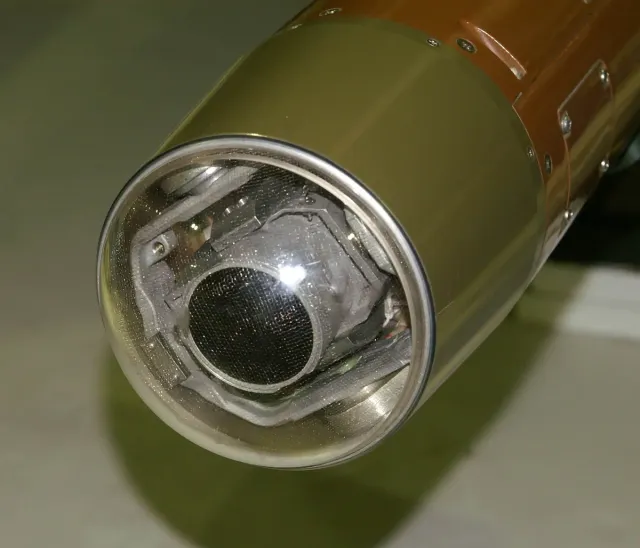
Munitions
Paveway IV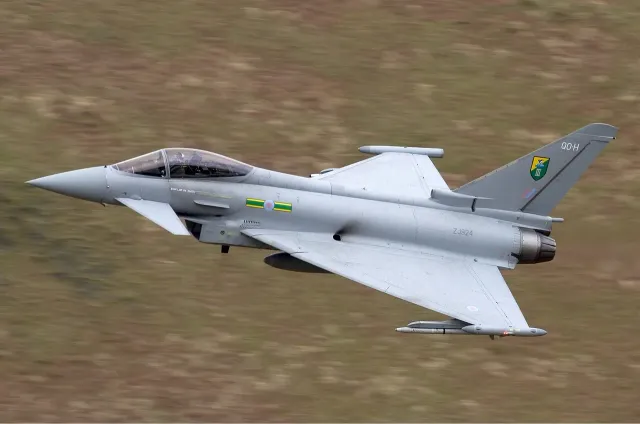
Fighter aircraft
Eurofighter Typhoon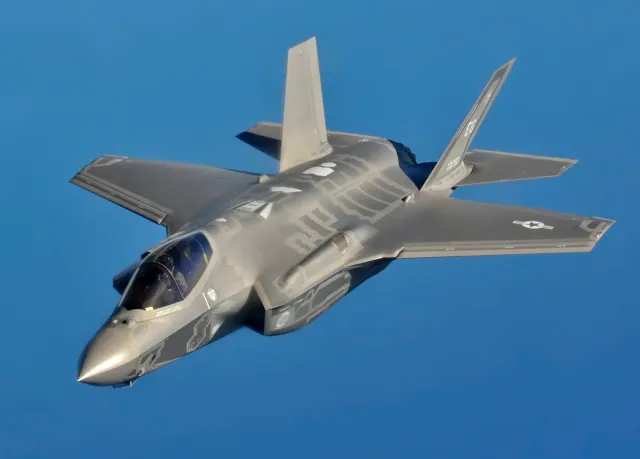
Fighter aircraft
F-35B Lightning II
Missile
Sea Viper (Aster 30)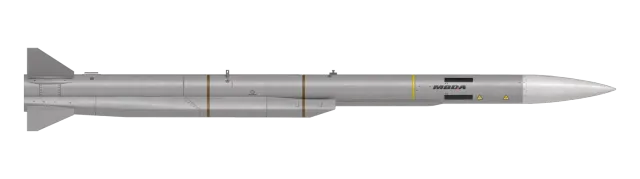

Frequently asked questions
Why is the UK tripling its munitions and defense spending over four years? +
The plan responds to NATO's expectation of 5% of GDP in defense spending by 2035, sustained Russian military activity, and lessons from Ukraine, where munitions consumption rates far exceeded what most Western stockpiles were built to sustain.
What is the 16-fold increase in 155mm shell production? +
BAE Systems is building a new continuous-flow explosive-filling facility at Glascoed in South Wales that raises output of 155mm artillery shells to 16 times the prior baseline, expected to be operational by summer 2026.
How does the UK's Precision Strike Missile program work? +
The UK is joining a joint procurement with the United States and Australia for Lockheed Martin's Precision Strike Missile. A £190 million allocation extends the British Army's ground-launched long-range strike range.
What long-range missile programs is the UK developing? +
The £1.4 billion Stratus programme, a joint UK-France-Italy effort targeting a missile with over 2,000 kilometers of range by the 2030s, plus a separate UK-Germany Deep Precision Strike initiative aiming at a similar range class.
More news


