Documents
 United Kingdom
 MBDA
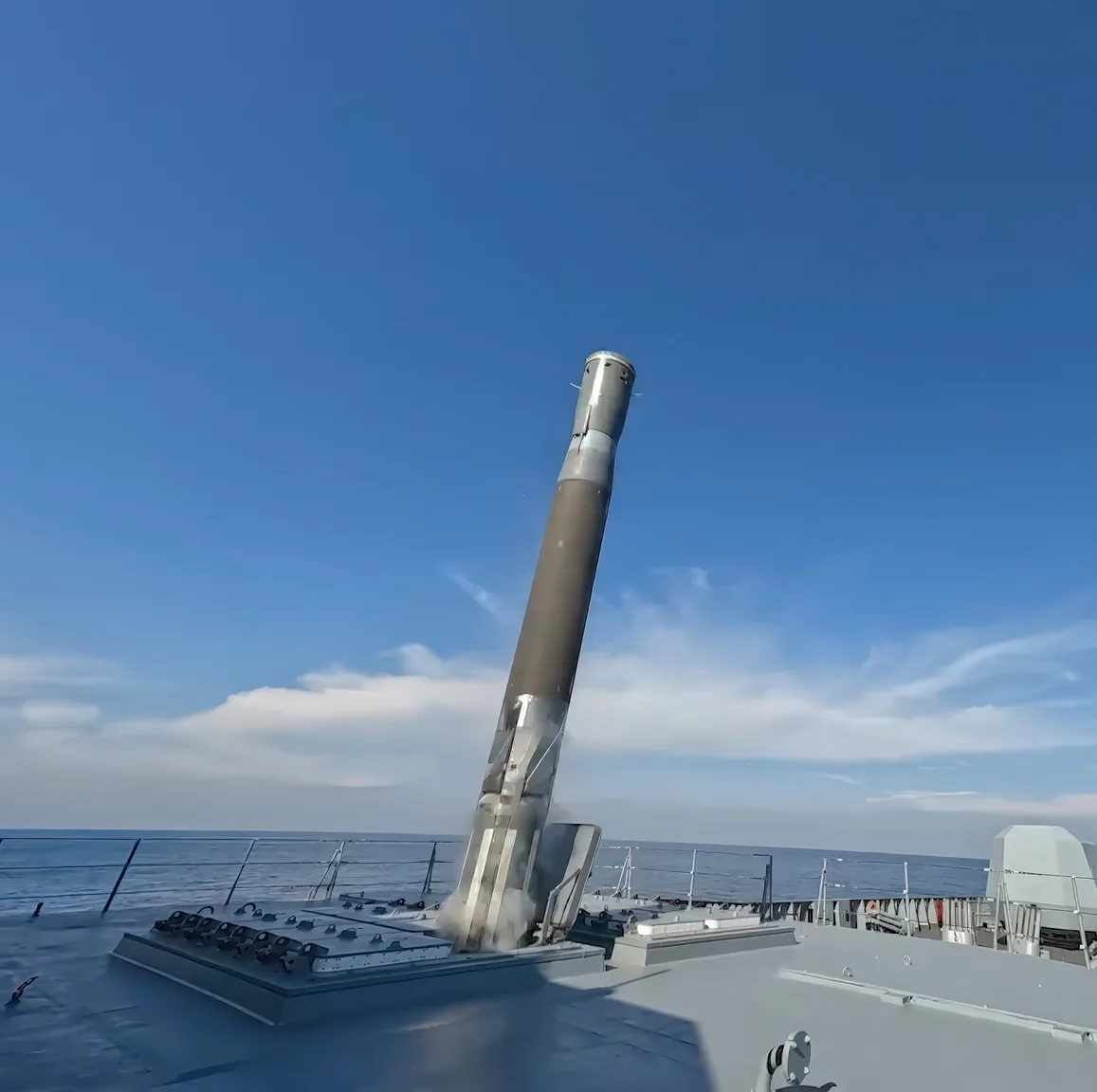
Sea Viper (Aster 30)
Royal Navy designation for the Principal Anti-Air Missile System (PAAMS) built around the Aster 15 and Aster 30 missiles, providing the Type 45 destroyer's primary air-defense armament against aircraft, anti-ship missiles and ballistic threats. Aster missiles use a unique PIF-PAF direct-thrust vector control system for high maneuverability.
In service since 2009 · 5 operator countries
Compiled from public sources ·primary reference ↗ ·last verified 2026-07-02
120
km range
4.5
Mach
15
kg warhead
Procurement snapshot
Availability & export
UK export-licensed
Subject to UK SPIRE licensing (ECJU); generally available to allied states.
Channel: Government-to-government or direct
Fielded & proven
Established · 5 operators
In service since 2009. Status: active.
Lifecycle cost (est.)
No public unit price to model from. Why so few systems publish one →
Interoperability
No standardised NATO calibre / datalink detected in public specs.
Derived guidance from public data, export regime by country of origin, lifecycle from the GAO ~30% acquisition rule. Verify eligibility, pricing and offsets with the manufacturer and your acquisition authority.
Full specifications
Performance
Speed, range, altitude and engagement capability.
| Max speed (Mach) Maximum speed as a multiple of the speed of sound. Mach 2+ is typical for air-superiority fighters. | 4.5 Mach |
|---|---|
| Range Maximum distance: ferry range for aircraft, operational range for vehicles, maximum engagement distance for missiles. Higher means more standoff or persistence. | 120 km |
Firepower
Armament, payload and guidance.
| Warhead Warhead mass. Heavier generally means larger effect radius, at the cost of range. | 15 kg |
|---|---|
| Warhead type Blast-fragmentation, shaped charge (HEAT), penetrator, thermobaric or nuclear-capable. | Fragmentation blast |
| Guidance How the weapon finds its target: inertial, GPS/GLONASS, active/semi-active radar, infrared, laser, TV, wire. | Inertial with mid-course update, Active radar terminal homing |
Physical
Dimensions, weight and crew.
| Length Overall length including gun/probe where applicable. | 4.9 m |
|---|---|
| Combat weight Fully loaded weight. Lighter eases transport and bridging limits; heavier often means more armor. | 510 kg |
Propulsion
Engine, power and fuel.
| Propulsion type Turbofan, turboshaft, diesel, gas turbine, solid-fuel rocket, ramjet… | Two-stage solid-fuel rocket with PIF-PAF thrust vectoring |
|---|
Program
Cost, production scale and operators.
| Operator countries Number of countries operating the system. More operators means broader support ecosystem. | 5 |
|---|
Specifications compiled from public MBDA and reference sources ↗. Published defense figures are approximations, treat comparisons as directional. Last verified 2026-07-02.
Compare with rivals
See how it stacks up
 Boeing AGM-86 ALCM
 Frequently asked questions
What is the range of the MBDA Sea Viper (Aster 30)? +
The MBDA Sea Viper (Aster 30) has a maximum range of 120 km.
How much does the MBDA Sea Viper (Aster 30) weigh? +
The MBDA Sea Viper (Aster 30) has a combat weight of 510 kg.
What is the MBDA Sea Viper (Aster 30) used for? +
The MBDA Sea Viper (Aster 30) is a missile typically used for air defense.
How many countries operate the MBDA Sea Viper (Aster 30)? +
The MBDA Sea Viper (Aster 30) is operated by 5 countries.
Similar systems
Raytheon (RTX)
SM-6
Raytheon (RTX)
SM-3 Block IIA
Raytheon (RTX)
RIM-116 RAM
Raytheon (RTX)
SM-2 (Standard Missile-2)
Related coverage
Sea Viper (Aster 30) in the news
 Article
 guide · Jul 28, 2026
What Warhead Weight Means on a Missile Spec Sheet
Only 112 of 213 missiles in our database publish both figures; the median warhead share is 17.7%, and Russia's 'hypersonic' Zircon posts just 7.5%.
 News
News policy · Jul 7, 2026
NATO Allies Pledge €70B Annually for Ukraine at Ankara Summit
An in-depth look at NATO's Ankara summit: a €70 billion-a-year Ukraine aid pledge, the road from a 2% to a 5%-of-GDP spending target, and why Turkey's grip on the Black Sea straits made it the venue.
 News
News procurement · Jul 7, 2026
UK Commits £298B to Defense, Doubling Munitions Output by Decade
Britain announces major military overhaul with £15B new funding, targeting 16-fold shell production and hypersonic missiles by the 2030s.