What Warhead Weight Means on a Missile Spec Sheet
Only 112 of 213 missiles in our database publish both figures; the median warhead share is 17.7%, and Russia's 'hypersonic' Zircon posts just 7.5%.

Via Wikipedia, 3M22 Zircon (shown for identification)
Of the 213 missiles in the WeaponSpecs database, only 112 (52.6%) publish both a warhead weight and a total combat or launch weight, the two figures needed to work out what fraction of a missile’s mass is actually explosive payload rather than motor, fuel, airframe, and seeker. Across those 112, the median warhead share is 17.7%, meaning a typical missile spends more than four-fifths of its launch weight on everything except the warhead. The range runs from 2.9% (Sea Viper, the Aster 30 naval interceptor) up to 97.2% (AGM-154 JSOW, an unpowered glide bomb).
How much of a missile’s weight is actually warhead?
Sorted across the extremes, the pattern is not subtle. The chart below plots the 16 lowest- and highest-ratio missiles in the database that disclose both figures.
This is the extremes only. The median across all 112 systems that publish both figures is 17.7%, so most of the database sits in the gap between these two clusters, not at either end of it.
The bigger story is the gap itself: 101 missiles in the database, nearly half, publish a range or a warhead type without publishing both weight figures needed to check the ratio. A reader can compare advertised destructive power across missiles all day, but for roughly 47% of the catalog there’s no way to verify how much of the launch weight that power actually occupies.
Why does Russia’s “hypersonic” Zircon have one of the lowest warhead shares in the database?
The 3M22 Zircon is Russia’s scramjet-powered anti-ship and land-attack cruise missile, marketed around a claimed Mach 9 top speed and, per Russia’s own account, used operationally against Ukraine, though independent verification of its hypersonic performance in service remains limited. Its warhead weighs 300 kg, a genuinely large payload in absolute terms. But its total launch weight is 4,000 kg, which puts the warhead at just 7.5% of the missile’s mass, lower than 9K38 Igla and R-73, both short-range tactical rockets built for entirely different, far cheaper missions.
The mechanism is straightforward physics, not a design flaw: pushing a missile to Mach 9 on a scramjet plus a solid rocket booster stage consumes most of the available weight budget in fuel, motor structure, and heat-tolerant airframe. What’s left over for explosive payload is whatever fraction survives that propulsion tax. Zircon sits in the same low-ratio cluster as Iranian ballistic missiles like Ghadr-110 and Shahab-3 and Chinese systems like DF-21D and DF-26, all missiles built to fly fast and far rather than to maximize payload fraction. That undercuts any “hypersonic means a more devastating warhead” framing. Zircon’s real distinguishing feature is the unpredictability of a very fast flight profile, not the size of the payload it delivers, and every figure describing it here is a Russian state and manufacturer claim, not an independently audited result.
Does propulsion type predict warhead share?
Yes, more reliably than country of origin or how “advanced” a missile is marketed as being. Grouping every missile in the database with both fields by propulsion class produces a clean gradient:
| Propulsion class | Systems (n) | Median warhead share | Mean |
|---|---|---|---|
| Unpowered glide bomb (no engine) | 2 | ~94% | ~93.6% |
| Air-breathing cruise missile (turbofan/turbojet/ramjet/scramjet) | 39 | 25.0% | 27.2% |
| Short-range tactical rocket (ATGM/AAM/SAM/MANPADS) | 53 | 15.4% | 19.3% |
| Rocket-boosted, ballistic-trajectory missile | 18 | 11.1% | 11.6% |
(The unpowered-glide row is only two systems, AGM-154 JSOW and SPICE 2000, too small a sample to generalize confidently; it’s suggestive of the mechanism, not proof of it.)
The gradient reads as a propulsion tax, paid in weight rather than dollars. A short-range rocket-propelled interceptor or air-to-air missile carries a solid motor for a flight measured in seconds; a cruise missile carries an air-breathing engine and fuel for a flight measured in hundreds of kilometers; a ballistic missile carries enough propellant to reach thousands of kilometers on a rocket-powered trajectory. Each step up in range or speed asks for more propulsion mass, and that mass has to come out of somewhere in a fixed launch weight, usually the warhead. It’s why Zircon, despite carrying “hypersonic” marketing, lands closer to the ballistic-missile row than the cruise-missile row it’s nominally grouped with: the propulsion demands of Mach 9 flight are closer to a ballistic booster’s than to a subsonic turbofan’s.
What happens when a missile has no engine at all?
Skip propulsion entirely and the tax disappears. AGM-154 JSOW and SPICE 2000 are both unpowered glide bombs, released from an aircraft and steered to target by GPS/INS guidance and control fins rather than any onboard engine. With no motor, no fuel tank, and no propellant mass competing for the weight budget, nearly the whole airframe can be warhead and guidance electronics: JSOW’s 483 kg warhead out of a 497 kg total weight works out to 97.2%, and SPICE 2000 posts 90.0%.
That makes AGM-86 ALCM’s figure the more interesting case, because it is a genuinely powered, turbofan-driven cruise missile with a real 2,400km range, not a glide weapon, and it still posts a 93.3% warhead share: a 1,360 kg warhead out of a 1,458 kg total. That figure is a documented, deliberate design choice, not a data error. The conventional CALCM Block I variant of the AGM-86 was built in the 1990s specifically to carry an unusually large blast-fragmentation warhead, roughly 3,000 lb (1,360 kg), a substantial jump from the earlier Block 0’s roughly 2,000 lb (910 kg) warhead, according to Designation-Systems.net’s reference entry on the missile family. The nuclear AGM-86B variant, by contrast, carries the far lighter W80 warhead instead, freeing up weight for the fuel needed to fly its longer nuclear-mission range. AGM-86 ALCM is the exception that proves the mechanism isn’t a hard physical law: it’s a budget allocation choice, and CALCM Block I chose to spend its budget on payload over range or fuel margin, landing near the unpowered-glide-bomb cluster despite carrying an engine the whole way.
Two systems where the database’s own numbers don’t add up
Building this ranking surfaced a genuine data-quality problem worth disclosing rather than quietly excluding. Two systems in the WeaponSpecs database list a warhead weight that is exactly identical to the total combat weight field, a 100% ratio that is physically impossible for any rocket-propelled missile, since there has to be a motor, fuel, and airframe mass in addition to the warhead:
- Derby (Israel, air-to-air missile): the database currently shows
warheadKgandcombatWeightKgboth listed as 118. Derby’s own Wikipedia infobox gives the real figures as a 118 kg launch weight and a 23 kg warhead, a normal 19.5% ratio, not 100%. - Akeron MP / MMP (France, anti-tank missile): the database shows both fields listed as 15. The real total weight, launch tube included, is 15 kg, but Wikipedia’s prose puts the warhead at “just over two kilograms,” not the full 15 kg.
Both look like a duplicate-value field error, where the same source number was copied into both fields instead of the two distinct figures each missile actually publishes. Both systems are excluded from every ratio, ranking, and chart figure in this piece, so the 112-system sample, all medians, and the tables below already reflect the corrected exclusion. This is now flagged internally as a data-quality item for correction; it isn’t being fixed in this piece, in keeping with how this column has disclosed similar issues before, like a warship’s VLS-cell field that turned out to secretly describe angled-tube launchers, or an AKM production figure that didn’t match its own cited Wikipedia source.
Full ranked data: 24 missiles by warhead-to-weight share
The table below lists the 12 lowest- and 12 highest-ratio missiles in the database that publish both fields, excluding Derby and Akeron MP for the reason above.
| Missile | Country | Warhead (kg) | Total weight (kg) | Warhead share | Propulsion |
|---|---|---|---|---|---|
| Sea Viper (Aster 30) | UK/France | 15 | 510 | 2.9% | Two-stage solid rocket, thrust vectoring |
| Sejjil | Iran (state claim) | 700 | 22,000 | 3.2% | Two-stage solid rocket |
| DF-21D | China (state claim) | 600 | 14,700 | 4.1% | Two-stage solid rocket |
| Ghadr-110 | Iran (state claim) | 750 | 15,000 | 5.0% | Single-stage liquid rocket |
| Emad | Iran (state claim) | 750 | 15,000 | 5.0% | Single-stage liquid rocket |
| Shahab-3 | Iran (state claim) | 1,000 | 17,400 | 5.7% | Single-stage liquid rocket |
| DF-26 | China (state claim) | 1,200 | 20,000 | 6.0% | Two-stage solid rocket |
| 9K38 Igla | Russia (state claim) | 1.17 | 17.9 | 6.5% | Solid rocket (MANPADS) |
| R-73 | Russia (state claim) | 7.4 | 105 | 7.0% | Solid rocket |
| 3M22 Zircon | Russia (state claim) | 300 | 4,000 | 7.5% | Scramjet + solid rocket booster |
| Grom | Poland | 1.27 | 16.5 | 7.7% | Solid rocket (MANPADS) |
| BrahMos | India | 200 | 2,500 | 8.0% | Ramjet + solid rocket booster |
| AGM-154 JSOW | United States | 483 | 497 | 97.2% | Unpowered glide |
| AGM-86 ALCM | United States | 1,360 | 1,458 | 93.3% | Turbofan |
| SPICE 2000 | Israel | 900 | 1,000 | 90.0% | Unpowered glide |
| AGM-65 Maverick | United States | 136 | 210 | 64.8% | Solid rocket |
| Wan Chien | Taiwan | 350 | 650 | 53.8% | Turbofan |
| AGM-84H/K SLAM-ER | United States | 360 | 674.5 | 53.4% | Turbofan/jet |
| Kh-29 | Russia (state claim) | 320 | 660 | 48.5% | Solid rocket |
| Kh-38 | Russia (state claim) | 250 | 520 | 48.1% | Solid rocket |
| AGM-158B JASSM-ER | United States | 450 | 1,043 | 43.1% | Turbofan |
| AGM-158C LRASM | United States | 450 | 1,111 | 40.5% | Turbojet + solid rocket booster |
| SOM | Turkey | 230 | 600 | 38.3% | Turbojet |
| FGM-148 Javelin | United States | 8.4 | 22.3 | 37.7% | Solid rocket, soft-launch booster |
Every Russian, Chinese, Iranian, and North Korean-origin figure above is a state or manufacturer claim, not an independently audited result, and should be read with that caveat regardless of where it falls in the ranking.
What this means for reading any missile spec sheet
A warhead weight by itself tells you almost nothing about a missile’s design without the total weight next to it, and a high or low ratio isn’t a quality score, it’s a mission signature. A 90%+ ratio on an unpowered glide bomb like SPICE 2000 reflects a short-range, aircraft-delivered weapon with no propulsion tax to pay; a single-digit ratio on 3M22 Zircon or Sea Viper reflects a missile that spent most of its weight budget getting somewhere fast, not on what happens when it arrives. Neither is “better,” they’re solving different problems, and the ratio only makes sense once you know which problem a given missile was built to solve.
Browse the full missile lineup on WeaponSpecs’ missile systems category page, or see how this same claim-versus-verified pattern plays out for range figures and hypersonic marketing elsewhere in our database.
None of this is targeting or operational guidance, it is a spec-sheet comparison built from publicly published weight figures, with every state and manufacturer claim flagged above.
Sources
Systems in this comparison
Every system covered above, with its photo and, where available, a video. Tap a card to open the full spec sheet.
Compare these side by side →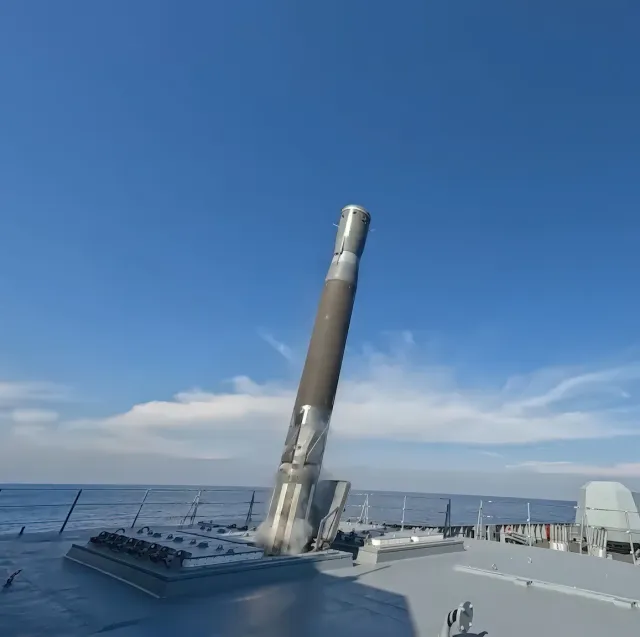
Missile
3M22 Zircon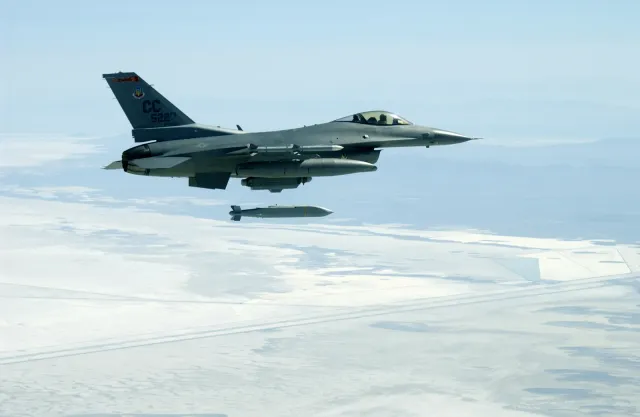
Missile
AGM-154 JSOW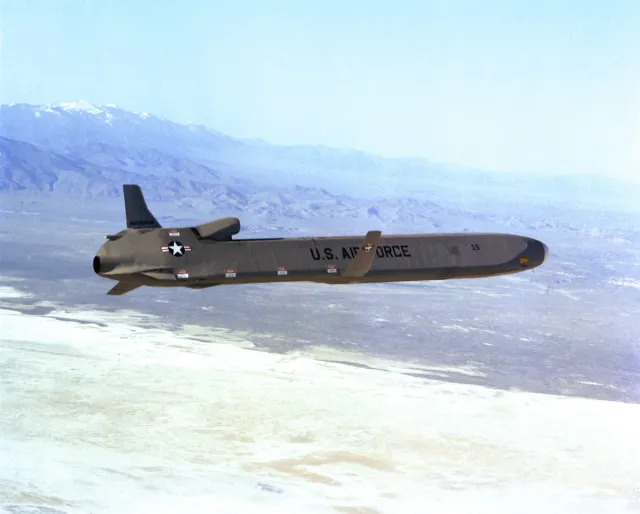
Missile
AGM-86 ALCM
Missile
Sea Viper (Aster 30)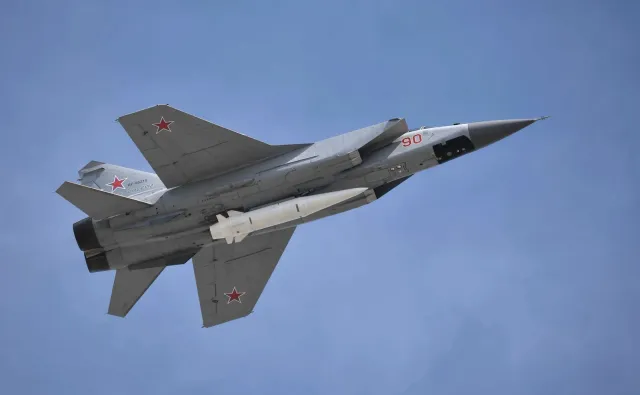
Missile
Kh-47M2 Kinzhal
Missile
Tomahawk Block VFrequently asked questions
What is warhead-to-weight ratio and why does it matter? +
It is a missile's warhead weight divided by its total combat or launch weight, expressed as a percentage. It matters because launch weight is fixed at design time and every kilogram not spent on explosive payload was spent on motor, fuel, airframe, seeker, or guidance instead, so the ratio shows how a missile's weight budget was actually allocated, not just how big or fast it is.
Why do ballistic missiles have a smaller warhead share of total weight than cruise missiles? +
Ballistic missiles carry their own rocket propellant for the entire flight and typically fly far longer ranges, so more of the launch weight goes to fuel, motor casing, and structure. In our database, rocket-boosted ballistic-trajectory missiles post a median warhead share of just 11.1%, versus 25.0% for air-breathing cruise missiles that draw oxygen from the atmosphere instead of carrying it.
Why does an unpowered glide bomb like JSOW have such a high warhead-to-weight ratio? +
An unpowered glide bomb has no engine, no fuel tank, and no propellant mass competing for the weight budget, so nearly the entire airframe can be warhead and guidance electronics. AGM-154 JSOW posts a 97.2% warhead share for exactly this reason, though only two systems in our database disclose both fields for this propulsion class, too small a sample to generalize confidently.
Is a higher warhead-to-weight ratio always a better missile design? +
No. It is a design tradeoff, not a quality signal. A high ratio on a short-range unpowered glide bomb reflects a completely different engineering problem than a low ratio on a missile built to fly 1,000km or reach Mach 9, and comparing the two ratios directly says nothing about which missile is more capable at its actual job.
How many missiles in the WeaponSpecs database publish both a warhead weight and total weight? +
112 of 213 (52.6%). The remaining 101 systems omit at least one of the two figures needed to compute the ratio, which is itself a data-transparency finding: for nearly half the missiles in the database, a reader cannot check what fraction of the advertised weight is actually explosive payload.
Related reading


