What Service Ceiling Means on a Fighter Jet Spec Sheet
Service ceiling spans 7,000-20,600m across 57 fighters in our database, but 72% share an identical published figure with a completely different jet.

Via Wikipedia, Mikoyan MiG-31 (shown for identification)
Fifty-seven of the 65 fighter aircraft in WeaponSpecs’ database, 88%, publish a service ceiling figure, and those 57 numbers span from 7,000m at the low end to 20,600m at the high end, a 2.94x range. That looks like a fine-grained performance ranking until you check for duplicates: 41 of those 57 jets (72%) share an exact published ceiling with at least one other, completely different aircraft. The single biggest cluster sits at exactly 15,240m, 50,000 feet on the nose, and it is shared by seven aircraft as different as the 1991-vintage F-16C Block 52 and a 2015-fielded F-35C stealth fighter, with a 1979-lineage Tornado GR4 swing-wing strike jet sitting in between.
How much does published service ceiling actually vary across fighters?
Of the 65 fighter aircraft in WeaponSpecs’ database, 57 (88%) publish a service ceiling. Sorted top to bottom, those 57 numbers run from Russia’s MiG-31 interceptor at 20,600m down to Russia’s Su-25SM3 close-air-support jet at 7,000m, a 2.94x spread. Every Russian- and Chinese-origin figure in this piece, including both of those, is a manufacturer or state claim, not an independently verified measurement, a caveat that applies across the ranking and gets repeated wherever the MiG-31’s own number carries the argument.
A wide top-to-bottom range is not the same as a fine-grained ranking, though. Check the 57 figures for exact duplicates and 41 of them (72%) match at least one other aircraft’s number precisely. The largest cluster is 15,240m, exactly 50,000 feet, shared by seven aircraft: the 1991 F-16C Block 52, the 2023-production F-16C Block 70/72, all three F-35 Lightning II variants, Sweden’s JAS 39C Gripen, and the UK’s 1979-lineage Tornado GR4 strike jet. A Cold War swing-wing bomber-killer and a 2015-fielded stealth fighter reporting the identical altitude is a tell: these are round design figures, not individually flight-tested maxima. India’s HAL AMCA (20,000m) and Russia’s Su-75 Checkmate (16,500m) sit near the top too, but both remain “announced” rather than fielded, so their numbers are design targets, not measured results.
Why do so many different fighters report the exact same number?
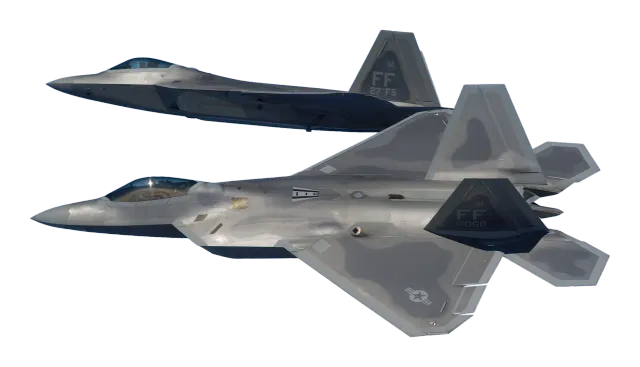
The database itself is the evidence, and it points to rounding, not coincidence. Every 15,240m entry converts to a clean 50,000 feet, and the pattern repeats: 19,812m converts to exactly 65,000ft (Typhoon and F-22A Raptor), 18,000m appears seven times, 20,000m appears five times. Only a handful of figures, like the MiG-31’s 20,600m or the Su-25SM3’s 7,000m, look like a measured value rather than a round number in a different unit system.
It’s tempting to blame a specific export-control or classification policy that rounds every publishable figure to a clean threshold. We could not independently confirm any single official rule doing that across this many air forces and manufacturers, so we won’t assert one. What the database does show, empirically, is the clustering itself, nearly three-quarters of published ceilings match another airframe’s number exactly, consistent with rounded, releasable design figures rather than individually flight-tested altitude records.
Does flying higher actually mean flying faster?
Across all 57 fighters with both figures published, ceiling correlates with maximum speed at a Pearson r of 0.759, a fairly strong relationship. The scatter below plots 23 representative aircraft (the complete 57-system ranking follows in the table further down).
Most of the field falls along a rough diagonal: faster jets tend to publish higher ceilings too, so a lot of what looks like an altitude ranking just re-derives what a speed ranking already told you. The r=0.759 correlation means speed explains most of the spread in ceiling, leaving the real information in the two aircraft that break the pattern: the MiG-31 alone above the pack at top right, and the Su-25SM3 alone more than 6,000m below every other fighter at bottom left. The tight band at 15,000-15,240m, where the F-16C, F-35A and Rafale C cluster despite different speeds, is the shared rounded-figure floor sitting on top of the real speed-ceiling relationship.
What actually makes the MiG-31 different?
The MiG-31 (NATO reporting name Foxhound) is the one aircraft here whose top position is not a rounding artifact. Its 20,600m figure, like every Russian-sourced number in this piece, is a manufacturer/state claim, not an independently verified result. But the doctrine behind it is genuine: the MiG-31 was purpose-built as a high-speed, high-altitude interceptor meant to catch bombers and cruise missiles at long range, not to dogfight, the only aircraft here flying a materially different mission from everything else clustered in the 15,000-20,000m band.
Modernized MiG-31BM/K variants also launch the Kh-47M2 Kinzhal air-launched ballistic missile. That pairing is real, but a common Russian-media framing around it deserves its own caveat: reports crediting the Kinzhal with a 2,000km “range” when carried by the MiG-31, or 3,000km on a Tu-22M3, are adding the launch aircraft’s own combat radius to the missile’s roughly 460-480km flight range, not describing the missile’s own performance. Flying high and fast changes where the launch happens, not what the missile can do once released.
Ceiling is a real kinematic factor analysts track: altitude and speed together widen detection range and extend a missile’s no-escape zone in beyond-visual-range combat, a point RUSI’s Justin Bronk made directly when comparing three of Europe’s own fighters:
“The Typhoon has the edge over both Gripen and Rafale in terms of Beyond Visual Range (BVR) combat, top speed, acceleration, manoeuvrability, service ceiling and climb rate,” wrote Justin Bronk, Senior Research Fellow for Airpower and Technology at RUSI (RUSI, 11 Feb 2014).
Ceiling is one item on that list, alongside BVR capability, speed, acceleration, maneuverability and climb rate, not the whole picture alone. That is why a 1,000-2,000m gap here, especially inside the 15,000-20,000m band where duplicates are common, should not be read as a meaningful edge without checking the other factors Bronk names.
What does the bottom of the ranking tell you?
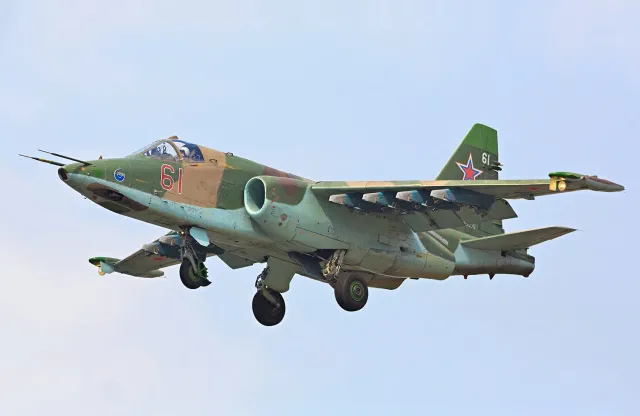
At the other end, Russia’s Su-25SM3 posts 7,000m, more than 6,000m below every other fighter in the database, and the second-lowest figure belongs to the United States’ A-10 Thunderbolt II at 13,700m. Both are heavily armored, low-and-slow close-air-support jets built around the same logic: the Su-25 (NATO “Frogfoot”) carries a titanium cockpit tub much like the A-10’s, and both survive ground fire through armor and low-altitude maneuvering, not altitude. A CAS jet has no operational reason to fly high, so a low ceiling here is a role artifact, not a weak airframe, and it’s not a US-versus-Russia story either: the two lowest-ceiling aircraft in the entire comparison are a Russian jet and a US jet doing the identical job, good evidence the pattern tracks mission role, not country of origin.
What should this ranking actually tell a buyer?
Treat any two fighters within roughly 1,000-2,000m of each other here as tied in practice, the number is far rounder and far more widely shared than a precise ranking implies. The real information sits in the outliers, the MiG-31’s distinct interceptor profile and the Su-25SM3’s and A-10’s shared close-air-support floor, and in the mission each aircraft is built for, not in the middle of a list where seven very different jets happen to report 50,000 feet.
Service ceiling is one line on a much longer spec sheet. Browse the full lineup on WeaponSpecs’ fighter aircraft category page, or put any two of these jets side by side, ceiling, speed, radar and weapons load included, in the Compare tool.
Full ranking: service ceiling across 57 fighter aircraft
The table below lists every one of the 57 fighter aircraft in the WeaponSpecs database that publish a service ceiling figure, ranked highest to lowest, with maximum speed and fielding status for context.
| # | Model | Country | Ceiling (m) | Ceiling (ft) | Speed (Mach) | Status |
|---|---|---|---|---|---|---|
| 1 | MiG-31 | Russia | 20,600 | 67,585 | 2.83 | active |
| 2 | J-8II | China | 20,200 | 66,273 | 2.2 | legacy |
| 3 | HAL AMCA | India | 20,000 | 65,617 | 1.8 | announced |
| 4 | F-15C Eagle | United States | 20,000 | 65,617 | 2.5 | legacy |
| 5 | J-20 | China | 20,000 | 65,617 | 2.0 | active |
| 6 | Mitsubishi F-15J/DJ | Japan | 20,000 | 65,617 | 2.5 | active |
| 7 | Su-57 | Russia | 20,000 | 65,617 | 2.0 | active |
| 8 | Eurofighter Typhoon | Multi-national | 19,812 | 65,000 | 2.35 | active |
| 9 | F-22A Raptor | United States | 19,812 | 65,000 | 2.25 | active |
| 10 | F-15EX Eagle II | United States | 19,200 | 62,992 | 2.5 | active |
| 11 | Su-27 | Russia | 18,500 | 60,696 | 2.35 | active |
| 12 | F-4E Phantom II | United States | 18,300 | 60,039 | 2.2 | legacy |
| 13 | F-15E Strike Eagle | United States | 18,200 | 59,711 | 2.5 | active |
| 14 | MiG-29 | Russia | 18,013 | 59,098 | 2.25 | active |
| 15 | J-10C | China | 18,000 | 59,055 | 1.8 | active |
| 16 | J-11B | China | 18,000 | 59,055 | 2.2 | active |
| 17 | J-15 | China | 18,000 | 59,055 | 2.2 | active |
| 18 | Mitsubishi F-2 | Japan | 18,000 | 59,055 | 2.0 | active |
| 19 | Su-35S | Russia | 18,000 | 59,055 | 2.25 | active |
| 20 | Kfir | Israel | 17,680 | 58,005 | 2.3 | legacy |
| 21 | MiG-35 | Russia | 17,500 | 57,415 | 2.25 | active |
| 22 | Su-30SM | Russia | 17,500 | 57,415 | 1.9 | active |
| 23 | J-16 | China | 17,000 | 55,774 | 2.0 | active |
| 24 | Mirage 2000-5 | France | 17,000 | 55,774 | 2.2 | active |
| 25 | Tejas Mk2 | India | 17,000 | 55,774 | 1.8 | announced |
| 26 | JF-17 Thunder Block 3 | Pakistan | 16,920 | 55,512 | 1.6 | active |
| 27 | JF-17 Thunder | Pakistan | 16,920 | 55,512 | 1.6 | active |
| 28 | Tejas Mk1A | India | 16,920 | 55,512 | 1.8 | active |
| 29 | F-CK-1 Ching-kuo | Taiwan | 16,800 | 55,118 | 1.8 | active |
| 30 | TAI Kaan | Turkey | 16,800 | 55,118 | 1.8 | announced |
| 31 | KF-21 Boramae | South Korea | 16,700 | 54,790 | 1.81 | active |
| 32 | Sukhoi Su-75 Checkmate | Russia | 16,500 | 54,134 | 1.8 | announced |
| 33 | J-35 | China | 16,000 | 52,493 | 1.8 | active |
| 34 | JAS 39E Gripen | Sweden | 16,000 | 52,493 | 2.0 | active |
| 35 | JH-7A | China | 16,000 | 52,493 | 1.75 | active |
| 36 | Kowsar | Iran | 15,800 | 51,837 | 1.4 | active |
| 37 | F-16C Block 52 Fighting Falcon | United States | 15,240 | 50,000 | 2.0 | active |
| 38 | F-16C Block 70/72 Fighting Falcon | United States | 15,240 | 50,000 | 2.0 | active |
| 39 | F-35A Lightning II | United States | 15,240 | 50,000 | 1.6 | active |
| 40 | F-35B Lightning II | United States | 15,240 | 50,000 | 1.6 | active |
| 41 | F-35C Lightning II | United States | 15,240 | 50,000 | 1.6 | active |
| 42 | JAS 39C Gripen | Sweden | 15,240 | 50,000 | 2.0 | active |
| 43 | Tornado GR4 | United Kingdom | 15,240 | 50,000 | 2.2 | legacy |
| 44 | Rafale C | France | 15,235 | 49,984 | 1.8 | active |
| 45 | Rafale F4 | France | 15,235 | 49,984 | 1.8 | active |
| 46 | Rafale M | France | 15,235 | 49,984 | 1.8 | active |
| 47 | F-14 Tomcat | United States | 15,200 | 49,869 | 2.34 | legacy |
| 48 | F/A-18C Hornet | United States | 15,200 | 49,869 | 1.8 | legacy |
| 49 | EA-18G Growler | United States | 15,000 | 49,213 | 1.8 | active |
| 50 | F/A-18E/F Super Hornet | United States | 15,000 | 49,213 | 1.8 | active |
| 51 | Tejas Navy Mk1 | India | 15,000 | 49,213 | 1.6 | active |
| 52 | Su-34 | Russia | 15,000 | 49,213 | 1.8 | active |
| 53 | FA-50 Golden Eagle | South Korea | 14,630 | 47,999 | 1.5 | active |
| 54 | A-10 Thunderbolt II | United States | 13,700 | 44,948 | 0.58 | legacy |
| 55 | Harrier GR9 | United Kingdom | 13,100 | 42,979 | 0.87 | legacy |
| 56 | AMX Ghibli | Italy | 13,000 | 42,651 | 0.86 | legacy |
| 57 | Su-25SM3 | Russia | 7,000 | 22,966 | 0.78 | active |
Every Russian- and Chinese-origin figure above is a manufacturer or state claim, not independently verified. HAL AMCA and Sukhoi Su-75 Checkmate remain listed as “announced,” not yet fielded, so their ceiling figures are design targets rather than measured results.
None of this is targeting or operational guidance, it is a spec-sheet comparison built from publicly published performance figures, with every manufacturer-claim number flagged above.
Sources
Systems in this comparison
Every system covered above, with its photo and, where available, a video. Tap a card to open the full spec sheet.
Compare these side by side →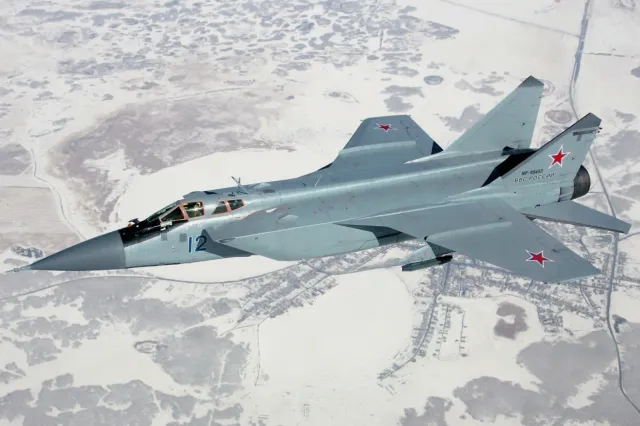
Fighter aircraft
F-22A Raptor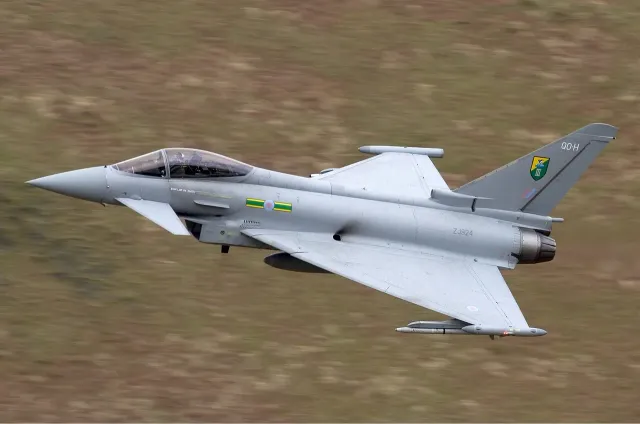
Fighter aircraft
Eurofighter Typhoon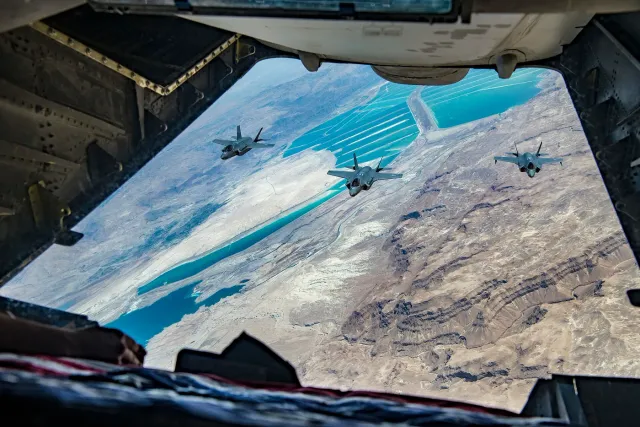
Fighter aircraft
F-35A Lightning II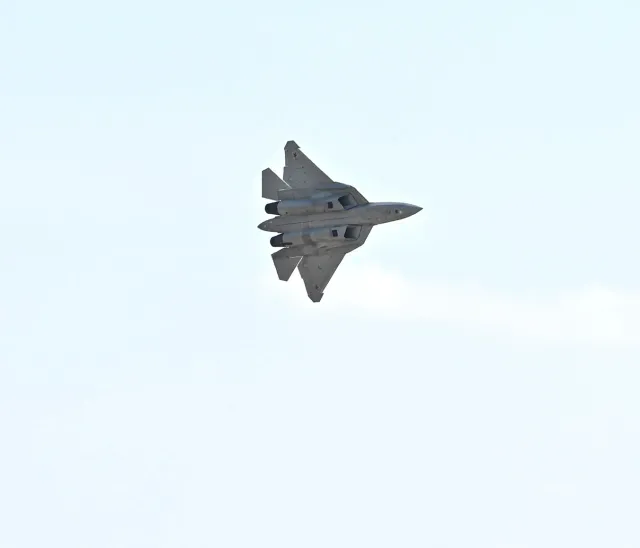
Frequently asked questions
What is a fighter jet's service ceiling? +
Service ceiling is the maximum altitude at which a fighter can still maintain a slow, steady rate of climb, typically defined as around 100 feet per minute, rather than the absolute highest altitude it can briefly touch. It is published in meters or feet on most manufacturer and government spec sheets.
Which fighter in the WeaponSpecs database has the highest published service ceiling? +
Russia's MiG-31 interceptor, at 20,600m (67,585ft), the highest of the 57 fighters in our database that publish a service ceiling. That figure is a Russian manufacturer/state claim rather than an independently verified test result, and should be read with that caveat.
Why do so many different fighter jets list an identical service ceiling? +
Most published ceilings are rounded design figures rather than individually flight-tested maxima. The clearest example in our database is 15,240m, exactly 50,000 feet, shared by seven very different aircraft: the F-16C Block 52, F-16C Block 70/72, all three F-35 Lightning II variants, the JAS 39C Gripen, and the Tornado GR4.
Does a higher service ceiling actually make a fighter more dangerous in combat? +
It is one relevant factor, not the whole picture. Ceiling correlates with maximum speed at r=0.759 across our 57-system dataset, so altitude and speed usually move together, and RUSI analyst Justin Bronk lists service ceiling alongside BVR combat capability, top speed, acceleration, maneuverability and climb rate as the kinematic factors that matter together. A 1,000-2,000m ceiling gap between two entries in a ranking like this one is frequently a rounding artifact, not a meaningful edge.
Why does the Su-25SM3 have such a low service ceiling compared to other fighters? +
The Su-25SM3 is a heavily armored, titanium-cockpit-tub close-air-support jet built to survive ground fire through armor and low-altitude maneuvering, not altitude, so it has no operational reason to climb high. The US A-10 Thunderbolt II, built for the identical mission, posts the second-lowest ceiling in our database for the same reason, which is evidence the pattern tracks mission role rather than country of origin.
Related reading


