The 10 Best Fighter Jets of 2026, Ranked
A 10-to-1 countdown of the best fighter jets of 2026, ranked on real combat record, sensors, survivability and sustainment, not brochure numbers.
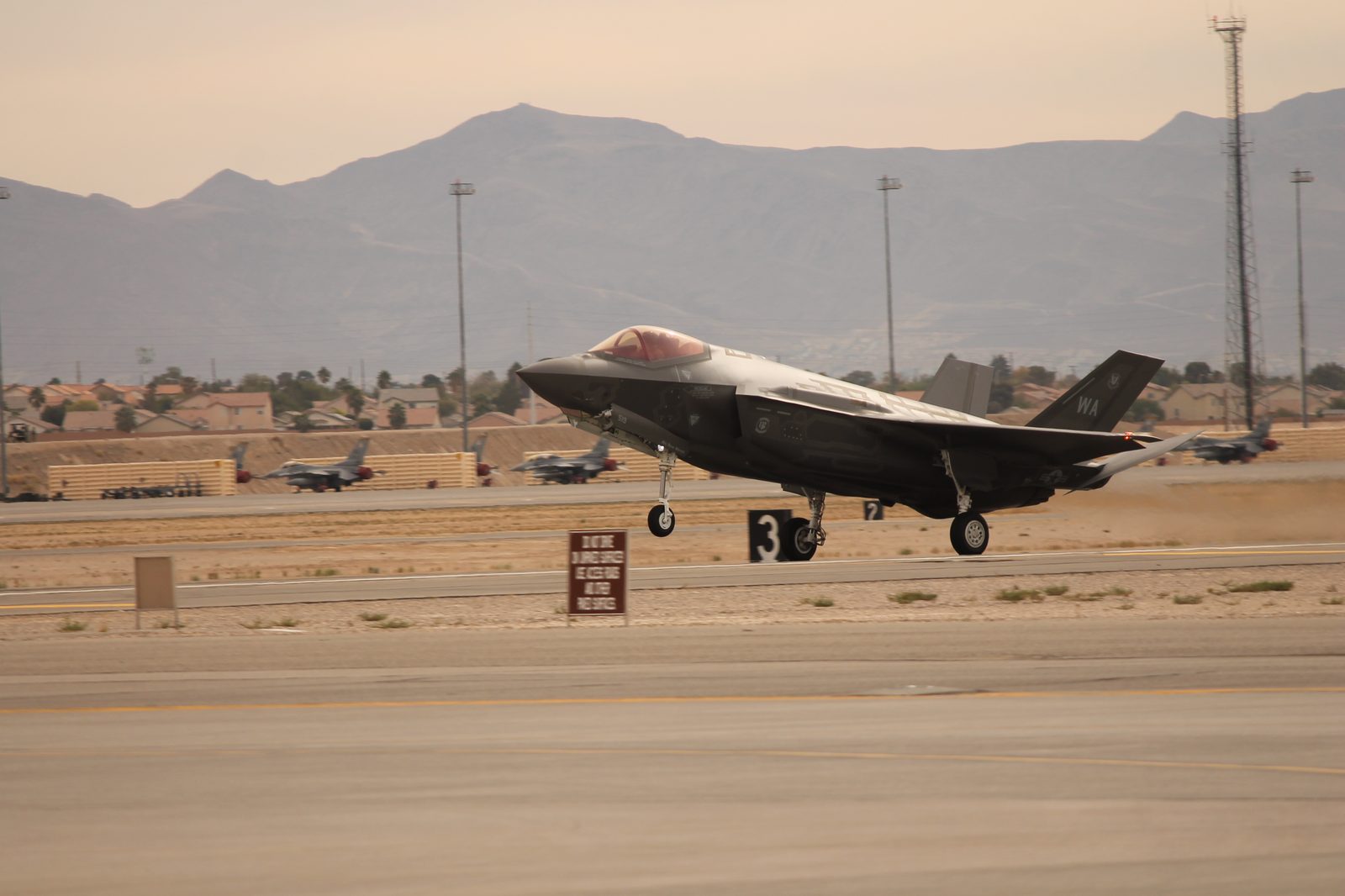
Noah Wulf, via Wikimedia Commons, CC BY-SA 4.0
Two 2025 air wars settled the “best fighter” argument faster than a decade of procurement panels. In June, F-35s led roughly 200 aircraft into Iranian airspace during Operation Rising Lion, the largest combat use of stealth fighters in history, and Israel came home without a single manned-aircraft loss. Six weeks earlier over Kashmir, a Chinese-built PL-15 missile fired from a Pakistani J-10C brought down at least one French-built Rafale, the type’s first combat loss ever. One jet proved stealth and sensor fusion still win in contested airspace. The other proved that even a top 4.5-generation jet can lose to a well-cued long-range missile shot. That pairing reorders this list more than any spec sheet does.
Key takeaways:
- Operation Rising Lion (June 2025) sent roughly 200 aircraft, led by F-35s, into Iranian airspace with zero manned Israeli losses, the largest combat use of stealth fighters in history.
- A Chinese-built PL-15 missile fired from a Pakistani J-10C downed at least one Indian Rafale in May 2025, the type’s first-ever combat loss.
- The F-15 family carries a widely cited 104-to-0 air-to-air record, more than half of it Israeli, dating back to a 1979 Syrian MiG-21 kill.
- The #1-ranked F-35A posts the lowest thrust-to-weight ratio (0.87) of any jet on this list, while combat-untested jets like the J-20, Su-57 and Gripen E cluster near the bottom despite higher ratios.
- The F-16C Block 70/72 flies with roughly 25 operators worldwide, the broadest logistics, weapons and pilot-training base of any fighter ranked here.
We ranked ten current fighters from 10 down to 1 on four criteria, in this priority order: combat record (has this jet, or its direct family, actually fought contested airspace, and what did that reveal), sensors and survivability (stealth, radar generation, electronic warfare, sensor fusion), lethality and reach (BVR missile, payload, combat radius), and sustainment at scale (cost per flight hour, spares, allied stockpiles, pilot pipelines). Every Russian and Chinese performance figure below is flagged as a manufacturer or state claim, not treated as fact. Photos and full spec sheets for every jet on this list are in the gallery below the article.
How we ranked them
- Combat record. A documented performance in contested airspace beats a better paper spec. We say plainly when a jet has never fired a shot.
- Sensors and survivability. Stealth or its absence, radar generation, EW self-protection and sensor fusion, weighted toward capability proven against modern SAMs and BVR missiles, not just claimed.
- Lethality and reach. BVR missile, payload and combat radius. A better missile beats a better airframe.
- Sustainment at scale. Cost per flight hour, parts, allied stockpiles, pilot pipelines, operator base. In a long war this is decisive.
10. Su-57 
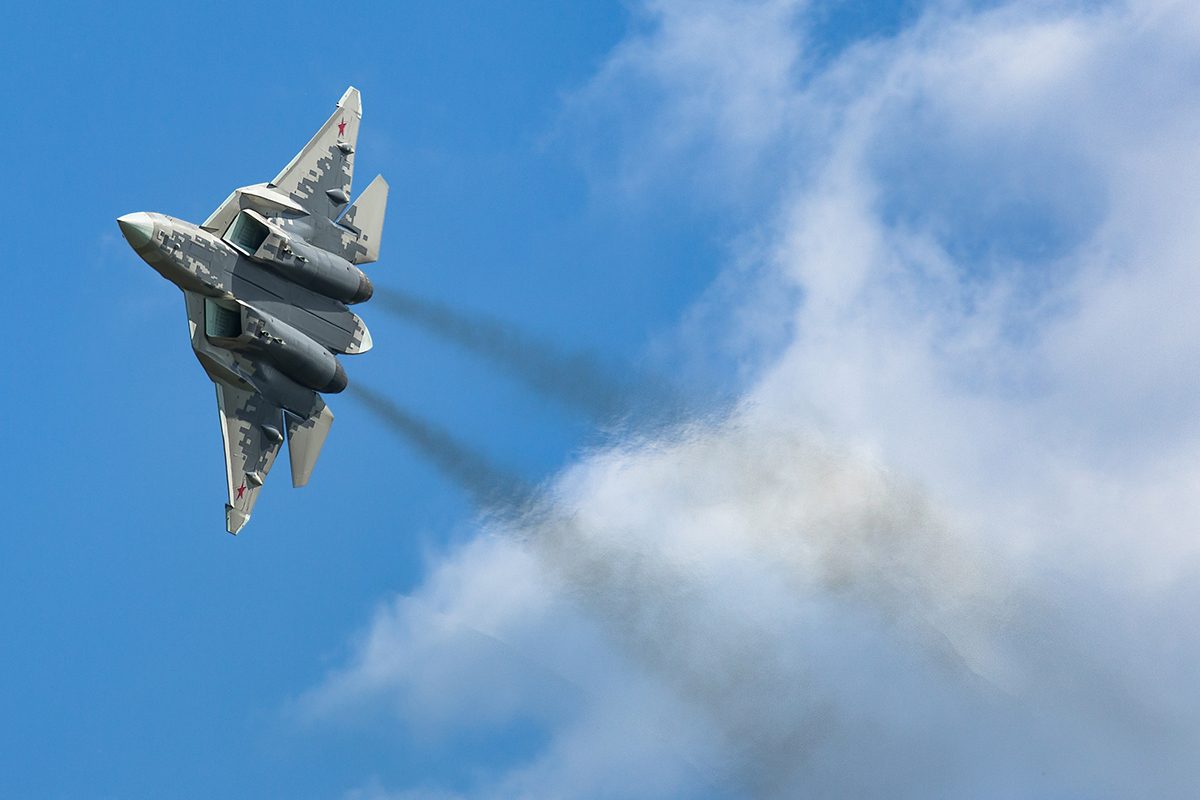
Russia’s fifth-generation flagship is the T-14 Armata of this list, most hyped, least verified. A claimed 1.08 thrust-to-weight ratio, supermaneuverable 3D thrust-vectoring and a large internal weapons bay would make it a genuine air-superiority threat if fielded at scale. It isn’t. Production sits in the low dozens, and Russia has never risked it in confirmed air-to-air combat. Russia claims stand-off missile launches from inside its own airspace over Ukraine since 2022, unverified. The best-documented Su-57 event of this whole war is the opposite of a combat record: on 8 June 2024, Ukrainian drones struck the Akhtubinsk test airfield roughly 600 km from the front line, damaging two Su-57s on the ground. Satellite imagery showed one jet intact on 7 June and scorched with blast damage the next day.
Advantages: supermaneuverable with 3D thrust-vectoring and a large internal weapons bay; long claimed combat radius; the only Russian fifth-generation airframe designed around internal weapons carriage and an IRST sensor.
Disadvantages: production reported in the low dozens, not a fielded fleet; every stealth, radar-cross-section and engine figure is an unverified state claim, and visibly exposed engine faces invite doubt about true low observability; no confirmed air combat.
UK Defence Intelligence assessed Russia deliberately keeps the Su-57 away from the front to protect its prestige, export prospects and sensitive technology. Its own air force, in other words, doesn’t trust it in a fight.
9. J-20 
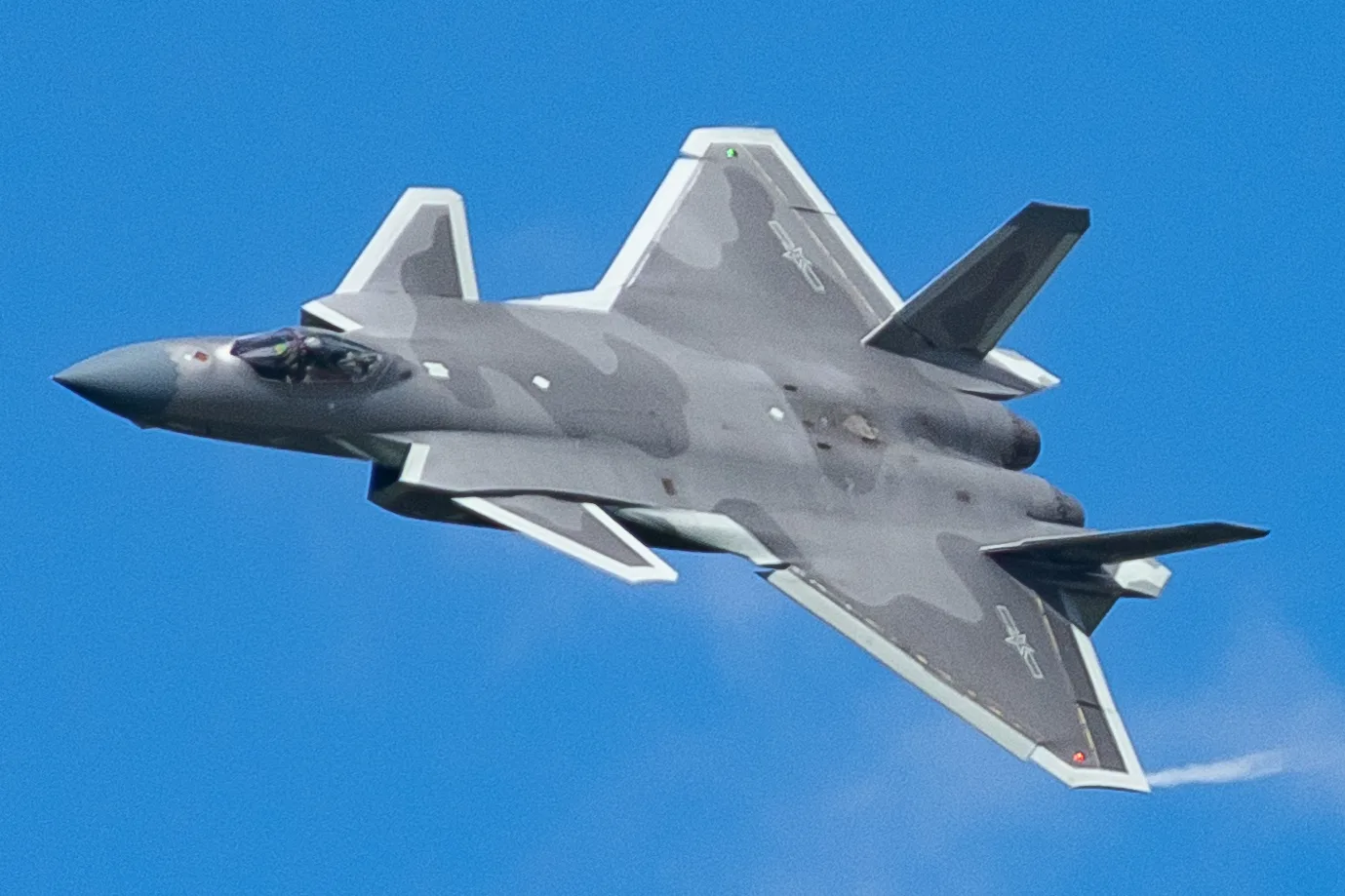
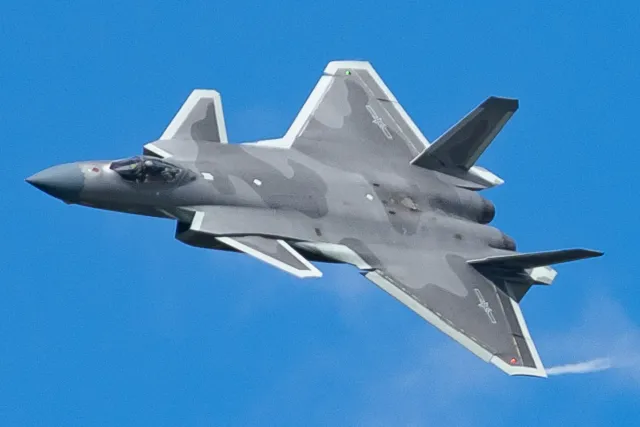
China’s J-20 is arguably the most capable jet on this list that has never fired a shot in anger. It’s also the most-produced non-US stealth fighter in the world, more than 200 built, a large twin-engine airframe with big internal bays built for long-range strikes on tankers, AWACS and air-defense networks using PL-15 and reportedly PL-17 missiles. None of that has been tested in combat. The J-20 flies PLA patrols and reported intercepts over the East and South China Seas, never in a real air war. Every stealth, radar-cross-section and engine performance figure is a Chinese state claim with no independent verification, and for years the jet flew on Russian AL-31 engines originally designed for the Su-27 while China finished its own WS-15 powerplant, a sovereignty gap Beijing rarely acknowledged.
Advantages: large, long-range twin-engine stealth design with substantial internal weapons capacity, built for standoff strikes on high-value air assets; genuinely fast production scale; rapidly maturing AESA radar and now reportedly indigenous WS-15 engines.
Disadvantages: zero combat data; all stealth, radar-cross-section and engine performance are Chinese state claims; early and even some current-production airframes depended on imported or interim Russian-derived engines, feeding long-running doubts about true kinematic performance.
The imported-engine story is the direct echo of the K2 Black Panther’s hidden German gearbox from our tanks ranking: a flagship marketed as a sovereign, world-class design that quietly leaned on someone else’s hardware to actually fly.
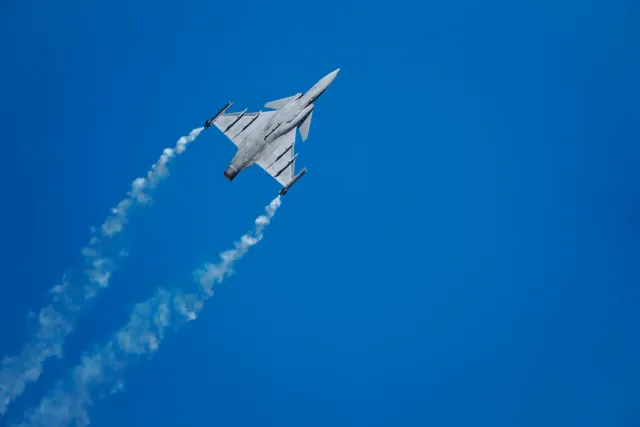
8. JAS 39E Gripen 
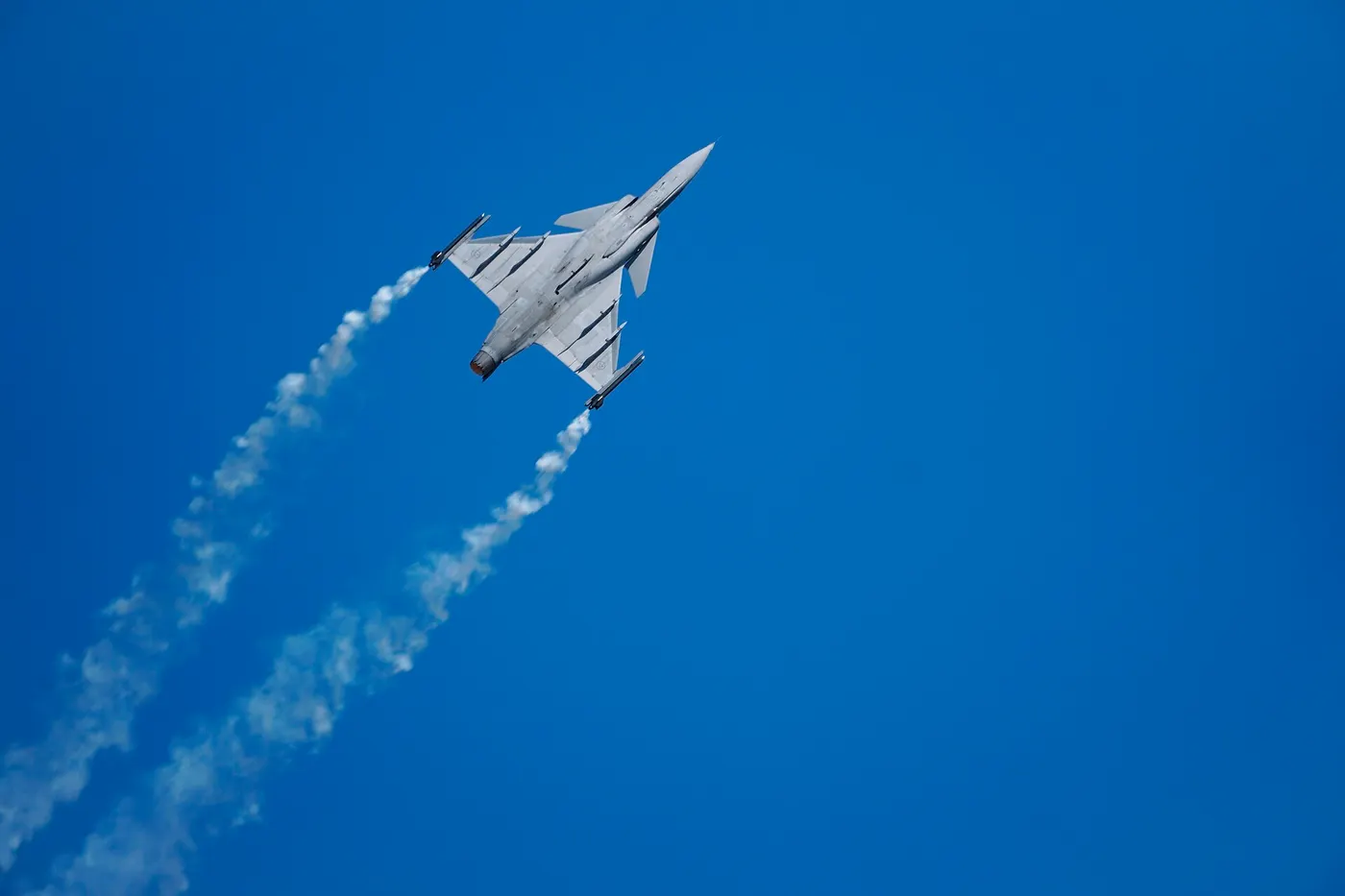
Sweden’s Gripen E is the smart buyer’s fighter, the closest thing on this list to the K2 Black Panther’s industrial pitch: no combat record for the E yet, a small fleet, but the best capability-per-dollar package here. Earlier Gripen C/Ds never fought a real air war either, Swedish jets flew reconnaissance over Libya in 2011 without air combat. What sets the E apart is a design built around a threat every air force is relearning the hard way in 2026: airfield vulnerability. Sweden designed the Gripen from the outset to be armed, refuelled and turned around by conscript ground crews on a public highway in about ten minutes, a Cold War answer to the exact kind of on-the-ground airfield strike that just hit Russia’s Su-57s at Akhtubinsk.
Advantages: the lowest operating cost per flight hour on this list, with road-base dispersal that sidesteps airfield-strike vulnerability entirely; Raven ES-05 AESA radar, the Meteor BVR missile, and a class-leading electronic-warfare suite; built for exactly the survivability-through-dispersal doctrine a long war rewards.
Disadvantages: single-engine with lighter payload and shorter combat radius than the twin-engine jets above it on this list; no combat record for the E variant and a thin operator and logistics base; depends on the US GE F414 engine and US-controlled components, which has constrained some export deals.
Sweden built its entire airbase doctrine around the assumption that a war would open with its runways bombed, an assumption Russia’s own military is now confirming the hard way, one drone strike at a time.
7. Su-35S
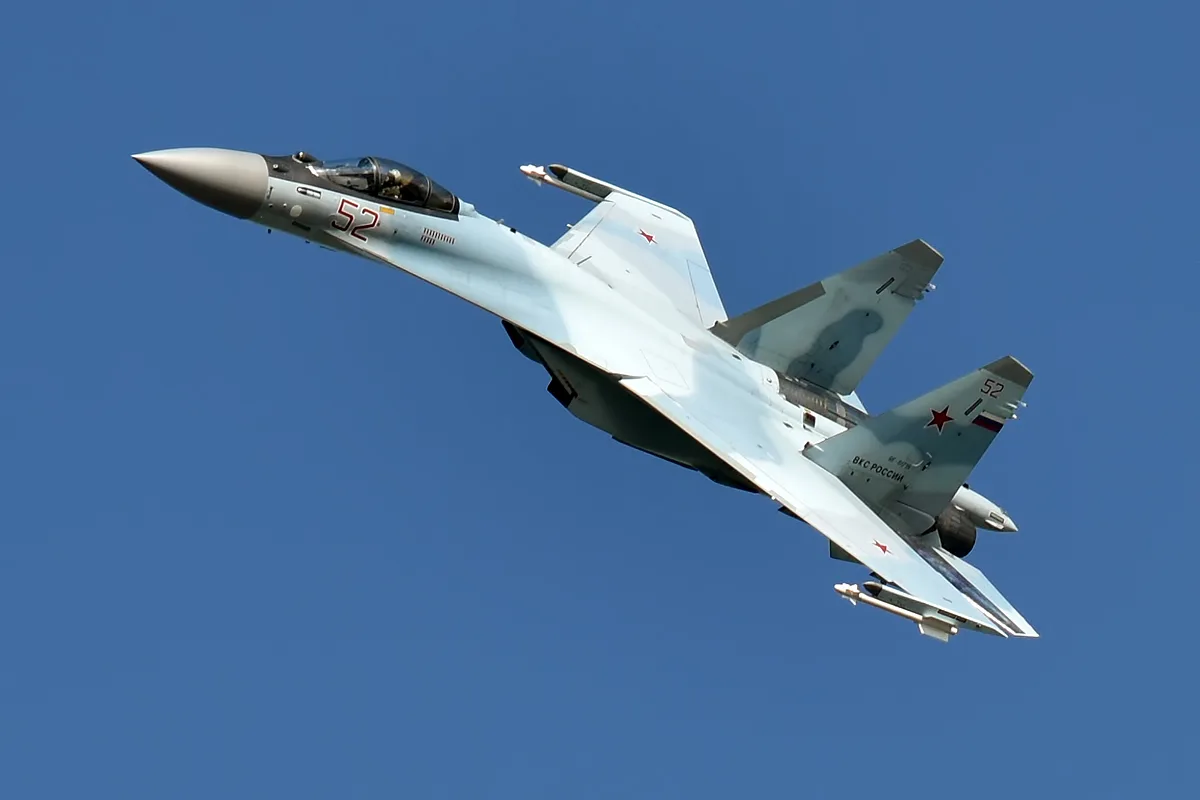
This is the T-90M of this list, the one Russian jet here with a large, genuinely documented combat record, ranked exactly this low because that record is visible and it isn’t flattering. The Su-35S flew combat in Syria from 2015 and has seen heavy use over Ukraine since 2022, where multiple aircraft have been documented lost to Ukrainian air defenses. In one widely reported case in April 2023 over Bryansk, inside Russia, a Su-35 was reportedly lost to a friendly-fire sequence during a chaotic multi-aircraft engagement. Its supermaneuverable airframe, powerful Irbis-E radar and long claimed combat radius make it a serious air-superiority threat on paper. Combat has shown the harder truth: a non-stealth 4.5-generation fighter with a PESA radar, one generation behind Western and Chinese AESA sets, struggles to survive in a dense modern SAM environment.
Advantages: supermaneuverable with 3D thrust-vectoring, long endurance and a heavy missile load; a powerful Irbis-E radar with long detection range paired with an infrared search-and-track sensor; genuinely combat-employed and in real, current production.
Disadvantages: the Irbis-E is a passive electronically scanned array, a radar generation behind Western and Chinese AESAs, and the airframe carries no low-observable shaping; documented combat losses, including at least one reported friendly-fire incident; every radar-range and kinematic figure is a Russian manufacturer claim.
The war has been unkind to Russia’s most advanced non-stealth fighter in ways its marketing never anticipated, lost not just to enemy SAMs but, at least once, to its own side in the confusion of contested airspace.
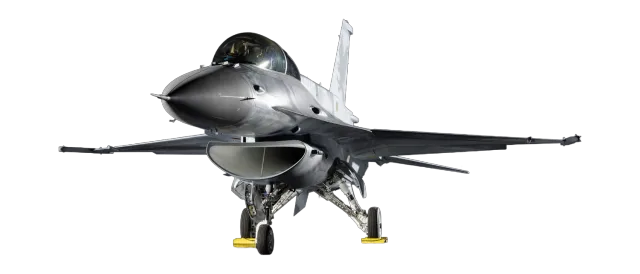
6. F-16C Block 70/72 Fighting Falcon 
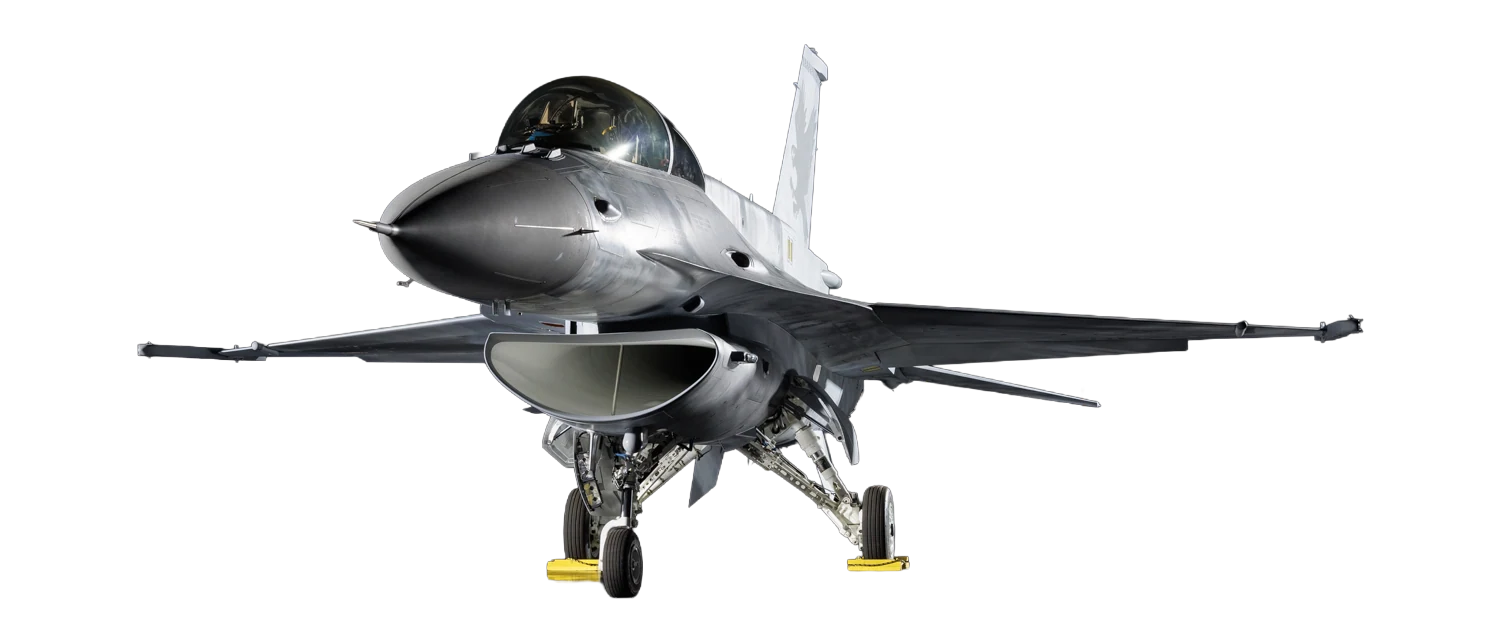
The newest Viper carries the world’s most combat-proven fighter airframe into 2026. It ranks mid-table because it’s a light, single-engine 4.5-generation jet with the shortest combat radius on this list, but no other airframe here has fought across a broader span of conflicts. Israeli F-16s struck the Osirak reactor in 1981 and flew constant combat through the Bekaa Valley campaign the following year; USAF F-16s scored their first air-to-air kill, a MiG-29, over Bosnia in 1994, and one was lost to a Serbian SAM over Kosovo in 1999; the type has flown Gulf War 1991, Iraq, Syria against ISIS, and now Ukraine, which began flying donated F-16s in 2024. Roughly 25 operators worldwide fly some version of this airframe. The Block 70/72 adds a modern APG-83 AESA radar to that pedigree, a genuine capability jump on a proven, agile, and comparatively cheap platform.
Advantages: APG-83 AESA radar and modern avionics on a proven, highly agile airframe with strong thrust-to-weight; the broadest global logistics, weapons and pilot training base of any fighter on this list, across roughly 25 operators; the cheapest capable Western multirole jet here with the fastest path to fielding.
Disadvantages: single engine, lighter payload and the shortest combat radius on this list; non-stealth and increasingly exposed to modern SAM and BVR missile threats; a mature airframe design near the top of its growth curve.
The F-16 actually drew first blood in Pakistani hands, not American: Pakistan Air Force Vipers downed several Soviet and Afghan aircraft along the Afghan border in the late 1980s, years before a USAF F-16 ever fired a missile in anger.
5. F-15EX Eagle II
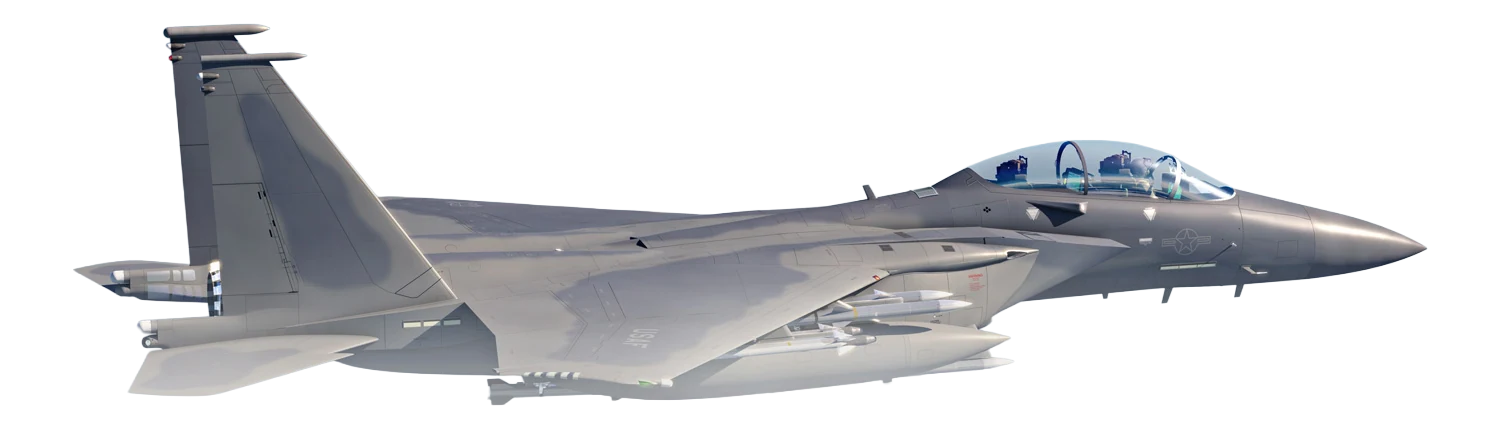
This is the Leopard 2A7 case of this list: it inherits the F-15’s legendary air-to-air ledger and carries the heaviest weapons load of any fighter here, but the EX itself, in service since 2021, has no combat of its own. The reputation is earned by the family, not this specific build. That family record is real but needs precision: it’s a widely cited 104-to-0 air-to-air count, air-to-air only (F-15s have been lost to SAMs and accidents), and more than half of those kills belong to Israel, starting with a Syrian MiG-21 shot down in 1979 and running through dominance over the Bekaa Valley in 1982. USAF F-15s added 34 to 36 more kills in the 1991 Gulf War. What the EX brings new is the largest weapons load of any jet on this list, roughly 13.4 tonnes across 12 or more hardpoints, paired with a modern APG-82 AESA radar and the EPAWSS electronic-warfare suite.
Advantages: the largest payload of any fighter on this list, a genuine missile truck for AMRAAM, AIM-260 and future hypersonic weapons; modern APG-82 AESA radar, EPAWSS electronic warfare suite, and a 20,000-hour-rated airframe; strong thrust-to-weight and a Mach 2.5 top speed.
Disadvantages: non-stealth with a large radar cross-section, which keeps it in a stand-off, missile-truck role behind stealth aircraft in contested airspace; expensive, within reach of F-35 pricing for a non-stealth airframe; the EX variant itself is combat-unproven.
The famous “American” 104-0 record is substantially an Israeli one: the ledger opened over Lebanon in 1979 in Israeli hands, and Israel still owns more of those kills than every other F-15 operator on Earth combined.
4. Eurofighter Typhoon 
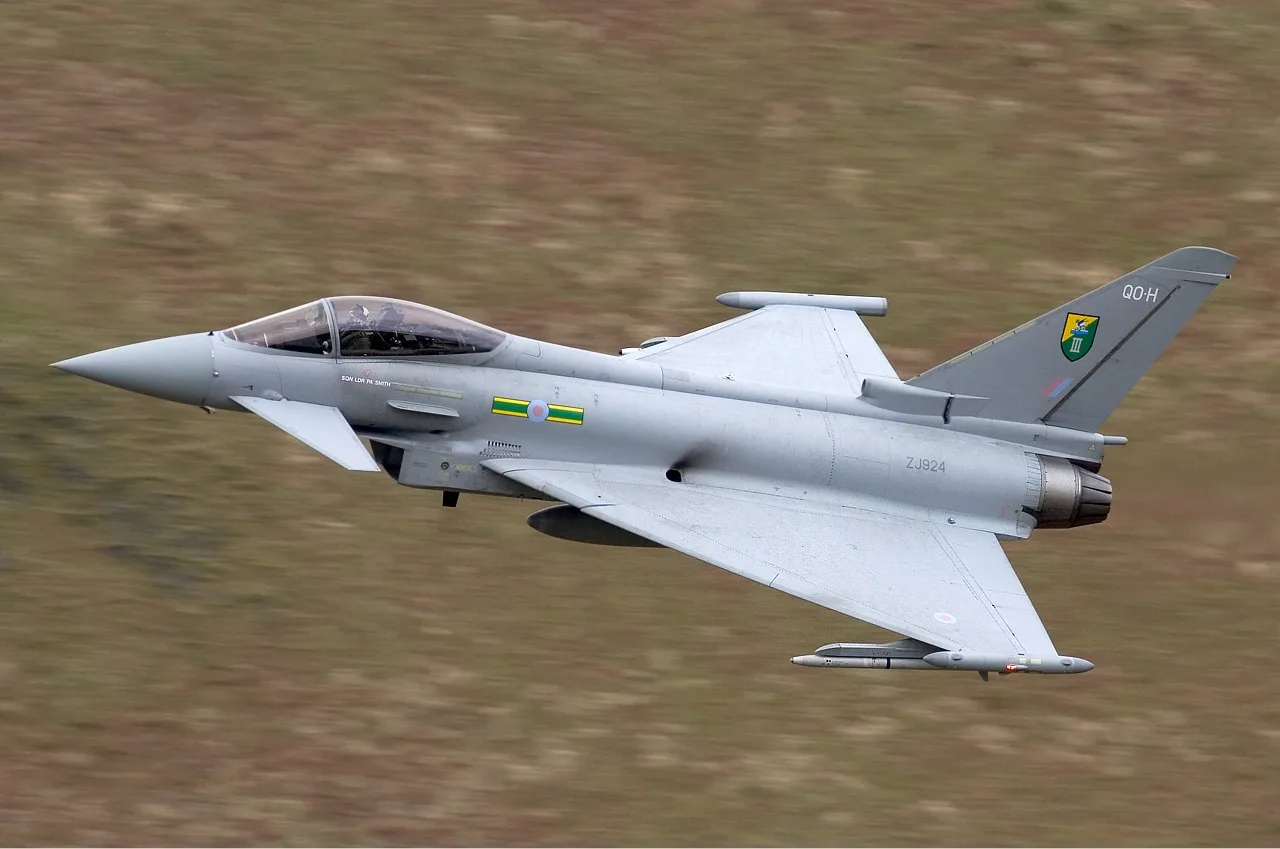
The best pure kinematic performer on this list, with supercruise and the highest thrust-to-weight ratio of any jet ranked here, backed by a real combat record and a four-nation industrial base spanning the UK, Germany, Italy and Spain. RAF and Italian Typhoons flew precision strike and air-policing missions over Libya in 2011, and RAF Typhoons have struck ISIS targets across Iraq and Syria since 2015, on top of constant NATO quick-reaction-alert intercept duty across Europe. That’s a genuine, sustained combat record. What it has never done is fight another fighter: no Typhoon has ever scored, or needed, an air-to-air kill, so its dogfighting reputation rests entirely on paper performance and training exercises.
Advantages: outstanding thrust-to-weight ratio and true supercruise, arguably the best air-combat kinematics of any jet on this list; Captor-E AESA radar on newer production tranches, the Meteor BVR missile, and strong sensor fusion; a deep four-nation plus export logistics and upgrade base, including Saudi Arabia and Qatar.
Disadvantages: non-stealth; expensive, with a fragmented multinational upgrade path that has at times lagged, including delayed AESA radar fielding across the four-nation fleet; excellent paper air-to-air numbers that have never been tested in a real dogfight.
In the 2011 Libya campaign, the RAF’s brand-new air-superiority fighter made its combat debut dropping precision-guided bombs, buddy-lased by aging Tornado jets, not hunting enemy fighters in the sky it was designed to dominate.
3. Rafale F4 
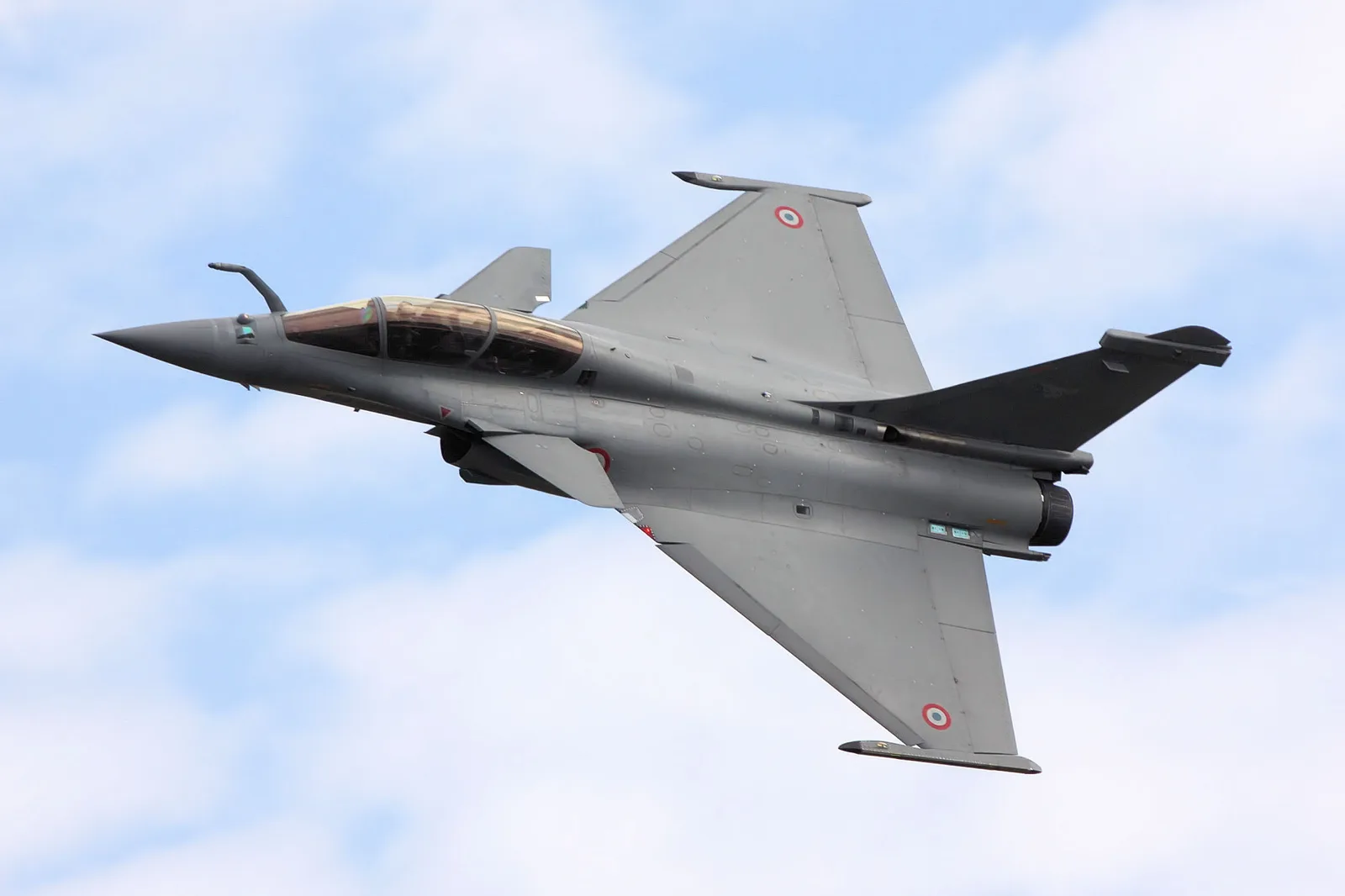
France’s omnirole fighter earns the podium on the sheer breadth of its combat calendar: Afghanistan from 2007, opening strikes over Libya in 2011, Mali in 2013, and ongoing operations against ISIS across Iraq and Syria since 2014. It’s also the jet at the center of the most consequential air-combat event of 2025. In the May India-Pakistan clash, India’s Chief of Defence Staff acknowledged losing aircraft, and France’s own air force chief confirmed at least one Indian Rafale was shot down. Pakistan claimed up to three, brought down by J-10C fighters firing Chinese PL-15 missiles from beyond visual range; India has not confirmed exact tail numbers, so treat the higher counts as a claim while the at-least-one loss stands corroborated by French officials. It’s the Rafale’s first-ever combat loss, a real, sobering data point on how a top 4.5-generation jet fares against a modern long-range missile shot.
“Of course, all those nations that bought Rafales asked themselves questions,” said General Jérôme Bellanger, Chief of Staff of the French Air and Space Force, in the Eurasian Times, July 2025.
Advantages: true omnirole capability, air-superiority, strike, reconnaissance, nuclear delivery and carrier operations, in one airframe, integrated with the SPECTRA electronic-warfare suite; RBE2-AA AESA radar, the Meteor BVR missile, and a fast-maturing F4-standard networking and sensor-fusion package; a strong and growing export base across France, India, Egypt, Qatar, the UAE, Greece, Croatia, Indonesia and Serbia.
Disadvantages: non-stealth; the May 2025 loss demonstrates that even a top-tier 4.5-generation jet is vulnerable to a well-cued long-range missile shot; expensive, with more modest engine thrust than the twin-engine Flankers and Eagles above and below it on this list.
The Rafale flew from 2001 without firing a shot in anger until Libya finally blooded it in 2011. Fourteen years later, its first-ever combat loss came not under French colors but Indian, brought down over Kashmir by a Chinese missile fired from a Pakistani jet.
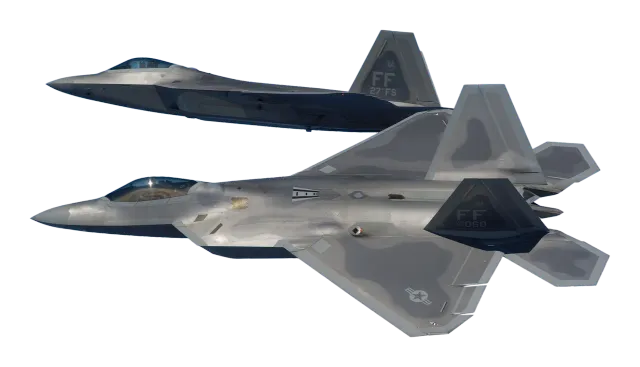
2. F-22A Raptor
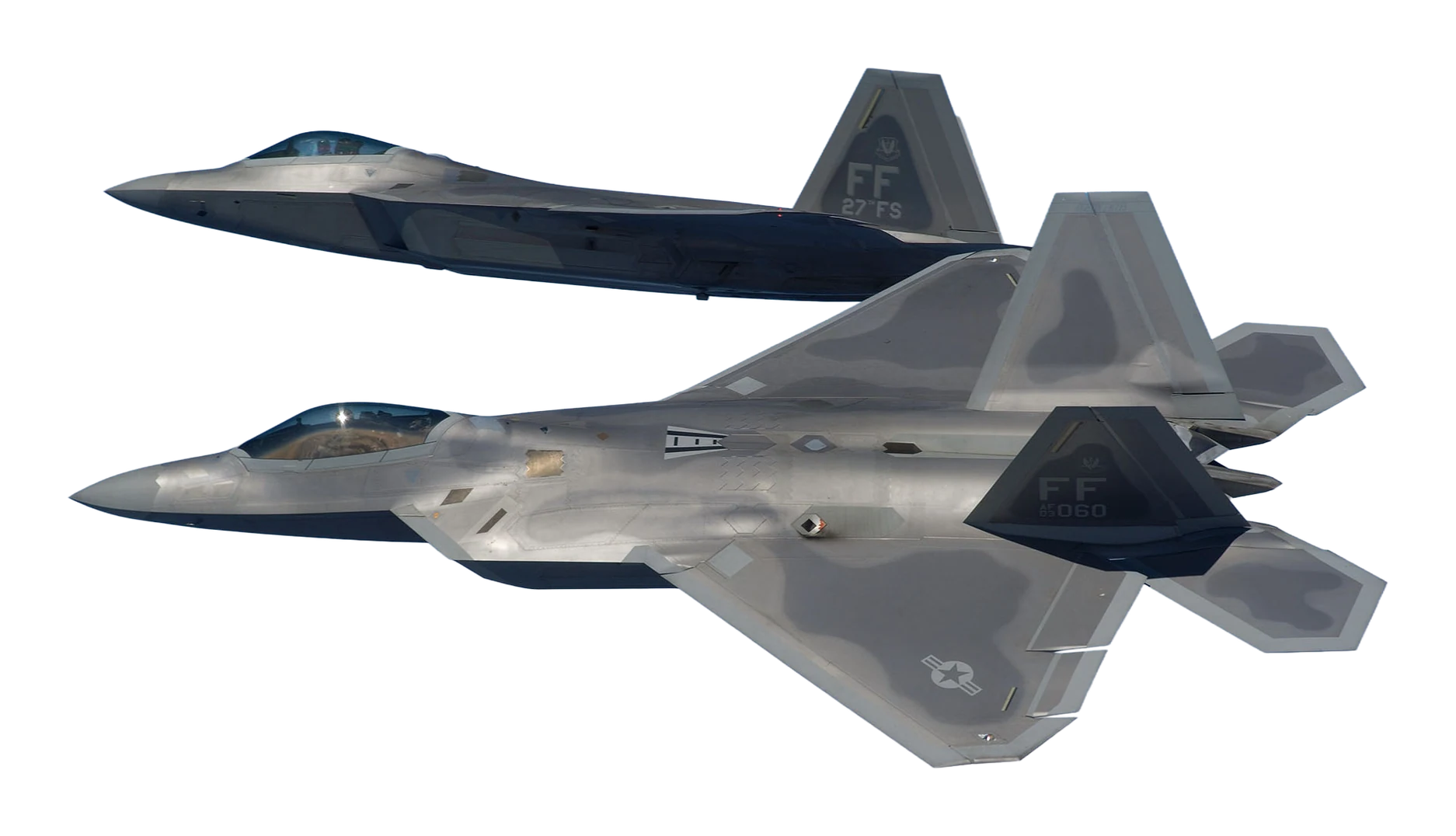
Still the benchmark pure air-superiority fighter, pairing all-aspect stealth with true supercruise and the best raw kinematics of any jet on this list. It sits at 2, not 1, because of a thin combat record, a tiny out-of-production fleet, and the simple fact it has never fought another fighter in the air. Its combat debut came in September 2014, flying air-to-ground strikes against ISIS targets in Syria, followed by years of escort and reconnaissance missions across the Middle East. Its only aerial “kills” came in February 2023, when F-22s shot down a Chinese high-altitude surveillance balloon and several other unidentified objects over North America with AIM-9X missiles, hardly the dogfight its air-superiority design was built for. Production ended in 2011 at roughly 195 aircraft, about 180 of them combat-coded, with no way to build more.
Advantages: the best combination of all-aspect stealth, true supercruise and raw kinematics of any fighter flying; an unrivaled air-superiority sensor and weapons package; combat-proven survivability in contested strike missions over the Middle East.
Disadvantages: out of production since 2011 with only around 180 combat-coded jets and no path to build more, alongside an aging communications and sensor fit compared with newer designs; no air-to-air combat record against a manned aircraft; very high cost and expensive low-observable maintenance.
The mighty Raptor’s only confirmed aerial kill in more than a decade of service is a Chinese spy balloon drifting over the Atlantic, five decades of air-superiority design pedigree cashed in on a target with the airspeed of a light breeze.
1. F-35A Lightning II
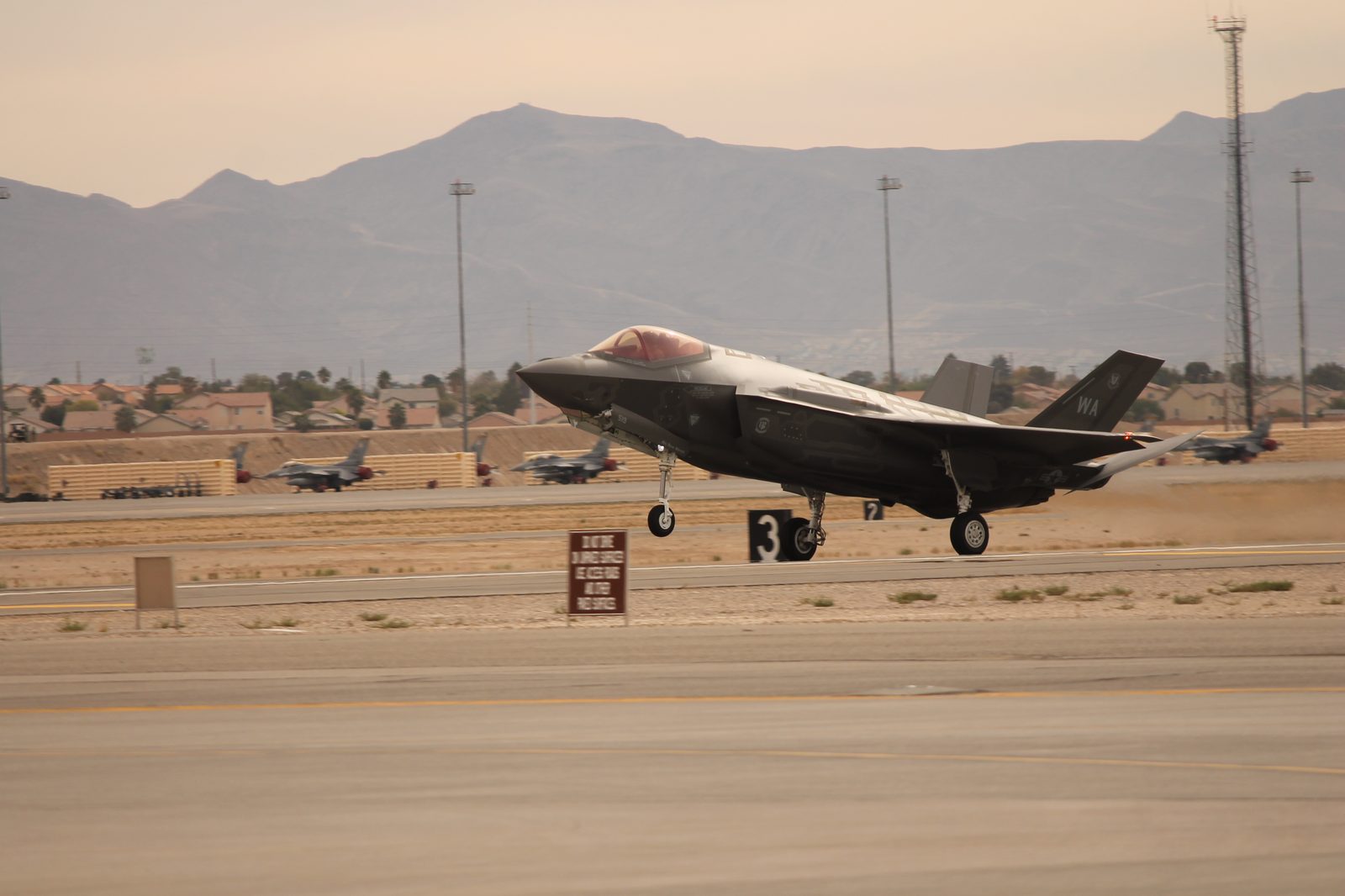
The F-35A wins this list on balance, the exact Leopard 2A7 logic from our tanks ranking: combat-proven, backed by the widest coalition sustainment base of any fighter in service, and carrying sensor fusion nothing else here matches. In a war decided by who survives contact, that balance is the whole argument. Israel’s F-35I “Adir” flew the type’s combat debut in May 2018 and has struck targets across Syria, Lebanon, Yemen and Iran-linked sites in the years since. The high point came in June 2025: Operation Rising Lion was the largest combat use of stealth fighters in history, with F-35s leading roughly 200 aircraft into Iranian airspace, one of the most heavily defended air-defense networks in the Middle East, and Israel lost no manned aircraft. To reach Iran’s deepest targets, Israeli F-35Is carried external drop tanks built with radar-absorbent material, a field-expedient range extension that let them strike without tanker support.
Advantages: sensor fusion, electronic warfare and networked situational awareness no 4.5-generation jet here matches, combined with all-aspect stealth; the largest coalition logistics, weapons and upgrade base of any fighter in service, roughly 20 operators and growing, the single biggest force multiplier in a long war; combat-validated in heavily contested airspace and still in full-rate production.
Disadvantages: the lowest thrust-to-weight ratio on this list with subsonic-biased kinematics, it wins by seeing first, not by turning best; persistent critiques over sustainment cost and fleet availability; single-engine, with a still-maturing software and sensor upgrade path.
The jet its critics spent a decade mocking as overpriced and underperforming came home from the most heavily defended airspace in the Middle East without a single loss, on external fuel tanks its own engineers improvised for the mission.
The 2026 ranking at a glance
| Rank | Jet | Origin | Radar | Combat record | Thrust-to-weight | Approx. unit cost |
|---|---|---|---|---|---|---|
| 1 | F-35A Lightning II | United States | AN/APG-81 AESA | Israel, 2018-, incl. Operation Rising Lion 2025 | 0.87 | ~$82.5M |
| 2 | F-22A Raptor | United States | AN/APG-77 AESA | Syria strikes 2014, balloon shootdown 2023 | 1.08 | ~$143M (program) |
| 3 | Rafale F4 | France | RBE2-AA AESA | Afghanistan, Libya, Mali, Syria, India-Pakistan 2025 | 0.99 | ~$115M |
| 4 | Eurofighter Typhoon | Multi-national | Captor-E AESA (later tranches) | Libya 2011, Iraq/Syria 2015- | 1.15 | ~$124M |
| 5 | F-15EX Eagle II | United States | AN/APG-82 AESA | None (variant); family record since 1979 | 1.06 | ~$90M |
| 6 | F-16C Block 70/72 | United States | AN/APG-83 AESA | Broadest multi-operator record of any jet here | 1.1 | ~$63M |
| 7 | Su-35S | Russia | Irbis-E PESA | Syria 2015-, Ukraine 2022- | 1.13 | ~$65M (claim) |
| 8 | JAS 39E Gripen | Sweden | Raven ES-05 AESA | None (E variant) | 1.05* | ~$85M |
| 9 | J-20 | China | AESA (claim) | None | 1* | not published |
| 10 | Su-57 | Russia | AESA (claim) | None confirmed; drone strikes suffered 2024 | 1.08* | ~$50M (claim) |
*Manufacturer or state figure; type has no confirmed combat record.
The #1 jet on this list, the F-35A, posts the lowest thrust-to-weight ratio of any fighter here, while several of the highest-thrust jets, the Eurofighter, Gripen E and J-20, cluster in the middle or bottom of the ranking. Raw kinematics don't decide this list. Sensors, missiles, stealth and sustainment do.
The bottom line
No jet on this list wins on every axis, and 2025 made that trade-off impossible to ignore: a war decided less by turn rate than by who sees first and who survives contact with a modern integrated air-defense system or a well-cued long-range missile. The F-35A leads on that exact balance, proven stealth and sensor fusion backed by the deepest coalition sustainment base of any fighter flying, but the F-22A, Rafale F4 and Eurofighter Typhoon are close enough that mission profile, budget and how fast you can actually field a fleet should decide a real procurement call.
Run any two of these jets head-to-head in the comparison tool, browse every fighter in the database on the fighter class page, or get a mission-tailored recommendation from the advisor. More rankings and breakdowns like this live on the articles page.
Sources
- Su-57 Felon struck deep inside Russia, Ukraine's spy agency claims, The War Zone
- 2025 India-Pakistan conflict, Wikipedia
- Lockheed Martin F-22, reference specifications, Wikipedia
- Lockheed Martin F-35 Lightning II, reference specifications, Wikipedia
- General Dynamics F-16 Fighting Falcon, reference specifications, Wikipedia
- IAF lost 1 Rafale aircraft, French Air Force boss confirms, Eurasian Times
Systems in this comparison
Every system covered above, with its photo and, where available, a video. Tap a card to open the full spec sheet.
Compare these side by side →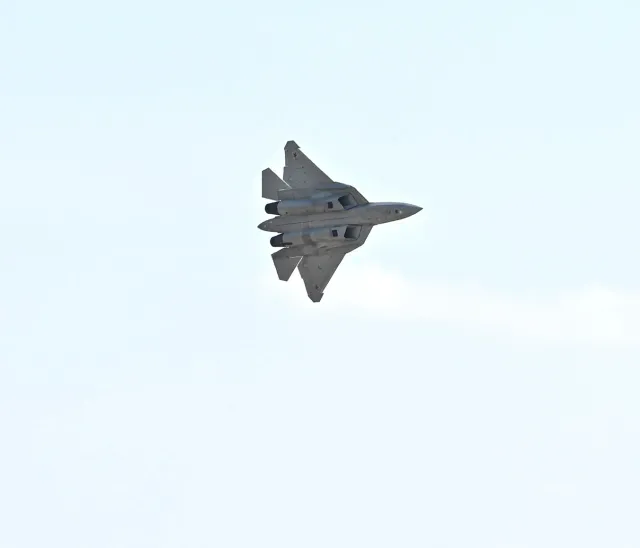
Fighter aircraft
JAS 39E Gripen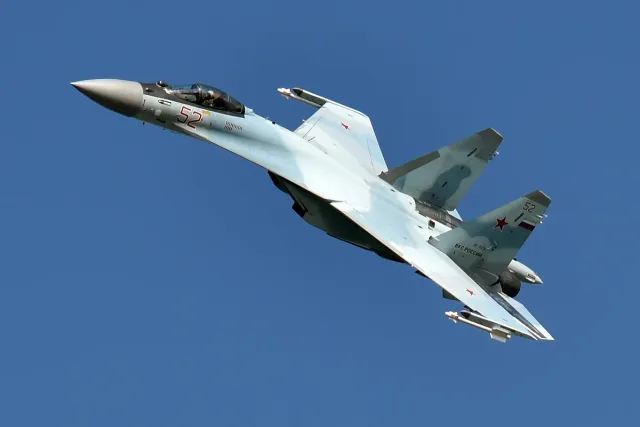
Fighter aircraft
F-16C Block 70/72 Fighting Falcon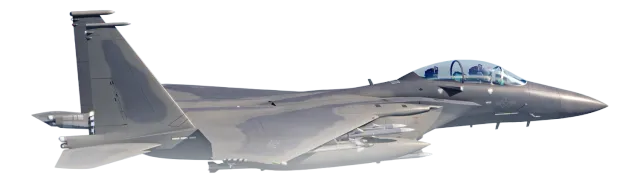
Fighter aircraft
F-15EX Eagle II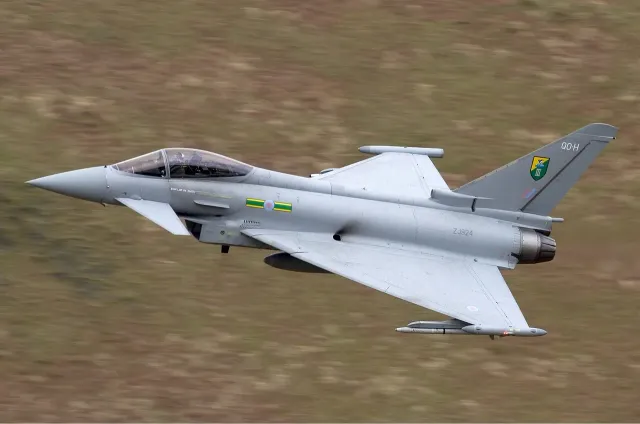
Fighter aircraft
Eurofighter Typhoon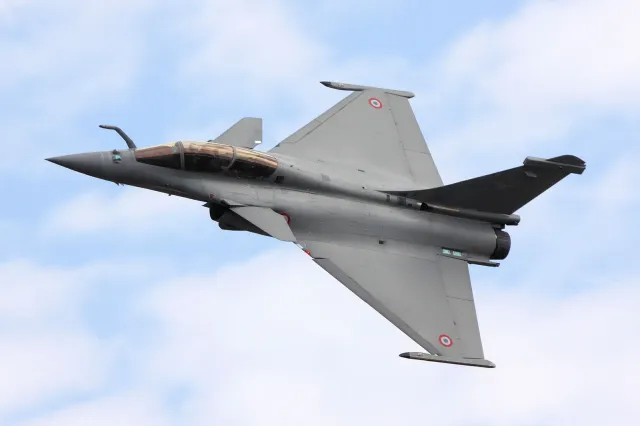
Fighter aircraft
F-22A Raptor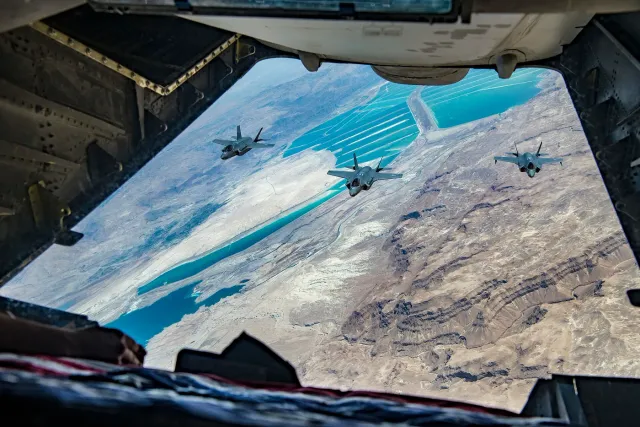
Fighter aircraft
F-35A Lightning IIFrequently asked questions
What is the best fighter jet in 2026? +
The F-35A. It is the only jet on this list combat-validated in heavily contested airspace, it led Israel's June 2025 strikes on Iran with no manned losses, and it pairs sensor fusion and stealth with the widest allied parts, weapons and pilot base of any fighter in service, which matters most in a long war.
Which fighter has the strongest combat record? +
The F-15 family (a widely cited 104-to-0 air-to-air record, more than half of it Israeli) and the F-16 (the broadest multi-operator combat history of any jet flying). Several highly capable jets here, the J-20, Su-57 and Gripen E, have never fought at all.
Has the Su-57 seen combat? +
No confirmed air-to-air combat. Russia claims stand-off missile launches from within its own airspace over Ukraine, unverified, and the best-documented event is Ukrainian drones damaging two Su-57s on the ground at Akhtubinsk airfield in June 2024. Treat its production and performance numbers as unverified state claims.
Did a Rafale really get shot down in 2025? +
India's defence chief acknowledged losing aircraft in the May 2025 clash with Pakistan, and France's air force chief confirmed at least one Rafale was lost. Pakistan claimed up to three, downed by J-10C jets firing PL-15 missiles; India has not confirmed exact numbers, so treat the higher counts as claims.
Is a stealth fighter always better than a 4.5-generation jet? +
No. Mission, missile (Meteor changed the math for the Rafale, Typhoon and Gripen), sensors and sustainment decide it. The Rafale, Typhoon and F-15EX remain top-tier aircraft, and cost and logistics often settle a real procurement call.
Related reading