Pentagon taps Lockheed Martin and nLIGHT for Joint Laser Weapon System
The Department of War has awarded parallel contracts, $44 million to nLIGHT Defense and a matching initial award to Lockheed Martin's Aculight subsidiary, to build containerized directed-energy weapons meant to counter drone swarms and cruise missiles, with a combined program ceiling reported at up to $847 million.
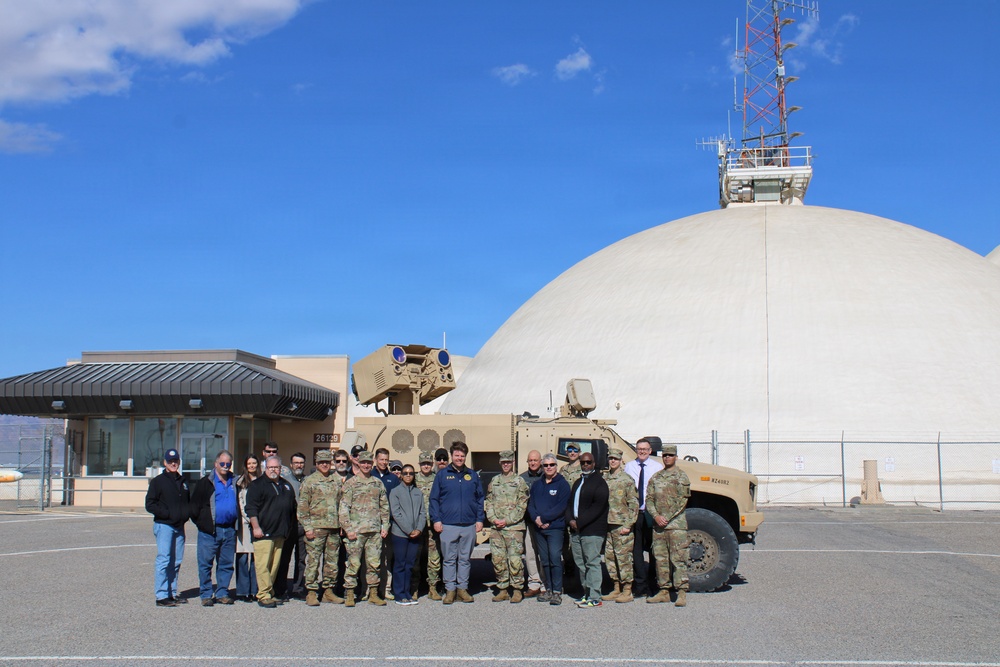
U.S. Air Force courtesy photo, 316th Wing, DVIDS, public domain
The Department of War has awarded parallel contracts to Lockheed Martin’s Aculight subsidiary and nLIGHT Defense to build prototype directed-energy weapons under the new Joint Laser Weapon System program, with nLIGHT’s confirmed initial award at $44 million and a combined program ceiling across both companies reported at up to $847 million, according to DefenseScoop and Breaking Defense. The contracts, announced July 9, 2026, are meant to produce containerized, modular laser systems that can be moved onto vehicles and ships to shoot down drone swarms and cruise missiles, the kind of low-cost, saturating threats that expensive missile interceptors are poorly suited to counter one at a time.
Why the Pentagon needs this now
The core problem JLWS is meant to solve is economic as much as technical: a single cruise missile or a handful of drones can force a defender to fire a missile interceptor costing far more than the threat itself, a math problem that breaks down entirely against a coordinated drone swarm. A laser weapon, once built and powered, can engage repeatedly without reloading, which is why the Pentagon has spent years chasing directed-energy programs. The catch has always been making a laser powerful and precise enough to reliably kill a fast-moving, hardened target rather than just a slow-moving test drone, and that gap is exactly where JLWS’s predecessor program ran into trouble.
That predecessor was the Army’s Indirect Fire Protection Capability-High Energy Laser, nicknamed Valkyrie, a 300-kilowatt Lockheed Martin system that the Army will not transition into a program of record after years of development, according to Stars and Stripes, which reported the decision in March 2026. Valkyrie struggled with a specific, hard problem: maintaining a continuous beam lock on fast, hardened cruise-missile targets long enough to disable a warhead or its guidance system, rather than just scoring a hit. Instead of scrapping the effort, the Army is folding Valkyrie’s single existing prototype into JLWS to inform the new program’s design, which is why JLWS reads less like a clean-sheet start and more like a structural correction built on a hard lesson.
What the new contracts actually buy
Per DefenseScoop’s reporting, JLWS is being run out of the Office of the Under Secretary of War for Research and Engineering’s Scaled Directed Energy critical technology area, with an explicit mandate to move directed-energy weapons out of one-off demonstration prototypes and into containerized, modular, production-oriented platforms. The initial prototypes are reported at roughly 150 kilowatts, with a scaling path toward 300 to 500 kilowatts for harder, cruise-missile-class targets, a staged approach meant to prove out beam control and tracking at a lower power level before committing to the much harder high-power engagement problem that tripped up Valkyrie.
Lockheed Martin’s own announcement, separately, touts a 500-kilowatt containerized system under the JLWS banner, describing it as the highest-power laser the company has packaged into a transportable container. Under Secretary of War for Research and Engineering Emil Michael framed the contracts in defensive, force-protection terms rather than as an offensive capability:
“We must actively defend the homeland against emerging threats, we are partnering with industry to rapidly deliver deep magazine directed energy capabilities to the Joint Force that can be seamlessly deployed across multiple domains,” said Emil Michael, Under Secretary of War for Research and Engineering (DefenseScoop, July 9, 2026).
Both contracts are structured as Other Transaction Authority agreements rather than traditional FAR-based contracts, a mechanism that lets the Pentagon move faster on prototyping and skip some of the procurement overhead that has historically slowed directed-energy programs down, though it also means the bulk of that $847 million ceiling is conditional on the prototypes actually clearing performance milestones rather than money already committed.
Reading the timeline correctly
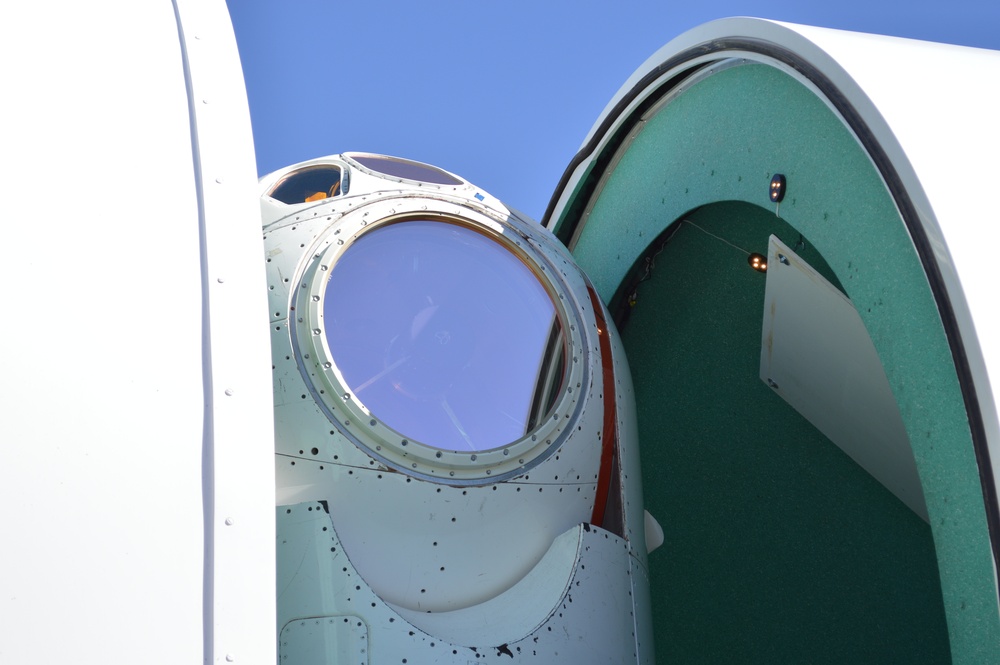
It is worth separating two events that reporting sometimes runs together. On June 23, 2026, Secretary of War Pete Hegseth and Under Secretary Michael personally watched a broader directed-energy live-fire demonstration at White Sands Missile Range, where systems from AeroVironment, nLight, Lockheed Martin, Epirus, and Raytheon, ranging from 20 to 300 kilowatts, engaged test targets. That was a contextual precursor demonstration of the Pentagon’s existing directed-energy portfolio, not a JLWS-specific validation test, and JLWS itself was not announced until roughly two weeks later, on July 9. The White Sands event is useful background for how seriously the Pentagon has been pursuing directed energy broadly, but it should not be read as evidence that the JLWS prototypes themselves have already been tested.
Why this is a defensive program, not an escalation
Every official description of JLWS frames it around defending fixed sites, deployed forces, and naval platforms against drones and cruise missiles already inbound, engineering framing rather than a new strike capability. That distinction matters for how to read the story: JLWS is a force-protection and cost-per-engagement play, not a new offensive weapons system, and the containerized, platform-neutral design specifically targets integration onto existing ground vehicles and ships rather than a dedicated new launch platform.
Sources
- Pentagon picks Lockheed, nLIGHT for laser defense project — Breaking Defense, Jul 15, 2026
- Pentagon awards deals for laser weapons that could shoot down drone swarms — DefenseScoop, Jul 9, 2026
- Lockheed Martin Awarded 500 kW Joint Laser Weapon System Contract — Lockheed Martin, Jul 9, 2026
- Army shelves planned 'Valkyrie' laser system, switches to joint program — Stars and Stripes, Mar 25, 2026
Frequently asked questions
What is the Joint Laser Weapon System (JLWS) program? +
JLWS is a Department of War effort, run out of the Office of the Under Secretary of War for Research and Engineering's Scaled Directed Energy critical technology area, to move laser weapons from one-off demonstration prototypes into containerized, modular systems that can actually be fielded and produced at scale. It is explicitly framed as a counter-drone-swarm and counter-cruise-missile capability for homeland and force protection, not an offensive strike weapon.
How much money is actually involved, and what happens next? +
The confirmed initial award is $44 million to nLIGHT Defense, with a combined program ceiling across both nLIGHT and Lockheed Martin reported at up to $847 million if all options and follow-on phases are exercised. That ceiling covers potential future development, integration, and production phases, it is not money committed today. The initial contracts are structured as Other Transaction Authority agreements, which let the Pentagon move faster than a traditional FAR-based contract but also mean the follow-on funding is conditional on the prototypes actually working.
Is JLWS related to the Valkyrie laser system the Army just shelved? +
Yes, directly. The Army's 300-kilowatt Indirect Fire Protection Capability-High Energy Laser, nicknamed Valkyrie and built by Lockheed Martin, will not transition to a program of record after years in development, according to reporting from Stars and Stripes and Military Times in March 2026. Rather than being scrapped outright, its single prototype is being folded into JLWS to inform the new program, making JLWS as much a course correction from Valkyrie's struggles as a clean-sheet start.
How does a laser weapon actually stop a drone or missile, and is 150 kilowatts enough? +
A high-energy laser holds a focused beam on a target for long enough to structurally damage it or destroy its guidance electronics, works well against slower, less-hardened targets like small drones, but gets much harder against fast, hardened cruise missiles, precisely the technical problem Valkyrie ran into. JLWS is reported to start with roughly 150-kilowatt initial prototypes and scale toward 300 to 500 kilowatts for harder targets, a staged approach meant to prove the beam-control and tracking technology at a lower power level before betting on the much harder high-power cruise-missile-defense case.
More news