Air Force and DARPA fly an F-16 under AI control at Eglin
A modified F-16 flew with an AI agent handling flight controls during cruise phase at Eglin Air Force Base in July, a DARPA and Air Force milestone meant to prove pilots can safely hand off control mid-flight.
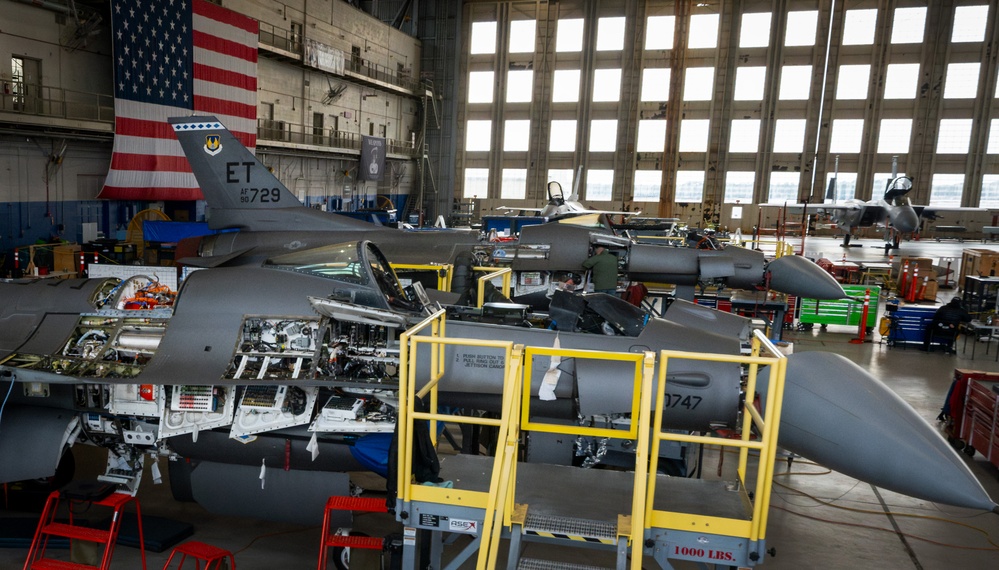
U.S. Air Force photo by Samuel King Jr., DVIDS, public domain
A modified F-16 fitted with DARPA and U.S. Air Force autonomy hardware flew with an AI agent handling flight controls during cruise phase at Eglin Air Force Base, Florida, in a test the two organizations announced July 16 and completed by July 20. A human safety pilot remained in the cockpit throughout, able to reclaim control instantly, but for stretches of the flight the aircraft’s level flight, turns and sensor operations were run by software rather than a person, a milestone DARPA is framing as the first sustained autonomous flight of a fully equipped, sensor-active crewed combat jet.
The program is called VENOM, the Viper Experimentation and Next-gen Operations Model, a joint effort between DARPA’s Artificial Intelligence Reinforcements program and the Air Force, run out of Eglin’s 96th Test Wing with its 40th Flight Test Squadron flying the jets and the 53rd Wing collaborating. Six standard F-16Cs are being converted into VENOM test platforms; the first three arrived at Eglin for modification in 2024 and the last arrived April 1, 2025, according to The Aviationist, which reported that this month’s flight came after two years of hardware and software integration work.
What the kit actually changes
The VENOM Autonomy Kit adds an auto-throttle system that lets the AI regulate engine thrust and connects to the jet’s Flight Control System computer to manage control surfaces, with safety limiters built in to keep the autonomy from exceeding the aircraft’s flight envelope. Critically, DARPA says the kit does this without altering the F-16’s core flight software, an aftermarket layer rather than a rebuild of the jet’s underlying systems. A physical switch in the cockpit lets the pilot toggle between human and AI control at will, and the program calls this arrangement human-on-the-loop: the AI flies, but a person is always present and able to intervene in real time, not a remote operator watching from the ground.
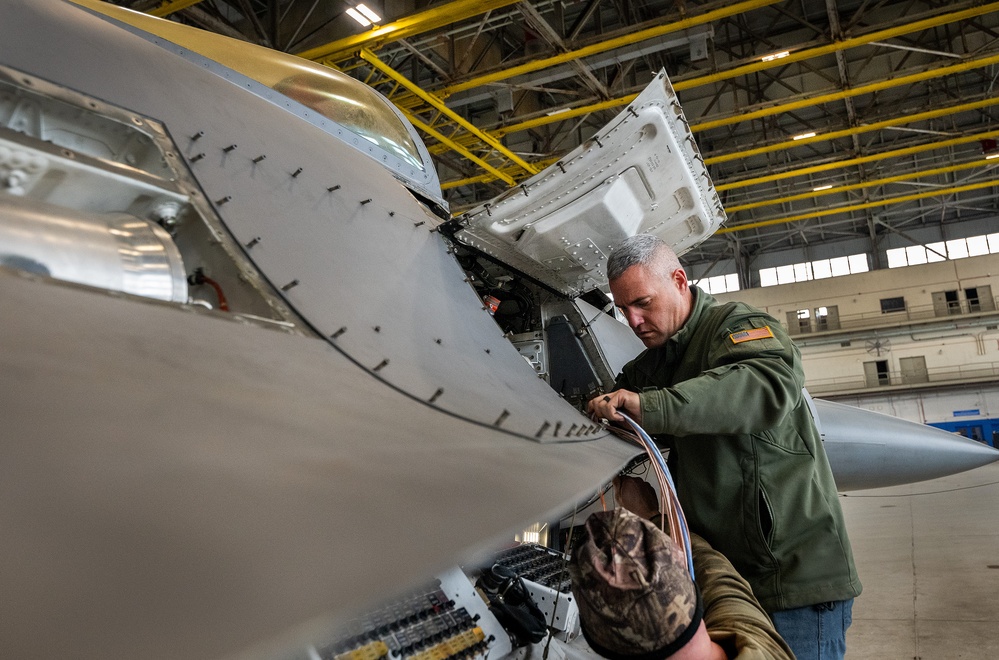
Under current test rules, a human pilot still handles takeoff and landing; the AI’s role is confined to cruise-phase flight, maneuvering and sensor operation, including radar and FLIR tasking, according to DARPA’s own account. No weapons employment has been tested. VENOM builds directly on the X-62A VISTA program, which demonstrated AI-controlled dogfighting maneuvers under DARPA’s Air Combat Evolution effort, but VENOM’s aircraft carry a full mission-systems suite rather than a stripped-down test airframe, which is the basis for DARPA’s claim that this is a step beyond the VISTA work rather than a repeat of it.
Why this matters more than a single test flight
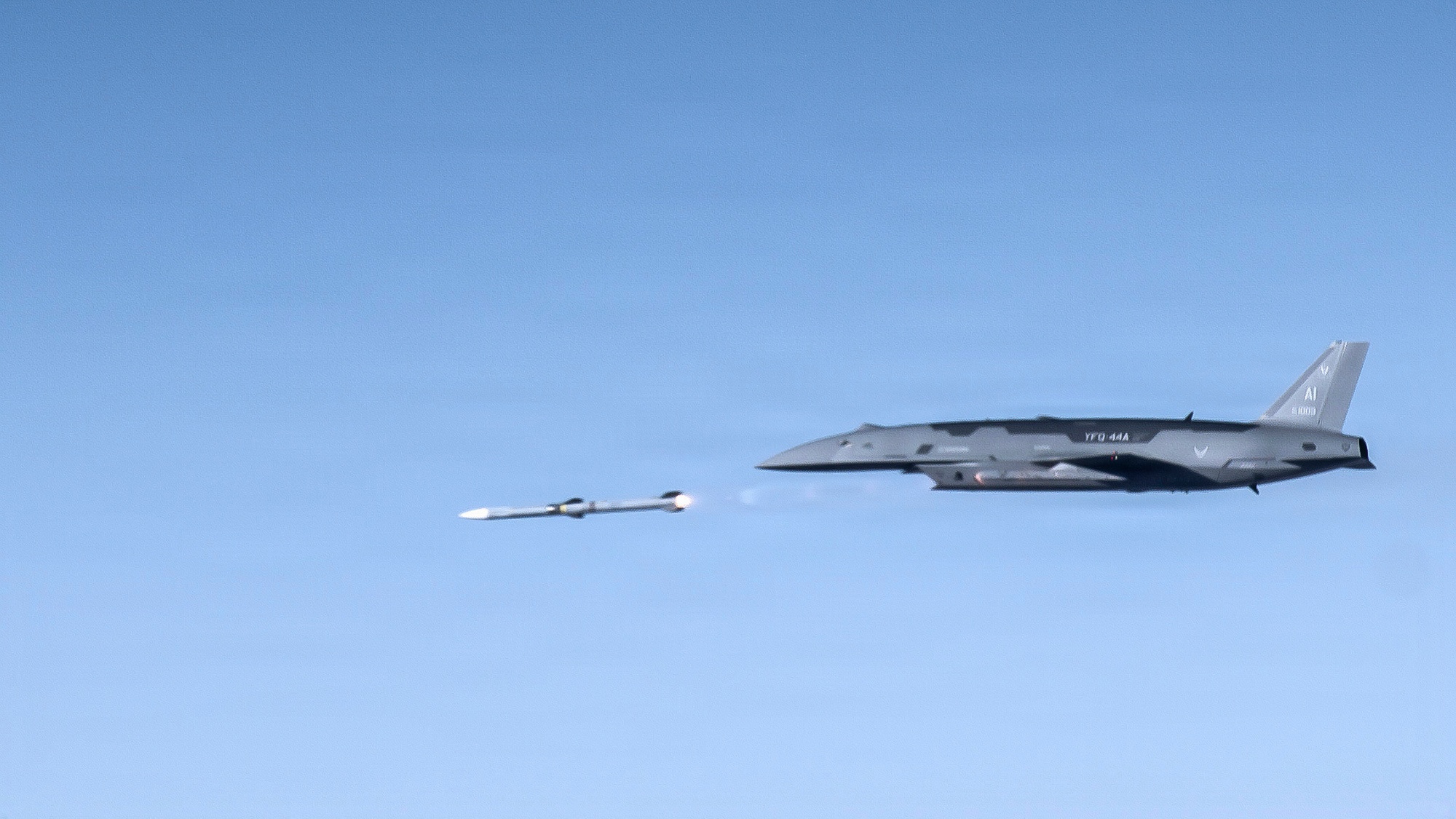
The stated destination for VENOM is the Air Force’s Collaborative Combat Aircraft program, the effort to field autonomous “loyal wingman” drones that fly alongside crewed fighters and extend their sensor reach and weapons capacity. WeaponSpecs already tracks two of the program’s Increment 1 winners, General Atomics’ YFQ-42A and Anduril’s YFQ-44A, with a combined production run of 150 aircraft planned by 2030. The logic connecting VENOM to CCA is straightforward: before the Air Force asks a single pilot to direct several uncrewed CCA drones in combat, it needs proof that an AI agent can reliably fly a real, sensor-active aircraft on its own for extended periods, and an F-16 with a pilot still aboard as a safety net is a far lower-risk way to generate that proof than testing on an actual uncrewed CCA airframe.
“The Air Force and DARPA team has automated flight controls without changing the jet’s core software,” said Brig. Gen. James “Fangs” Valpiani, DARPA program manager for the Artificial Intelligence Reinforcements program in its Tactical Technology Office (DARPA, July 16, 2026).
Valpiani, who previously commanded the Air Force Test Pilot School and oversaw the X-62A VISTA program, separately said the effort aims to “develop trusted, autonomous air combat capabilities” in direct support of CCA development. Lt. Col. Patrick “Dice” Highland, incoming DARPA program manager for the same effort, added that the program creates “the opportunity to create dominant autonomy for beyond-visual-range, multi-ship combat.” Tim Stevens, a VENOM test pilot with the 40th Flight Test Squadron, called the flight “a monumental milestone for a complex test program,” representing “years of design, modification and test planning poured into this project by a dedicated team of hundreds.”
Sources
- DARPA and U.S. Air Force fly AI-controlled F-16, paving the way for autonomous air combat — DARPA, Jul 16, 2026
- Air Force begins piloted flights, autonomy tests for modified F-16s — Military Times, Jul 20, 2026
- F-16 outfitted with AI kit completes pathbreaking sortie in 'monumental milestone' — Stars and Stripes, Jul 20, 2026
- DARPA and USAF Fly F-16 with VENOM Autonomy Modification — The Aviationist, Jul 16, 2026
- U.S. Air Force F-16 fighter flies under AI control as DARPA expands VENOM combat tests — Army Recognition, Jul 20, 2026
Systems mentioned
Every system named in this story, with its photo and, where available, a video. Tap a card to open the full spec sheet.
Compare these side by side →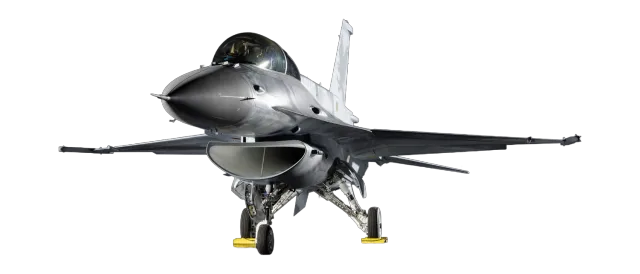
Fighter aircraft
F-16C Block 52 Fighting Falcon Fighter aircraft
F-16C Block 70/72 Fighting FalconUAV / drone
YFQ-42A (Dark Merlin)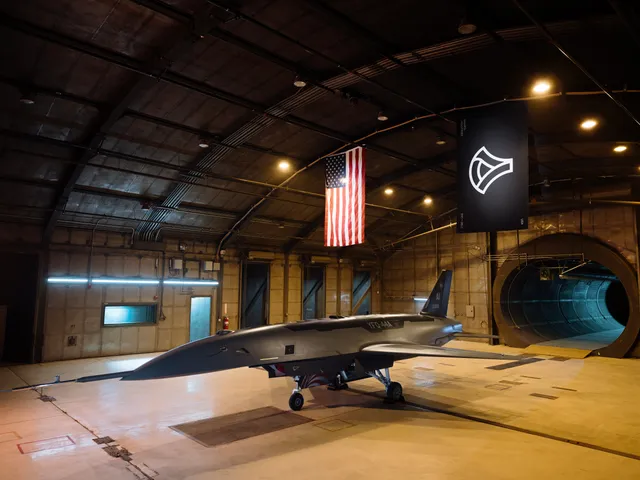
UAV / drone
Fury (YFQ-44A)Frequently asked questions
What is VENOM and what actually happened in this flight test? +
VENOM, the Viper Experimentation and Next-gen Operations Model, is a joint DARPA and U.S. Air Force program that fits standard F-16s with the VENOM Autonomy Kit (VAK), hardware and software that lets an AI agent fly the jet. In June and July 2026 at Eglin Air Force Base, a modified F-16 completed flights in which the AI controlled the aircraft during level flight, turns and sensor operations, with a human safety pilot in the cockpit throughout who could take back control instantly.
Does the AI fly the whole mission, including takeoff and landing? +
No. A human pilot handles takeoff and landing under current test rules. The AI controls the aircraft during the cruise and maneuvering phases of flight, and a physical cockpit switch lets the pilot toggle between human and AI control in real time, an approach the program calls human-on-the-loop rather than fully autonomous.
Has this F-16 fired any weapons under AI control? +
No. VENOM testing to date covers flight control, navigation and sensor operation, radar and FLIR, not weapons employment. The Air Force has described a follow-on phase that could eventually test weapons-related functions, but no live-fire or weapons-employment testing under AI control has occurred as of this story's publication.
How does VENOM connect to the Air Force's other drone programs? +
VENOM is explicitly framed as feeding the Collaborative Combat Aircraft (CCA) program, the effort to field autonomous 'loyal wingman' drones like General Atomics' YFQ-42A and Anduril's YFQ-44A that would fly alongside crewed fighters. Proving that an AI agent can safely fly a real, sensor-equipped combat aircraft is a step toward one human pilot eventually directing multiple autonomous aircraft in the same formation.
More news