GAO: Navy hypersonic missile now 2 years late, output halved
A new GAO audit finds the Navy's Conventional Prompt Strike missile 24 months behind schedule, Lockheed Martin building barely half the required rate.
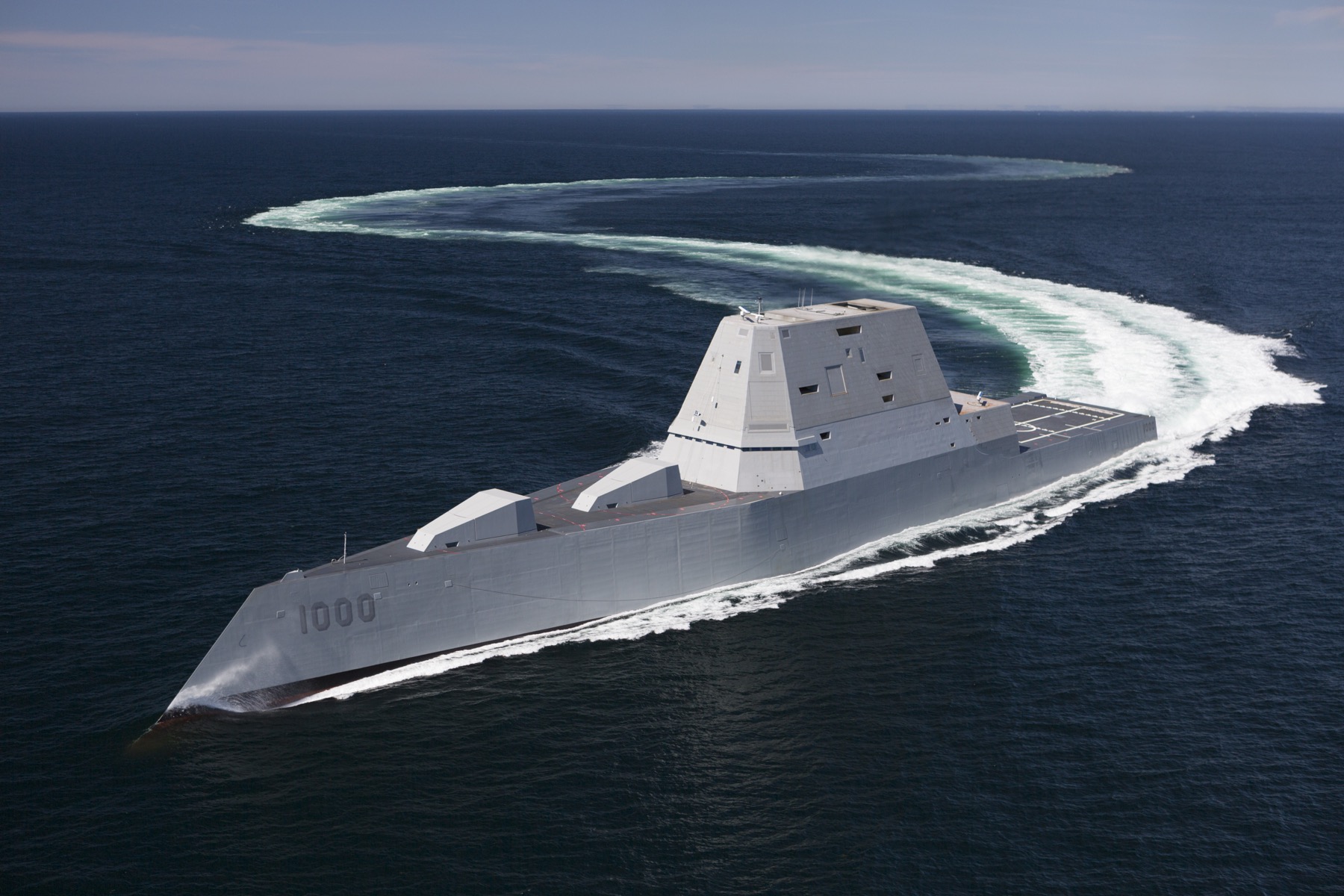
U.S. Navy photo 160421-N-YE579-005, National Museum of the U.S. Navy via Wikimedia Commons, public domain
The Government Accountability Office says the Navy’s Conventional Prompt Strike hypersonic missile, the weapon meant to give USS Zumwalt its reason for existing, is now 24 months behind schedule, with Lockheed Martin able to build barely half the missiles a year the program needs, according to a report released July 17, 2026 and covered July 20 by Stars and Stripes and Naval Today. The first at-sea flight test, originally planned for 2025, has slipped to 2027. The Navy’s own cost estimate for the missile program has grown from roughly $31 billion to $41 billion since 2020, even as the planned missile count fell from 262 to 224, per DefenseScoop.
Key takeaways:
- The Conventional Prompt Strike program is 24 months behind schedule; first at-sea flight testing on USS Zumwalt now targets 2027, not 2025.
- Lockheed Martin can currently build 6 to 7 CPS missile rounds a year against a required rate of 12, per GAO.
- Navy CPS program cost has risen from about $31 billion (2020, 262 missiles) to about $41 billion (2024, 224 missiles); average unit cost is $63 million to $71 million.
- USS Zumwalt was 94 percent complete as of January 2026 and is expected back in the fleet around September 2026.
- GAO found the Navy and Army “continue to make major investment decisions independently” on a missile the two services jointly developed and are jointly trying to mass-produce.
This is a different, more specific GAO product than the broader 104-program weapons-delay report WeaponSpecs covered on July 6, which surveyed the Pentagon’s entire major-program portfolio and mentioned the Army/Air Force’s Long Range Hypersonic Weapon only in passing. This report, GAO-26-107974, “Navy Ship Modernization: DOD Needs Comprehensive Strategy to Field Hypersonic Missile Capability,” is a dedicated deep-dive into the Navy and Army’s shared hypersonic missile effort specifically, with new production-line and cost detail the July 6 report did not contain.
How far behind is the missile now, and why does Zumwalt matter?
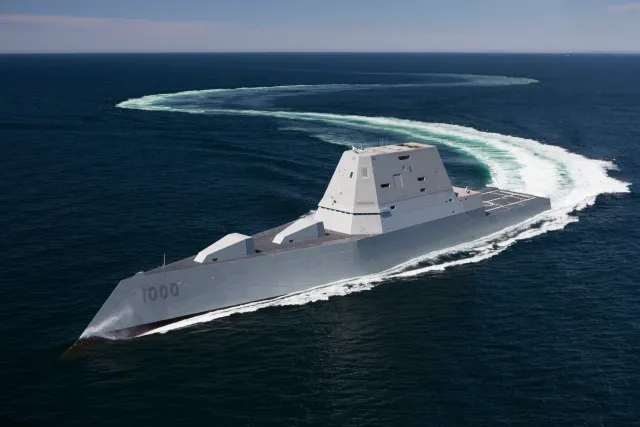
USS Zumwalt (DDG-1000) is the lead ship of a class originally meant to run to 32 hulls before soaring per-unit costs cut the program to three. With its intended mission of naval gunfire support made obsolete by the cancellation of its specialized ammunition, the Navy re-roled the ship as the Conventional Prompt Strike missile’s first at-sea platform, ripping out its two 155mm Advanced Gun Systems and replacing them with four launch tubes, each holding three Intermediate-Range Conventional Prompt Strike rounds, for 12 missiles per ship, according to The War Zone. That conversion work, the Build Yard Modernization Period, began in 2023 and was 94 percent complete as of January 2026, per GAO, with the Navy now targeting a fleet return around September 2026, roughly 10 months behind that specific overhaul’s own internal schedule. Unplanned work, including added cabling and electrical-system equipment failures during the ship’s first full shutdown of its Integrated Power System since delivery, added an estimated 230,000 work hours and $20 million in cost, per The War Zone.
That 10-month shipyard slip is separate from, and smaller than, the 24-month slip in the missile itself reaching an at-sea flight test. Zumwalt can be structurally ready to carry Conventional Prompt Strike rounds well before the missile program can reliably supply and validate them, exactly the mismatch GAO’s report describes.
Why can Lockheed Martin only build 6 to 7 missiles a year?
GAO’s production findings are unusually granular for a hypersonic-weapons audit. Contaminated thermal-protection coating materials, the heat-shielding layer that lets a glide body survive atmospheric reentry without burning up, have contributed directly to schedule slips, according to DefenseScoop. Missile assembly kits, the pre-staged part sets needed for each production stage, have shipped incomplete, forcing technicians to strip parts from other kits to keep a unit moving, sometimes requiring partial disassembly of already-built rounds.
Workforce capacity compounds both problems. The line has grown from roughly 60 to 80 employees, but turnover has been high as technicians leave for other programs, and GAO found new hires need close to a year before they can work independently, slowed further by instructions written more like engineering specifications than shop-floor guidance. Lockheed Martin, asked for comment, said only that it is “enhancing production and manufacturing processes to deliver faster,” per DefenseScoop, without disputing GAO’s figures.
Lockheed Martin's factory is running at roughly half the rate the Navy and Army need to stabilize a shared production line for a missile both services are counting on to arm both a warship and a ground battery.
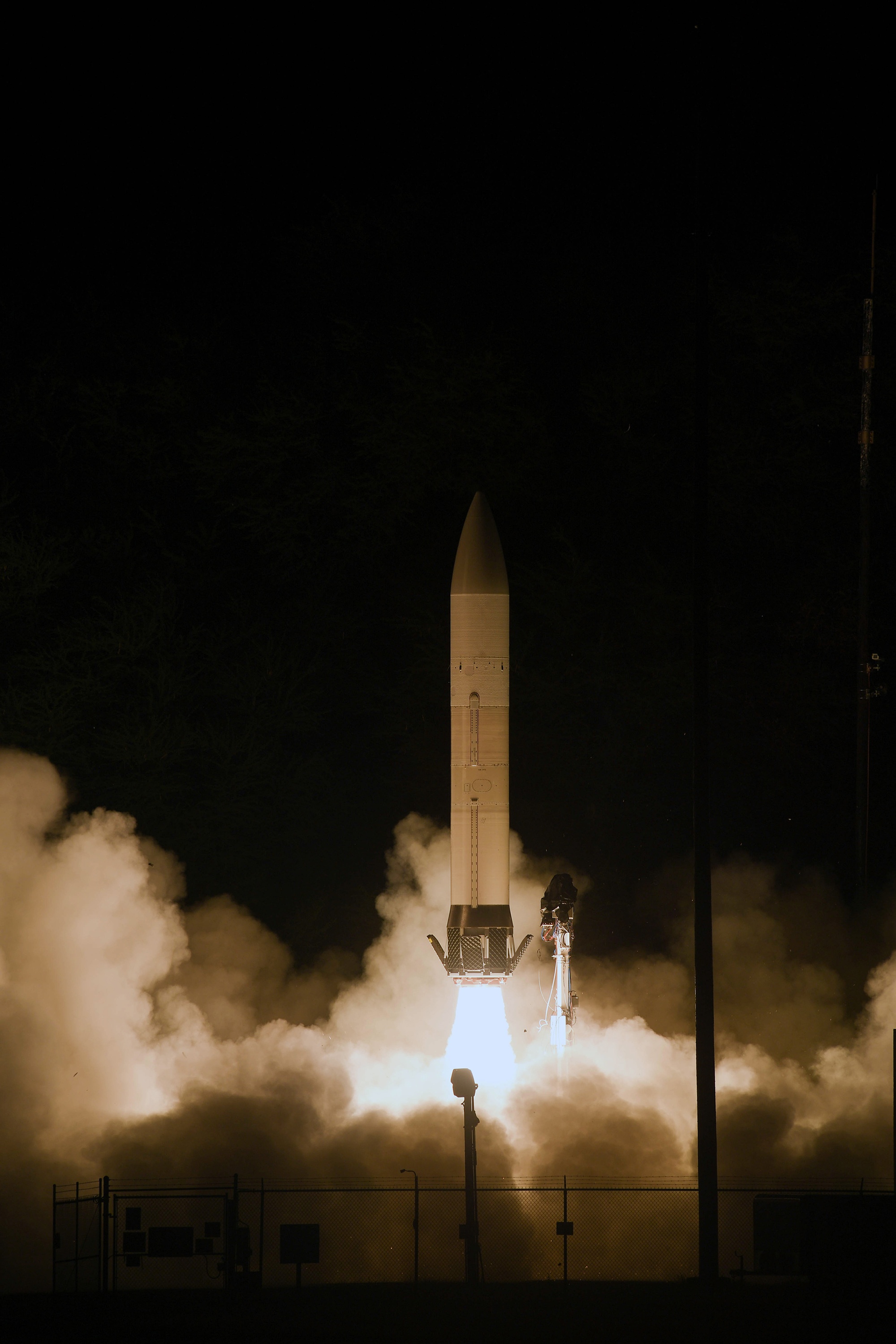
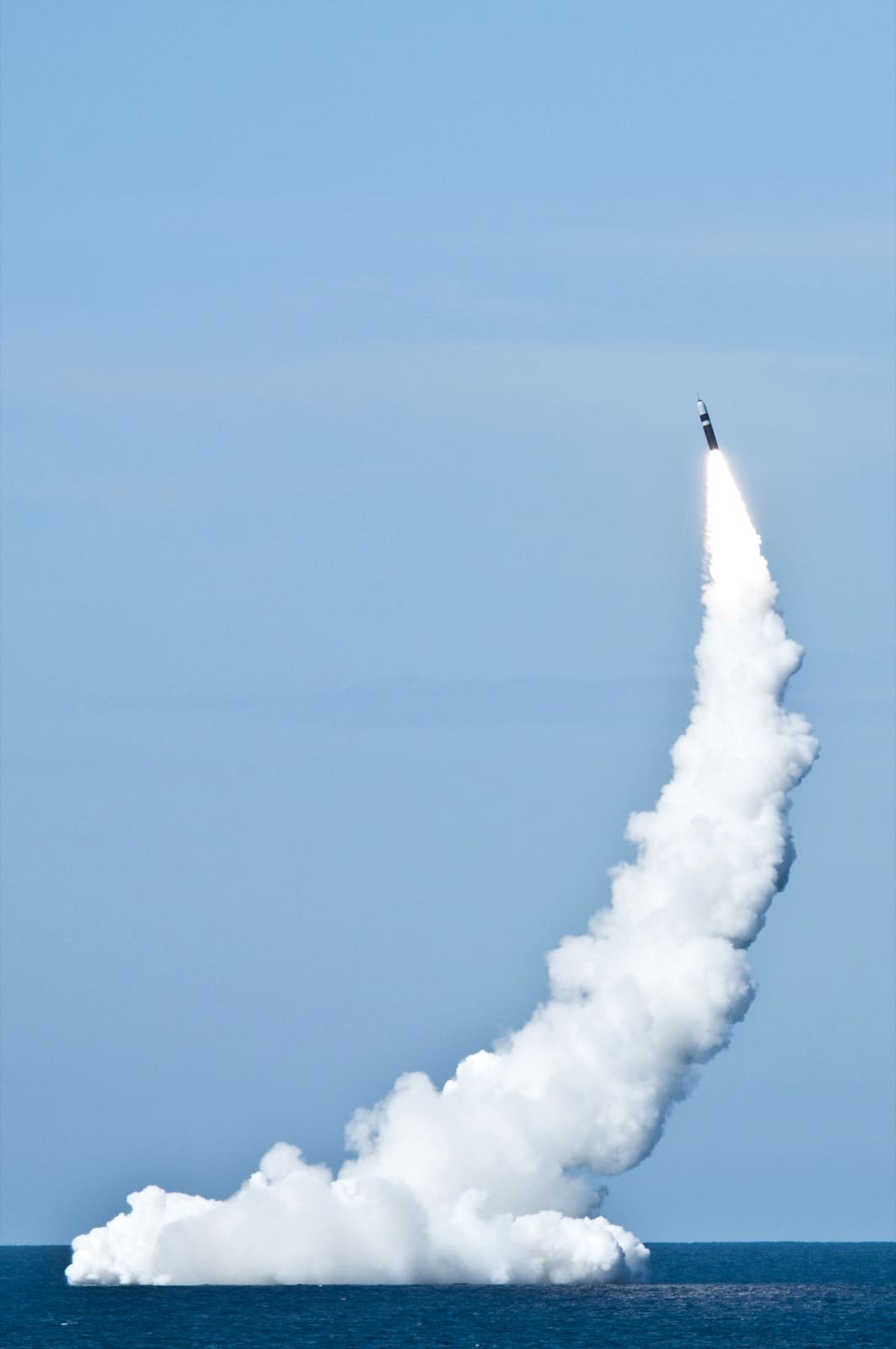
The Common Hypersonic Glide Body launches from the Pacific Missile Range Facility in Kauai, Hawaii, in an earlier joint test. The Navy's Conventional Prompt Strike and the Army's Long Range Hypersonic Weapon share this glide body and, largely, the same production line. Photo by Lt. Jennifer Bowman, U.S. Navy/DVIDS, public domain.
Why does it matter that the Navy and Army invest separately?
The Navy’s Conventional Prompt Strike and the Army’s Long Range Hypersonic Weapon, known as Dark Eagle, are not competing programs, they are the same missile round in two different launchers, sharing a common glide body and, largely, the same Lockheed Martin production line. Combined, the services plan to invest more than $50 billion developing, testing, producing and fielding this shared capability, per Naval Today. Yet GAO found “the services largely manage investment decisions for these programs separately, which contributes to inefficiencies and delays,” reported by Breaking Defense alongside GAO’s recommendation that the Secretary of Defense direct a genuinely coordinated investment strategy across both services’ CPS-family spending, something that does not exist today despite the shared hardware. That gap is plausibly why a single contractor’s factory floor, not a design flaw or failed test, is now the pacing item for two services’ flagship strike programs: neither can unilaterally fix a bottleneck on production capacity it only partly controls.
What does a 2-year slip and a halved production rate actually mean?
The headline numbers matter less on their own than what they add up to for the timeline of the United States fielding its first operational hypersonic strike weapon. China has fielded the DF-17 hypersonic glide-vehicle system and Russia has claimed operational use of both the Kinzhal and Zircon hypersonic missiles against Ukraine, claims this site has flagged as state assertions rather than independently verified combat performance. The U.S. program was conceived specifically to close that perceived gap. A missile that cannot reach its own Navy at more than 6 to 7 rounds a year is not simply late, it is a program that, even once fielded, will take years to accumulate a stockpile large enough to matter operationally: at the current build rate, replacing even a modest expended inventory after a real conflict would take longer than most planners assume a high-intensity fight against a peer competitor would last. A 2027 first at-sea test does not mean meaningful numbers of missiles reach deployable ships and Army batteries in 2027, it means the clock on building that stockpile, at half the intended speed, does not even start in earnest until then.
Sources
- Hypersonic missile program for Navy, Army delayed to 2027 — Stars and Stripes, Jul 20, 2026
- GAO: US Navy's Zumwalt hypersonic missile upgrade program hit by major delay — Naval Today, Jul 20, 2026
- GAO: Lockheed Martin struggling to build Navy hypersonic missile at scale — DefenseScoop, Jul 17, 2026
- USS Zumwalt Set To Return To Fleet After Long Anticipated Hypersonic Missile Upgrade — The War Zone, Jul 17, 2026
- Navy, Army risk wasting money, time without unified hypersonic missile strategy: GAO — Breaking Defense, Jul 17, 2026
Systems mentioned
Every system named in this story, with its photo and, where available, a video. Tap a card to open the full spec sheet.
Warship
Zumwalt-class DestroyerFrequently asked questions
How far behind schedule is the Navy's Conventional Prompt Strike missile? +
A GAO report released July 17, 2026 (GAO-26-107974) found the program 24 months behind its original schedule. The first at-sea flight test aboard USS Zumwalt, originally planned for 2025, is now expected no earlier than 2027.
Why can Lockheed Martin only build 6 to 7 missiles a year? +
GAO attributes the shortfall to contaminated thermal-protection coating materials, missile kits missing parts that then have to be borrowed from other kits, and a small, high-turnover workforce (roughly 60 to 80 technicians) working from instructions written more like engineering specifications than manufacturing guidance. New workers reportedly need close to a year to perform independently.
How much has the program's cost grown? +
The Navy's Conventional Prompt Strike program cost estimate rose from about $31 billion in 2020, covering a planned 262 missiles, to about $41 billion in 2024, covering 224 missiles, according to GAO. Separately, GAO put the average unit cost at $63 million to $71 million per missile, roughly $67 million on average. The cost of converting all three Zumwalt-class hulls to fire the missile has separately risen from $1.8 billion to at least $2 billion.
When will USS Zumwalt return to the fleet? +
The Navy expects USS Zumwalt back in the fleet around September 2026 following its Build Yard Modernization Period, which began in 2023 and is now running roughly 10 months behind its own schedule, distinct from the 24-month slip in the missile's own flight-test timeline.
More news