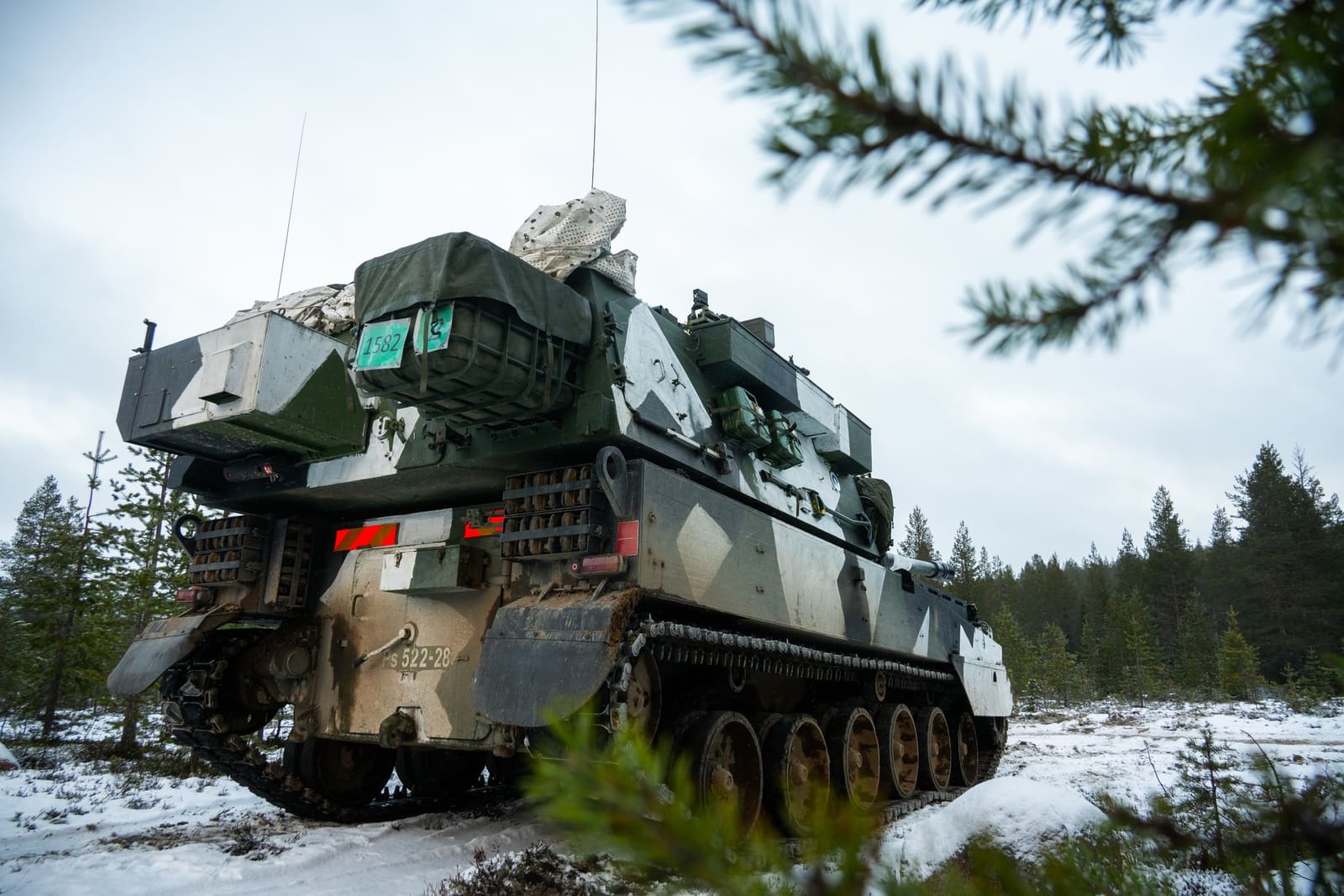
South Korea ships first K9PL howitzers to Poland
Hanwha Aerospace has begun shipping the Polish-customized K9PL variant of its K9 Thunder self-propelled howitzer out of its Changwon plant, the opening delivery under a 152-vehicle contract that is distinct from, and larger than, the K9A1 batch Poland already received.
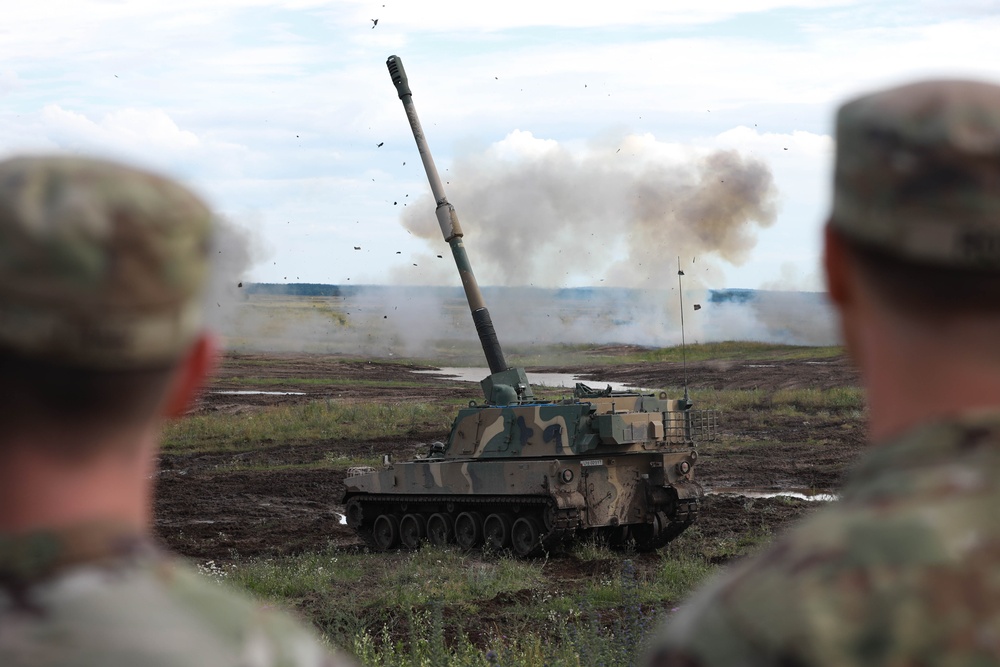
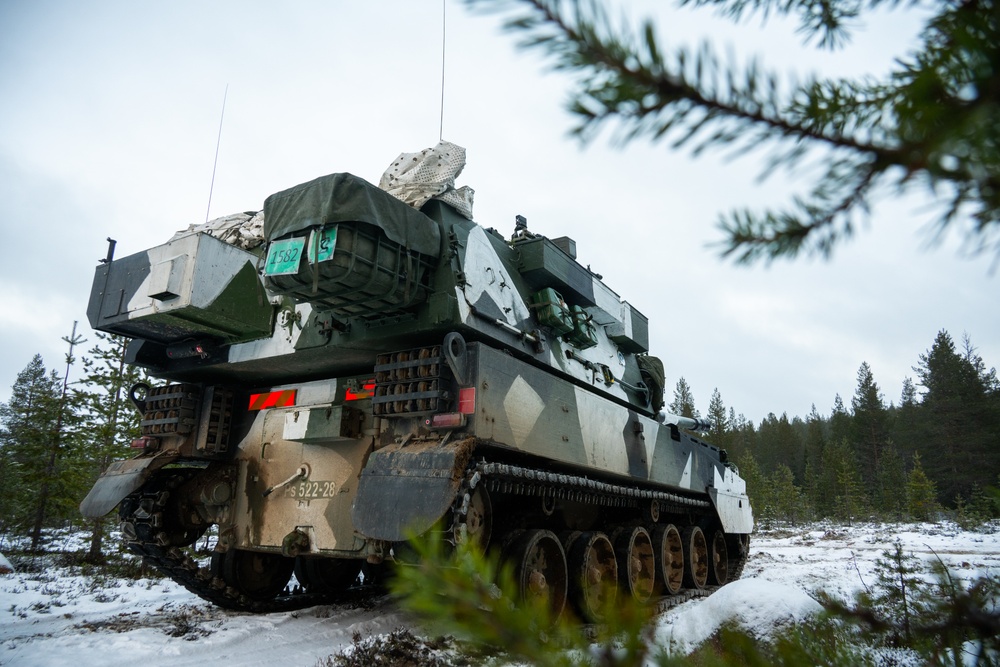
U.S. Army photo by Sgt. Trevor Wilson, 70th Mobile Public Affairs Detachment, DVIDS, public domain
The first K9PL self-propelled howitzers, a Poland-customized variant of South Korea’s K9 Thunder, left Hanwha Aerospace’s Changwon production plant on July 3, 2026, according to Army Recognition. The shipment executes the second of two executive agreements between Warsaw and Seoul, this one signed December 1, 2023, covering 152 vehicles: six standard-configuration K9A1s already delivered in November 2025, and 146 K9PLs now moving out in stages through 2026 and 2027. That matters because it is a different, larger, and more Poland-specific batch than the 224 K9A1 vehicles Poland ordered under its first contract, and it marks the point where the K9 program shifts from simply exporting finished South Korean hardware to building a variant designed around Polish command and communications equipment from the outset.
What actually changed between the K9A1 and the K9PL
The K9PL keeps the core of the K9 Thunder platform that made it South Korea’s best-selling artillery export, the same 155mm 52-caliber Hyundai WIA CN98 gun with a maximum firing range around 54 kilometers, a 47,000-kilogram combat weight, a five-person crew, and a road speed of 67 kilometers per hour. Per Army Recognition’s reporting, the specific vehicles now shipping run on an MTU MT 881 Ka-500 diesel engine rated around 1,000 horsepower, carry 48 complete rounds, and are rated for an operational range near 480 kilometers, standard-range firing sits around 40 kilometers, extending past 50 kilometers with extended-range ammunition.
What actually distinguishes the K9PL is not the gun or the hull, it is what Poland bolted onto it. The variant integrates a Topaz automated fire control system, a Fonet battlefield communications network, and Obra-3 laser warning sensors paired with smoke-grenade countermeasures, along with added plate protection over the running gear. Those additions matter because they are Polish-developed systems, not South Korean ones: the K9PL is built to plug directly into Poland’s existing command, control, and communications architecture rather than operate as an imported system that Polish crews have to work around. That is also why the contract carries a technology-transfer component covering servicing and eventual domestic production, the K9PL is designed to be maintained and, over time, partly built inside Poland rather than shipped complete from Changwon indefinitely.
A second, separate contract, not a restock of the first
It is worth being precise about what this shipment is and is not. Poland’s first K9 contract, signed in 2022, covered 224 vehicles in the standard K9A1 configuration and has already been delivered in full. This shipment executes a second, later agreement, the one signed December 1, 2023, for 152 additional vehicles split between six more K9A1s and 146 K9PLs. Combined, that puts Poland’s total confirmed K9-family order at 376 vehicles across both contracts, well below the roughly 672 howitzers floated in the broader 2022 framework agreement between Warsaw and Seoul, a reminder that framework-level figures describe an intended ceiling for future orders, not a single signed contract.
That broader framework, reported at approximately $44.2 billion when it was announced in 2022, also covers up to 1,000 K2 tanks and 48 FA-50 light attack aircraft, alongside artillery. Firm contracts under that framework have arrived in tranches rather than all at once: Hyundai Rotem’s K2 Black Panther tanks and Hanwha’s K239 Chunmoo rocket launchers have followed the same pattern of staged, separately negotiated orders built on top of the original framework rather than a single lump-sum purchase. The K9PL shipment fits that same pattern: it is the second wave of an artillery relationship that began with the 2022 framework and has been executed contract by contract ever since, most recently discussed at a policy level in South Korea’s push to formalize a broader NATO procurement framework earlier this month, a separate, forward-looking negotiation rather than a description of this specific delivery.
Why this matters beyond one delivery
Poland’s decision to keep ordering K9-family vehicles, and to keep customizing each successive batch more deeply around its own systems, is a signal about how Warsaw plans to sustain a large artillery force over the long run rather than about any single shipment. Six years after Russia’s full-scale invasion of Ukraine reset European threat assessments, Poland has consistently chosen to lock in delivery speed and proven production volume over waiting for domestic or broader-European alternatives to scale up, while simultaneously negotiating technology transfer so it is not permanently dependent on Hanwha’s production line. The K9PL variant is the clearest evidence yet of that second half of the strategy: a Polish-specific configuration built around Polish fire control and communications, with servicing and future production rights baked into the contract, rather than a straight repeat purchase of the same K9A1 hardware Poland already fields.
Sources
- First customized K9PL howitzers leave South Korea for Poland under second major artillery contract — Army Recognition, Jul 4, 2026
- Poland's massive tank, artillery and jet deal with S. Korea comes in shadow of Ukraine war — Breaking Defense, Jul 27, 2022
Systems mentioned
Every system named in this story, with its photo and, where available, a video. Tap a card to open the full spec sheet.
Compare these side by side →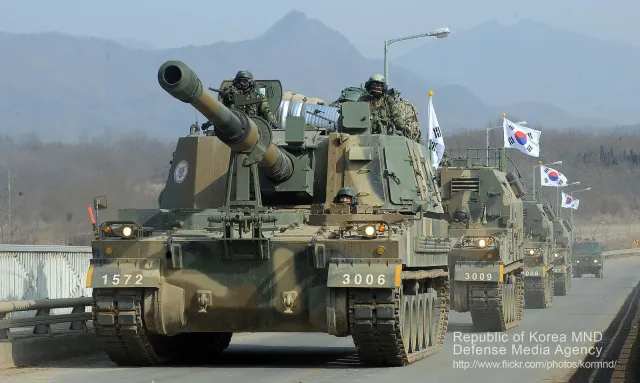
Artillery & MLRS
K9 Thunder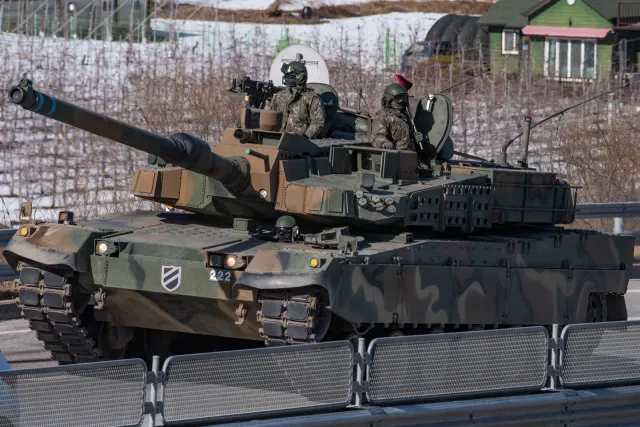
Main battle tank
K2 Black Panther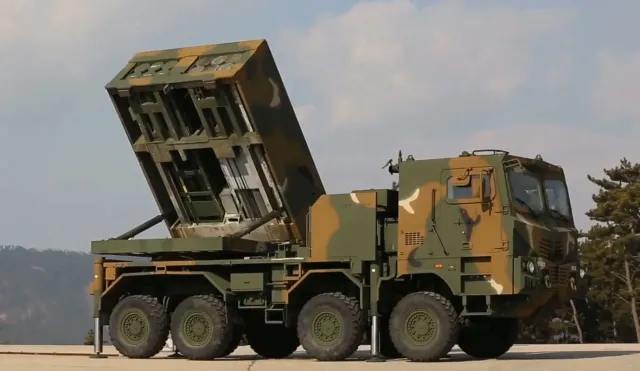
Artillery & MLRS
K239 ChunmooFrequently asked questions
What is the K9PL and how is it different from the K9A1 Poland already operates? +
The K9PL is a Poland-specific variant of Hanwha's K9 Thunder self-propelled howitzer, built around the same 155mm/52-caliber gun and chassis as the standard K9A1 export version but fitted with Polish subsystems: a Topaz automated fire control system, Fonet battlefield communications, and Obra-3 laser warning sensors paired with smoke-grenade countermeasures. It also carries added armor plating over the running gear. The K9A1 is the standard South Korean export configuration; the K9PL is built specifically to plug into Polish command and communications networks.
How many K9PL howitzers is Poland getting, and when? +
The second executive agreement, signed December 1, 2023, covers 152 vehicles: 6 K9A1s (already delivered in November 2025) and 146 K9PLs scheduled for delivery across 2026 and 2027. That is separate from Poland's first contract, which covered 224 K9A1 vehicles in the standard export configuration.
Is this the same story as South Korea's NATO procurement framework talks from earlier in July 2026? +
No. That earlier story covered Hanwha Aerospace's pitch to negotiate a formal framework letting Korean contractors bid into NATO's own joint acquisition programs, a policy-level discussion. This is a concrete, already-contracted delivery event: the first K9PL vehicles physically leaving Hanwha's Changwon plant for Poland under an agreement signed back in December 2023.
Why does Poland keep buying South Korean artillery instead of relying on European suppliers? +
Poland turned to South Korea in 2022 largely because Hanwha could deliver at a pace European artillery manufacturers could not immediately match, while Warsaw was racing to rebuild depleted stocks and deter Russia after the full-scale invasion of Ukraine. The K9 program's export track record, in Turkey, Finland, Norway, Estonia, Australia, Egypt, Romania, and Vietnam, gave Poland a proven, already-mass-produced platform rather than a new development program, and the deal's technology-transfer and local-servicing terms let Poland build domestic production capacity alongside the imports rather than depend on South Korea indefinitely.
More news