F-22 Raptor Carries Less Payload Than a 1967 Jet
The F-22A Raptor ranks 55th of 56 fighters in published weapons payload at 2,270 kg, trailing even the 1967-service F-4E Phantom II by nearly 4x.
Lockheed Martin, official product image, background removed
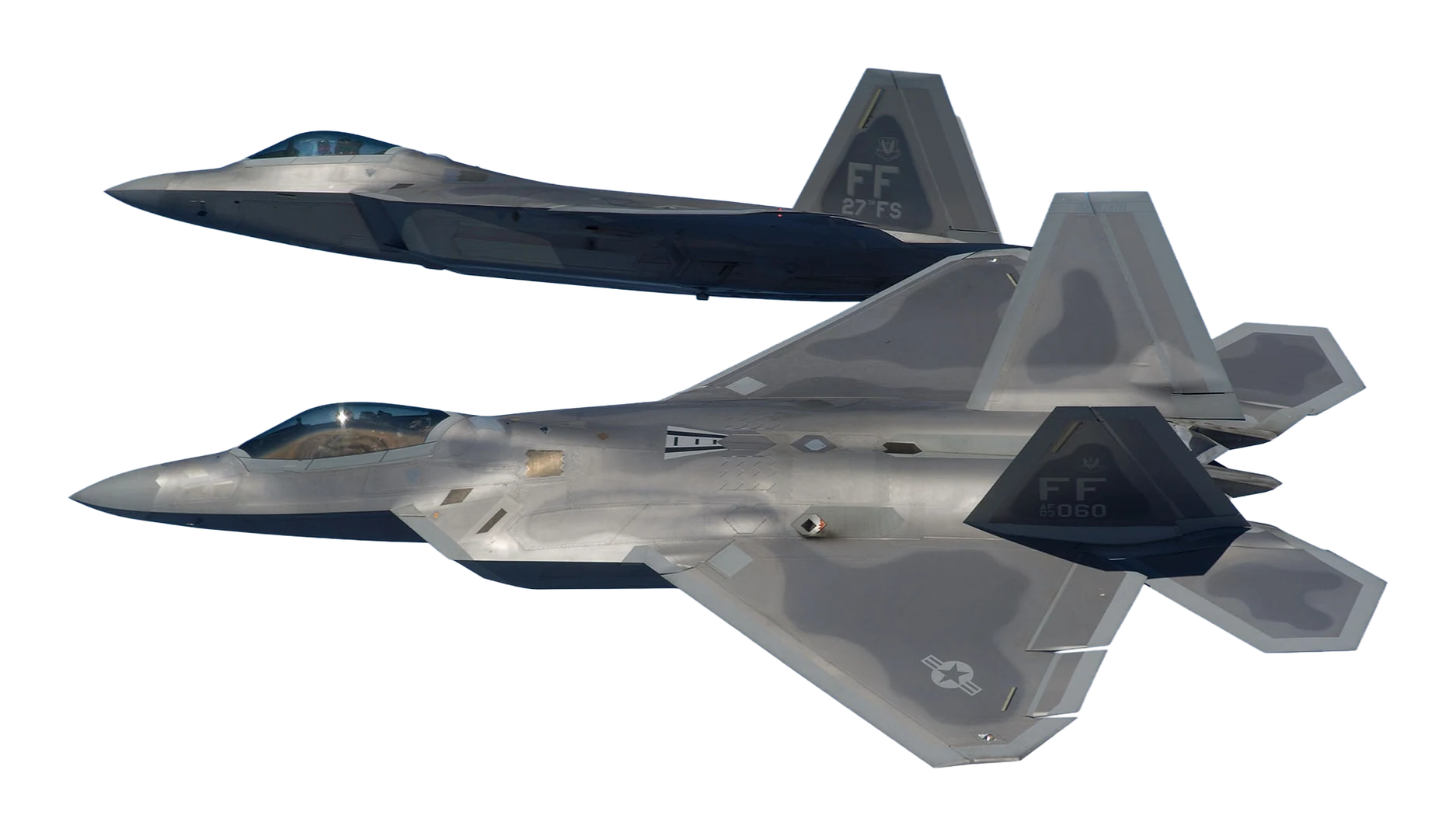
Of the 56 fighter aircraft in the WeaponSpecs database that publish a numeric weapons payload figure, the F-22A Raptor ranks 55th at 2,270 kg, ahead of only the 1978-designed Super Etendard. That puts America’s premier air-superiority jet behind the F-4E Phantom II, a design that entered service in 1967 and carries 8,480 kg, nearly four times the Raptor’s figure. The gap looks alarming until you account for hardpoint count, and even then the F-22A still comes out last, for reasons that trace directly back to a 2005-era design brief built around one job: air-to-air dominance.
Key takeaways:
- The F-22A Raptor ranks 55th of 56 fighters in the WeaponSpecs database by published weapons payload, at 2,270 kg, just ahead of the Super Etendard (2,100 kg) and far behind the F-4E Phantom II (8,480 kg).
- By payload per hardpoint, a cleaner efficiency measure since hardpoint counts vary widely, the F-22A is dead last of all 56 at 284 kg per hardpoint, just 38% of the 746 kg per hardpoint fleet average.
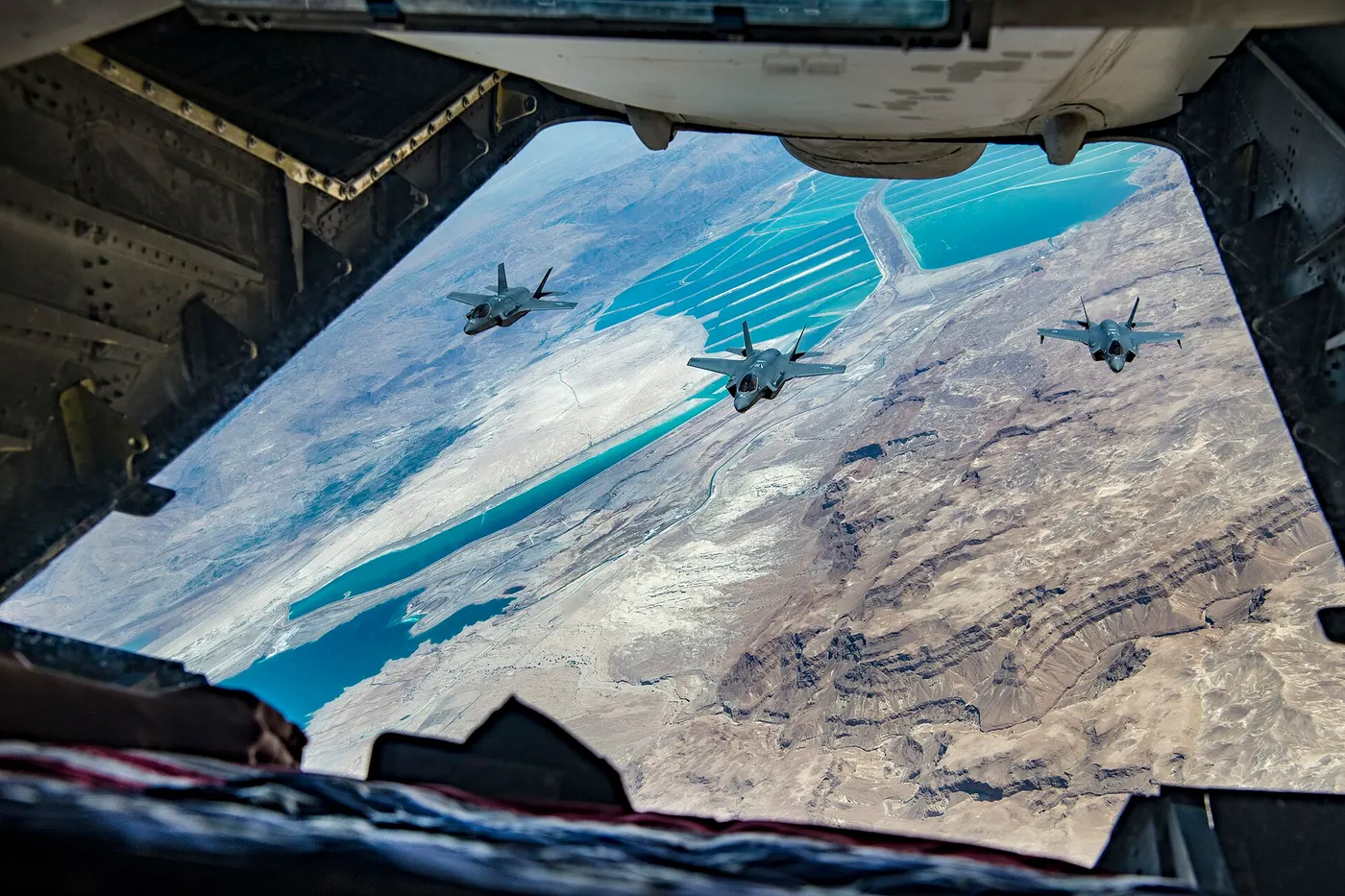
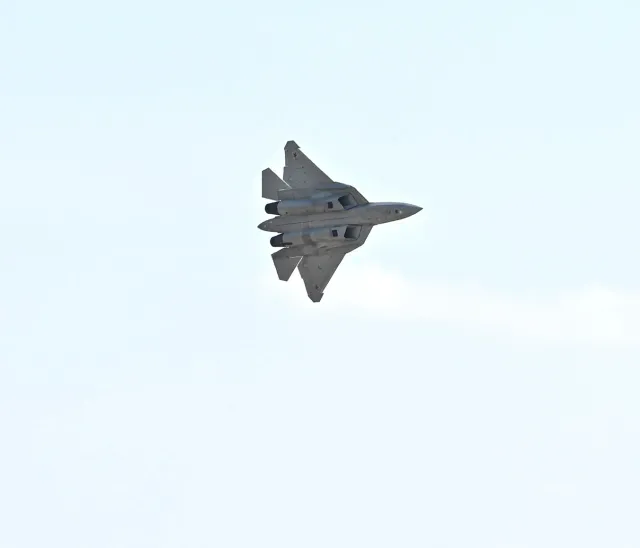
- This is not a universal stealth-fighter penalty: the F-35A/C (816 kg/hardpoint), Su-57 (1,000 kg/hardpoint) and J-20 (1,833 kg/hardpoint, the highest in the database) all publish payloads well within or above the normal range.
- Gen. Richard E. Hawley, then-Commander of Air Combat Command, explained in 1998 that the F-22’s small internal munitions exist “because it allows you to put more weapons in that internal weapons bay,” the design logic behind the low payload figure.
- 3 of the 59 fighters in the database (TAI Kaan, Kowsar, Mirage 2000-9) do not publish a numeric weapons payload figure and are excluded from this ranking.
Where does the F-22 Raptor rank in weapons payload?
Fifty-five out of fifty-six. Our analysis of every fighter aircraft in the WeaponSpecs database with a disclosed weaponsPayloadKg figure puts the F-22A Raptor at 2,270 kg, second-lowest in the set. Only the Super Etendard, a French carrier-based strike jet designed in the early 1970s, publishes less, at 2,100 kg. Above the Raptor sits the F-4E Phantom II at 8,480 kg, a jet that first flew in the 1960s and still out-carries the Raptor by nearly 4x. Three fighters in the broader 59-aircraft database, the TAI Kaan, the Kowsar and the Mirage 2000-9, do not publish a numeric payload figure at all and are excluded here rather than assumed.
Raw payload alone is a blunt instrument, though. A jet with 14 hardpoints will naturally out-carry one with 6, regardless of design intent. That is why the more useful cut is payload per hardpoint, and on that measure the F-22A does not just rank near the bottom, it ranks last of all 56, at 284 kg per hardpoint against a fleet average of 746 kg per hardpoint and a median of 700 kg per hardpoint. The Raptor’s per-hardpoint figure is 38% of the average.
Is this a stealth penalty, or an F-22-specific design choice?
The obvious read is that stealth costs payload, low-observable jets trade internal bay space for radar-cross-section, so of course they carry less. The data does not support that as a general rule. The F-35A and F-35C Lightning II, both stealth designs with internal weapons bays, publish 8,160 kg each across 10 hardpoints, 816 kg per hardpoint, comfortably above the fleet average. Russia’s Su-57 publishes 10,000 kg across 10 hardpoints, exactly 1,000 kg per hardpoint. China’s J-20 publishes 11,000 kg, the highest per-hardpoint figure in the entire 56-fighter database at 1,833 kg per hardpoint, and it does so with only 6 hardpoints, the same low count that partly explains the Raptor’s small denominator. Where the F-22A turns a low hardpoint count into the worst per-hardpoint figure in the database, the J-20 turns an identical hardpoint count into the best. (As with every China- and Russia-origin figure in this database, the J-20, J-16, J-35 and Su-57 numbers above are manufacturer or state-disclosed rather than independently audited, consistent with how the rest of the WeaponSpecs dataset is sourced and flagged.)
So the gap is not stealth. It is specific to the F-22A’s design brief. The Raptor was conceived in the late Cold War and fielded in 2005 as a pure air-superiority and intercept platform, built to win beyond-visual-range and within-visual-range fights and clear contested airspace, not to haul ordnance. It had no serious built-in air-to-ground role at introduction, that capability arrived later through software upgrades that let it carry precision-guided bombs internally. Its four external underwing pylons exist mainly for ferry fuel tanks or, in “beast mode,” non-stealth external ordnance, not for routine combat warload the way a strike-oriented jet’s pylons are used from day one.
“Those miniature munitions … are ideally suited to stealthy platforms, because it allows you to put more weapons in that internal weapons bay,” said Gen. Richard E. Hawley, then-Commander of Air Combat Command (Air & Space Forces Magazine, Aug. 1, 1998).
Hawley made that comment while explaining why the Raptor leans on small, internal munitions rather than a large external warload, and separately noted the jet could carry “as many as eight bombs in the F-22 bomb bay pretty much as it’s currently configured.” That framing, from 1998, still describes the tradeoff baked into the Raptor’s published payload figure today.
What does the F-22 actually carry into combat?
Internally, where the F-22A Raptor’s stealth shaping is preserved, the standard air-to-air loadout is 6x AIM-120 AMRAAM in the main weapons bay plus 2x AIM-9 Sidewinder in the side bays, eight munitions total, all sized to fit inside the airframe rather than hang underneath it. The internal air-to-ground option, added later, tops out at 2x GBU-32 JDAM or up to 8x GBU-39 Small Diameter Bombs, still modest next to a dedicated strike jet’s external capacity. Push weapons onto the four external pylons and the Raptor loses the radar-cross-section reduction that is the entire point of the airframe, so those stations are reserved for fuel tanks or non-stealth “beast mode” sorties, not counted as part of its everyday combat warload.
Which fighters carry the heaviest loads?
At the other end of the table, the biggest published payloads belong to large, non-stealth multirole jets built around external pylon capacity rather than internal-bay stealth. The F-15EX Eagle II tops the list at 13,380 kg across 12 hardpoints, followed by China’s J-16 at 12,000 kg and the F-15E Strike Eagle at 11,100 kg. The J-20 and Su-57 both sit inside the top five despite being stealth designs, reinforcing that the F-22A’s low ranking is an outlier, not a category trait.
The F-22A's bar is a fraction of the top nine, but three of those nine, the J-20, Su-57 and F-35A, are stealth designs too, so stealth is not what separates them from the Raptor.
The full ranked table
All 56 fighters in the WeaponSpecs database with a disclosed weapons payload, sorted highest to lowest, with hardpoint count and the derived payload-per-hardpoint figure.
| Rank | Aircraft | Country | Year | Payload (kg) | Hardpoints | kg/hardpoint |
|---|---|---|---|---|---|---|
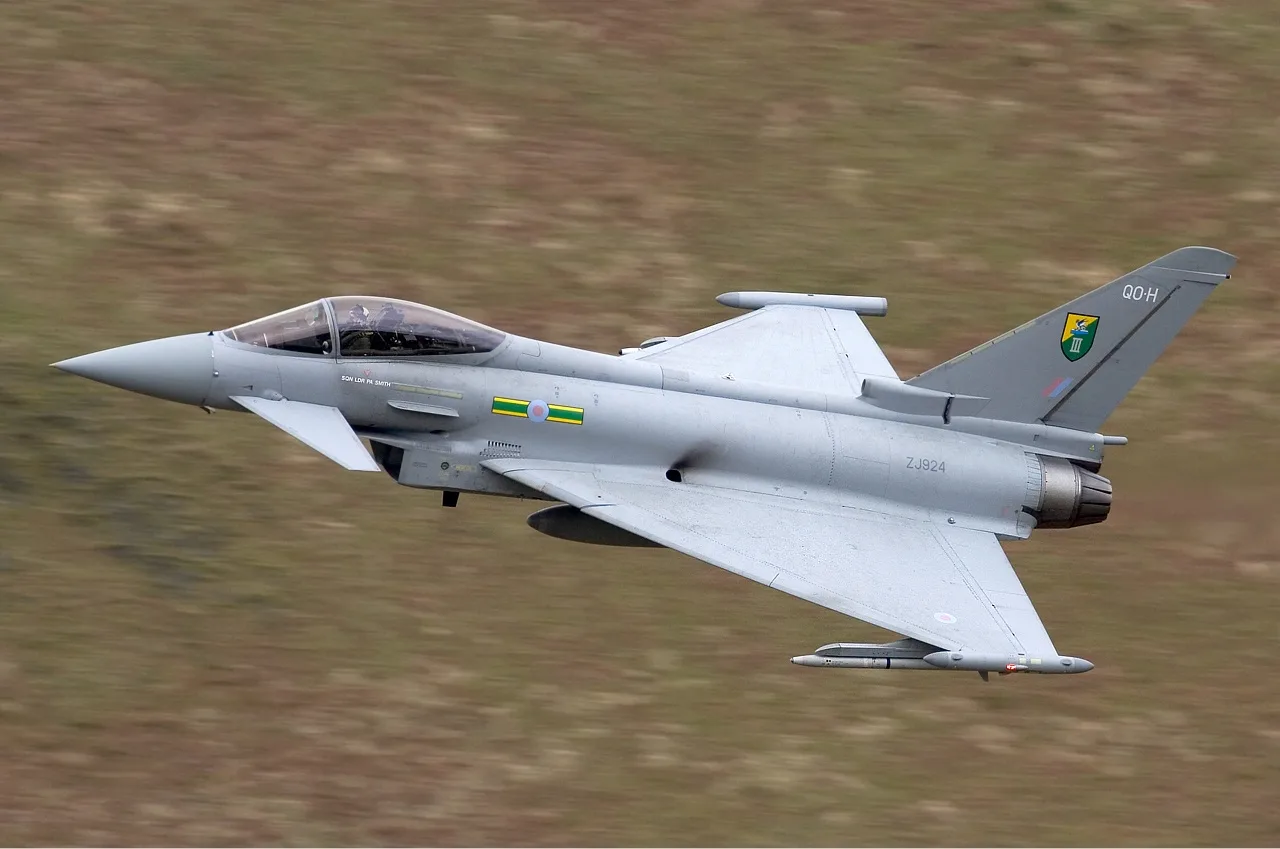
| 1 | F-15EX Eagle II | United States | 2021 | 13,380 | 12 | 1,115 |
| 2 | J-16 | China | 2015 | 12,000 | 12 | 1,000 |
| 3 | F-15E Strike Eagle | United States | 1989 | 11,100 | 11 | 1,009 |
| 4 | J-20 | China | 2017 | 11,000 | 6 | 1,833 |
| 5 | Su-57 | Russia | 2020 | 10,000 | 10 | 1,000 |
| 6 | Rafale C | France | 2006 | 9,500 | 14 | 679 |
| 7 | Rafale F4 | France | 2023 | 9,500 | 14 | 679 |
| 8 | Rafale M | France | 2001 | 9,500 | 13 | 731 |
| 9 | Eurofighter Typhoon | Multi-national | 2003 | 9,000 | 13 | 692 |
| 10 | JH-7A | China | 1998 | 9,000 | 9 | 1,000 |
| 11 | MiG-31 | Russia | 1981 | 9,000 | 6 | 1,500 |
| 12 | Tornado GR4 | United Kingdom | 1998 | 9,000 | 7 | 1,286 |
| 13 | F-4E Phantom II | United States | 1967 | 8,480 | 9 | 942 |
| 14 | F-35A Lightning II | United States | 2016 | 8,160 | 10 | 816 |
| 15 | F-35C Lightning II | United States | 2019 | 8,160 | 10 | 816 |
| 16 | Mitsubishi F-2 | Japan | 2000 | 8,085 | 13 | 622 |
| 17 | EA-18G Growler | United States | 2009 | 8,050 | 9 | 894 |
| 18 | F/A-18E/F Super Hornet | United States | 1999 | 8,050 | 11 | 732 |
| 19 | J-11B | China | 2007 | 8,000 | 10 | 800 |
| 20 | J-35 | China | 2024 | 8,000 | 8 | 1,000 |
| 21 | Su-30SM | Russia | 2012 | 8,000 | 12 | 667 |
| 22 | Su-34 | Russia | 2014 | 8,000 | 12 | 667 |
| 23 | Su-35S | Russia | 2014 | 8,000 | 12 | 667 |
| 24 | F-16C Block 52 Fighting Falcon | United States | 1991 | 7,700 | 9 | 856 |
| 25 | F-16C Block 70/72 Fighting Falcon | United States | 2023 | 7,700 | 11 | 700 |
| 26 | F/A-18C Hornet | United States | 1987 | 7,700 | 9 | 856 |
| 27 | KF-21 Boramae | South Korea | 2026 | 7,700 | 10 | 770 |
| 28 | F-15C Eagle | United States | 1979 | 7,300 | 8 | 913 |
| 29 | Mitsubishi F-15J/DJ | Japan | 1981 | 7,300 | 9 | 811 |
| 30 | A-10 Thunderbolt II | United States | 1977 | 7,260 | 11 | 660 |
| 31 | MiG-35 | Russia | 2019 | 7,000 | 9 | 778 |
| 32 | F-35B Lightning II | United States | 2015 | 6,800 | 8 | 850 |
| 33 | F-14 Tomcat | United States | 1974 | 6,600 | 10 | 660 |
| 34 | J-15 | China | 2013 | 6,500 | 12 | 542 |
| 35 | Tejas Mk2 | India | 2027 | 6,500 | 11 | 591 |
| 36 | Mirage 2000-5 | France | 1996 | 6,300 | 9 | 700 |
| 37 | Mirage 2000D | France | 1993 | 6,300 | 9 | 700 |
| 38 | J-10C | China | 2018 | 6,000 | 11 | 545 |
| 39 | Su-27 | Russia | 1985 | 6,000 | 10 | 600 |
| 40 | Kfir | Israel | 1975 | 5,775 | 7 | 825 |
| 41 | JAS 39C Gripen | Sweden | 2003 | 5,300 | 8 | 663 |
| 42 | JAS 39E Gripen | Sweden | 2019 | 5,300 | 10 | 530 |
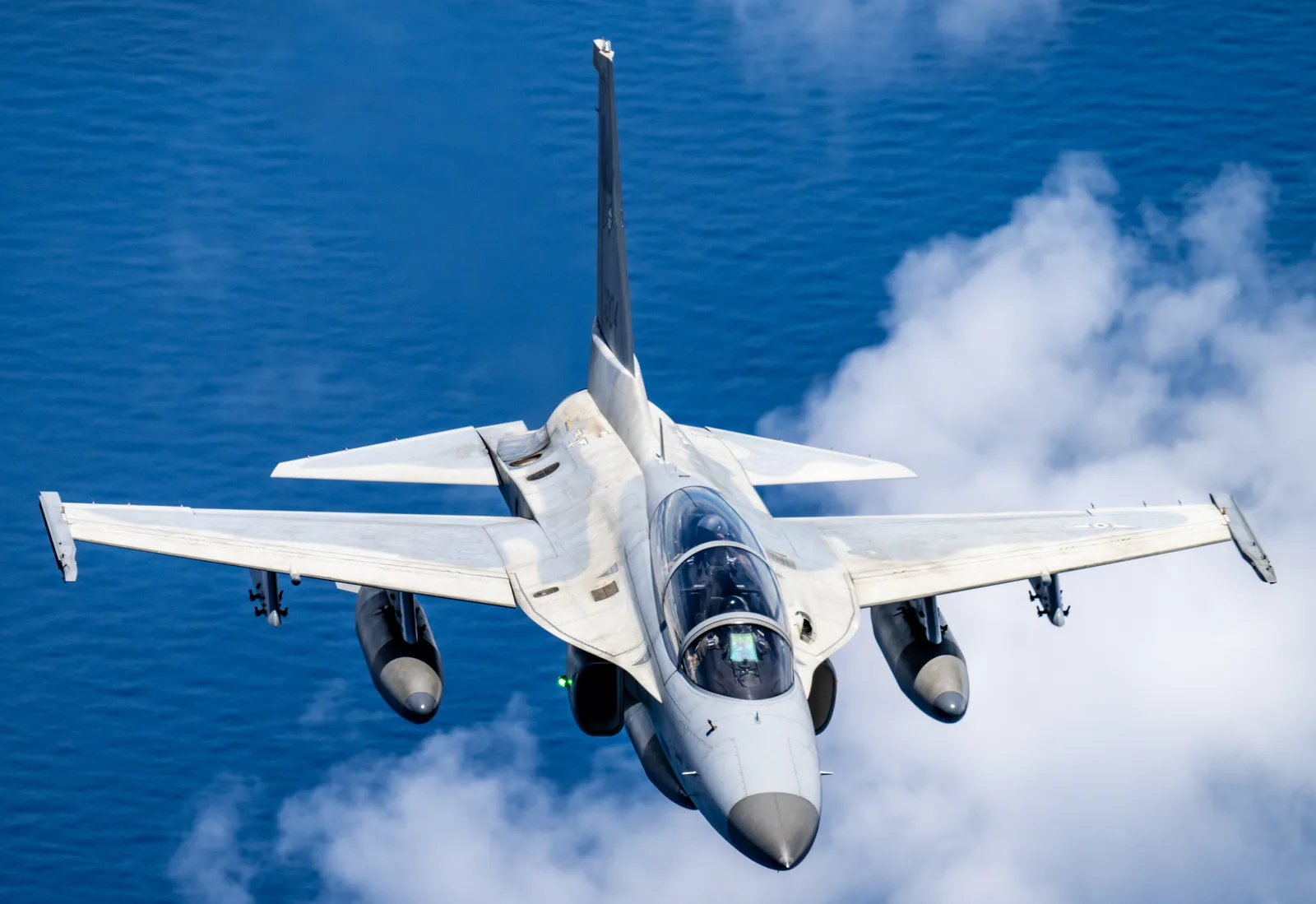
| 43 | FA-50 Golden Eagle | South Korea | 2013 | 4,536 | 7 | 648 |
| 44 | J-8II | China | 1988 | 4,500 | 7 | 643 |
| 45 | Su-25SM3 | Russia | 1981 | 4,400 | 10 | 440 |
| 46 | Harrier GR9 | United Kingdom | 2006 | 4,170 | 9 | 463 |
| 47 | Mirage F1 | France | 1973 | 4,000 | 7 | 571 |
| 48 | F-CK-1 Ching-kuo | Taiwan | 1994 | 3,900 | 7 | 557 |
| 49 | AMX Ghibli | Italy | 1989 | 3,800 | 5 | 760 |
| 50 | JF-17 Thunder Block 3 | Pakistan | 2020 | 3,629 | 7 | 518 |
| 51 | JF-17 Thunder | Pakistan | 2007 | 3,629 | 7 | 518 |
| 52 | MiG-29 | Russia | 1982 | 3,500 | 7 | 500 |
| 53 | Tejas Mk1A | India | 2024 | 3,500 | 8 | 438 |
| 54 | Tejas Navy Mk1 | India | 2020 | 3,000 | 8 | 375 |
| 55 | F-22A Raptor | United States | 2005 | 2,270 | 8 | 284 |
| 56 | Super Etendard | France | 1978 | 2,100 | 6 | 350 |
Fleet average across all 56: 6,945 kg mean payload (7,300 kg median), 746 kg/hardpoint mean (700 kg/hardpoint median). The F-22A’s 284 kg/hardpoint sits at 38% of that mean. Three fighters in the WeaponSpecs types/fighter category, the TAI Kaan, Kowsar and Mirage 2000-9, publish no weapons payload figure and are left out of the ranking entirely rather than assigned a placeholder value.
The bottom line
A single low payload number reads like a red flag until you check what the jet was built to do and what its peers in the same stealth category publish. The F-22A Raptor’s 2,270 kg and 284 kg per hardpoint are real, and they are the lowest and second-lowest of their kind in the WeaponSpecs database respectively. But the F-35A/C, Su-57 and J-20 prove stealth airframes can and do publish payload figures at or above the fleet average, the J-20 tops the entire database on a per-hardpoint basis. What sets the Raptor apart is a 2005-era design brief written around air-to-air dominance first, with air-to-ground capability bolted on later through software rather than built in from the start. For the mission it was designed for, clearing contested airspace before anything else arrives, payload tonnage was never the metric that mattered. For anyone evaluating it against a strike or multirole requirement, it is the metric that will disqualify it fastest.
For more on how the Raptor’s design tradeoffs show up elsewhere in its spec sheet, see our earlier piece on fighter thrust-to-weight ratios, and for a payload-efficiency comparison in a different aircraft class, see attack helicopter payload ratios. Run your own mission profile through the Advisor to see which fighter’s real payload matches your requirement, not just its headline spec.
Sources
Systems in this comparison
Every system covered above, with its photo and, where available, a video. Tap a card to open the full spec sheet.
Compare these side by side →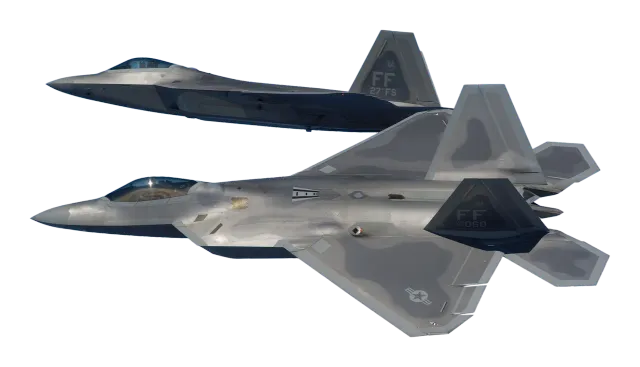
Fighter aircraft
F-22A Raptor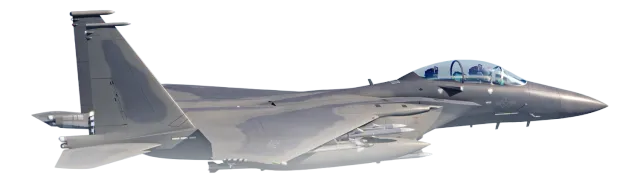
Fighter aircraft
F-15EX Eagle II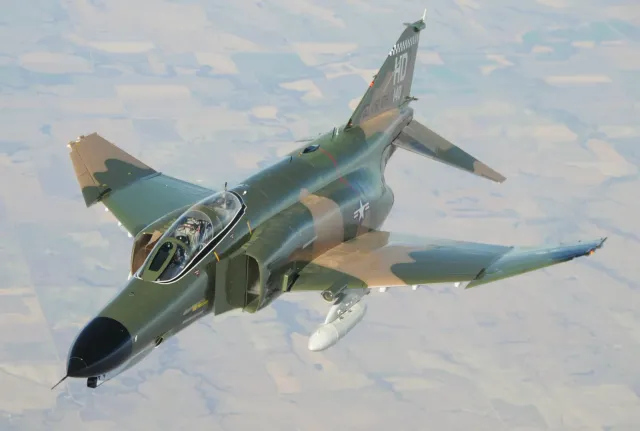
Fighter aircraft
F-4E Phantom II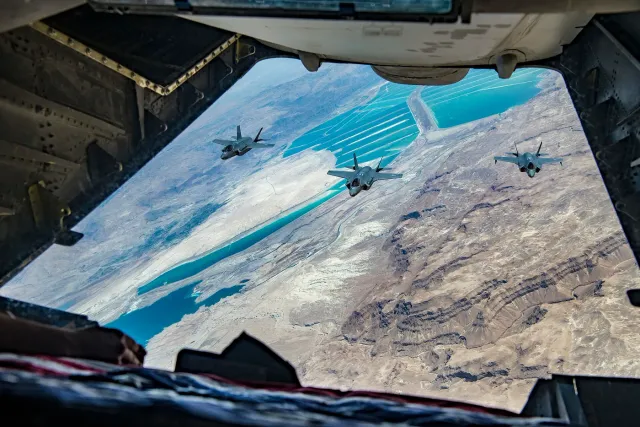
Fighter aircraft
F-35A Lightning II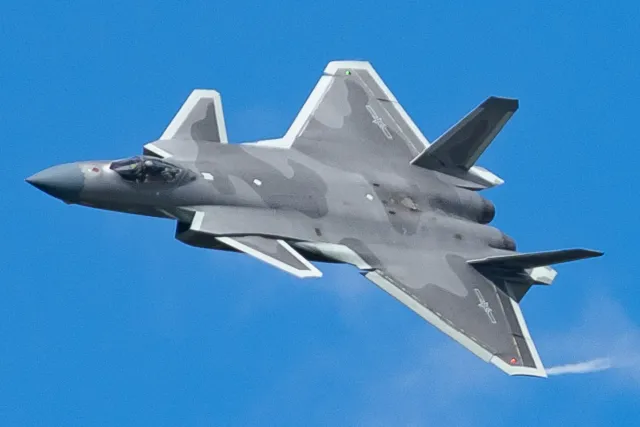
Frequently asked questions
Why does the F-22 Raptor carry less weapons payload than older fighters? +
The F-22A was designed in the 1990s and fielded in 2005 as a pure air-superiority interceptor, not a strike aircraft. Its standard internal loadout is 6x AIM-120 AMRAAM and 2x AIM-9 Sidewinder, small munitions sized to fit its stealth-preserving internal weapons bay, rather than the larger mixed air-to-ground loads that older multirole jets like the F-4E carried on external pylons from day one.
Does a low payload figure mean the F-22 is a weak fighter? +
No. Payload measures how much ordnance a jet can carry, not how effective it is in its designed role. The F-22 was built to win air-to-air engagements and clear airspace before other aircraft arrive, a mission where stealth, sensor fusion and kinematics matter more than bomb tonnage. Its low published payload is a design tradeoff, not a capability failure.
Do all stealth fighters carry less payload than 4th-generation jets? +
No, this is specific to the F-22A rather than stealth designs generally. The F-35A and F-35C Lightning II each publish 8,160 kg (816 kg per hardpoint), the Su-57 publishes 10,000 kg (1,000 kg per hardpoint), and the J-20 publishes 11,000 kg, the highest per-hardpoint figure of any fighter in the WeaponSpecs database at 1,833 kg per hardpoint. All three sit within or above the 56-fighter average of 746 kg per hardpoint.
What weapons does the F-22 actually carry into combat? +
Internally, where stealth is preserved, the F-22's standard air-to-air loadout is 6x AIM-120 AMRAAM plus 2x AIM-9 Sidewinder in its side bays. Its internal air-to-ground capacity, added later through software upgrades, tops out at 2x GBU-32 JDAM or up to 8x GBU-39 Small Diameter Bombs. Four external underwing pylons exist mainly for ferry fuel tanks or non-stealth external ordnance, not routine combat warload.
Which fighter jet in the database carries the most weapons payload? +
The F-15EX Eagle II publishes the highest weapons payload in the WeaponSpecs database at 13,380 kg across 12 hardpoints, ahead of China's J-16 at 12,000 kg and the F-15E Strike Eagle at 11,100 kg. All three are large, non-stealth multirole platforms built around external pylon capacity rather than internal-bay stealth.
Related reading