Two Naval Gun Calibers Arm 72% of the World's Warships
Of 53 gunned warships in the WeaponSpecs database, 76mm and 127mm guns each arm 19 ships, 38 of 53 combined, or 72 percent, of the entire fleet.
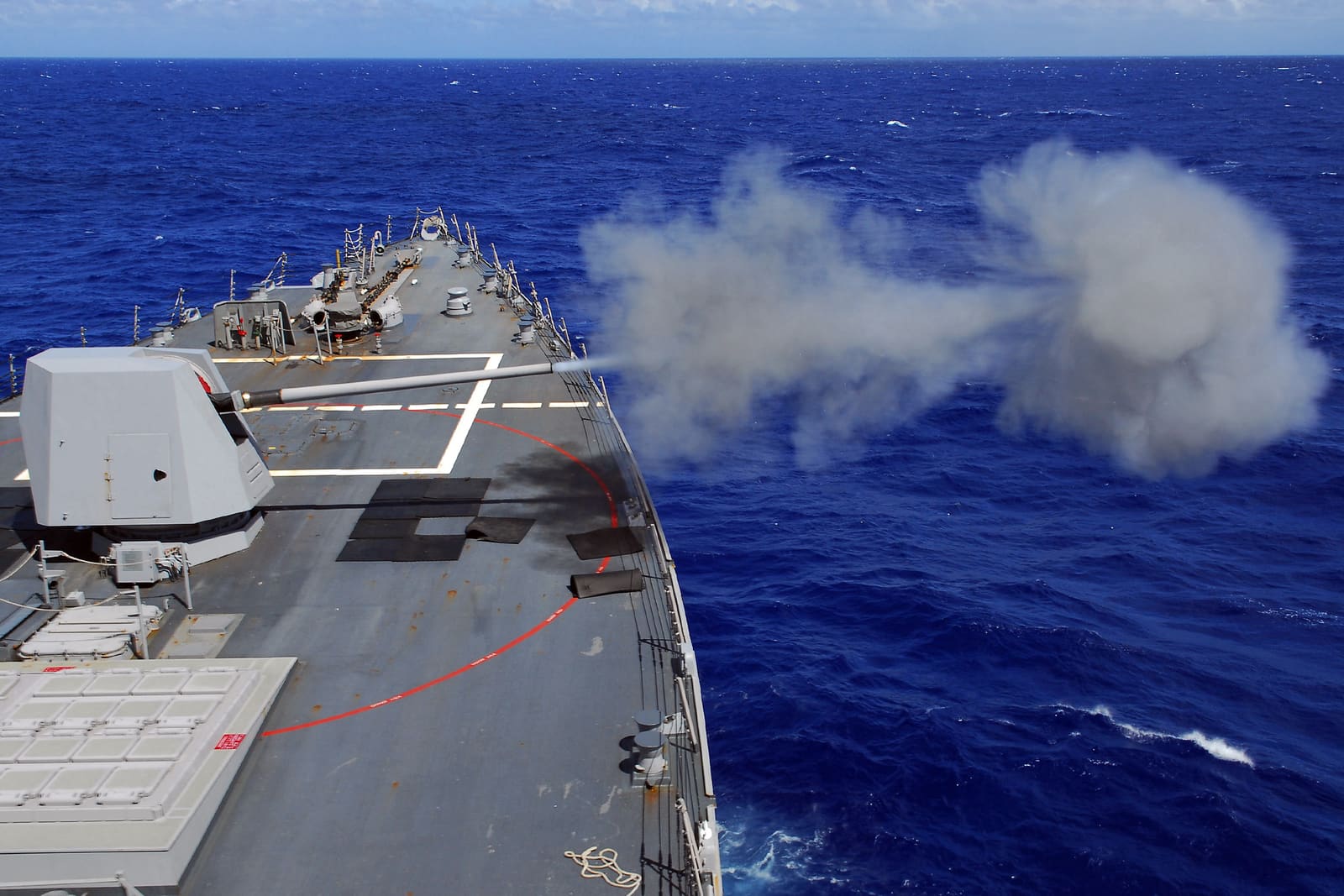
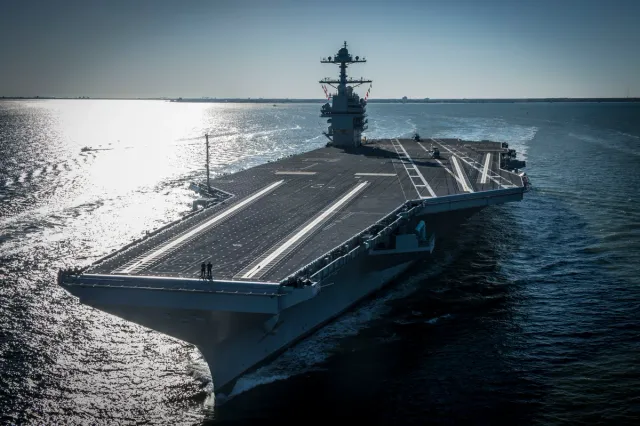
U.S. Navy photo by Mass Communication Specialist 2nd Class Byron C. Linder, public domain, via Wikimedia Commons
Of the 72 warships cataloged in the WeaponSpecs database, 53 publish a real naval main-gun caliber. Among those 53, two calibers dominate: 76mm and 127mm (5-inch) each arm exactly 19 ships, 38 of 53 combined, or 72 percent. A spec that looks like a simple number, the diameter of a gun barrel, turns out to sort the world’s surface combatants into two design philosophies almost by itself.
Key takeaways:
- 38 of 53 gunned warships in the database, 72 percent, carry either a 76mm or a 127mm main gun.
- 19 of 72 warships, 26 percent, list no gun at all, mostly aircraft carriers and large-deck amphibious assault ships built around an air wing instead.
- The Zumwalt class carries the single heaviest naval gun in the database, a 2x 155 mm Advanced Gun System, and has never fired a combat round, its ammunition was cancelled in 2016.
- Five of the seven 57mm-armed ships in the database are recent or still-building designs, a real signal that new frigates are choosing smaller guns than their predecessors.
- Russia and China’s 130mm gun family and NATO’s 127mm Mk 45 represent competing bloc standards, not a raw capability gap; the UK is abandoning its own 114mm standard for the Mk 45 on the incoming Type 26.
Which naval gun caliber is most common in the WeaponSpecs database?
76mm and 127mm tie at 19 ships apiece, the two most common calibers by a wide margin over everything else cataloged. Below them, 130mm (mostly Russian and Chinese hulls) and 57mm (the newest generation of frigates) hold single-digit counts, and 100mm and 114mm are fading calibers now being phased out in favor of one of the two leaders.
76mm and 127mm tie at 19 ships each, together arming 72 percent of the database's 53 gunned warships.
| Caliber | Count | Representative ships | Note |
|---|---|---|---|
| 57mm | 5 | Constellation-class (US, 57 mm Mk 110 naval gun), Type 31 (UK), Visby-class (Sweden), Hamina-class (Finland), Pohjanmaa-class (Finland) | Newest generation, all recent or in-construction designs |
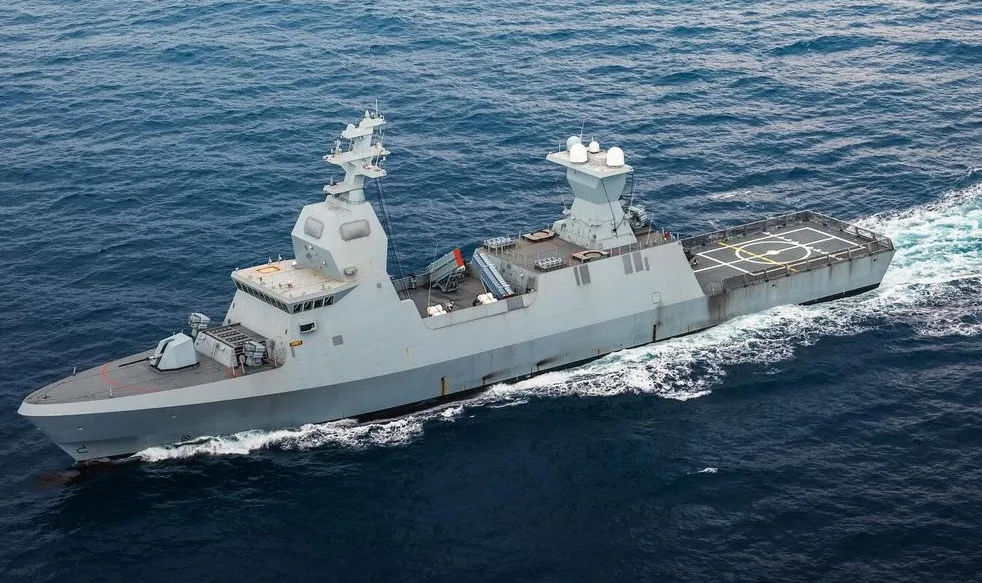
| 76mm | 19 | Ada-class (Turkey), FREMM (France, 76 mm main gun), Formidable-class (Singapore), Horizon-class (France), Iver Huitfeldt-class (Denmark), Kolkata-class (India), Sa’ar 6 (Israel), Type 054A (China), and 11 more | Most common single caliber; the OTO Melara 76mm is in service with 60 navies worldwide |
| 100mm | 2 | La Fayette-class (France), Steregushchiy-class (Russia) | Fading caliber |
| 114mm (4.5in Mk8) | 2 | Type 23 Duke, Type 45 Daring (both UK) | UK’s own national standard, being abandoned for 127mm on the incoming Type 26 |
| 127mm (5-inch Mk45 family) | 19 | Arleigh Burke-class, Ticonderoga-class (both US, 5-inch Mk 45 naval gun), Sejong the Great-class (South Korea, 127mm/L62 Mk 45 Mod 4 naval gun), Type 26 City-class (UK, incoming), Alvaro de Bazan/F100 (Spain), Absalon-class (Denmark), Maya-class (Japan), Bergamini/FREMM (Italy), and 11 more | Heavier, NGFS-capable; the Mk 45 is the de facto Western/allied standard |
| 130mm | 5 | Kirov-class, Slava-class, Admiral Gorshkov-class (all Russia), Type 052D, Type 055 (both China, 1x 130 mm main gun) | Russia/China’s own bloc standard; no Western navy uses it |
| 155mm | 1 | Zumwalt-class (US, 2x 155 mm Advanced Gun System) | Unique; the Advanced Gun System has no ammunition (see below) |
That 60-navy figure for the OTO Melara 76mm is why the caliber wins the count without any single navy dominating it: it’s a lighter, fast-firing, multi-role gun that fits corvette and frigate-size hulls across NATO, Asia, and non-aligned navies alike. The 127mm total, by contrast, concentrates on the heavier end: destroyers and cruisers built to carry naval gunfire support in addition to air-defense and strike missions.
Why does the Zumwalt-class destroyer’s 155mm gun never fire?
The Zumwalt-class destroyer carries the single heaviest naval gun cataloged anywhere in the database, a 155mm Advanced Gun System, two per ship. It has never fired a combat round, and the reason is a procurement failure, not a technical one.
The AGS was designed around a single ammunition type, the Long-Range Land Attack Projectile, built for precision, rated for a 50-meter circular error probable at range. The Navy originally planned 32 Zumwalt-class ships, a production run large enough to spread LRLAP’s fixed development cost across thousands of rounds. The program was cut to just three ships, so the same fixed development costs landed on a tiny fraction of the planned buy.
“In November 2016… it was reported that the Navy had decided to stop procuring LRLAP projectiles because the projected unit cost of each projectile had risen to at least $800,000,” per a Congressional Research Service report by Ronald O’Rourke, Specialist in Naval Affairs (EveryCRSReport.com).
At that price, roughly the cost of a small guided missile for what was supposed to be a conventional gun round, the Navy simply stopped buying it. Both AGS mounts on all three Zumwalt-class ships have sat without usable ammunition since 2016 (The War Zone). As of 2023 the Navy confirmed the guns will be placed into storage, removed one per ship, to make room for Conventional Prompt Strike hypersonic missile tubes instead (Naval News).
The database’s own largest naval-gun figure belongs to the one gun in the fleet that cannot shoot. Caliber size and operational relevance are not the same thing, the exact gap this column keeps finding whenever a spec sheet number and a program’s real capability diverge.
Why are the newest frigate designs choosing a smaller 57mm gun?
Five of the seven 57mm-armed ships in the database are recent or still-building designs: the Constellation-class frigate, Type 31, Visby-class, Hamina-class, and Pohjanmaa-class. None are legacy holdovers, and that’s a real doctrinal signal, not noise: the newest frigate designs are choosing a smaller gun than their destroyer and cruiser predecessors, not a bigger one.
The US Navy picked the 57 mm Mk 110 naval gun for the Constellation class specifically because the mission split changed. Constellation-class frigates are built for escort and anti-submarine work, freeing the Navy’s Arleigh Burkes and Ticonderogas for ballistic-missile defense and deep-strike missions that actually call for a heavier gun (Naval News). With more than 60 Burkes and their 5-inch guns already in the fleet, the Navy judged it didn’t need naval-gunfire-support capability on every new hull (Navy Lookout).
The 57mm Mk 110 still fires up to 220 rounds per minute out past 9 nautical miles, plenty of gun for the threats a frigate-size platform actually faces today: fast attack craft, small boats, and increasingly, drones. It’s a smaller number on the spec sheet that reflects a more precisely matched mission, not a step down in capability where it counts.
What’s the actual difference between a 76mm and a 127mm naval gun?
76mm (the OTO Melara Compact/Super Rapid family) is the multi-role, fast-firing, lighter-hull choice. In service with 60 navies worldwide, it dominates frigates and corvettes across NATO, Asia, and neutral navies alike, from Turkey and France to Singapore, Denmark, India, Israel, Norway, Taiwan, and China.
127mm/5-inch Mk 45 is the heavier, naval-gunfire-support-capable choice, reserved mostly for destroyer and cruiser-size hulls: Arleigh Burke-class, Ticonderoga-class, Sejong the Great-class, and now the UK’s incoming Type 26. That last case is worth a line on its own: the Type 26 is dropping the Royal Navy’s own long-standing 114mm (4.5-inch) Mk 8 gun, carried by the outgoing Type 23 and Type 45, in favor of the same US-designed Mk 45 nearly everyone else uses (Navy Lookout). That’s a national standard being abandoned for a multinational one.
Compare the two head-on in the Arleigh Burke vs. Type 055 comparison tool, where the 127mm Mk 45 sits opposite China’s Type 055 and its 1x 130 mm main gun, the closest thing to a direct East-West gun matchup the database has to offer. Russia and China build to their own 100-130mm gun family instead of adopting the Mk 45, the same bloc-standardization pattern that shows up across their missile and radar fits too, no Western navy uses the 130mm.
Why do 19 of the database’s 72 warships list no gun at all?
Most of them are genuinely gunless by design. Aircraft carriers like the Gerald R. Ford, Nimitz, Charles de Gaulle, Vikrant, Cavour, Trieste, and China’s Type 002 Shandong and Type 003 Fujian rely entirely on their air wing plus a CIWS and point-defense missile screen. Large-deck amphibious assault ships, the America class, Izumo class, Type 075, Dokdo class, Juan Carlos I, Mistral class, and TCG Anadolu follow the same logic. No naval gun at all is a deliberate design choice for a hull built around aviation, not a capability gap.
But at least one entry in that “no gun” group is more likely a database gap than a real gunless design: Israel’s Sa’ar 5-class corvette, listed with only “Phalanx CIWS.” Sa’ar 5 corvettes are publicly documented elsewhere as carrying a 76mm OTO Melara gun, which would put the caliber count even higher than 19. We’re flagging this as a known data-completeness caveat rather than stating it as settled fact, the same standard this column applies to every other gap in the dataset: know what the field measures, and say plainly when it might be measuring incompletely.
The database says caliber encodes strategy, not just size
A warship’s main-gun caliber looks like a simple spec, one number on a data sheet. In practice it encodes a design philosophy (fast-firing multi-role versus heavier gunfire-support-capable), a national or bloc standardization choice (NATO-aligned navies converging on 76mm and 127mm, Russia and China holding to their own 100-130mm family), and in one case, an outright procurement failure sitting on three billion-dollar hulls. Two calibers arm nearly three-quarters of the world’s gunned warships not because they’re the only options, but because they’re the two the market actually converged on.
If you’re building out your own warship comparison and a caliber figure like these is doing real work in your analysis, run it through the Advisor rather than eyeballing a spec sheet. It pulls from the same underlying database this analysis does, so the same disclosure gaps and state-claim caveats apply, but it lets you filter against the categories and systems that actually matter for your use case.
Sources
- CRS Report: Navy DDG-51 and DDG-1000 Destroyer Programs (Ronald O'Rourke)
- The Navy Won't Buy Ammo For Its Dumbed Down Stealth Destroyer's Big Guns
- US Navy Discloses 155mm Advanced Gun System's Preliminary Fate
- Constellation-class: the US Navy's struggle to forge a new generation of frigates
- US Navy to equip Constellation-class frigates with 57mm Mk 110 guns
- In focus: the 127mm Mk 45 gun that will equip the Type 26 frigates
- OTO Melara 76 mm
Systems in this comparison
Every system covered above, with its photo and, where available, a video. Tap a card to open the full spec sheet.
Compare these side by side →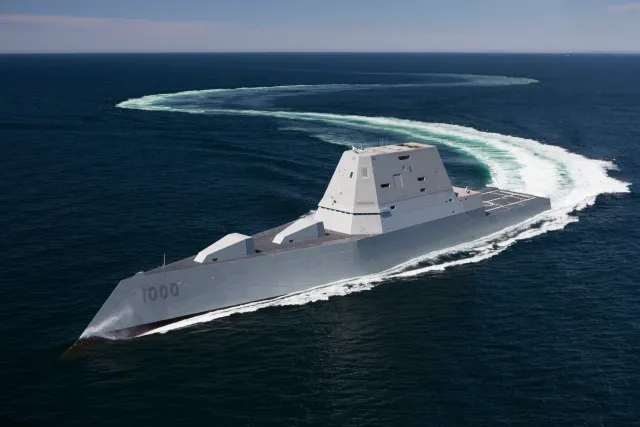
Warship
Zumwalt-class Destroyer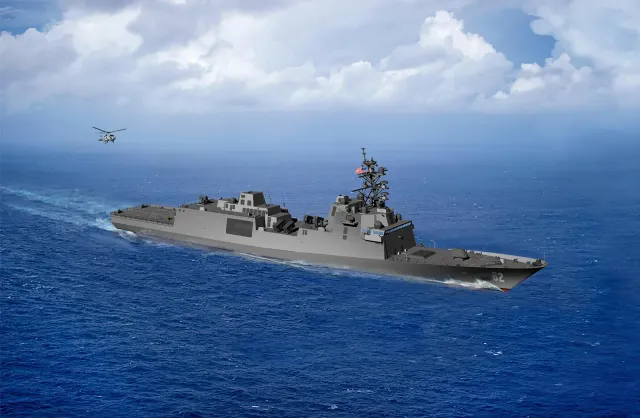
Warship
Constellation-class Frigate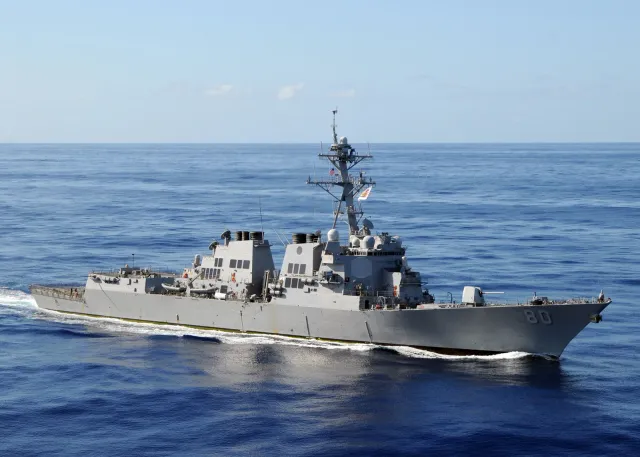
Warship
Arleigh Burke-class Destroyer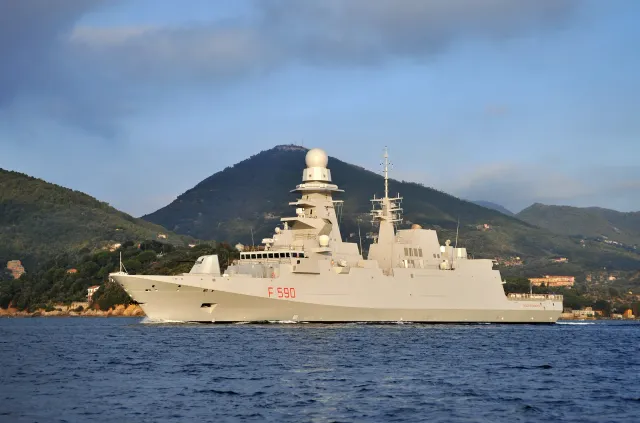
Warship
FREMM (Aquitaine class)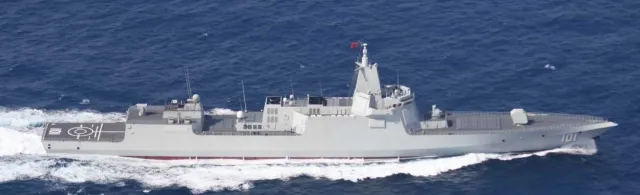
Frequently asked questions
Why do frigates carry a smaller gun than destroyers? +
It reflects a mission split, not a budget shortfall. Destroyer and cruiser-size hulls like the Arleigh Burke class carry a 127mm/5-inch gun because that caliber can still deliver naval gunfire support, shore bombardment in an amphibious operation. Frigates increasingly do not need that capability at all: the newest US frigate design, the Constellation class, carries a 57mm gun because its job is escort and anti-submarine work, not shore bombardment, and the Navy already has 60-plus Burkes with 5-inch guns to cover that mission if it comes up.
What happened to the Zumwalt-class destroyer's guns? +
They have never fired a combat round. The Zumwalt class carries the heaviest naval gun in the WeaponSpecs database, a 155mm Advanced Gun System, two per ship, but the ammunition built for it, the Long-Range Land Attack Projectile, was cancelled in November 2016 after its projected unit cost rose to at least $800,000 per round. With no ammunition, the guns have sat unusable since. As of 2023 the Navy confirmed it would remove one AGS mount per ship to make room for Conventional Prompt Strike hypersonic missile tubes instead.
Why do aircraft carriers have no main gun at all? +
It is a deliberate design choice, not a data gap. Aircraft carriers like the Gerald R. Ford class rely on their air wing for offense and on a CIWS and missile point-defense screen for self-protection, a gun large enough to matter against a modern threat would add weight and complexity without adding real capability an aviation-centric hull needs. The same logic applies to large-deck amphibious assault ships. Of 19 warships in the database that list no gun, most fall into these two categories.
Is Russia and China's 130mm naval gun better than the West's 127mm? +
Not demonstrably. It is heavier on paper, but 130mm and 127mm both belong to the same broad class of destroyer/cruiser-size naval guns, and neither side's figures for range or rate of fire are independently verified in combat. What the two calibers really represent is bloc standardization: Russia and China each build to their own 100-130mm gun family, while NATO and allied navies have converged on the US-designed Mk 45 in 127mm, most recently the UK's incoming Type 26, which is dropping its own long-standing 114mm gun to adopt it.
Why are new frigate designs choosing a 57mm gun instead of a bigger one? +
Because the threat a modern frigate's gun actually faces changed. Five of the seven 57mm-armed ships in the WeaponSpecs database are recent or still-building designs, the Constellation class, Type 31, Visby, Hamina, and Pohjanmaa. The US Navy picked the 57mm Mk 110 for Constellation-class frigates specifically because those ships are built for escort and anti-submarine work, not naval gunfire support, and the 220-round-per-minute Mk 110 is plenty of gun against fast attack craft, small boats, and drones, the threats a frigate-size gun realistically faces today.
Related reading