3-Crew vs 4-Crew Tanks: What the Difference Buys You
Our analysis of 56 tanks in the WeaponSpecs database finds crew size splits exactly 28-28 between 3-person autoloader and 4-person manual-loader crews.
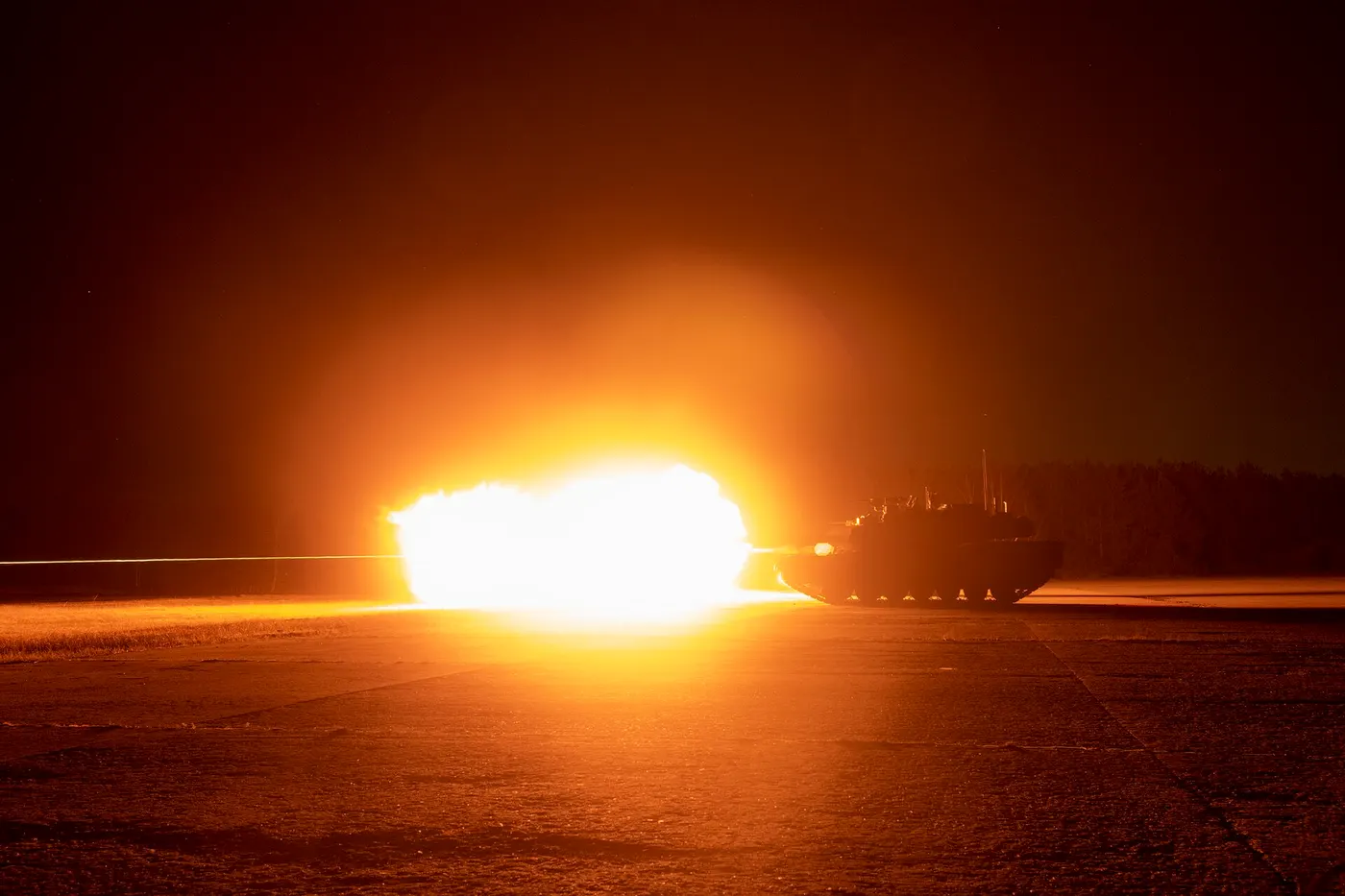
U.S. Army photo by Kevin Payne, Public domain
Of the 56 tanks in the WeaponSpecs database with a published crew figure, exactly 28 use a 3-person crew built around an autoloader, and exactly 28 use a 4-person crew with a human loader. A clean 50/50 split, and it hides a real design and survivability argument, not just a stylistic preference.
Key takeaways:
- Of 56 tanks with a published crew size, the split is exactly 28 three-crew (autoloader) to 28 four-crew (manual loader).
- Autoloader tanks average 39.5 ready rounds versus 44.7 for manual-loader tanks (53 systems with a published ammunition figure), removing the loader did not buy more ammunition capacity.
- Every Russian-lineage design since the 1966 T-64 uses an autoloader, so does China, Ukraine, Poland, Iran, and France’s Leclerc; the US, UK, Italy, and Israel have never fielded an autoloading tank in this database.
- The 2020s alone have already produced 6 new manual-loader tank introductions (Altay, Leopard 2A8, Challenger 3, Merkava Barak) against 3 new autoloader designs, the manual-loader tradition is not fading.
- Oryx’s visually confirmed tracker has documented 4,430 Russian tanks destroyed, damaged, abandoned, or captured since February 2022; the carousel autoloader’s ammunition placement is the widely cited mechanical reason so many losses show the turret separated from the hull.
Which tanks use an autoloader, and which don’t?
The 28-28 split isn’t a coin flip. It tracks design lineage far more than it tracks era. Every tank descended from the Soviet T-64, fielded in 1966, uses an autoloader. That single lineage decision propagated through decades of exports and derivatives: Russia builds autoloaders into 9 of its 10 tanks in our database, China’s 5 tanks are all autoloaded, and the same holds for Ukraine, Poland, Iran, and most of Pakistan’s fleet. Turkey’s Kaplan MT, South Korea’s K2, and Japan’s Type 90 and Type 10 also load their own way onto the autoloader side of the ledger, each a case of a domestic design borrowing the mechanism rather than the doctrine behind it.
The opposite tradition is just as consistent. The United States has fielded 5 tanks in this database and every one keeps a human loader. Italy’s 3 tanks, Israel’s 5, the United Kingdom’s 2, and 6 of Germany’s 7 all do the same. India’s 2 tanks round it out. This is not a case of laggards failing to adopt newer technology, the US has iterated the M1A2 SEP v3 Abrams through decades of upgrades without ever automating the loader’s job.
France breaks the pattern cleanly. The Leclerc XLR has used an autoloader since the original Leclerc entered service in 1992, a NATO tank built by a Western manufacturer that chose the Soviet-tradition mechanism on its own terms. That single case is worth sitting with: it means the West’s manual-loader habit was never a case of “the technology wasn’t trusted here,” France trusted it three decades ago and never looked back.
One inconsistency in the data is worth flagging plainly rather than smoothing over. Turkey’s Altay description references an autoloaded main armament, yet the database records it with a 4-person crew. We didn’t resolve that discrepancy, it’s flagged here as-is rather than guessed at.
| Tank | Country | Crew | Ready rounds | Introduced |
|---|---|---|---|---|
| M1A2 SEP v3 Abrams | United States | 4 | 42 | 2017 |
| Merkava Mk4 | Israel | 4 | 48 | 2004 |
| Leopard 2A7 | Germany | 4 | 42 | 2014 |
| T-90M | Russia | 3 | 40 | 2017 |
| K2 Black Panther | South Korea | 3 | 40 | 2014 |
| Leclerc XLR | France | 3 | 40 | 2023 |
Israel’s Merkava Mk4 sits at the high end of the manual-loader group’s ammunition capacity, while Russia’s T-90M and South Korea’s K2 Black Panther both land at the autoloader group’s average. Germany’s Leopard 2A7 tracks close to the Abrams on both crew size and rounds carried, no surprise given how closely the two NATO designs have shadowed each other for decades.
Does removing the loader mean less ready ammunition?
No, and this is the counter-intuitive part. Across 53 tanks in the database with a published ammunition figure, autoloader tanks average 39.5 ready rounds. Manual-loader tanks average 44.7. Cutting a crew member did not free up room for more shells, if anything the manual-loader tanks in our sample carry slightly more.
Here’s the “so what”: the loader’s job was never occupying ammunition space, it was a person performing a task that a mechanism can now do instead. Removing that person freed up crew-compartment volume and weight, not ammunition volume. Ammunition stowage is set by hull and turret design decisions made well before anyone answers the “human or machine” question, the number of ready rounds a tank carries has much more to do with how its turret bustle or hull is laid out than with who or what is loading them.
Treat the 39.5-versus-44.7 gap as a modest-sample average, not a law of tank design. Fifty-three systems is enough to say the pattern is real, not enough to say it’s universal. A future autoloader design could easily carry more rounds than a manual-loader tank built on a smaller hull, the averages describe the current fleet, not a mechanical constraint.
Why do Russian tanks lose their turrets so often in combat?
The T-64-onward Russian and Soviet autoloader design places its carousel at the base of the turret, inside the crew compartment, loaded with ready propellant charges and projectiles arranged for the mechanism to reach. That placement is the mechanical root of a pattern documented repeatedly in loss footage from Ukraine.
“If you see film footage of a hit followed by the ammunition fire, typically what happens is that one propellant casing goes off, or one or two, because of a penetration. The explosion of the first propellant case tends to trigger more,” said Steven Zaloga, senior analyst at The Teal Group (Task & Purpose).
One propellant charge igniting inside the carousel can cascade into the rest of the ready rounds going off in sequence. With that much explosive energy released inside a sealed turret basket, the pressure has to go somewhere, and the weakest point is often the turret ring itself. That’s the mechanical chain behind the pattern seen so often in loss footage from the war: a hit, then a secondary explosion, then the turret separating from the hull entirely.
Oryx’s visually confirmed tracker (Oryx) has recorded 4,430 Russian tanks destroyed, damaged, abandoned, or captured since the February 2022 invasion began, a figure Oryx itself notes is a floor, not a ceiling, since it only counts losses with photo or video evidence. We won’t put a number on what share of those show a separated turret, no verified statistic for that exists, but it’s a widely documented pattern in loss footage from the war. Worth being explicit about the distinction here: this isn’t a manufacturer or state claim we’re flagging for skepticism, it’s combat-loss evidence gathered independently, a different category of information from the brochure figures this column usually treats with caution.
Why do NATO’s newest tanks still carry four crew?
Of 56 tanks with a published crew figure and release year, 27 autoloader designs and 27 manual-loader designs (plus one of each with no listed year) span every decade from the 1970s to the 2020s. The 2010s produced the most autoloader introductions (15), but the 2020s alone have already added 6 new manual-loader tanks (Altay, Leopard 2A8, Challenger 3, Merkava Barak) against just 3 autoloader designs, evidence the manual-loader tradition isn't fading out.
Sixty years is a long time for a technology to prove itself, and the autoloader has: it’s been in front-line service since the T-64 arrived in 1966. If NATO’s manual-loader tradition were simply a matter of catching up, the 2020s numbers wouldn’t make sense. Instead they run the other way, six new manual-loader tanks against three new autoloader designs in the current decade alone.
What that says is that the fourth crew member is a deliberate reliability hedge, not an engineering gap. A human loader is redundancy: another set of hands for maintenance under field conditions, another body for security tasks when the tank is stationary, and a backup if a crew member becomes a casualty. Armies that keep building manual-loader tanks in 2026 are making that tradeoff on purpose, weighing a proven mechanical reliability record against the space, weight, and training cost of carrying a fourth soldier.
So which crew size is actually safer?
Crew count alone doesn’t determine survivability. Ammunition placement does, and that’s a separate design choice that doesn’t track cleanly with whether a human or a mechanism is doing the loading.
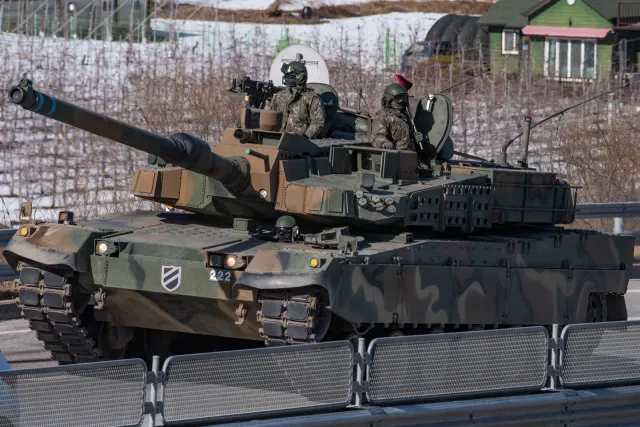
The Soviet carousel design keeps ready ammunition at the base of the turret, inside the crew compartment, the arrangement behind the turret-separation pattern discussed above. But not every autoloader tank shares that layout. The Leclerc and the K2 both use autoloaders, yet both isolate their ready ammunition in a bustle behind blast-relief or blow-out panels, designed to vent an ignition upward and away from the crew rather than let it cook off inside the fighting compartment. That’s structurally much closer to how the manual-loader Abrams, Challenger, Leopard, and Merkava all stow their own ready rounds, in a separated bustle or hull compartment away from the crew, than it is to the Soviet carousel.
The real dividing line, then, isn’t 3 crew versus 4. It’s whether the ready ammunition sits next to the crew or is walled off from them. A 3-crew autoloader tank with isolated stowage and a 4-crew manual-loader tank with isolated stowage share the same underlying survivability logic. A 3-crew tank with a carousel inside the crew compartment does not.
If you want to run these tradeoffs yourself, WeaponSpecs’ Abrams vs T-90M comparison and K2 vs Leopard 2A7 comparison put the full spec sheets side by side, and the Advisor can help build a broader procurement shortlist across crew size, ammunition stowage, and every other spec in the database.
Sources
Systems in this comparison
Every system covered above, with its photo and, where available, a video. Tap a card to open the full spec sheet.
Compare these side by side →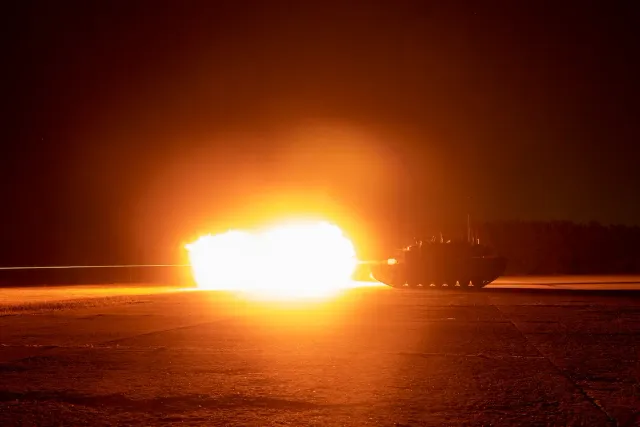
Main battle tank
M1A2 SEP v3 Abrams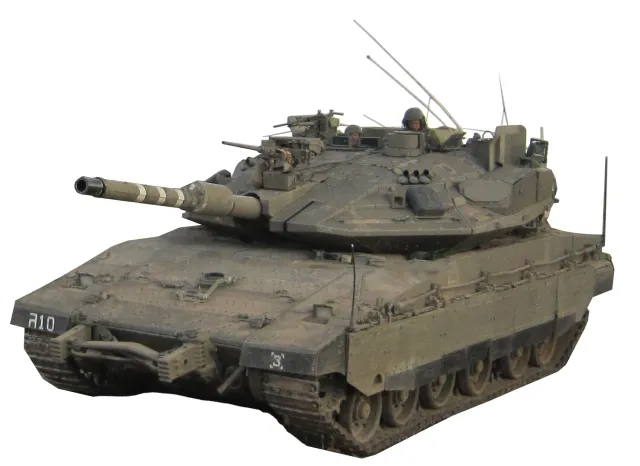
Main battle tank
Merkava Mk4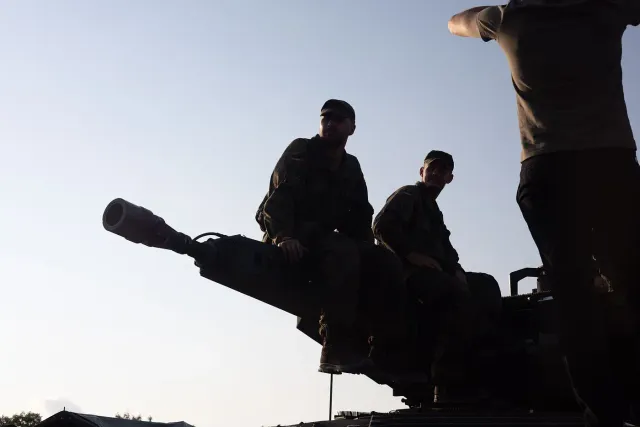
Main battle tank
Leopard 2A7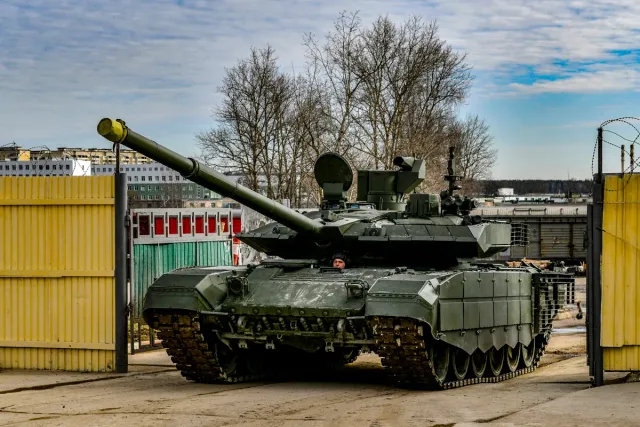
Main battle tank
K2 Black Panther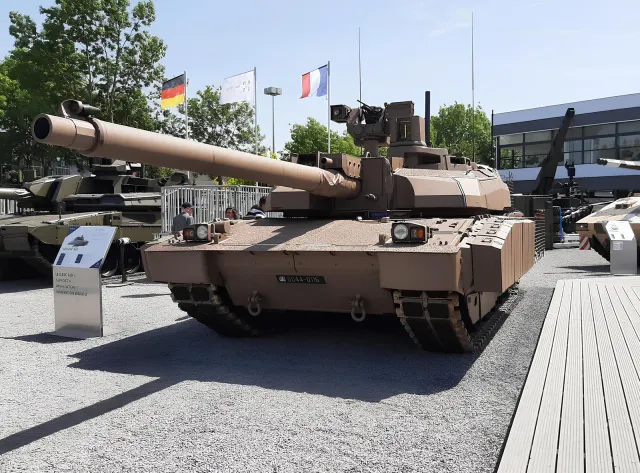
Main battle tank
Leclerc XLRFrequently asked questions
Why do some tanks have a 3-person crew and others have 4? +
The fourth crew member is the loader, who manually pulls and rams each round into the breech. An autoloader mechanism does that job instead, so the tank only needs a commander, gunner, and driver.
Does an autoloader mean a tank can carry more ammunition? +
Not in our data. Across the 53 tanks in the WeaponSpecs database with a published ammunition capacity, 3-crew autoloader tanks average 39.5 ready rounds versus 44.7 for 4-crew manual-loader tanks, slightly less, not more.
Why do Russian tanks lose their turrets so often in Ukraine? +
Russian autoloader designs descended from the T-64 store ready ammunition in a carousel at the base of the turret, inside the crew compartment. A penetration that reaches it can set off a chain reaction of propellant charges violent enough to blow the turret off the hull.
Why do NATO countries still build 4-crew tanks when autoloaders have existed since the 1960s? +
It is a doctrinal choice, not a technology gap. The US, UK, Germany, Italy, and Israel have all fielded new manual-loader tanks in the 2020s. A human loader adds redundancy, can help with maintenance and security tasks, and removes a mechanical failure point some armies still don't fully trust under sustained combat use.
Is a 3-crew or 4-crew tank safer? +
Crew count alone doesn't determine survivability, ammunition location does. France's Leclerc and South Korea's K2 both use autoloaders but store ready rounds in an isolated bustle behind blast-relief panels, closer to how Western manual-loader tanks stow ammunition than to the Soviet carousel design.
Related reading