The 10 Best Main Battle Tanks of 2026, Ranked
A 10-to-1 countdown of the best main battle tanks of 2026, judged on combat record, protection, mobility and logistics, not brochure specs.

U.S. Army photo by Spc. Andrew Clark, Public domain
Ukraine settled an argument that used to fill defense-procurement panels for a decade: the tank that wins in 2026 is not the one with the biggest gun or the thickest armor, it’s the one with a real combat record and a logistics chain that keeps it running while a $500 drone hunts for it. Cheap FPV drones, mines and artillery, not enemy tanks, have been the leading killer of top-tier main battle tanks on both sides of that war, and in April 2024 the US quietly pulled its own Abrams back from the front line because a gas-turbine tank is easy for a drone crew to find by heat signature alone. That single fact reorders this list more than any spec sheet does.
Key takeaways:
- The Leopard 2A7 ranks first for allied logistics depth and inherited combat-proven survivability from its 2A4/2A6 siblings, not for the best raw spec.
- Ukraine lost only 5 of its 71 Leopard 2 tanks (2A4 and 2A6 combined) in the first 13 weeks of its 2023 counteroffensive.
- Three tanks on this list, the K2 Black Panther, Type 99A and T-14 Armata, have never fought, despite claimed power-to-weight figures as high as 27.4 hp/t.
- A new-build Western main battle tank costs roughly $6-11 million per unit; a Russian T-90M costs about $4.5 million.
- The US pulled its own M1A1-variant Abrams tanks back from Ukraine’s front line in April 2024 specifically because of drone vulnerability.
We ranked ten current tanks from 10 down to 1 on four criteria, in this priority order: combat record (has this tank, or its direct siblings, actually fought, and what did that reveal), protection (armor generation, active protection systems, and a real intercept record where one exists), lethality (gun, ammunition, fire control), and mobility plus logistics (power-to-weight, spare parts, allied stockpiles, training pipelines). A tank with no combat data is ranked honestly on that basis, not given the benefit of the doubt, and every state or manufacturer figure below is flagged as a claim, not treated as fact. Photos and full spec sheets for every tank on this list are in the gallery below the article.
How we ranked them
- Combat record. A documented battlefield performance beats a better paper spec. We say plainly when a tank has never fought.
- Protection. Armor generation and active protection system integration, weighted toward systems with a real intercept record, not just a claimed one.
- Lethality. Gun caliber and length, ammunition family, fire control and target-acquisition sensors. A bigger gun with worse fire control loses to a smaller gun that hits first.
- Mobility and logistics. Power-to-weight ratio plus how sustainable the tank actually is: spare parts, allied stockpiles, training pipelines, export footprint.
10. T-14 Armata 

The most-hyped tank of the last decade is also the least verified. A 125mm 2A82-1M smoothbore fires from a fully unmanned turret, with the three-man crew isolated in an armored capsule up front, a genuinely novel layout that would be a real survivability leap if it were fielded at scale. At a claimed 55 tonnes and 25 hp per tonne it would also be one of the more mobile tanks on this list. None of that has been confirmed in sustained combat. A handful reportedly appeared in southern Ukraine around July 2023 in rear evaluation and indirect-fire roles before being withdrawn, and UK Defence Intelligence assessed that Russia was unwilling to risk the “prestige” vehicle at the front, that early production tanks were rejected for poor build quality, and that output is probably only in the low tens of units a year, not a fielded fleet. Its Afghanit active protection system, its armor package and its unit cost are all manufacturer or state claims with no independent confirmation.
Advantages: a genuinely novel crew-capsule layout that separates the crew from stored ammunition; high claimed mobility; designed from the outset around modern sensor and APS integration.
Disadvantages: production reported in the low tens of units, not a fielded fleet; no confirmed combat use; every protection and performance figure is an unverified state claim.
At the 2015 Victory Day parade rehearsal on Red Square, a T-14 stalled dead in front of the reviewing stands and had to be nudged along by a recovery vehicle before it restarted under its own power. A decade later, that’s still the most-documented public appearance this tank has made, a parade star that has yet to prove itself as anything else.
9. Type 99A 

China’s Type 99A is arguably the most capable tank on this list that has never fired a shot in anger. A 125mm smoothbore with autoloader, 58 tonnes, and a claimed 25.5 hp per tonne make it a credible late-generation design on paper, and it is not rare: roughly 700 Type 99A of about 1,300 Type 99-series tanks were in People’s Liberation Army service by 2024, forming the core of China’s heavy combined-arms brigades. Its one real test came during the 2020 to 2021 Ladakh border standoff with India, when PLA units deployed Type 99As onto the Tibetan Plateau above 4,000 meters, altitude that measurably cuts engine output on any tank, Western or Chinese. Deployment near a friction point is not combat, and its composite plus explosive reactive armor package and its reported GL5 active protection system remain manufacturer and state claims with no independent verification.
Advantages: a large, modern fleet with real industrial depth behind it; hunter-killer sights and an autoloader comparable to late-Soviet designs; strong claimed power-to-weight for its class.
Disadvantages: zero combat data; protection, APS and electronics performance are unverified state claims; documented power loss operating at high altitude.
During the Ladakh standoff, observers on both sides noted PLA Type 99As held well behind the actual friction points, and one widely circulated account had them pressed into a logistics role well to the rear, a reminder that a plateau deployment is not the same thing as a fight.
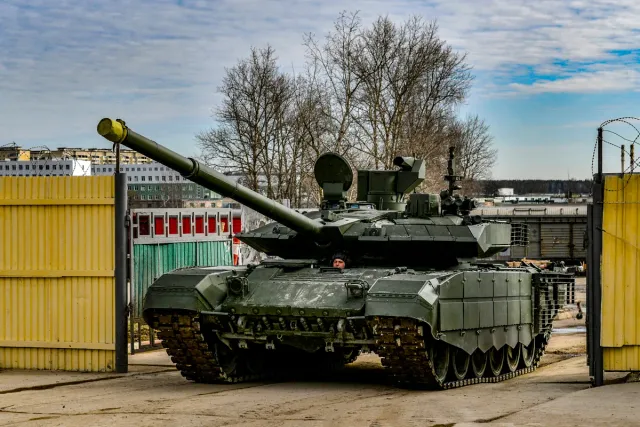
8. T-90M Proryv

This is the one Russian tank on this list with a large, genuinely documented combat record, and it ranks here precisely because that record is visible and it is not flattering. Russia’s most modern serially produced tank, a 125mm 2A46M-5 smoothbore on a 48-tonne hull with Relikt reactive armor and a soft-kill Shtora-1 system, has fought across the full span of the 2022 invasion of Ukraine. The first confirmed T-90M loss came in early May 2022 near Staryi Saltiv outside Kharkiv, and the first intact capture followed that September during Ukraine’s Kharkiv counteroffensive: a T-90M abandoned in a forest with only a thrown track, found in near-perfect condition and shipped west for a full technical teardown by American and British analysts. The tank has been destroyed and captured repeatedly since. Its modern armor and thermal sights are a real step up over Russia’s older T-72 fleet, but it shares the T-72/T-90 family’s long-standing vulnerability: an autoloader carousel that stores ammunition low in the hull, directly under the turret ring, and a penetrating hit there can blow the turret clean off.
Advantages: modern Relikt reactive armor and Shtora-1 over a well-proven hull; light at 48 tonnes and cheap at roughly $4.5 million, genuinely sustainable at scale; competent thermal fire control; currently in real production.
Disadvantages: carousel ammunition storage risks a catastrophic turret-off kill; thinner protection budget than any 65-plus tonne Western tank on this list; documented heavy combat losses; soft-kill-only active protection, no hard-kill intercept.
The September 2022 capture became one of the war’s signature images: Russia’s newest tank, abandoned essentially undamaged because its crew fled during a collapsing retreat, handed straight to NATO intelligence for a free teardown.
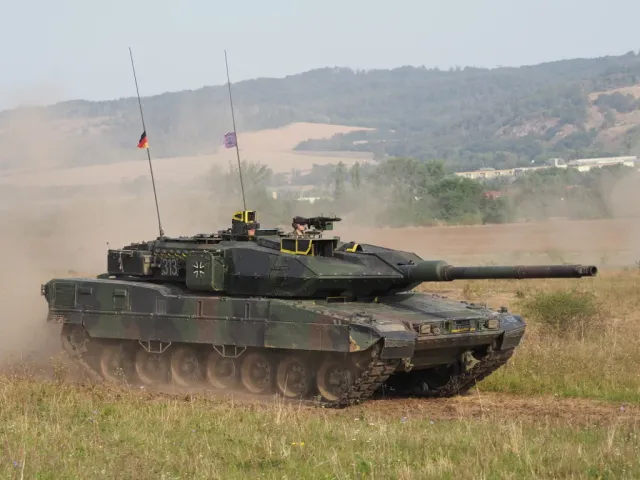
7. Leopard 2A6 

This entry is deliberately separate from the 2A7 below it in the ranking, because the 2A6 has something the newer variant doesn’t yet: a real, recent combat record. Germany’s previous-generation Leopard 2 standard, a 120mm L/55 smoothbore on a 62.3-tonne hull with no active protection system as standard, was donated to Ukraine alongside older 2A4s and committed to the June 2023 Zaporizhzhia counteroffensive around Mala Tokmachka and Robotyne. The honest number from that fighting: Ukraine lost only 5 of its 71 Leopard 2s (2A4 and 2A6 combined) in the first 13 weeks of the counteroffensive, with roughly 10 more damaged and recovered for repair, and Russian drones, not Russian tanks, accounted for most of the kills. Crews largely survived even catastrophic hits, exactly the kind of evidence a spec sheet can’t provide.
Advantages: combat-proven crew survivability and recoverability under fire; the L/55 gun and NATO-standard ammunition family; enormous shared parts and training base across the Leopard operator club.
Disadvantages: the lowest power-to-weight on this list, 18.6 hp per tonne on a 62-tonne hull; the baseline variant carries no active protection system, Trophy is a 2A7-and-later, operator-specific add-on; a roughly 30-year-old armor generation that now needs add-on packages to stay current.
Every one of those first five Leopard 2 losses happened inside a single roughly 25-square-mile box of minefields and drone kill zones around Robotyne, the sharpest illustration in this whole list that terrain and cheap munitions, not enemy armor, now decide whether a tank comes home.
6. Leclerc XLR 

France’s most modern tank belongs to a family that fought its first real battle a full 23 years after entering service, and under someone else’s flag. The XLR, fielded from 2023, is a 56.8-tonne, three-man-crew design with a 120mm autoloading gun and the best power-to-weight ratio on this list at 27 hp per tonne, plus new networked C4I systems and improved mine and IED protection over the base Leclerc. The XLR variant itself hasn’t been in combat yet, but the Leclerc family has: from summer 2015 the United Arab Emirates committed roughly two battalions, on the order of 70 Leclercs, to the war in Yemen against Houthi forces near Aden. Over one month of that fighting, three tanks were damaged, two by anti-tank mines and one by an RPG that failed to penetrate the hull, and one crew member was killed by an anti-tank guided missile that struck through a vision episcope. None were completely destroyed, a modest but genuine record: survivable, while exposed like every MBT on this list to modern guided anti-tank weapons.
Advantages: best-in-class mobility and a fast autoloader that cuts crew to three, reducing exposure; the XLR upgrade adds Scorpion-program networking, new armor-piercing ammunition and better mine resistance; light for its firepower class.
Disadvantages: an armor generation generally assessed a step behind the latest Leopard and Challenger composite packages; a small fleet and thin export footprint, essentially France and the UAE, means a shallow logistics and doctrine base; its active protection system is still only in evaluation.
Yemen closed a strange chapter for the Leclerc: a tank that had never fired a shot under French colors since entering service in 1992 got its combat debut wearing UAE markings, in someone else’s war.
5. Merkava Mk4 

No tank on this list has been tested by combat more than Israel’s Merkava Mk4, and it ranks fifth rather than higher only because its gun, ammunition family and mobility profile are more conservative than the four tanks above it, not for any shortage of evidence. Built around a philosophy no other tank here shares, crew survivability first, with the engine mounted forward as extra armor and a rear hatch for evacuation under fire, the Mk4 fields a 120mm MG253 smoothbore on a 65-tonne hull. The 2006 Lebanon war exposed real gaps: Hezbollah’s Kornet and reverse-engineered anti-tank guided missiles hit more than 40 Israeli tanks and destroyed up to four Merkavas, a result that directly drove Israel to rush its Trophy active protection system into service. Trophy scored its first-ever combat intercept on 1 March 2011 near Gaza, then a documented Kornet intercept on 14 July 2014 during Operation Protective Edge, with Israel reporting a dozen or more successful intercepts through that operation and no tank lost to the threats Trophy engaged. Heavy use continued through the Gaza operations of 2023 and 2024.
Advantages: the only combat-validated hard-kill active protection record on this list; a survivability-first architecture with the engine doubling as frontal shielding and a rear hatch for evacuation; can carry infantry or casualties in its rear compartment; purpose-built for the anti-tank-guided-missile and urban threat that now defines armored warfare.
Disadvantages: conservative gun, ammunition and mobility compared with the top four; heavy at 65 tonnes against a modest 24 hp per tonne; effectively a single-operator platform, so none of the allied-stockpile logistics advantage that benefits NATO’s Leopard and Abrams fleets.
2006 is the real pivot point for this entire list: getting Merkavas burned by Hezbollah’s Kornets is what pushed Israel to field Trophy, and five years later Trophy scored the world’s first-ever combat intercept by an active protection system, the same category of technology every tank ranked above the Merkava now carries or is adding.
4. Challenger 3 

Britain’s newest tank hasn’t fought yet, but it rebuilds a hull with the most under-appreciated combat pedigree in NATO. The Challenger 3 finally brings a NATO-standard 120mm Rheinmetall L/55A1 smoothbore, replacing the old rifled gun that set Britain’s armor apart from every ally for three decades, onto a 66-tonne hull with Trophy active protection fitted from the start. As Challenger 3 specifically, there’s no combat record yet, entry into service is set for 2027. What it inherits is the Challenger 2’s reputation: no Challenger 2 was lost to enemy fire during the 2003 invasion of Iraq, and the type’s first-ever loss to enemy action didn’t come until Ukraine committed a small donated fleet to the 2023 counteroffensive. One correction worth making here, since it gets repeated often: the famous roughly 4,700-meter longest-range confirmed tank kill from 26 February 1991 belongs to the Challenger 1, not the Challenger 2, a distinction the Challenger 2’s own reputation sometimes borrows without earning.
Advantages: new digital fire control and architecture closing the gap to Leopard and Abrams; Trophy integrated from the start rather than bolted on later; NATO-standard 120mm smoothbore ammunition at last, a major logistics fix over the old rifled gun; inherits an exceptionally tough hull.
Disadvantages: a small fleet, roughly 148 rebuilds planned, limiting scale and doctrine depth; the lowest-tier mobility on this list at 19.3 hp per tonne on a 66-tonne hull; combat confidence rests on the old hull and armor, not the new turret and electronics, which are untested.
The bluntest fact about the Challenger 2’s decade-plus without a combat loss: its first-ever kill came not against an enemy tank, but during a 2003 Basra friendly-fire incident, when one Challenger 2 destroyed another and killed two crew, a sobering footnote to a genuinely strong survivability record.
3. K2 Black Panther 

South Korea’s K2 has the best power-to-weight ratio on this list, at 27.4 hp per tonne, active in-arm suspension that lets the hull kneel or lean for better gun-laying on rough terrain, and a fast autoloader that cuts crew to three. It ranks third rather than first for the same reason we’ve applied to every other paper contender here: it has never been in combat. What makes it consequential anyway is industrial, not military. On 27 July 2022 Poland signed for 1,000 K2s, 180 built in South Korea and 820 to be license-built locally as the K2PL, followed by a further 180-unit, roughly $6.2 billion follow-on order in 2025, the single deal reshaping European tank procurement in the mid-2020s. Worth noting honestly: South Korea’s fully indigenous transmission only passed endurance testing in September 2024, so earlier production batches, including the Poland-bound K2GF, actually run a German Renk gearbox, a real supply-chain dependency behind the “fully domestic” marketing.
Advantages: best power-to-weight on this list plus active suspension for agility on rough terrain; three-man crew via autoloader; the fastest production and delivery cadence in the business, proven at NATO scale by the Poland deal; modern hunter-killer sights.
Disadvantages: zero combat record; a soft-kill-only active protection system, no combat-proven hard-kill intercept like Trophy; earlier production batches depend on an imported German transmission rather than the indigenous unit still finishing qualification.
The transmission saga punctures the K2’s own sovereignty pitch: Korea’s domestic gearbox kept failing endurance testing, so the “indigenous” tank Poland bought as a supply-chain hedge quietly shipped with a German Renk unit until 2024.
2. M1A2 SEP v3 Abrams 

The deepest combat record on this list belongs to the Abrams, and its most instructive lesson is barely two years old. In the 1991 Gulf War, nine M1A1s of Eagle Troop destroyed an entrenched Iraqi Republican Guard brigade in about 23 minutes at the Battle of 73 Easting on 26 February 1991, and Medina Ridge the following day became the war’s largest tank battle. No M1A1 was lost to enemy tank fire in that entire war, every one of the 18 losses was friendly fire or a deliberate destruction of an already-disabled vehicle. The SEP v3, at 66.8 tonnes with a 120mm M256A1 gun, Trophy active protection and a 23.8 hp-per-tonne gas-turbine powerplant, is the most electronically sophisticated tank on this list, with sensor fusion and battlefield networking nothing else here matches. But in April 2024, the US pulled its own M1A1-variant Abrams back from Ukraine’s front line specifically because the gas turbine’s heat and fuel signature made the tank too easy for cheap FPV drones to find and kill, the same platform that defined overmatch against a peer-equipped army in 1991 now teaching everyone that no tank outruns a $500 drone without infantry support, electronic warfare and smart employment.
Advantages: the best sensor fusion and battlefield networking on this list; combat-validated depleted-uranium composite armor plus Trophy; the deepest doctrine, training and sustainment enterprise behind any tank in this ranking; strong 23.8 hp-per-tonne mobility.
Disadvantages: a thirsty, thermally loud gas turbine, a genuine logistics and survivability liability far from a fuel point, and the explicit reason for the 2024 Ukraine pull-back; the heaviest-class weight on this list at 66.8 tonnes, which strains bridges and strategic lift; a premium unit and lifecycle cost.
Put 73 Easting and the 2024 withdrawal side by side and you get the honest arc of this whole list: a 23-minute annihilation of a dug-in enemy brigade using thermal sights the other side couldn’t match, still taught at armor schools today, followed three decades later by the same tank pulled off the line because a drone that costs less than a laptop can now find it first.
1. Leopard 2A7

The Leopard 2A7 wins this list on balance, not on any single spec, and in a war being decided by drones and mines, balance is the whole argument. It pairs the Leopard 2 family’s combat-proven survivability, demonstrated by its 2A4 and 2A6 siblings in Ukraine, with the most modern protection and APS-ready configuration in the family and the widest allied logistics base of any tank in service anywhere: roughly a dozen NATO and partner operators sharing parts, ammunition and doctrine. Be precise about what’s proven and what isn’t: the 2A7 variant itself, in service with Germany, Qatar, Hungary and others, has not personally seen combat. What has fought is the 2A6 ranked above, the same family, one generation back, and the 2A7 is its direct upgrade: better protection, improved fire control and an auxiliary power unit layered onto exactly the platform Ukraine’s counteroffensive already tested. At 67.5 tonnes and 19.4 hp per tonne, its diesel MTU powerplant gives it a fuel-logistics reach the Abrams’ gas turbine simply can’t match, which is the quiet reason the diesel Leopard, not the turbine Abrams, has become Europe’s default heavy tank.
“Leopard 2 is a modern, well-protected main battle tank with good sensors,” said Jack Watling, Senior Research Fellow in Land Warfare at the Royal United Services Institute (RUSI), to CNN, January 2023.
Advantages: inherited, combat-proven Leopard 2 crew survivability and recoverability; the widest allied logistics, ammunition and training commonality of any tank in service, the single biggest force multiplier in a war that doesn’t end quickly; modern add-on armor and APS-ready configuration; an efficient diesel powerplant with none of the Abrams’ fuel penalty.
Disadvantages: the lowest power-to-weight on this list, 19.4 hp per tonne, on the heaviest hull here at 67.5 tonnes; the 2A7 variant itself remains combat-unproven, only its predecessors have actually fought; a premium price around $11 million per unit.
Two tanks, the Leopard 2A7 and the Abrams SEP v3 just below it, share almost the same weight class and the same 1,500-horsepower output. The difference that puts the Leopard on top is the one that doesn’t show up on a spec sheet until a war runs long: a diesel engine sips fuel where a gas turbine gulps it, and in a drone-and-logistics war, that gap is the whole ballgame.
The 2026 ranking at a glance
| Rank | Tank | Main gun | Crew | Combat record | Power-to-weight | Approx. unit cost |
|---|---|---|---|---|---|---|
| 1 | Leopard 2A7 | 120mm L/55 smoothbore | 4 | Family fought in Ukraine (2A4/2A6) | 19.4 hp/t | ~$11.0M |
| 2 | M1A2 SEP v3 Abrams | 120mm M256A1 smoothbore | 4 | 1991 Gulf War, Iraq, Ukraine | 23.8 hp/t | ~$10.5M |
| 3 | K2 Black Panther | 120mm CN08 smoothbore, autoloader | 3 | None | 27.4 hp/t | ~$8.5M |
| 4 | Challenger 3 | 120mm L/55A1 smoothbore | 4 | Hull fought in Iraq 2003, Ukraine 2023 | 19.3 hp/t | ~$10.0M |
| 5 | Merkava Mk4 | 120mm MG253 smoothbore | 4 | Lebanon 2006, Gaza 2014-2024 | 24 hp/t | ~$6.0M |
| 6 | Leclerc XLR | 120mm CN120-26/52, autoloader | 3 | Family fought in Yemen (2015-) | 27 hp/t | ~$9.0M |
| 7 | Leopard 2A6 | 120mm L/55 smoothbore | 4 | Ukraine, 2023 counteroffensive | 18.6 hp/t | not published |
| 8 | T-90M Proryv | 125mm 2A46M-5, autoloader | 3 | Ukraine, 2022- | 20.9 hp/t | ~$4.5M |
| 9 | Type 99A | 125mm smoothbore, autoloader | 3 | None (deployed, not fought) | 25.5 hp/t* | not published |
| 10 | T-14 Armata | 125mm 2A82-1M, autoloader | 3 | Unconfirmed, brief 2023 rear role | 25 hp/t* | not published |
*Manufacturer or state claim, not independently verified.
The two tanks at the top of this ranking, Leopard 2A7 and Abrams SEP v3, post middling power-to-weight, while the three highest figures on the chart, K2 Black Panther, Leclerc XLR and Type 99A, belong to tanks with a thin or nonexistent combat record. Mobility on paper doesn't decide this list, combat record and logistics do.
The bottom line
No tank on this list wins on every axis, and that’s the honest state of main battle tank design in 2026: a set of trade-offs between combat record, protection, lethality and what a real logistics chain can actually sustain, while cheap drones make every one of them a target. The Leopard 2A7 leads because it pairs its family’s proven survivability with the deepest allied sustainment base of any tank in service, but the M1A2 SEP v3 Abrams and K2 Black Panther are close enough that mission profile, fuel logistics and how fast you can actually field a fleet should decide a real procurement call, not gun caliber alone.
Run any two of these tanks head-to-head in the comparison tool, browse the full tank class page for every system in the database, or get a mission-tailored recommendation from the advisor. More rankings and breakdowns like this live on the articles page.
Sources
- Ukraine loses just five of its 71 Leopard 2 tanks in counteroffensive, The National
- Ukrainian forces capture Russia's most advanced tank, Overt Defense
- Merkava, reference specifications, Wikipedia
- T-14 Armata, reference specifications, Wikipedia
- M1 Abrams, reference specifications, Wikipedia
- Germany is 'wasting time' on sending tanks to Ukraine, its allies say. Here's why the Leopard 2 is so important, CNN
Systems in this comparison
Every system covered above, with its photo and, where available, a video. Tap a card to open the full spec sheet.
Compare these side by side →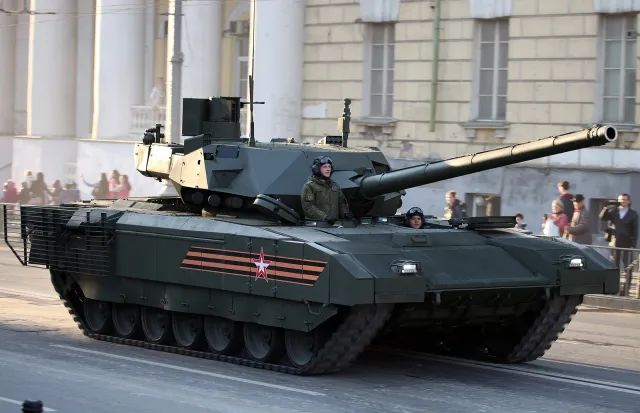
Main battle tank
T-14 Armata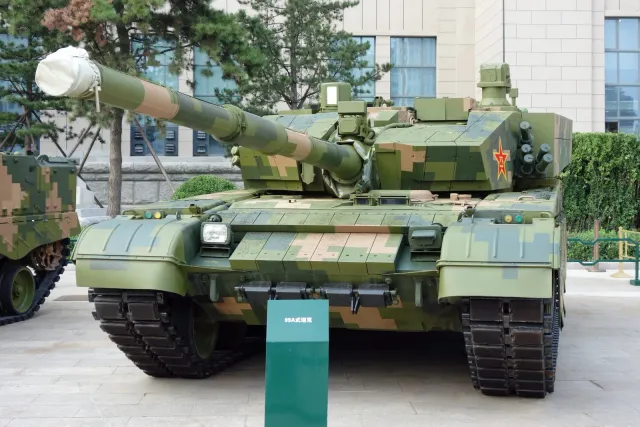
Main battle tank
Leopard 2A6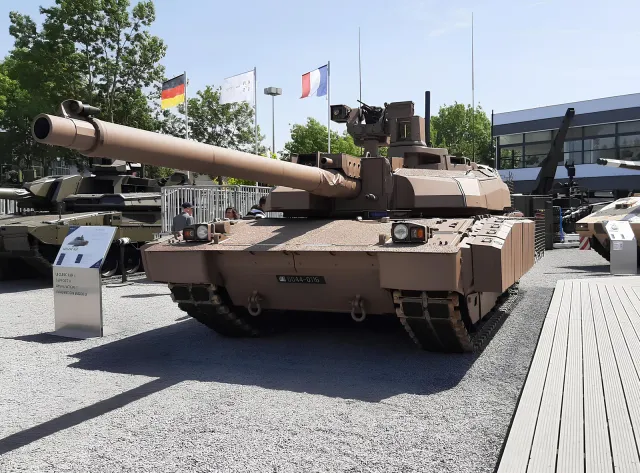
Main battle tank
Leclerc XLR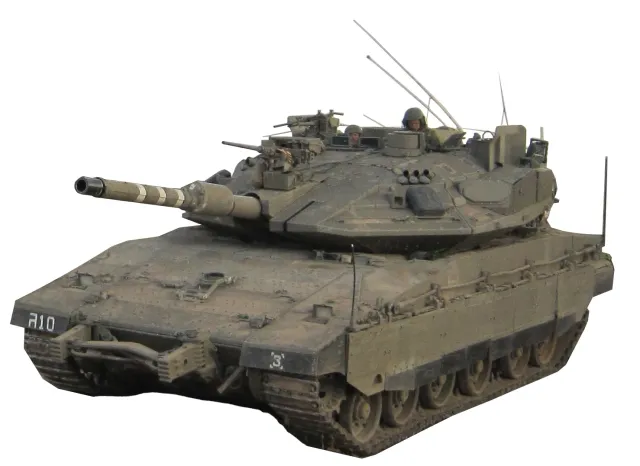
Main battle tank
Merkava Mk4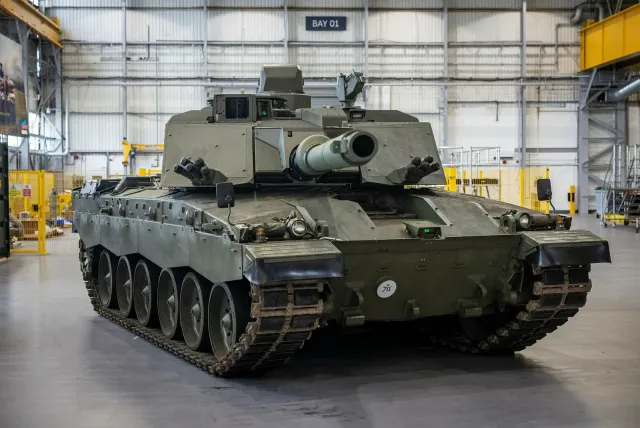
Main battle tank
Challenger 3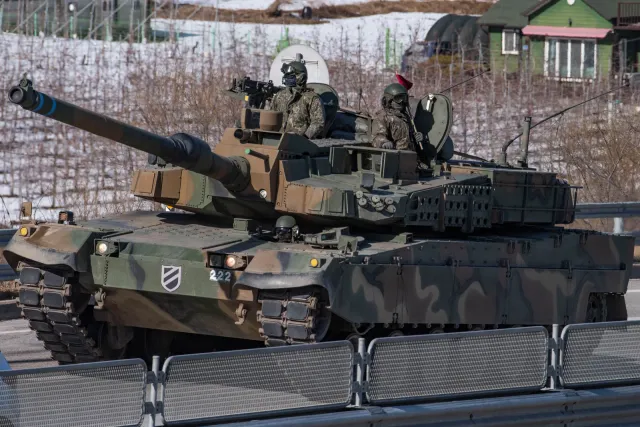
Main battle tank
K2 Black Panther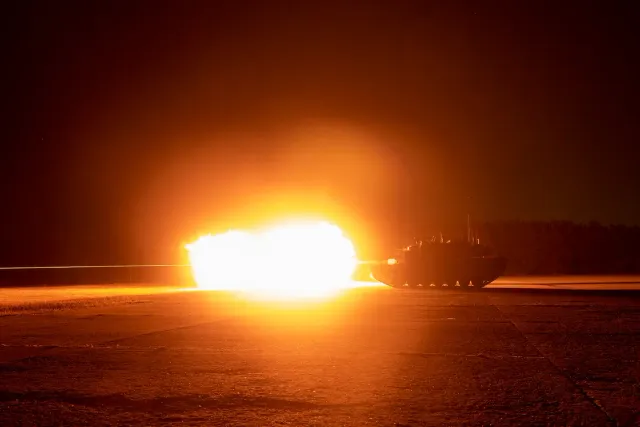
Main battle tank
M1A2 SEP v3 Abrams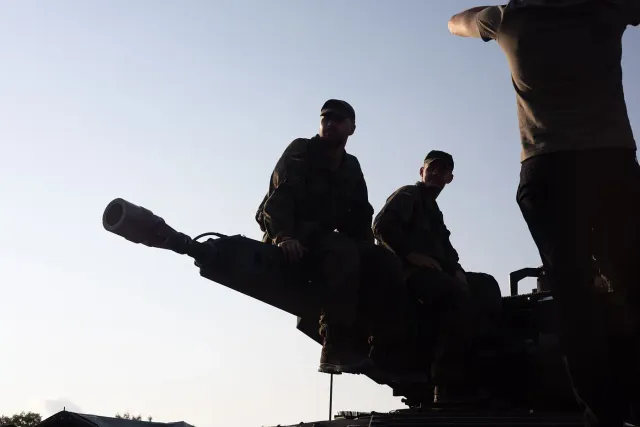
Main battle tank
Leopard 2A7Frequently asked questions
What is the best main battle tank in 2026? +
By our weighting of combat record, protection, lethality and logistics, the Leopard 2A7 ranks first. It combines the Leopard 2 family's combat-proven survivability, its 2A4 and 2A6 siblings fought in Ukraine, with a modern APS-ready configuration and the widest allied parts, ammunition and training base of any tank in service, which matters most in a long war.
Which tank on this list has the strongest combat record? +
The M1A2 Abrams family (the 1991 Gulf War through Iraq and now Ukraine) and Israel's Merkava Mk4 (the 2006 Lebanon war, Gaza, and the first combat-proven active-protection intercepts) have the deepest battlefield records. Several highly capable tanks on paper, the K2 Black Panther, the Type 99A and the T-14 Armata, have never fought at all.
Is the Russian T-14 Armata in service? +
Only in very small numbers. UK Defence Intelligence assessed that production is probably only in the low tens, that early production tanks were rejected for poor build quality, and that a brief 2023 appearance in Ukraine was in a rear evaluation role before the tanks were withdrawn. Treat its production and combat-readiness figures as unverified state claims.
Have drones changed which tank is best? +
Yes. In Ukraine, cheap FPV drones, mines and artillery, not enemy tanks, have been the leading killer of top-tier MBTs on both sides. The US pulled its own Abrams back from the front line in April 2024 for exactly this reason. Best in 2026 means best-balanced and best-supported, not most invulnerable.
How much does a modern main battle tank cost? +
Roughly $6 to 11 million per unit for a new-build Western MBT, and about $4.5 million for a Russian T-90M, before lifecycle costs. Crew training, spare parts and logistics typically run several times the sticker price over a tank's service life.
Related reading


