Leopard 2A7 vs Abrams vs Leclerc XLR
Leopard 2A7, M1A2 SEP v3 Abrams, Leclerc XLR, and Challenger 3 compared on firepower, armor, mobility, and cost.

Via Wikipedia, Leclerc XLR (shown for identification)
Four tanks, four philosophies, one honest answer: the M1A2 SEP v3 Abrams currently leads this field, and it leads on the metric that matters most in 2026, protection depth. Trophy active protection is standard-fit, third-generation composite armor is combat-proven, and the power-to-weight figure (roughly 23.8 hp/t) beats every rival here by a wide margin. That said, “leads” is not “dominates.” The Leopard 2A7 counters with better range and a diesel engine that won’t strand a brigade waiting on fuel trucks, the Leclerc XLR undercuts both on weight and price, and the Challenger 3 is the wildcard, a real rebuild, but still working through low-rate production. This is a comparison of trade-offs, not a coronation.
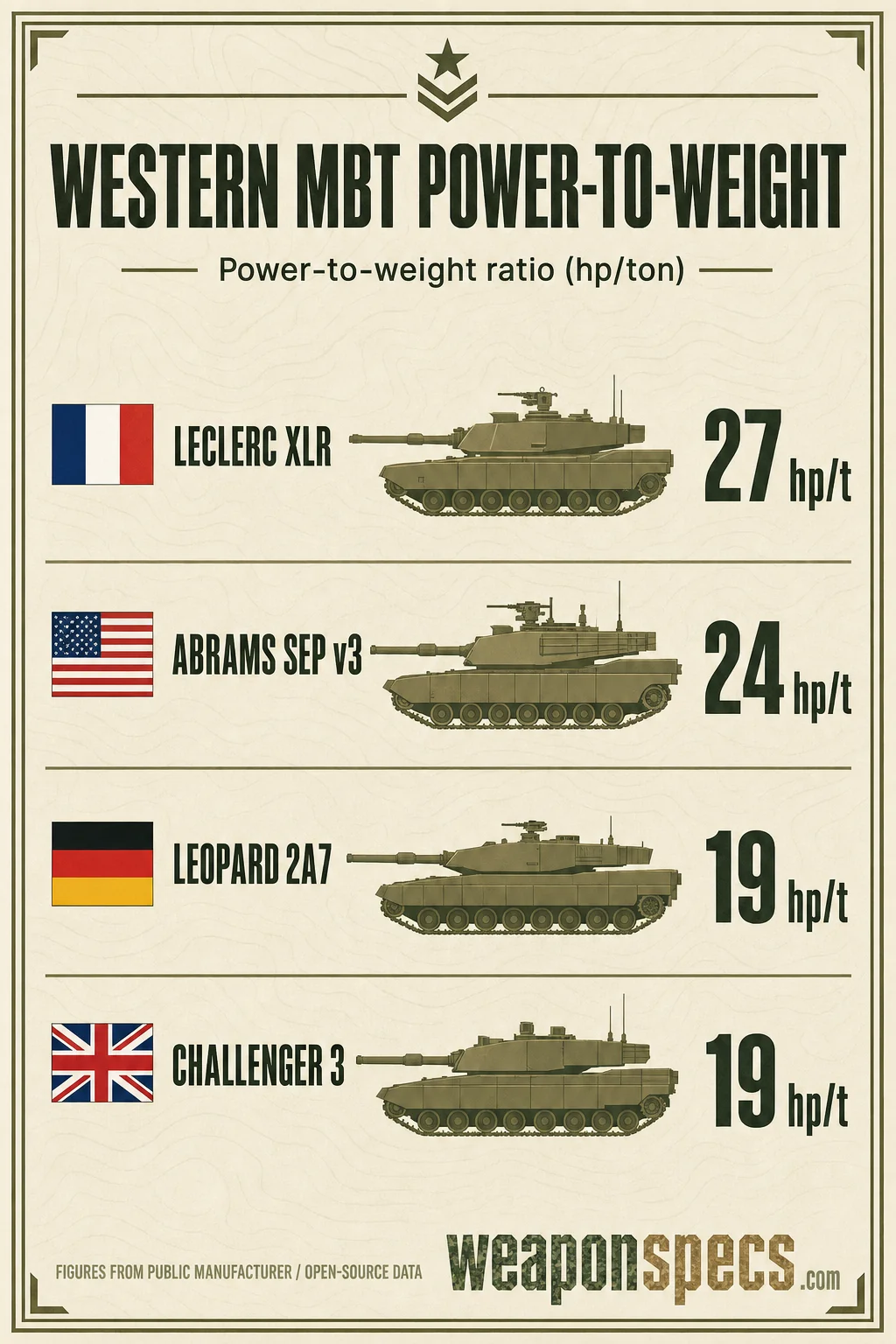
The spec sheet
Figures below are hedged from public manufacturer and open-source data; treat unit costs especially as directional, since export configurations and support packages swing the final number substantially.
| Tank | Main gun | Armor / APS | Power-to-weight | Combat weight | Crew | Approx. unit cost |
|---|---|---|---|---|---|---|
| Leopard 2A7 | 120mm Rheinmetall L/55 smoothbore | Modular composite; Trophy APS (select operators) | ~19.4 hp/t | ~67.5 t | 4 | ~$11M |
| M1A2 SEP v3 Abrams | 120mm M256A1 smoothbore | 3rd-gen composite w/ DU mesh; Trophy APS standard | ~23.8 hp/t | ~66.8 t | 4 | ~$10.5M |
| Leclerc XLR | 120mm CN120-26/52 (autoloaded) | Modular composite; APS in evaluation | ~27 hp/t | ~56.8 t | 3 | ~$9M |
| Challenger 3 | 120mm Rheinmetall L/55A1 smoothbore | Composite modular; Trophy APS standard | ~19.3 hp/t | ~66 t | 4 | ~$10M |
Full technical breakdowns for each platform, including sensor suites and propulsion detail, are on their tank profile pages.
The mobility leader is also the protection laggard: the Leclerc XLR's top power-to-weight figure comes from shedding roughly ten tonnes versus its rivals, the same weight budget the Abrams and Challenger 3 spend on standard-fit Trophy APS.
Leopard 2A7, the incumbent
The Leopard 2A7 doesn’t need to prove itself; it’s been proving itself since 2014, and the wider Leopard 2 family has anchored European armor since the 1980s. The formula is conservative on purpose: a 120mm L/55 smoothbore that’s been incrementally uprated rather than replaced, modular composite armor tuned for both peer conflict and urban IED threats, and improved optics and cooling over the 2A6. Range is the standout figure at roughly 450 km, aided by a diesel powerplant that sips fuel compared to a turbine.
What it doesn’t have, in most fielded configurations, is hard-kill active protection, Trophy is fitted on select export builds, not the German baseline. In a drone-saturated battlefield, that’s the gap critics point to first.
M1A2 SEP v3 Abrams, the protection leader
The SEP v3, redesignated M1A2C, is the most heavily armored tank in this group in practice, not just on paper. Third-generation depleted-uranium mesh composite plus a standard-fit Trophy APS gives it two independent layers against both kinetic penetrators and top-attack munitions, a combination none of the three others currently match simultaneously. Its Honeywell AGT1500 gas turbine is the outlier of the group: multi-fuel flexible and blisteringly quick off the line, but notoriously fuel-hungry, with a fuel capacity of 1,900 liters against the Leopard’s 1,200.
Combat losses of a small Ukraine-supplied Abrams detachment in 2024, to drones, mines, and ATGMs, reopened the debate on heavy armor survivability generally. It’s worth noting those losses say more about unsupported employment than about the platform’s protection package, but the debate has legs and is shaping the Army’s leaner M1E3 successor concept.
Leclerc XLR, the lightweight specialist
France’s Leclerc XLR is the only three-man crew in the lineup, courtesy of its autoloader, and it shows in the numbers: roughly ten tonnes lighter than the Abrams or Challenger, with the best power-to-weight ratio of the four at approximately 27 hp/t. That translates into genuine agility advantages, and the lower headcount trims long-run manpower costs.
The tradeoff is protection margin and the active-protection gap, APS integration is still in evaluation rather than fielded. With only two operators (France and the UAE) and a hyperbar diesel engine that isn’t found elsewhere in NATO inventories, the Leclerc XLR is also the hardest of the four to support at scale if you’re not already a Leclerc operator.
Challenger 3, the rebuild
Challenger 3 is less a new tank than a deep reconstruction of the Challenger 2 hull: new turret, a NATO-standard 120mm smoothbore replacing the old rifled gun, modern fire control, and Trophy APS as standard equipment from day one, matching the Abrams on hard-kill protection. Power-to-weight sits near the Leopard’s figure, and it’s the shortest hull of the four at 8.3 meters.
The catch is maturity. Challenger 3 is still an “announced” program working through deliveries into the late 2020s, with zero units built as of this data pull. On paper it’s competitive with the Abrams on protection; in practice, it hasn’t yet accumulated the fielded-fleet track record the other three have.
Firepower
All four converge on 120mm smoothbore guns, the NATO standard since the Leopard 2 set the trend in 1979, but implementation differs. The Leclerc XLR’s autoloader is the headline difference, cutting crew size but adding a mechanical failure point that manually-loaded crews don’t have to worry about. Muzzle velocities where published favor the Leopard 2A7 and Leclerc XLR (both around 1,750 m/s) over the Abrams’ M256A1 (roughly 1,655 m/s), though ammunition natures and fire-control integration matter as much as raw velocity for effective range and penetration.
Protection
This is where the field splits cleanly into two tiers. Abrams and Challenger 3 field Trophy APS as standard; Leopard 2A7 offers it only on select export configurations; Leclerc XLR doesn’t have it fielded at all yet. If you’re weighing these four for a drone- and ATGM-heavy threat environment, that APS gap is the single most consequential line in the spec sheet, arguably more important than armor composition differences between the platforms.
Mobility
The Leclerc XLR wins outright on power-to-weight and top speed (~72 km/h), which matters for maneuver warfare and repositioning under fire. The Abrams’ turbine gives it strong acceleration despite mid-pack power-to-weight versus the Leclerc. The Leopard 2A7 and Challenger 3 sit closest together, both around 19.3–19.4 hp/t, reflecting their shared lineage of heavier, diesel-driven European armor design.
Logistics
Fuel type and consumption separate this group as much as firepower does. The Leopard 2A7, Leclerc XLR, and Challenger 3 all run diesel engines, meaning shared fuel logistics with most NATO ground vehicle fleets. The Abrams’ gas turbine is the exception, multi-fuel capable, but at a real cost in fuel consumption and logistics tail, a long-documented tradeoff of the AGT1500. Crew size also factors into logistics: the Leclerc XLR’s three-man crew reduces training and personnel-replacement burden versus the four-man crews on the other three.
The bottom line
Ranking these four honestly: Abrams SEP v3 leads on protection and mobility integration, Leopard 2A7 leads on range and operating simplicity, Leclerc XLR leads on weight and unit economics, and Challenger 3 is the most improved on paper but the least proven in the field. There’s no single “best” answer here, the right tank depends on whether your priority is survivability against modern threats, sustainment simplicity, or fleet economics.
Want to run these numbers side by side yourself, filter by category, or check a fifth platform against any of these four? Use the comparison tool to put Leopard 2A7 head-to-head with the Abrams, or check the Leclerc XLR against Challenger 3 directly. For a broader category view, browse all main battle tanks, or ask the advisor to shortlist a platform against your own requirements. More comparisons and analysis are on the WeaponSpecs articles.
Systems in this comparison
Every system covered above, with its photo and, where available, a video. Tap a card to open the full spec sheet.
Compare these side by side →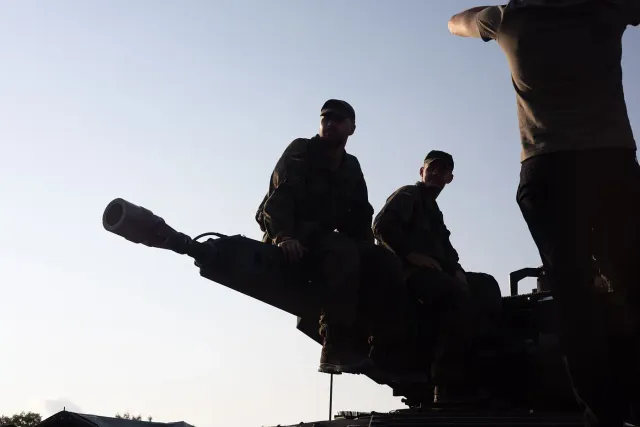
Main battle tank
Leopard 2A7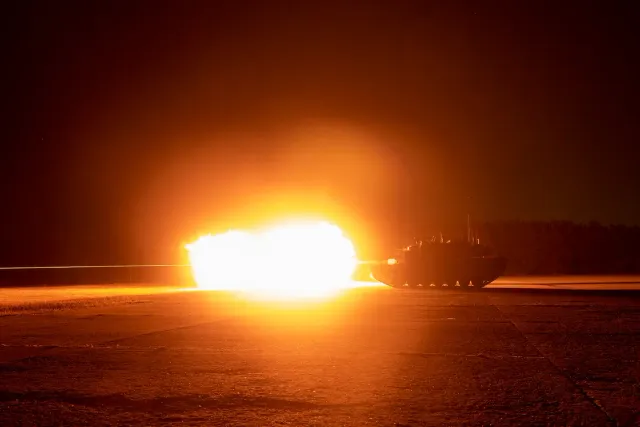
Main battle tank
M1A2 SEP v3 Abrams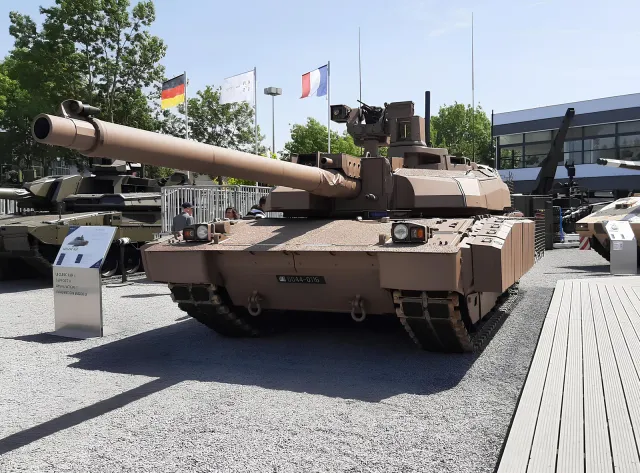
Main battle tank
Leclerc XLR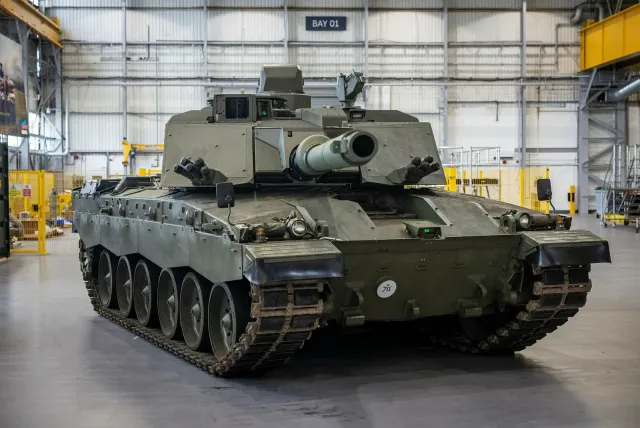
Main battle tank
Challenger 3Frequently asked questions
Is the Leopard 2 better than the Abrams? +
Neither wins outright. The Leopard 2A7 is lighter and diesel-powered with better range, while the Abrams SEP v3 has a stronger power-to-weight ratio and Trophy APS as standard. Choice depends on logistics, terrain, and whether APS is fielded.
What makes the Leclerc XLR different? +
The Leclerc XLR is the lightest and fastest of the four, using an autoloader to cut crew to three. That trims weight roughly ten tonnes below its rivals but leaves protection margins comparatively thinner and active protection still unresolved.
Which Western tank has the best protection? +
The M1A2 SEP v3 Abrams and Challenger 3 both field Trophy APS as standard, giving them a hard-kill layer the Leopard 2A7 only has on select export builds and the Leclerc XLR lacks entirely as of this writing.
Which is cheapest to operate? +
The Leclerc XLR carries the lowest unit price and a three-man crew, trimming manpower costs, but its diesel-hyperbar engine and smaller operator base complicate parts and depot support versus NATO-standard Leopard or Abrams fleets.
Does the Abrams still use a gas turbine? +
Yes. The M1A2 SEP v3 keeps the Honeywell AGT1500 gas turbine that has powered every Abrams variant since 1980. It gives strong acceleration but drinks far more fuel per mile than the diesel engines in its European rivals.
Related reading


