Best Main Battle Tank 2026: Barak, Leopard, Abrams, 99A
Four modern main battle tanks share one 1,500 hp engine standard yet span 12 tonnes in weight. The real gaps are mobility, crew doctrine, and which figures verify.
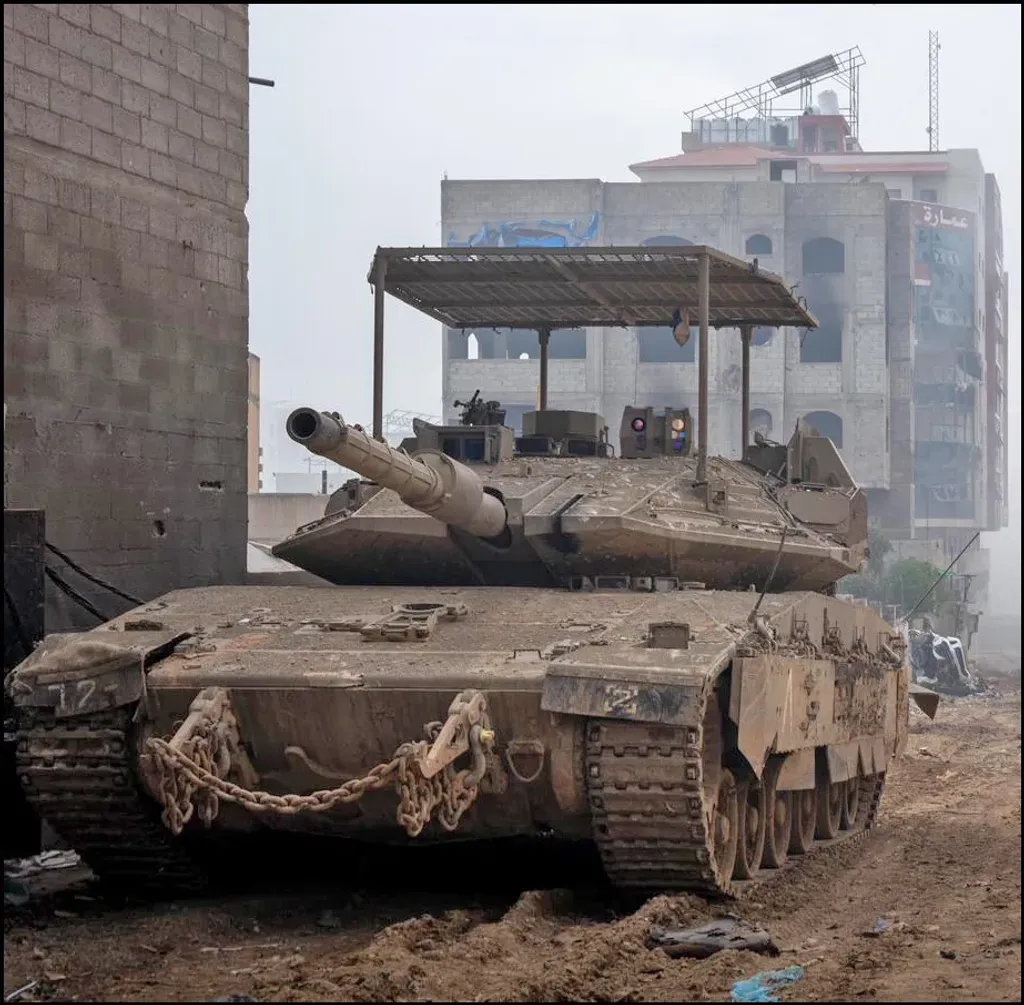
IDF Spokesperson's Unit, via Wikimedia Commons, CC BY-SA 3.0 (shown for identification)
Four current main battle tanks, the Merkava Barak, the Leopard 2A7, the M1A2 SEP v3 Abrams, and the Type 99A, all run a 1,500 hp class engine. That single fact makes the engine spec close to useless as a comparison point. The gap that actually separates these platforms is combat weight, which spans 58 tonnes for the Type 99A to 70 tonnes for the Barak, a 12 tonne, 21 percent range on the same nominal power. Run the math and power-to-weight moves from 25.5 hp per tonne down to 19.4, a 31 percent spread from four engines rated at the same output.
Which tank wins on paper, and why the engine spec hides the answer?
“1,500 horsepower” tells a buyer almost nothing on its own. It is the weight the engine has to move that decides how a tank accelerates, climbs a grade, or keeps pace with a convoy under load. Here is the full data cut.
| Spec | Merkava Barak (IL) | Leopard 2A7 (DE) | M1A2 SEP v3 (US) | Type 99A (CN, claim) |
|---|---|---|---|---|
| Main gun | 120 mm smoothbore | 120 mm L/55 | 120 mm M256A1 | 125 mm autoloader |
| Crew | 4 | 4 | 4 | 3 |
| Combat weight | 70,000 kg | 67,500 kg | 66,800 kg | 58,000 kg |
| Power | 1,500 hp diesel | 1,500 hp diesel | 1,500 hp gas turbine | 1,500 hp diesel |
| Power-to-weight | 21 hp/t | 19.4 hp/t | 23.8 hp/t | 25.5 hp/t |
| Top speed | 64 km/h | 68 km/h | 67 km/h | 80 km/h |
| Road range | 500 km | 450 km | 426 km | 500 km |
| Active protection | Trophy (standard) | Trophy (select) | Trophy (standard) | GL5 (reported) |
| First fielded | 2023 | 2014 | 2017 | 2011 |
The Type 99A tops the ranking because it is lighter, not because its engine does more work. The Leopard 2A7 sits at the bottom of the same table despite sharing the same power class, because KNDS built it heavier around composite armor packages that add protection mass the Type 99A does not carry. Weight is a design choice, and every one of these four numbers reflects a different bet about how much armor a crew needs versus how much road speed a formation wants.
Autoloader or four crew: the doctrine split?
The Type 99A runs a 125 mm autoloaded gun and a three-man crew. The other three all keep a 120 mm gun, a human loader, and four crew. That is not a minor spec difference, it is two competing schools of tank design.
An autoloader removes the loader’s body from the turret, which lets designers build a lower silhouette and a smaller crew compartment, and in theory delivers a consistent mechanical reload rate that does not degrade as a human loader tires. The cost is a fourth set of hands. A human loader can also help with maintenance, local security when dismounted, and casualty coverage if another crew member is hit. NATO armor programs, including the M1A2 SEP v3, the Leopard 2A7, and the Merkava Barak, have stayed with the four-man, human-loader layout across multiple generations, which suggests the crew-redundancy argument still outweighs the silhouette and headcount savings for those operators. This is a doctrine choice, not a solved engineering problem, and buyers should treat it as such rather than assume autoloaders are simply the newer, better answer.
Who actually has active protection as standard?
Survivability is where these four platforms actually diverge, more than the weight table suggests. The M1A2 SEP v3 and the Merkava Barak both carry the Trophy hard-kill active protection system as standard fit, meaning every production vehicle in that configuration ships with a radar-cued interceptor designed to defeat incoming anti-tank rounds before they reach the hull. The Leopard 2A7 fits Trophy only for select operators, so a buyer ordering a base 2A7 is not automatically getting the same hard-kill layer. The Type 99A’s GL5 active protection system is reported on some units in open-source reporting but is not confirmed as a fleet-wide standard fit, and it originates from a Chinese state-linked manufacturer, so it belongs on the claim side of the ledger until independently verified.
This is the category where a spec sheet comparison starts to matter operationally. A tank with a confirmed, standard hard-kill system is a different procurement proposition than one where the equivalent capability is reported but unconfirmed at fleet scale.
Whose numbers can you verify?
The Type 99A is a Norinco design and its figures come through Chinese state and manufacturer channels with limited independent verification, a pattern consistent with other Chinese systems in the WeaponSpecs database. Its 80 km/h top speed and 25.5 hp per tonne figure are plausible for a lighter, autoloaded design, but neither has the kind of third-party confirmation that comes from decades of allied inspection, joint exercises, and export sales.
The three Western tanks do not have that problem. The M1A2 SEP v3 has a documented combat record stretching back to the original Abrams’ 1991 Gulf War deployment, with export sales and inspections across multiple allied militaries. The Leopard 2A7 has an even longer export trail through NATO and partner armies, with its base design combat-tested since the 1991 Gulf War era in earlier variants. The Merkava Barak is the outlier on this axis in the other direction, it is the newest platform here, fielded in 2023, and while it inherits the extensively combat-tested Merkava IV chassis, the Barak-specific configuration, including the upgraded Trophy fit and the Iron Vision helmet system, has the least independent combat verification of the three Western tanks simply because it has been in service the shortest time.
Bottom line: which tank for which buyer?
Buyers evaluating any of these four should run their own side-by-side in the compare tool and check the broader tank category for additional platforms before committing to a doctrine. Build your own matchup in Compare, or browse more data-first breakdowns in Articles.
Sources
Systems in this comparison
Every system covered above, with its photo and, where available, a video. Tap a card to open the full spec sheet.
Compare these side by side →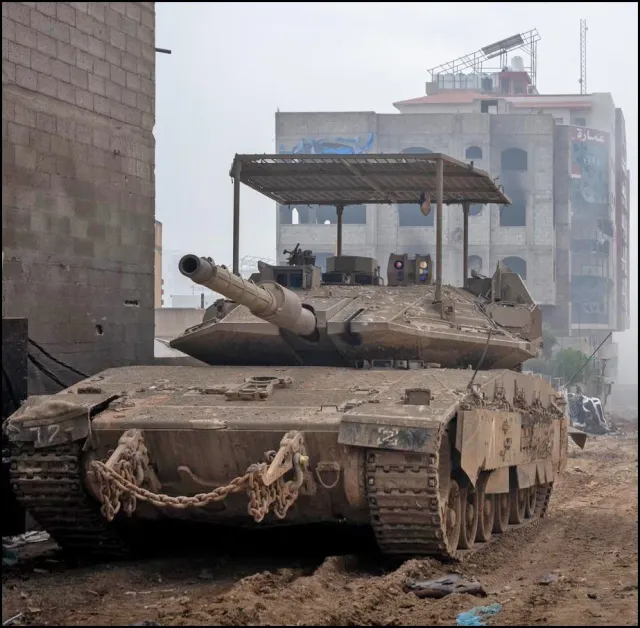
Main battle tank
Merkava Barak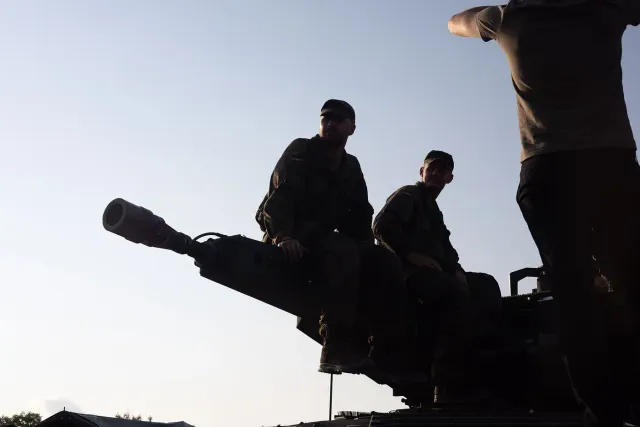
Main battle tank
Leopard 2A7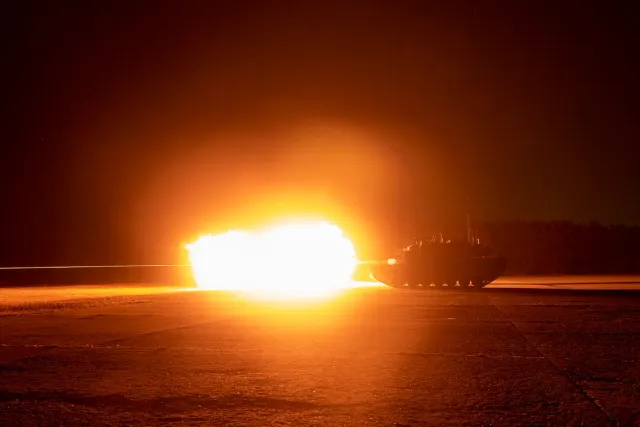
Main battle tank
M1A2 SEP v3 Abrams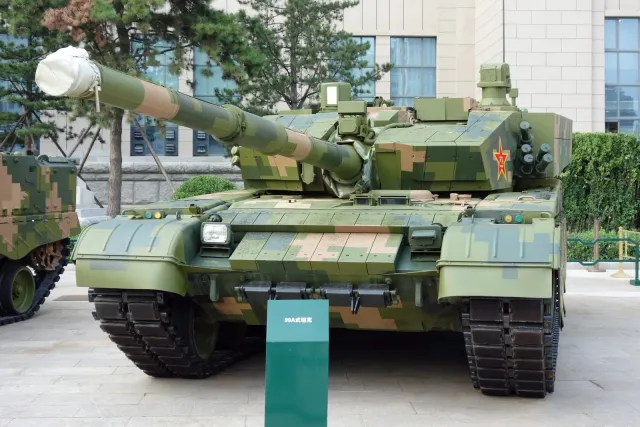
Frequently asked questions
Which main battle tank has the best power-to-weight ratio? +
On published figures the Type 99A leads at about 25.5 hp per tonne, ahead of the M1A2 SEP v3 at 23.8, the Merkava Barak at 21, and the Leopard 2A7 at 19.4. All four use a 1,500 hp class powerplant, so the spread comes from weight, which ranges from the 58 tonne Type 99A to the 70 tonne Barak.
Which tanks carry active protection as standard? +
The M1A2 SEP v3 and the Merkava Barak carry the Trophy hard-kill active protection system as standard. The Leopard 2A7 fits Trophy only for select operators, and the Type 99A's GL5 system is reported on some units but not confirmed fleet-wide, a Chinese figure treated here as a claim.
Why does the Type 99A have only three crew? +
The Type 99A uses a 125 mm gun with an autoloader, which removes the human loader and cuts the crew to three. The Merkava Barak, Leopard 2A7 and M1A2 keep a four-man crew and a 120 mm gun with a human loader, a doctrine choice that trades a faster theoretical reload for a smaller crew and a lower silhouette.
Which is the newest tank here? +
The Merkava Barak, introduced in 2023, is the newest. It is built on the Merkava IV platform with an upgraded Trophy system, the Iron Vision helmet-mounted see-through-armor system, and AI-assisted target detection. The M1A2 SEP v3 dates to 2017, the Leopard 2A7 to 2014, and the Type 99A to 2011.
Which main battle tank is best? +
There is no single winner. The Barak leads on survivability and networked awareness, the M1A2 SEP v3 on a balanced and combat-proven package, the Leopard 2A7 on gun and optics, and the Type 99A on mobility and a lighter autoloaded design whose figures are the least independently verified.
Related reading