Attack Helicopter Payload Ratio: Apache Ranks Last
The AH-64E Apache carries just 7.4% of combat weight as weapons payload, the lowest ratio of 17 attack helicopters, versus the AH-1Z Viper's 29.8%.

Boeing, official product image, background removed
The AH-64E Apache Guardian, the world’s most exported attack helicopter, carries weapons payload equal to just 7.4% of its combat weight, the lowest ratio of any dedicated attack helicopter in the WeaponSpecs database. The AH-1Z Viper tops the same list at 29.8%, a roughly four-fold spread across 17 aircraft. Both Apache variants, the D-model Longbow and the newer E-model Guardian, sit dead last of the entire set, well below every other gunship in the comparison.
That gap is worth pausing on given the news cycle. In January 2026, the US State Department cleared a $3.8 billion Foreign Military Sale of 30 AH-64E Apache Guardians to Israel, per Army Recognition1. That’s roughly $127 million per airframe on paper, but that figure bundles munitions, spares, training, and support into one package total, it is not a comparable per-unit flyaway cost, and shouldn’t be read as one. WeaponSpecs’ own database lists the Apache’s approximate new-build flyaway cost at about $35 million, a separate figure measuring a different thing. Set the price confusion aside and the more interesting story is underneath it: the aircraft every allied air force wants to buy is, by this one metric, the worst-equipped gunship in its own class.
Which attack helicopter carries the most firepower for its weight?
Weapons payload as a share of combat weight is a simple ratio: external ordnance capacity (missiles, rockets, gun pods) divided by the aircraft’s combat weight. It doesn’t measure lethality or survivability on its own, but it tells you how much of an airframe’s mass converts into offensive stores versus armor, fuel, avionics, and structure. Across the 17 dedicated anti-armor and attack helicopters in the WeaponSpecs database, the ranked list runs like this, from highest ratio to lowest.
| Helicopter | Country | Payload (kg) | Combat weight (kg) | Payload / weight | Hardpoints | Main gun |
|---|---|---|---|---|---|---|
| AH-1Z Viper | United States | 2,500 | 8,392 | 29.8% | 6 | 20mm M197 3-barrel Gatling |
| A129 Mangusta | Italy | 1,200 | 4,600 | 26.1% | 4 | 20mm TM197B 3-barrel |
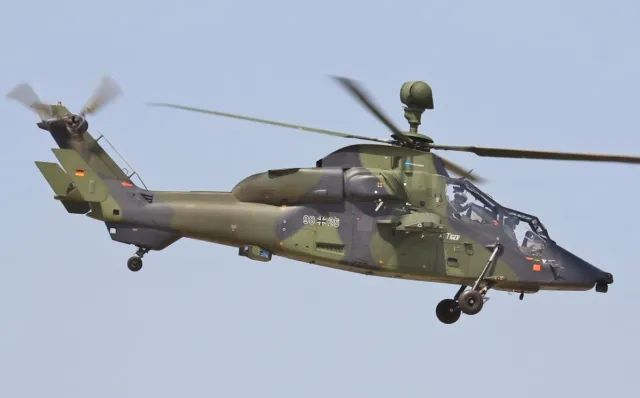
| Tiger HAD | France/Germany | 1,500 | 6,100 | 24.6% | 4 | 30mm GIAT AM-30781 |
| T129 ATAK | Turkey | 1,200 | 5,000 | 24.0% | 4 | 20mm TM-197B 3-barrel |
| AH-1W Super Cobra | United States | 1,497 | 6,690 | 22.4% | 4 | 20mm M197 3-barrel Gatling |
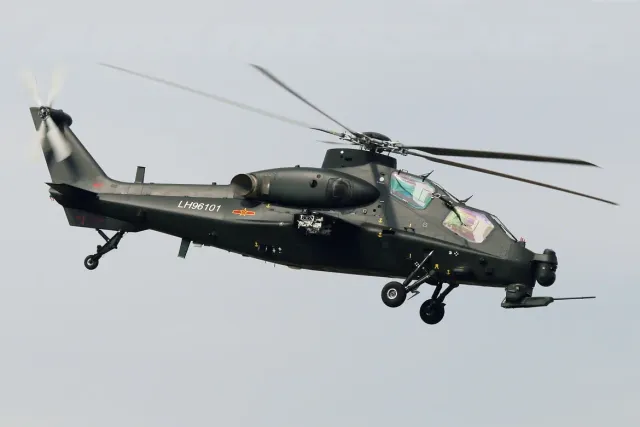
| Z-10 | China | 1,500 | 7,000 | 21.4% | 4 | 30mm chin-mounted cannon |
| Mi-35M | Russia | 2,400 | 11,500 | 20.9% | 6 | 23mm GSh-23L twin-barrel |
| Rooivalk | South Africa | 1,800 | 8,750 | 20.6% | 4 | 20mm F2 cannon |
| Ka-50 Black Shark | Russia | 2,000 | 9,800 | 20.4% | 4 | 30mm 2A42 autocannon |
| Ka-52 Alligator | Russia | 2,000 | 10,400 | 19.2% | 6 | 30mm 2A42 autocannon |
| Mi-28NM | Russia | 2,300 | 12,100 | 19.0% | 4 | 30mm 2A42 chain gun |
| Z-19 | China | 600 | 4,500 | 13.3% | 4 | 23mm cannon pod |
| Mi-24 Hind | Russia | 1,500 | 11,500 | 13.0% | 6 | 12.7mm 4-barrel Yak-B |
| Mi-24P | Russia | 1,500 | 11,500 | 13.0% | 6 | 30mm twin-barrel GSh-30K |
| Prachand LCH | India | 700 | 5,800 | 12.1% | 4 | 20mm M621 turret-mounted |
| AH-64D Apache Longbow | United States | 771 | 10,107 | 7.6% | 4 | 30mm M230 chain gun |
| AH-64E Apache Guardian | United States | 771 | 10,433 | 7.4% | 4 | 30mm M230 chain gun |
The world's most exported attack helicopter, the Apache, doesn't even make this top-10 chart: its 7.4% ratio trails the tenth-place Mi-28NM by more than 11 percentage points.
The Apache pair, at 7.6% and 7.4%, don’t even make the bottom of this chart’s frame, they trail the tenth-place Mi-28NM by more than 11 percentage points, and trail the entire Russian and Chinese cohort in the table above.
Why does the world’s most exported attack helicopter rank last?
The likely answer is that combat weight and weapons payload are measuring two different design philosophies, not two versions of the same aircraft. The Apache’s airframe carries mass that never touches a hardpoint. The AN/APG-78 Longbow millimeter-wave fire-control radar, mounted above the rotor mast on the D and E variants, adds detection and multi-target engagement capability that no external missile rail provides. Boron-carbide and Kevlar armor around the crew compartment and critical systems is built for a helicopter that’s expected to survive close-in ground fire, not just deliver stand-off strikes. And the internal magazine for the 30mm M230 chain gun holds a substantial ammunition load that counts toward combat weight without ever appearing as “payload” in the way an external Hellfire rail does.
None of that is confirmed by WeaponSpecs’ spec fields, it’s a reasonable read of what the weight and hardpoint numbers imply, not a manufacturer-stated design rationale. But it lines up with what’s public about Apache doctrine: sensor fusion and networked, stand-off engagement using Hellfire and the newer AGM-179 JAGM, rather than maximizing raw external stores. Boeing’s own program page2 markets the aircraft on sensor and survivability terms, not payload volume.
Compare that to the AH-1Z Viper, built by Bell3 as a lighter, more gun-centric evolution of the Cobra line. Less armor mass, no mast-mounted radar dome, and a design lineage optimized around the Marine Corps’ expeditionary requirements rather than a heavy sensor suite. That tradeoff shows up directly in the ratio: less airframe overhead spent on survivability and sensors means more of the aircraft’s weight budget is available for external ordnance.
The European and Turkish designs in the middle of the table, the Tiger HAD4, A129 Mangusta, and T129 ATAK, follow a similar lighter-airframe logic without going as far as the Viper. None of them carry an equivalent to the Longbow radar as standard equipment, and all three sit comfortably in the 24-26% band.
How reliable are the Russian and Chinese payload figures?
Less reliable than the American and European entries, and that caveat matters for six of the seventeen aircraft in the table. The Ka-52 Alligator, Ka-50 Black Shark, Mi-28NM, Mi-35M, and both Mi-24 Hind variants report payload and weight figures sourced from Russian manufacturer and state publications, not independent Western test data. The same applies to China’s Z-10 and Z-19. The Ka-525 and Mi-286 entries, like most open-source references on these aircraft, ultimately trace back to the same state and manufacturer disclosures rather than third-party verification.
That doesn’t mean the numbers are wrong. It means they haven’t been checked the way Western combat-proven figures have, and they should carry a permanent asterisk in any procurement analysis. The CAIC Z-107, for instance, has seen limited export and no large-scale combat record to validate its published payload figures against real-world performance, unlike the Apache and Viper, both of which have accumulated years of combat use across multiple operators. When a payload ratio for a Russian or Chinese airframe lands in the middle of this list, treat it as a manufacturer claim occupying that rank, not a verified fact.
What this data actually says about attack helicopter design
A four-fold spread in payload ratio, from 7.4% to 29.8%, across 17 aircraft in the same broad category (dedicated anti-armor and attack helicopters) is a bigger gap than the category label suggests. It’s evidence that “attack helicopter” covers at least two distinct design philosophies: gun-and-rocket platforms optimized for external stores capacity, like the Viper, Mangusta, and ATAK, and sensor-heavy, armored platforms like the Apache that spend more of their weight budget on staying alive and finding targets at range rather than carrying the most ordnance possible.
Neither philosophy is objectively better. A buyer prioritizing raw strike capacity per ton of airframe has a clear answer at the top of this table. A buyer prioritizing all-weather target acquisition, crew survivability against ground fire, and a deep operator and sustainment network, which is exactly what has driven 17 nations to fly the Apache, is optimizing for something this particular ratio doesn’t capture.
For a closer look at how the Apache and its main Russian rival compare across the full spec sheet, not just payload ratio, see the AH-64E Apache vs Ka-52 Alligator breakdown, browse the full helicopter class page to see where the Tiger HAD, Mi-28NM, and Z-10 land on other metrics, or read the wider attack helicopters compared piece for the broader field. Every helicopter in the ranked table above sits in the same WeaponSpecs systems database with its full spec sheet, sourcing, and any state-claim flags attached.
Run your own payload-versus-survivability comparison, weighing hardpoint capacity against sensor suite, armor, and combat record for your actual mission profile, with the Advisor tool.
Sources
Systems in this comparison
Every system covered above, with its photo and, where available, a video. Tap a card to open the full spec sheet.
Compare these side by side →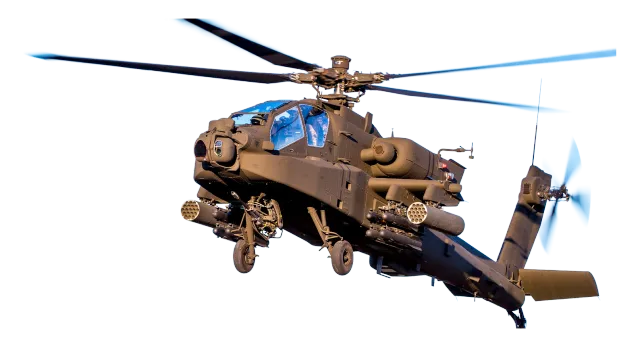
Helicopter
AH-64E Apache Guardian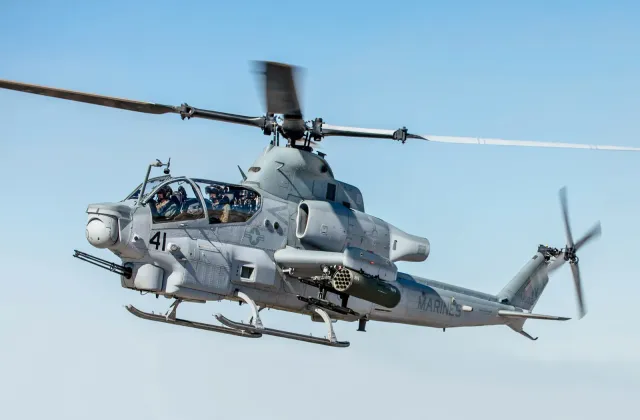
Helicopter
AH-1Z Viper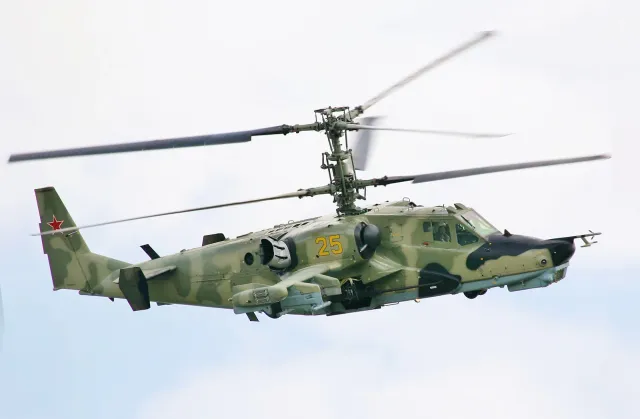
Helicopter
Ka-52 Alligator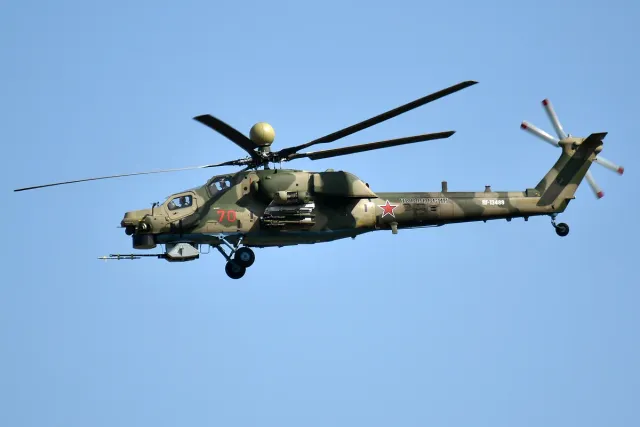
Frequently asked questions
Why does the Apache carry less payload than other attack helicopters? +
The Apache's combat weight is loaded with equipment that never shows up on a hardpoint: the AN/APG-78 Longbow millimeter-wave radar dome, boron-carbide crew armor, and a large internal ammunition store for the 30mm chain gun. None of that counts as external weapons payload, so even though the aircraft is heavier and better protected, its payload-to-weight ratio looks worse than lighter, gun-optimized designs like the AH-1Z Viper.
What is weapons payload as a percentage of combat weight? +
It's the external ordnance a helicopter can carry (missiles, rockets, gun pods) divided by its combat weight, expressed as a percentage. It's a proxy for how much of an aircraft's mass converts into offensive stores rather than airframe, armor, fuel, or sensors. Across 17 dedicated attack helicopters in the WeaponSpecs database, that ratio ranges from 7.4% to 29.8%.
Is the AH-64E Apache still the most capable attack helicopter? +
Payload ratio is one metric, not a capability verdict. The Apache remains the most widely exported attack helicopter in the world, with 17 operators and a combat record across multiple conflicts, built around sensor fusion, survivability, and stand-off precision engagement rather than maximum external stores. A lower payload ratio reflects a different design tradeoff, not an inferior aircraft.
Are Russian and Chinese payload figures independently verified? +
No. Payload and weight figures for the Ka-52, Mi-28NM, Mi-35M, Mi-24 Hind/P, Ka-50, Z-10, and Z-19 come from manufacturer or state-published specifications. None of these have been independently audited by a Western test agency, and none carry a comparable combat verification record to the Apache or Viper. Treat them as manufacturer claims, not confirmed fact.
What does the Israel Apache deal actually cost per unit? +
The January 2026 US State Department clearance covers a $3.8 billion Foreign Military Sale for 30 AH-64E Apache Guardians, which works out to about $127 million per unit. That figure is not a comparable unit cost. It bundles munitions, spares, training, and support services into the package total. WeaponSpecs' database lists the Apache's approximate new-build flyaway cost at roughly $35 million per unit, a different number measuring a different thing.
Related reading


