The 10 Best Anti-Tank Guided Missiles of 2026, Ranked
A 10-to-1 countdown of the best anti-tank guided missiles of 2026, ranked on real combat record, guidance sophistication and program maturity.

Via Wikipedia, FGM-148 Javelin (shown for identification)
Two shoulder-fired missiles helped stop the Russian armored column advancing on Kyiv in February and March 2022, and neither was the longest-ranged weapon in this ranking. Britain had delivered roughly 2,000 NLAWs before the invasion and 1,615 more by early March, and Ukraine had received more than 5,500 Javelins by that May. UK officials credited NLAW-armed infantry with helping break up the Russian push north of the capital, and the Pentagon reported an 89 percent hit rate on the first 112 Javelins fired. Neither missile reaches even 5 kilometers. Israel’s Spike NLOS reaches 32 kilometers, more than six times as far as the NLAW, and it ranks lower on this list than both of them.
We ranked ten anti-tank guided missiles from 10 down to 1 on four criteria, in this priority order: real combat and operational record (we say plainly when a system’s record is thin or entirely state-sourced), guidance sophistication and precision (fire-and-forget beats a man-in-the-loop datalink beats laser-beam-riding beats older radio-command guidance, because autonomy after launch is what keeps a crew alive), range and role fitness (weighed against what the weapon is actually for, not treated as a single leaderboard), and program maturity and export scale. Every Russian and Chinese figure below is flagged as an unverified claim. Photos and full spec sheets for every missile are in the gallery below the article.
Key takeaways:
- Britain delivered roughly 2,000 NLAWs before Russia’s 2022 invasion and 1,615 more by early March 2022, credited with helping stop the armored push north of Kyiv.
- The Pentagon reported an 89 percent hit rate on the first 112 Javelins fired in Ukraine.
- Israel’s Spike NLOS has the longest range on this list at 32 km, yet ranks only fourth because it needs a vehicle, helicopter or ship launch platform.
- At the Battle of Wadi Saluki in 2006, roughly 11 of 24 Israeli Merkava Mk4 tanks were struck by Hezbollah Kornet missiles, per a US Army Combined Studies Institute analysis.
- The top-ranked Javelin has one of the shortest ranges on this list at just 4 km, evidence that guidance and combat record outweigh raw reach here.
How we ranked them
- Real combat and operational record. A documented battlefield result beats a better paper spec. We say plainly when a system’s record is thin or entirely state-sourced.
- Guidance sophistication and precision. Fire-and-forget guidance means the operator can move immediately after firing, the single biggest survivability factor in the drone era.
- Range and role fitness. Published maximum range weighed against the weapon’s actual job, infantry close defense versus deep precision strike, not a single leaderboard.
- Program maturity, production and export scale.
10. 9M114 Shturm 

The oldest guidance generation on this list. A Soviet SACLOS radio-command missile, development began in 1967 and it entered service in 1976, built to arm the Mi-24 Hind. Its real combat record is genuinely long: reported 75 to 85 percent hit rates from Mi-24s during the Soviet-Afghan war, a Soviet-sourced figure, and later use in Chechnya, Syria, and Donbas, where separatist forces have employed it. It’s a real, combat-tested weapon on a guidance paradigm nearly half a century old.
Advantages: a long, real helicopter-launched combat history stretching back to Afghanistan; tube-launched standoff reach for its era; mass-produced across the former Warsaw Pact and widely exported.
Disadvantages: the oldest SACLOS radio-command guidance on this list, the launching helicopter must track the target through the missile’s entire flight; every performance figure is an unverified Soviet or Russian claim; effectively obsolete against modern reactive and composite armor without upgrade.
Its clearest public showcase came in a 1995 demonstration in Sweden, where a Mi-28A fired a Shturm at 900 meters from a hover, a marketing moment worth noting for what it is: a controlled demonstration, not a combat result.
9. 9M120 Ataka

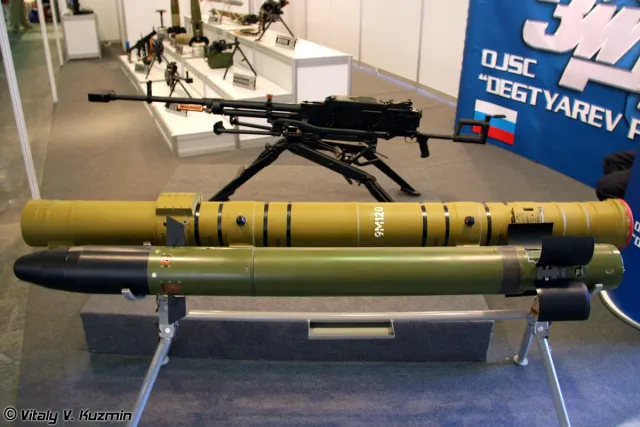
The Shturm’s direct successor, faster, longer-ranged at 6 kilometers, and armed with a tandem shaped-charge warhead built to defeat reactive armor, carried on the Mi-28 and Mi-35. It has seen real use in Syria and Ukraine. It ranks just above the Shturm purely for being the newer, more capable member of the same family: still the same SACLOS radio-command guidance that keeps the launching helicopter exposed for the full time of flight, and its combat footage is largely Russian gun-camera material that’s hard to independently verify at scale.
Advantages: a meaningful upgrade over the Shturm in speed, range and warhead design; a tandem shaped charge built to defeat reactive armor; integrated across Russia’s modern attack-helicopter fleet.
Disadvantages: still SACLOS radio-command, exposing the helicopter through the entire engagement; a combat record that’s thinner and less independently documented than the Western systems above it; every performance figure is Russian-sourced.
Its combat appearances are largely Russian gun-camera footage from Syria and Ukraine, worth noting honestly as harder to independently verify than the Western systems ranked above it.
8. HJ-8 

China’s first indigenous anti-tank missile, an SACLOS wire-guided design in PLA service since the late 1980s. Some analysts believe it combined elements of a TOW-style tripod, a MILAN-style tracker and a Swingfire-derived missile, though Chinese sources describe it as fully indigenous, and that origin remains genuinely disputed rather than settled fact. What isn’t disputed is its combat record: a Pakistani-supplied Baktar-Shikan variant destroyed Bosnian Serb armor at Stup and Tešanj in 1993, rebel forces used HJ-8Es extensively against Syrian government armor from 2012 onward in widely filmed engagements, and Hamas reportedly used one against an Israeli Namer-family vehicle in June 2024. It’s been license-produced and exported to Pakistan, Bangladesh and Malaysia among others.
Advantages: a broad, independently documented multi-conflict combat record spanning Bosnia, Syria and Gaza; very widely exported and license-produced, with real sustainment depth; later variants add tandem warheads capable of defeating reactive armor.
Disadvantages: 1980s SACLOS wire guidance, leaving the operator exposed and tethered through the entire flight; disputed reverse-engineered origins that Chinese sources contest; performance figures carry the same skepticism this site applies to any Chinese state claim.
The 1993 Bosnia footage of Pakistani-supplied Baktar-Shikan missiles knocking out Serb armor is an early, well-documented case of a Chinese-origin missile shaping an armored engagement in someone else’s war, decades before its more famous Syria appearances.
7. Spike LR2 

The newest man-portable member of Israel’s Spike family, reaching 5.5 kilometers with an electro-optical infrared seeker and a fiber-optic or radio-frequency datalink that allows lock-on before or after launch, plus a tandem warhead against reactive armor. Its guidance sophistication genuinely rivals the Javelin, with the added flexibility of mid-flight retargeting through the datalink. It ranks here because it’s the newest and least independently documented variant of the Spike family on this list, resting more on manufacturer figures than a long combat record of its own.
Advantages: dual fire-and-forget and man-in-the-loop modes with lock-on possible after launch, among the most flexible guidance approaches here; a datalink that allows mid-flight retargeting or abort; a modern tandem warhead and multipurpose seeker.
Disadvantages: the newest Spike variant, with limited independent combat documentation to date; capability rests substantially on manufacturer figures; higher unit cost and complexity than a simple close-defense weapon.
Rafael’s Spike family overall is genuinely combat-proven, but it’s worth being precise that the LR2 specifically is the least battle-documented of the three Spike variants on this list, a promising design still building its own record.
6. NLAW 

The other internet-famous weapon of the 2022 invasion. Its Predicted Line Of Sight guidance works differently from the Javelin’s imaging-infrared seeker: the firer tracks the target for two to three seconds, fires, and the missile flies a pre-computed intercept path with no wire and no post-launch tracking required. Its overfly top-attack mode detonates above the target, aimed at a tank’s thinnest armor. The UK Ministry of Defence confirmed roughly 2,000 NLAWs delivered before the invasion and 1,615 more by 9 March 2022, and UK officials have credited NLAW-armed infantry with helping stop Russian armored columns advancing toward Kyiv. It ranks here, not higher, because its 800-meter range and single-shot, disposable design cap it firmly as a close-defense weapon rather than a general-purpose system.
Advantages: fire-and-forget guidance with no wire and no post-launch tracking, letting the firer take cover instantly; an overfly top-attack mode against a tank’s thin roof; light, cheap and fast to train on; a real, UK-government-credited role in the 2022 defense of Kyiv.
Disadvantages: an 800-meter range, the shortest on this list, suited only to close defense; single-shot and disposable, with no reload; effectiveness depends on holding a two-to-three-second pre-launch track, harder against a fast-crossing or obscured target.
The ambushes in the forests and suburbs north of Kyiv, where infantry armed with disposable NLAWs helped break up an armored column advancing from Belarus, remain one of the war’s defining early images, and the aggregate armor losses credited to that period reflect NLAWs, Javelins, artillery and mines together, not any single weapon alone.
5. Spike ER

Israel’s extended-range Spike variant, reaching 8 kilometers from a vehicle or helicopter mount, with the same electro-optical infrared homing and datalink retargeting as the rest of the family. It has a real, extensive Israeli combat history across decades of operations and a solid export footprint. It ranks above the LR2 on a broader, better-documented service record but below the top four on a shorter reach and a narrower operational role than a general infantry weapon.
Advantages: man-in-the-loop datalink guidance with lock-on possible after launch and mid-flight control; vehicle or helicopter mounting that extends reach and magazine depth; a real Israeli combat pedigree and export base.
Disadvantages: requires a vehicle or helicopter platform, not an infantry self-defense weapon; performance figures come from the manufacturer; overshadowed in reach by the Spike NLOS above it.
Its role as an Apache and vehicle-launched precision weapon in Israeli operations makes it a genuine workhorse platform missile, rather than a headline system in its own right.
4. Spike NLOS

The longest-range system on this entire list at 32 kilometers, and a category apart from every other missile here. Launched from a vehicle, helicopter or ship, its man-in-the-loop electro-optical infrared guidance with a fiber-optic or radio-frequency datalink lets an operator see through the missile’s own seeker feed and retarget it mid-flight. Israel first used it in combat during the 2006 Second Lebanon War, employed dozens during Operation Cast Lead, and the Israeli Navy used it against coastal targets in Gaza in 2023. It’s been adopted and exported beyond Israel, including reported operational use by the US Army in Iraq. It ranks fourth, not first, despite having the best specs on paper for a simple reason: it’s a specialized deep-precision-strike weapon that needs a substantial launch platform and a fully engaged operator for the entire time of flight, not a general infantry tank-killer.
Advantages: 32-kilometer man-in-the-loop precision strike with mid-flight retargeting, unmatched on this list; multi-platform launch from vehicles, helicopters and ships; a real combat record since 2006 plus US and allied adoption.
Disadvantages: requires a substantial launch platform and an operator engaged for the full time of flight, not man-portable; manufacturer-sourced performance figures; a niche deep-strike role rather than a frontline anti-armor weapon.
Its 2023 use by the Israeli Navy against coastal targets in Gaza, and its reported operational firing by the US Army in Iraq, are real evidence of a genuinely global, combat-employed system, not just a demonstrated capability.
3. 9M133 Kornet

The most combat-consequential Russian-origin anti-tank missile in service. A laser-beam-riding SACLOS weapon with a claimed 10-kilometer range and a tandem shaped charge, it has been used by an unusually wide set of actors: Hezbollah, multiple sides in Syria, Houthi forces, both Armenia and Azerbaijan, and both sides of the Russia-Ukraine war. Its defining moment came in the 2006 Second Lebanon War, when Hezbollah Kornets penetrated Israeli Merkava Mk4 armor. At the Battle of Wadi Saluki, a US Army Combined Studies Institute analysis reported roughly 11 of 24 Merkava Mk4 tanks struck and about 2 knocked out, killing 8 crew, and across the wider war more than 40 Israeli tanks were hit with several Merkavas destroyed, figures that vary somewhat by source. That result directly drove Israel to rush its Trophy active-protection system into service, the same pivot that shapes the Merkava’s own entry on our tanks list.
Advantages: a genuine, independently documented ability to penetrate top-tier Western armor, demonstrated against Merkava tanks in 2006; long reach with a tandem and thermobaric warhead family; extremely widely proliferated and combat-tested across many different operators.
Disadvantages: laser-beam-riding SACLOS still requires the operator to hold the beam on target through the entire flight, exposing the crew; the 10-kilometer range is an unverified Russian state claim; proliferation to non-state actors complicates any clean read of its real-world performance.
Wadi Saluki in 2006 is the rare case where a single anti-tank missile measurably changed a major army’s doctrine: the ambush that put Kornets into Merkava armor is what pushed Israel to field Trophy, the active-protection system now standard on the tank that ranks fifth on our own best tanks countdown.
2. BGM-71 TOW 

The broadest and longest combat record of any anti-tank missile in service anywhere. Its combat debut wasn’t the 1973 Yom Kippur War, a common misattribution, that war’s famous anti-tank-missile story belongs to the Soviet 9M14 Malyutka fired by Egyptian infantry, though the US did airlift 81 TOW launchers and more than 2,000 missiles to Israel late in that conflict. The TOW’s real debut came a year earlier: on 2 May 1972 near An Loc, Vietnam, US Army helicopters firing early TOWs destroyed North Vietnamese tanks, the first combat tank kills by a US-guided anti-tank missile, with 24 confirmed kills by the end of that month. It has since fought in the Iran-Iraq war, been supplied to Syrian rebels, and been donated to Ukraine. It’s still SACLOS wire or radio-frequency guided, with a 4.5-kilometer range, but it sits on the deepest install base and sustainment network of any missile on this list, mounted across dozens of allied militaries’ vehicle fleets.
Advantages: the deepest, broadest combat record of any anti-tank missile, from 1972 to the present, across nearly every armored theater since; a massive install base, integration and sustainment network across dozens of allied militaries; repeated warhead and guidance upgrades over five decades of service.
Disadvantages: SACLOS wire or radio-frequency guidance, the gunner must track the target for the missile’s entire flight, exposing the crew, exactly the survivability penalty the drone era now punishes; a modest 4.5-kilometer range; heavy and vehicle- or tripod-bound in its full-capability forms.
The May 1972 engagement near An Loc, helicopter-fired TOWs destroying North Vietnamese tanks, was the world’s first combat tank kill by a US guided anti-tank missile, more than a year before the war it’s often mistakenly credited with debuting in.
1. FGM-148 Javelin

The Javelin wins this list on balance, the same logic that put the Leopard 2A7, F-35A and CAESAR atop our tanks, fighter jets and artillery rankings: the deepest combination of decisive combat record, the most autonomous guidance in its class, and real program scale. Its imaging-infrared seeker is true fire-and-forget, locking on before launch and flying a top-attack profile onto a tank’s thinnest armor, its roof. Its combat debut came at the Battle of Debecka Pass in Iraq in 2003, where a US special forces platoon fired 19 Javelins with 17 hits, destroying two T-55 tanks and eight armored personnel carriers at ranges beyond the missile’s official maximum. It saw further use in Afghanistan and against ISIS in Syria, then its most decisive chapter: more than 5,500 supplied to Ukraine by May 2022, another 1,000 committed that August, and a Pentagon-reported 89 percent hit rate on the first 112 fired. That record drove the “St. Javelin” phenomenon, though a later Forbes reassessment argues its actual share of Ukraine’s aggregate armor-kill claims was smaller than the meme implied, since NLAWs, artillery and mines all contributed to the same totals.
“The production and workforce investments we’re making now will allow us to rapidly deliver this critical capability to our customers,” said Dave Pantano, Javelin Joint Venture Vice President and Lockheed Martin Javelin Program Director, Lockheed Martin, October 11, 2022.
Advantages: true fire-and-forget imaging-infrared guidance, letting the operator displace or re-engage immediately, the best crew survivability in the man-portable class; a top-attack profile that defeats even the thickest frontal armor by hitting the roof; a decisive, multi-era combat record spanning Iraq in 2003, Afghanistan, Syria and Ukraine; deep US production with a wide export and sustainment base.
Disadvantages: a short 4-kilometer range, near the bottom of this list; a high unit cost and a heavy shoulder load compared with disposable weapons like the NLAW; against the inflated “St. Javelin” tallies, its real per-system kill share is smaller and hard to isolate from other weapons in the same engagements.
Debecka Pass in 2003, a handful of Green Berets with Javelins destroying an Iraqi armored column at and beyond the missile’s official maximum range, was its combat debut, years before it became an internet symbol of a different war entirely.
The 2026 ranking at a glance
| Rank | Missile | Origin | Guidance | Max range | Combat record |
|---|---|---|---|---|---|
| 1 | FGM-148 Javelin | United States | Imaging IR, fire-and-forget | 4 km | Iraq 2003, Afghanistan, Syria, Ukraine 2022- |
| 2 | BGM-71 TOW | United States | Wire/RF SACLOS | 5 km | Vietnam 1972 to present, deepest breadth |
| 3 | 9M133 Kornet | Russia | Laser beam-riding SACLOS | 10 km* | Lebanon 2006 (Merkava penetrations), Syria, Ukraine |
| 4 | Spike NLOS | Israel | EO/IR + datalink, non-line-of-sight | 32 km | Israel 2006-, US/allied use |
| 5 | Spike ER | Israel | EO/IR + datalink | 8 km | Israeli platform use, decades |
| 6 | NLAW | Sweden/UK | PLOS, overfly top-attack | 1 km | Ukraine 2022 (Kyiv defense) |
| 7 | Spike LR2 | Israel | EO/IR + datalink | 6 km | Limited, newest Spike variant |
| 8 | HJ-8 | China | Wire SACLOS | 4 km* | Bosnia 1993, Syria 2012-, Gaza 2024 |
| 9 | 9M120 Ataka | Russia | Radio-command SACLOS | 6 km* | Syria, Ukraine |
| 10 | 9M114 Shturm | Russia/USSR | Radio-command SACLOS | 6 km* | Afghanistan, Chechnya, Syria, Donbas |
*Russian or Chinese state figure, not independently verified.
The #1 system, the Javelin, has almost the shortest range on this list at 4 km, while the longest reach, the Spike NLOS at 32 km, ranks only fourth, and the NLAW's 0.8 km helped stop an armored column outside Kyiv. Range doesn't decide this list. Combat record and guidance do.
The bottom line
No anti-tank guided missile on this list wins on every axis. The Javelin leads on the balance of a decisive combat record and fire-and-forget survivability, but the TOW’s install base, the Kornet’s proven ability to defeat top-tier armor, and the Spike NLOS’s reach mean mission and role, not range, should drive a real procurement call.
Run any two of these missiles head-to-head in the comparison tool, browse the full missile category on the types page, or get a mission-tailored recommendation from the advisor. More rankings and breakdowns like this live on the articles page, including our recent countdowns of the best main battle tanks and best self-propelled howitzers of 2026.
Sources
Systems in this comparison
Every system covered above, with its photo and, where available, a video. Tap a card to open the full spec sheet.
Compare these side by side →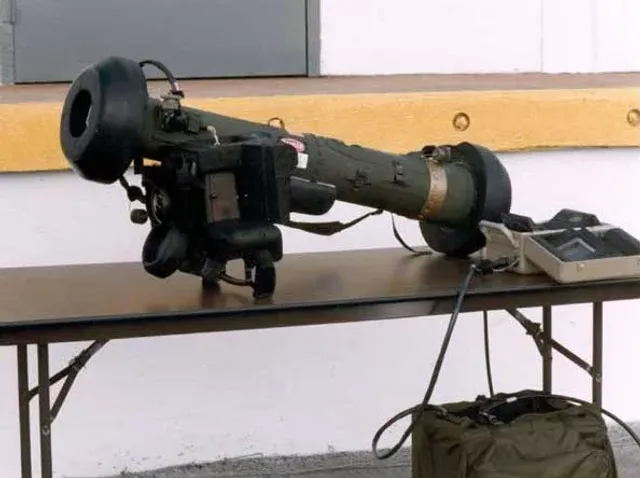
Missile
FGM-148 Javelin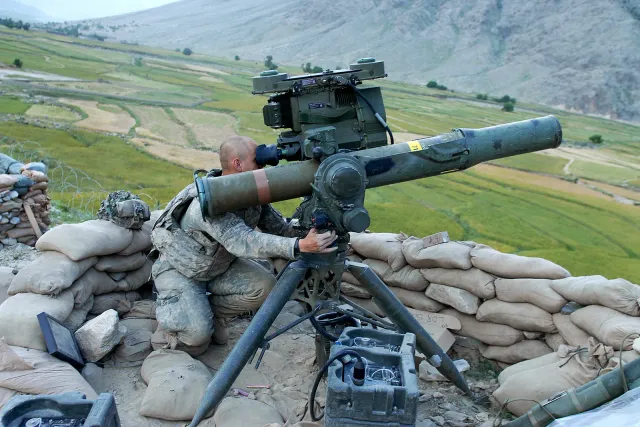
Missile
BGM-71 TOW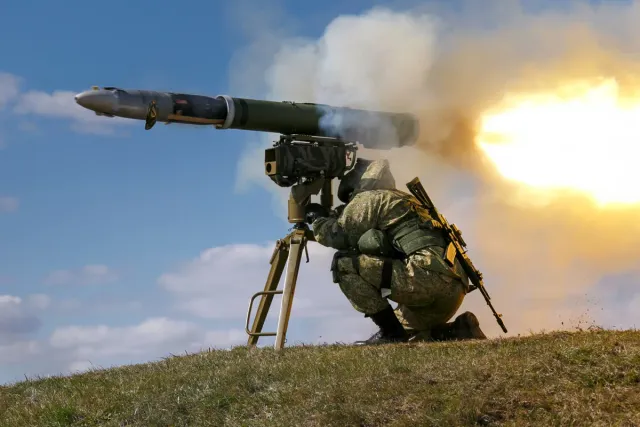
Missile
9M133 Kornet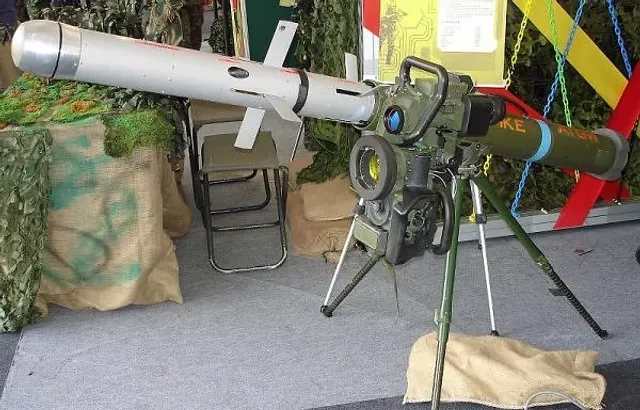
Missile
Spike NLOS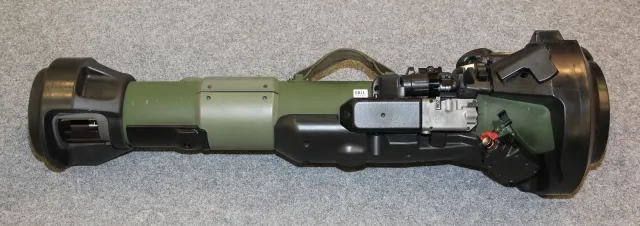
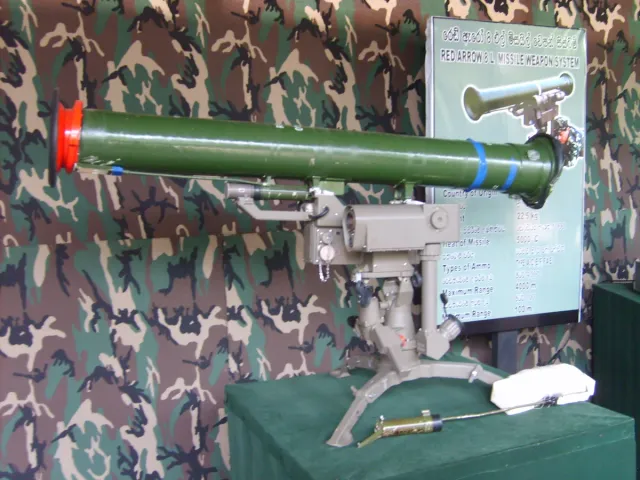
Missile
9M120 Ataka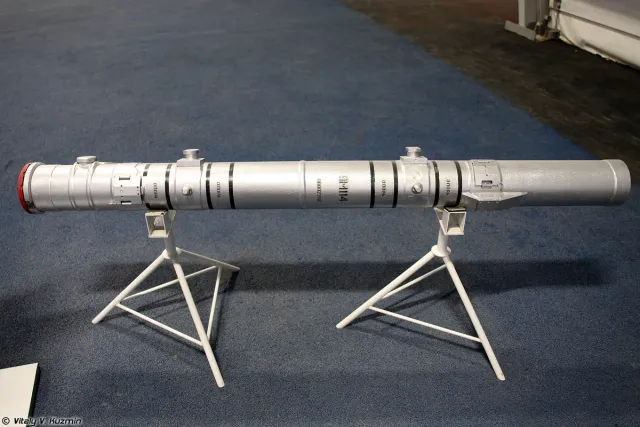
Missile
9M114 ShturmFrequently asked questions
What is the best anti-tank guided missile in 2026? +
The FGM-148 Javelin, on balance. It combines a decisive, well-documented combat record from Iraq in 2003 through Ukraine since 2022, the most autonomous fire-and-forget guidance in the man-portable class, and the widest Western production and export base. Rank isn't universal fit, the TOW's install base or the Spike NLOS's 32-kilometer reach may matter more to a given army.
Which ATGM has the strongest combat record? +
The BGM-71 TOW, by breadth: it first killed tanks from helicopters in Vietnam in 1972 and has fought in nearly every major armored conflict since. For a single decisive event, Hezbollah's 9M133 Kornet strikes on Israeli Merkava tanks in 2006 were the most consequential, they directly drove Israel to field the Trophy active-protection system.
Does range decide which ATGM is best? +
No, and this list is the clearest proof. The top-ranked Javelin has one of the shortest ranges here at 4 kilometers, while the longest-range system, Israel's Spike NLOS at 32 kilometers, ranks only fourth, because it's a specialized vehicle- and helicopter-launched deep-strike weapon, not a general infantry tank-killer.
What is the difference between fire-and-forget and SACLOS guidance? +
A fire-and-forget missile like the Javelin guides itself onto the target after launch, letting the operator take cover or move immediately. A SACLOS missile, like the TOW, Kornet or HJ-8, requires the operator to keep the sight on the target for the missile's entire flight, keeping the crew exposed, the same survivability penalty the drone era now punishes.
Are Russian and Chinese ATGM figures reliable? +
Treat them as claims. The Kornet's 10-kilometer range, the Ataka and Shturm figures, and the HJ-8's specifications are all state or manufacturer numbers, not independently audited. The Kornet is a rare exception: its real-world effect, penetrating Merkava armor in 2006, was independently documented by its victims rather than only claimed by its maker.
Related reading


