The 10 Best Destroyers of 2026, Ranked
A 10-to-1 countdown of the best destroyers of 2026, ranked on real combat record, air defense, weapons and sustainment, not brochure numbers.

Via Wikipedia, Arleigh Burke-class destroyer (shown for identification)
On 19 October 2023, the Arleigh Burke-class destroyer USS Carney fought a roughly ten-hour action against Houthi cruise missiles and drones that the US Navy called the most intense combat engagement by an American warship since World War II. Over its seven-month deployment, Carney logged 51 engagements, destroying about 45 Houthi weapons, including land-attack cruise missiles, anti-ship ballistic missiles and drones. The Houthis were the first entity in history to fire anti-ship ballistic missiles in combat, which makes the Arleigh Burke fleet the first warships in history to intercept them, arguably the most significant sustained surface-combatant air-defense combat since 1945. That real, documented record, not a spec sheet, anchors this list.
Key takeaways:
- USS Carney logged 51 engagements and destroyed about 45 Houthi weapons over a seven-month deployment starting October 2023, the first warship in history to intercept anti-ship ballistic missiles in combat.
- The #1-ranked Arleigh Burke-class carries 96 VLS cells, fewer than South Korea’s Sejong the Great-class (128) or China’s Type 055 (112), both ranked below it.
- HMS Diamond (Type 45 Daring-class) shot down nine Houthi drones across three separate attacks plus one anti-ship ballistic missile in the Red Sea.
- The Zumwalt-class ranks last: only 3 of a planned 32 hulls were built, and its cancelled 155mm shells would have cost $800,000 to $1 million each.
- Roughly 74 Arleigh Burke-class hulls have been built across three design flights, the deepest fleet and sustainment base of any destroyer in service.
We ranked ten current destroyer classes from 10 down to 1 on four criteria, in this priority order: real combat and operational record (documented performance beats a paper spec, we say plainly when a ship has never fired in anger), air defense and sensors (radar generation, Aegis or equivalent combat-system depth, weighted toward capability proven against real threats, not claimed), lethality and reach (missile magazine composition, anti-ship and land-attack weapons, gun, combat radius), and sustainment at scale (fleet size, allied logistics, build cadence, reliability). Every Chinese figure below is flagged as a manufacturer or state claim, not treated as fact. Photos and full spec sheets for every ship on this list are in the gallery below the article.
How we ranked them
- Real combat and operational record. A documented performance beats a better paper spec. We say plainly when a ship has never fired a shot.
- Air defense and sensors. Radar generation and combat-system depth, weighted toward capability proven against real saturation attacks, not just claimed.
- Lethality and reach. Missile magazine composition, anti-ship and land-attack weapons, main gun, combat radius.
- Sustainment at scale. Fleet size, allied logistics and weapons commonality, build cadence, reliability.
10. Zumwalt-class 

The biggest, most expensive, most-hyped ship on this list is the T-14 Armata of destroyers, and it ranks last because as a fighting warship today it barely functions. Originally planned at 32 hulls, the class was cut to 3 once costs ballooned, and that cut triggered a cascade: the two 155mm Advanced Gun System mounts were designed around a Long Range Land-Attack Projectile whose per-round cost, once the buy shrank from a planned 2,000 rounds to a fraction of that, hit $800,000 to $1 million each, roughly the cost of a guided missile for an unguided shell. The Navy cancelled the ammunition in 2016. The guns have never fired in service. The class has essentially no combat deployment record, spending most of its life in trials, and the Navy is now removing the gun mounts entirely to install Conventional Prompt Strike hypersonic missile tubes instead.
Advantages: a genuinely radical low-observable stealth hull design; a large 15,761-tonne hull with real growth margin, now being repurposed for hypersonic strike; heavy automation, just 175 crew for a 15,000-tonne ship.
Disadvantages: its two main guns have no ammunition and have never usefully fired; only 3 ships exist with essentially no combat record; a byword for cost overrun and requirements churn in modern shipbuilding.
The Navy built a ship class costing more than $7 billion each around a gun whose shells ended up priced like guided missiles, then simply declined to buy them, leaving the stealth destroyer’s twin 155mm mounts as, functionally, empty gun barrels for most of the class’s service life.
9. Kolkata-class 

India’s first modern indigenous guided-missile destroyer has no combat record, but its real story is programmatic rather than tactical. Sanctioned in 2000 with steel cut in 2003, the lead ship was expected by 2010 and didn’t commission until 2014, with its sisters following in 2015 and 2016, roughly a decade each from steel to service. Program cost escalated by an estimated 225 percent over the same span, driven by Navy design changes mid-build, a Ukrainian shipyard that never delivered contracted propellers and shafts, and late delivery of the Barak-8 missile system. What it carries is genuinely potent: the BrahMos supersonic anti-ship missile alongside Barak-8 area air defense, on an Israeli MF-STAR AESA radar.
Advantages: carries the BrahMos supersonic anti-ship missile, a genuinely potent strike weapon few destroyers anywhere field; Israeli MF-STAR AESA radar paired with the Barak-8 surface-to-air missile; a real milestone in indigenous Indian warship construction.
Disadvantages: the shallowest VLS count on this list at 32 cells, and a modest 76mm gun; no combat record; a program marked by roughly a decade of delay and steep cost growth.
The lead ship took eleven years from steel-cut to commissioning, in part because a Ukrainian yard never delivered its propellers and shafts, a reminder that even an indigenous shipbuilding program still runs on a global supply chain.
8. Visakhapatnam-class

The improved follow-on to the Kolkata, commissioned starting in 2021 with more automation, better stealth shaping and higher indigenous content on essentially the same heavy BrahMos and Barak-8 armament. It ranks above the Kolkata because it’s where India’s indigenous destroyer line matured, still built on the same program lineage that ran late and over budget a decade earlier, but with real lessons learned baked into the design. No combat record exists.
Advantages: the most modern Indian destroyer, with improved stealth shaping and automation over the Kolkata; BrahMos and Barak-8 give it real anti-ship and area air-defense reach; growing indigenous content, with a follow-on next-generation destroyer program already planned.
Disadvantages: the same shallow 32-cell VLS and modest gun as the Kolkata; no combat record; a small class with a thin export and logistics base outside India.
The Visakhapatnam is essentially the Kolkata’s lessons-learned rebuild, proof India’s destroyer program is climbing a real learning curve even though neither class has ever been tested by an actual engagement.
7. Chungmugong Yi Sun-sin-class 

An older, non-Aegis 2003-era design, but the only ship in the bottom half of this list with a genuine documented combat action, which is exactly why it ranks above the newer, larger Indian destroyers. Ships of this class have anchored South Korea’s Cheonghae Unit anti-piracy deployments in the Gulf of Aden since 2009. On 21 January 2011, ROKS Choi Young served as command ship for Operation Dawn of Gulf of Aden: South Korean navy commandos launched from the destroyer, retook the hijacked chemical tanker MV Samho Jewelry, killed eight pirates, captured five, and rescued all 21 crew members, including a captain who survived multiple gunshot wounds.
Advantages: a real, documented combat and operational record, sustained Gulf of Aden anti-piracy patrols plus the 2011 Samho Jewelry hostage rescue; six hulls, more than most classes on this list; a balanced general-purpose armament covering air defense, anti-ship and anti-submarine roles.
Disadvantages: a 2003-generation, non-Aegis combat system, a clear step behind every Aegis ship ranked above it; a modest 56-cell VLS; single-operator sustainment.
Its finest hour wasn’t a fleet action but a pre-dawn commando raid, South Korean special forces off this destroyer storming a hijacked tanker in the Arabian Sea and bringing every hostage home, the kind of real operational record most newer, glossier ships on this list simply don’t have.
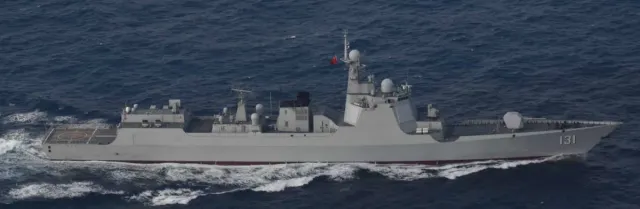
6. Type 052D 

China’s most-produced modern destroyer, with roughly 25 built, forms the backbone air-defense escort of the PLA Navy and increasingly deploys on carrier group escort, East and South China Sea patrols, and joint exercises with Russia. None of that is combat. Every radar, missile and cell-count figure attached to this class is a Chinese state claim with no independent verification.
Advantages: built at genuine scale, roughly 25 hulls, with real industrial momentum behind continued production; a modern AESA radar and balanced VLS air-defense and anti-ship loadout; increasingly deployed on real blue-water escort missions.
Disadvantages: zero combat record; every radar, missile and cell-count figure is a Chinese state claim; smaller and less capable than the Type 055 ranked above it.
The Type 052D is the ship China actually built in bulk while the larger Type 055 grabbed the headlines, the workhorse escort now shadowing carriers and shipping lanes from the East China Sea toward Australia, still without ever having fired a weapon in anger.
5. Type 055

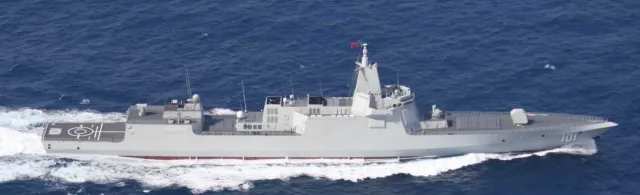
The most capable ship on this list that has never fired a shot, the J-20 of the destroyer world. At roughly 13,000 tonnes and carrying 112 vertical launch cells behind a dual-band AESA radar, NATO nicknames it Renhai and often classes it as a cruiser rather than a destroyer. Its real record short of combat is a genuine blue-water presence story: a Type 055 sailed with a four-ship PLA Navy group into US economic waters near Alaska’s Aleutian Islands in 2021, shadowed the whole way by a US Coast Guard cutter, has trained on joint patrols with Russian warships, and now operates in Taiwan-focused exercises and long-range cruises toward Australia.
Advantages: the heaviest air-defense and strike loadout of any Chinese surface combatant, 112 cells behind a dual-band AESA radar; large enough for genuine blue-water endurance, now proven by real long-range deployments; increasingly the centerpiece of PLA Navy carrier escort and gray-zone presence operations.
Disadvantages: zero combat record; every performance, radar and cell-count figure is a Chinese state claim not independently verified; unit cost never disclosed.
The clearest measure of the Type 055 isn’t a battle but a patrol line, a Chinese super-destroyer inside US economic waters off the Aleutians in 2021, trailed the entire time by a US Coast Guard cutter, announcing a blue-water navy without a single shot fired.
4. Sejong the Great-class

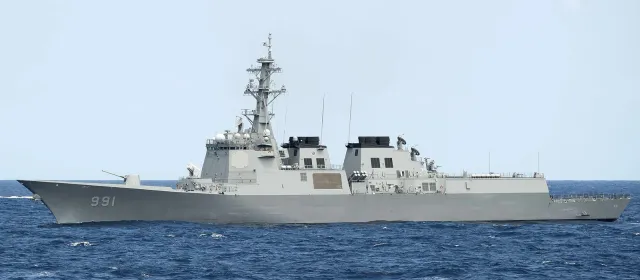
The heaviest broadside on this entire list: 128 vertical launch cells, more than any other destroyer in our database, on a 10,000-tonne KDX-III hull with a full Aegis combat system and Haeseong anti-ship missiles. No combat record exists, and it ranks below Maya because its 2008-era Aegis Baseline lacks the ballistic-missile-defense capability the newer Japanese ship carries. Four hulls in service make it a capable, well-regarded regional heavy combatant.
Advantages: the deepest missile magazine on this entire list at 128 cells; a full Aegis combat system with the SPY-1D(V) radar; a capable, well-regarded regional combatant with four hulls in service.
Disadvantages: no combat record; a 2008-generation Aegis baseline without the newer ballistic-missile-defense capability fielded by Maya; regional, single-operator sustainment.
The Sejong the Great packs more launch cells than any warship in our database, more even than the Arleigh Burke that tops this list, proof that on this ranking a bigger magazine is not the same thing as a better destroyer.
3. Maya-class 

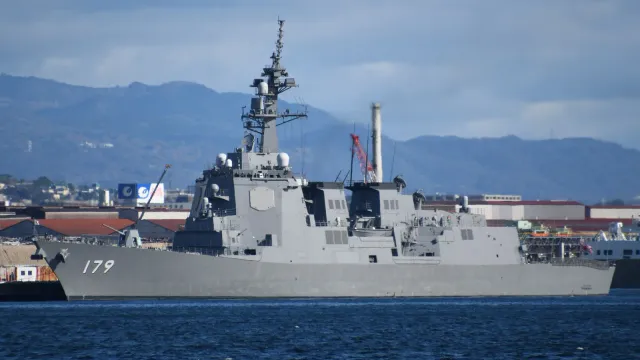
Asia’s most technically advanced Aegis destroyer, and the most capable non-US ship on this list. The Maya-class entered service already ballistic-missile-defense capable on Aegis Baseline 9, armed with SM-3 Block IIA exo-atmospheric interceptors, and on 16 November 2022 JS Maya intercepted a ballistic target above the atmosphere off Hawaii with an SM-3 Block IIA, the first such launch from a Japanese warship. It’s also the first Japanese destroyer fitted with Cooperative Engagement Capability, letting it share fire-control data directly with US and allied ships and aircraft. A genuine capability milestone, but a test-range intercept is not combat, and the class has never engaged a real threat. Only two hulls exist.
Advantages: the only Asian destroyer on this list with proven exo-atmospheric ballistic-missile defense via the SM-3 Block IIA; the newest Aegis baseline of any ship ranked here; deep data-sharing integration with the US Navy’s own combat architecture.
Disadvantages: only two ships, a very thin fleet for such a capable design; no combat record, its BMD success was a test-range intercept, not an engagement; single-operator, though tightly allied to US sustainment.
In November 2022 off Hawaii, JS Maya reached above the atmosphere and destroyed a ballistic target with an SM-3 Block IIA, a genuine capability milestone, and still the closest this superb ship has come to firing a weapon in anger.
2. Type 45 Daring-class 

Britain’s dedicated area air-defense destroyer takes second place because, after the Arleigh Burke, it has the strongest recent air-defense combat record of any ship on this list. In the Red Sea, HMS Diamond downed nine drones across three separate attacks with its Sea Viper and Aster missile system and close-in guns, the first combat use of the Aster missile by the Royal Navy, including seven drones in a single day, a Royal Navy record, and around 24 April 2024 shot down a Houthi anti-ship ballistic missile, the fastest target any British warship had ever engaged. The honest flaw is equally real: a design fault in the WR-21 gas turbine and intercooler system caused catastrophic power failures in warm water, notably the Persian Gulf, leaving ships dead in the water, and the Royal Navy is still re-engining the fleet under a Power Improvement Programme costing more than £160 million. Only six ships were built.
Advantages: a real, recent air-defense combat record, drone and ballistic-missile kills in the Red Sea, second only to the Arleigh Burke on this list; the SAMPSON AESA radar and Sea Viper/Aster missile system are a genuinely top-tier air-defense fit; purpose-built as a dedicated area air-defense destroyer.
Disadvantages: the WR-21 propulsion fault that left ships powerless in warm water, still being fixed under a multi-year re-engining program; only six hulls in the entire fleet; the shallowest VLS of any top-tier air-defense destroyer here at 48 cells, historically light on anti-ship and land-attack strike.
HMS Diamond shot down seven Houthi drones in a single day and later a ballistic missile, the fastest target the Royal Navy had ever hit, from a class whose own engineers spent nearly a decade fixing turbines that kept cutting out in the heat of the Gulf.
1. Arleigh Burke-class

The Arleigh Burke-class wins this list on balance, the same logic that put the Leopard 2A7, F-35A and Virginia-class atop our tanks, fighter jets and submarines rankings: the most combat-employed, most-produced, best-sustained destroyer in service. The Red Sea Aegis combat record since October 2023 is genuinely unprecedented, USS Carney’s 51 engagements and the Navy’s own “most intense engagement since World War II” language, plus USS Gravely destroying two anti-ship ballistic missiles aimed at itself and a merchant ship on 30 December 2023, the first-ever combat intercepts of that missile type in history. That sits on top of a deep prior strike record, including Tomahawk launches across multiple conflicts going back to the 1990s. Roughly 74 ships have been built across three design flights, and the class remains in production today with the newer SPY-6 radar on Flight III hulls.
“The ASBM threat is very challenging. It’s very dynamic and it’s very fast,” said Cmdr. Jeremy Robertson, Commanding Officer of USS Carney, in Task & Purpose, December 2024.
Advantages: the only genuinely combat-proven modern air-defense destroyer, with a real, sustained record intercepting cruise missiles, anti-ship ballistic missiles and drones in the Red Sea; by far the largest fleet, roughly 74 hulls, and deepest allied sustainment, weapons and training base of any destroyer in service; continuously upgraded, now fielding the SPY-6 radar with Flight III still in production.
Disadvantages: a 1990s hull design pushed to its margins on space, power and cooling as sensors and missiles keep growing heavier; expensive, at roughly $1.9 billion per Flight III ship; not the deepest magazine on this list, at 96 cells, below both the Sejong the Great’s 128 and the Type 055’s 112.
Eighty years after the last time a US warship fought at this tempo, an Arleigh Burke destroyer stood off Yemen and knocked down cruise missiles, ballistic missiles and drones for hours at a stretch, the entire crew later receiving the Combat Action Ribbon, the first time a Navy crew had earned it since the 1991 Gulf War. The Aegis system finally did, in real combat, exactly what it was designed for during the Cold War and never had to prove until 2023.
The 2026 ranking at a glance
| Rank | Destroyer | Origin | Radar | Real record | VLS cells | Approx. unit cost |
|---|---|---|---|---|---|---|
| 1 | Arleigh Burke-class | United States | SPY-1D/SPY-6 Aegis | Red Sea intercepts, 2023- | 96 | ~$1.9B |
| 2 | Type 45 Daring-class | United Kingdom | SAMPSON AESA | Red Sea drone/missile kills, 2023-24 | 48 | ~$1.2B |
| 3 | Maya-class | Japan | SPY-1D(V) Aegis BMD | SM-3 test intercept, 2022 (not combat) | 96 | not published |
| 4 | Sejong the Great-class | South Korea | SPY-1D(V) Aegis | None | 128 | ~$0.92B |
| 5 | Type 055 | China | Type 346B dual-band AESA* | None | 112* | not published |
| 6 | Type 052D | China | Type 346A AESA* | None | 64* | not published |
| 7 | Chungmugong Yi Sun-sin-class | South Korea | SPS-49/MW08 | Samho Jewelry rescue, 2011 | 56 | not published |
| 8 | Visakhapatnam-class | India | MF-STAR AESA | None | 32 | ~$0.95B |
| 9 | Kolkata-class | India | MF-STAR AESA | None | 32 | ~$0.9B |
| 10 | Zumwalt-class | United States | SPY-3 | None | 80 | ~$4.4B |
*Chinese state figure, not independently verified.
The #1 ship, the Arleigh Burke, does not have the most cells. South Korea's Sejong the Great carries 128, and China's Type 055 carries 112, both ranked below it. VLS count doesn't decide this list, a real combat record, air defense and sustainment do, exactly the metric an earlier version of this ranking used as its whole thesis.
The bottom line
No destroyer on this list wins on every axis, and the last two years made that trade-off impossible to ignore: real combat now separates these ships more than any spec sheet does. The Arleigh Burke leads because it pairs the only sustained modern air-defense combat record with the deepest fleet and sustainment base in the world, but the Type 45 and Maya are close enough behind it that mission, budget and fleet size should decide a real procurement call, not cell count alone.
Run any two of these ships head-to-head in the comparison tool, browse every warship in the database on the warship class page, or get a mission-tailored recommendation from the advisor. More rankings and breakdowns like this live on the articles page, including our recent countdowns of the best tanks, best fighter jets and best submarines of 2026.
Sources
- Destroyer USS Carney returns home after seven-month deployment, 51 Houthi engagements, USNI News
- HMS Diamond shoots down a Houthi missile, Royal Navy
- Advanced Gun System, Wikipedia
- Operation Dawn of Gulf of Aden, Wikipedia
- Type 45 destroyer, Wikipedia
- Sailors on USS Carney recall tense night of combat in fierce Red Sea fight, Task & Purpose
Systems in this comparison
Every system covered above, with its photo and, where available, a video. Tap a card to open the full spec sheet.
Compare these side by side →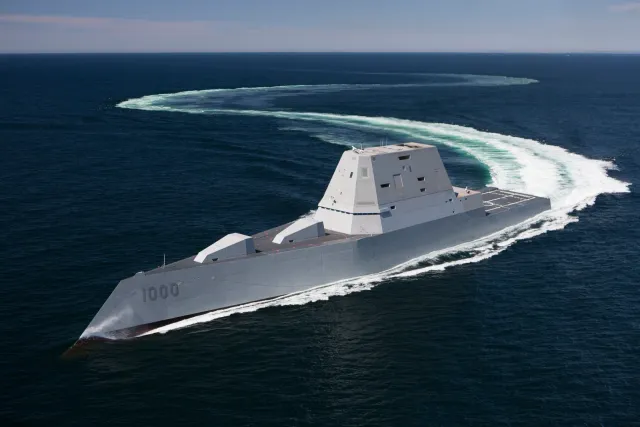
Warship
Zumwalt-class Destroyer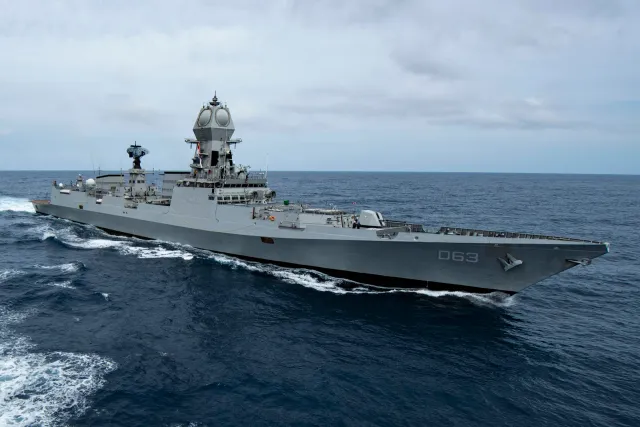
Warship
Kolkata class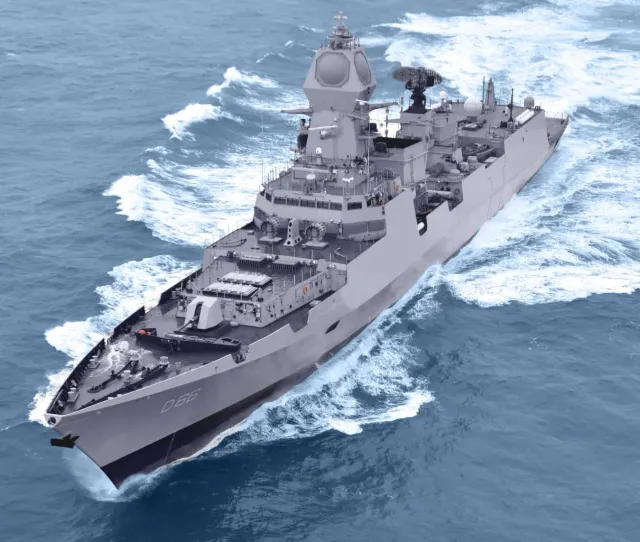
Warship
Visakhapatnam class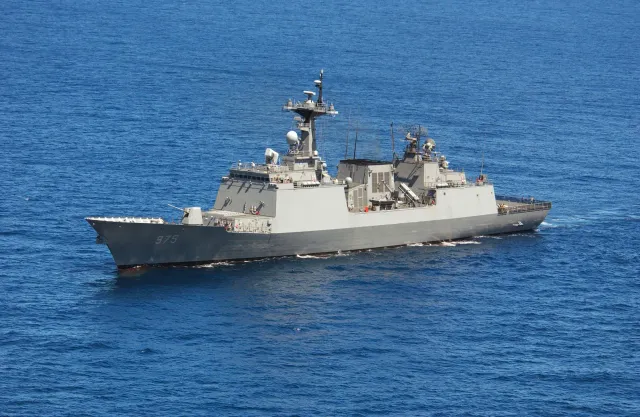
Warship
Maya-class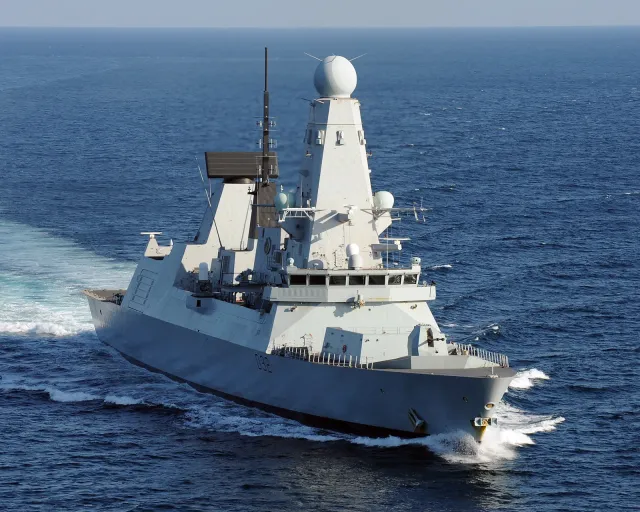
Warship
Type 45 Daring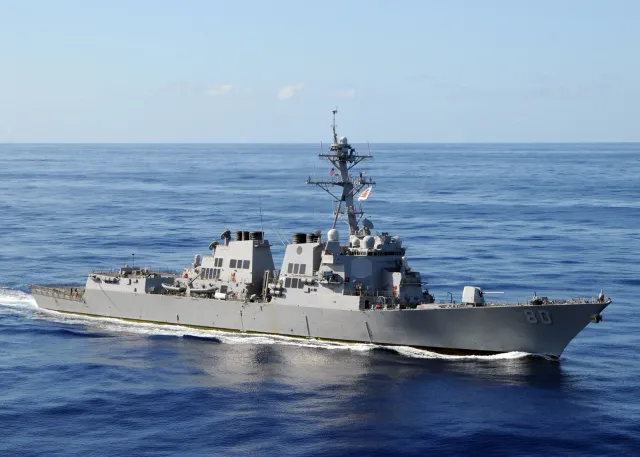
Warship
Arleigh Burke-class DestroyerFrequently asked questions
What is the best destroyer in 2026? +
The Arleigh Burke-class. It is the most combat-proven, most-produced, best-sustained destroyer in service. Its Aegis system compiled a genuinely unprecedented real combat record intercepting cruise missiles, anti-ship ballistic missiles and drones in the Red Sea from October 2023, backed by roughly 74 hulls and the deepest allied sustainment base of any destroyer afloat.
Has a destroyer actually shot down an anti-ship ballistic missile in combat? +
Yes, for the first time in history, starting in late 2023. US Arleigh Burke-class destroyers USS Carney and USS Gravely intercepted Houthi anti-ship ballistic missiles in the Red Sea. The Houthis were the first entity ever to fire anti-ship ballistic missiles in combat, which made these the first warships in history to defend against them. Britain's Type 45 destroyer HMS Diamond also downed a Houthi ballistic missile in April 2024.
Does the destroyer with the most missile cells win this ranking? +
No. South Korea's Sejong the Great-class carries 128 vertical launch cells, the most in our database, but ranks 4th. China's Type 055 carries 112 and ranks 5th. The Arleigh Burke tops the list with only 96 cells because a real combat record, sensors and sustainment matter more than magazine depth.
Are Chinese destroyer specifications reliable? +
Treat them as claims. The Type 055's and Type 052D's cell counts, radar performance and unit costs are Chinese state disclosures, not independently verified, and neither class has any combat record to test them against.
Why does the Zumwalt-class rank last despite being the biggest and most expensive? +
Because as a fighting ship it barely functions. Its two 155mm guns have no ammunition, the shells were cancelled once the per-round cost reached $800,000 to $1 million, only three of a planned 32 were built, and it has essentially no combat deployment record while the Navy re-arms it for hypersonic missiles instead.
Related reading


