GCAP's $6.1B Contract Still Doesn't Price the Jet
GCAP is the only next-gen fighter with real, dated government contracts on record, and the £4.6B/$6.1B deal still only funds design, not a jet.
Of the eight next-generation fighter programs in WeaponSpecs’ database still carrying “announced” status rather than “in service,” the Global Combat Air Programme is the only one backed by real, dated, government-published contract figures: a £4.6 billion ($6.1 billion) trilateral design contract signed July 3, 2026, on top of separate UK national commitments worth billions more. Every other program in the cohort discloses either an unofficial press guess, a single unverified state claim, or nothing at all. But being the most disclosed program does not make GCAP the most priced one. Every pound, dollar, euro, and yen published so far funds design and engineering, not aircraft, and no government behind any of these eight programs has published a real cost per jet.
How much has GCAP actually been funded, and by whom?
Treat these as separate funding layers, not line items in one running total. They cover different scopes and overlapping time windows, and the sources behind them do not establish that they stack cleanly on top of each other.
- £4.6 billion / $6.1 billion (as disclosed, trilateral), signed July 3, 2026, through Edgewing: an 18-month Aircraft Concept and Assessment phase ahead of full development. The only figure here with a sourced USD conversion.
- £8.6 billion (~$11.4 billion, an approximate conversion at that same ~1.326 rate), the UK’s June 2026 Defence Investment Plan commitment, spread over four years through fiscal year 2029-30. UK-only, and it likely overlaps with the two figures below rather than sitting alongside them.
- £708 million (~$939 million, same approximate rate), a UK Ministry of Defence contract extension to BAE Systems, awarded July 22, 2026, for UK-sovereign technologies and the wider Future Combat Air System.
- £686 million (~$910 million, same approximate rate), an earlier UK stopgap contract from April 2026, referenced in the July 22 announcement as prior funding.
Italy and Japan run on their own tracks. Italy’s Parliament approved 8.8 billion euros in February 2026 for annual disbursement through 2037, a decade-plus national funding line with no stated USD conversion in the sourcing used here. Japan allocated roughly 206.6 billion yen, about $1.27 billion, for fiscal year 2026 alone. As aviation lecturer Marco Chan put it in his analysis for The Conversation, the total cost of GCAP “remains unquantified,” a fair summary given four active UK-side figures and no combined number published anywhere.
What does that money actually buy?
Not aircraft. The £4.6 billion contract funds an 18-month Aircraft Concept and Assessment phase, engineering work that comes before full development, let alone production. The £708 million UK extension funds software, digital networks, digital engineering, and physical infrastructure: sovereign groundwork underneath the jet, not the jet itself. That is the same distinction WeaponSpecs’ broader price-transparency census keeps finding across the industry: announcing a contract value is not the same act as publishing what a unit will cost once the line is running.
The UK government’s own framing of the July 22 award leans into achievement language that a reader should weigh against what the contract funds:
“This £708 million investment demonstrates the UK’s continued commitment to maintaining a world-leading combat air capability and a freedom of action which ensures our Armed Forces remain equipped to meet future threats,” said Richard Berthon, Director Future Combat Air at the Ministry of Defence (UK Defence Journal, July 22, 2026).
That is a government describing its own spending in its own favor, worth reading alongside what the money is actually scoped to buy: digital infrastructure, not flyaway jets. For background on how fighter cost figures are typically reported, see WeaponSpecs’ explainer on how fighter jet cost figures work.
Is GCAP the exception, or the rule, among next-gen fighter programs?
Our analysis of the 65 fighter systems in the WeaponSpecs database found 8 still carrying “announced” status, which we’ve tracked as a group before. Sorted by cost disclosure, GCAP stands alone.
| Program | Country | Target service year | Development funding disclosed | Unit cost disclosure |
|---|---|---|---|---|
| GCAP Tempest | UK / Italy / Japan | 2,035 | Yes, real government contracts with dates (see above) | Not disclosed |
| F-47 (NGAD) | United States | 2,028 | EMD contract reported near $20 billion; not itemized publicly | $300 million, unofficial press estimate, not confirmed by the USAF or Boeing |
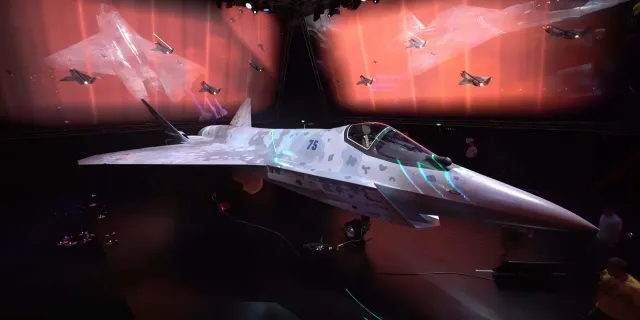
| Su-75 Checkmate | Russia | 2,026 | Not disclosed | $27.5 million (Rostec’s stated range: $25-30 million), a state-claimed export price from CEO Sergei Chemezov, unverified, no confirmed export orders |
| AMCA | India | 2,028 | About 1.6 billion dollars approved for the overall prototype-development phase | Not disclosed |
| TAI Kaan | Turkey | 2,024 | Not disclosed | Not disclosed |
| Tejas Mk2 | India | 2,027 | Not disclosed | Not disclosed |
| J-36 | China | Undisclosed | Not disclosed; program existence unconfirmed by Chinese authorities | Not disclosed |
| J-50 | China | Undisclosed | Not disclosed; program existence unconfirmed by Chinese authorities | Not disclosed |
The accent slice is the only one backed by a government contract with a signature and a date; the other three colors, tan, red, and gray, cover a press guess, an unverified state claim, and five programs that have published nothing at all, and none of the four counts as a price.
A government contract with a signature is a more trustworthy category of disclosure than Rostec’s chief executive naming a price range in an interview: this column flags that kind of figure as a state claim, not a fact. But “more trustworthy disclosure” and “known price” remain two different claims, and GCAP still sits in the same undisclosed-unit-cost column as the other seven.
Why did Italy’s early GCAP cost estimate roughly triple?
Early planning-stage estimates for Italy’s share of the program put the figure at around 6 billion euros before it grew to roughly 18.6 billion euros over five years, according to program history compiled on the Global Combat Air Programme’s Wikipedia page. That is not a claim about the finished aircraft’s price. It is a claim about how much a national defense budget expects to spend before a single production jet exists. A tripling at that stage is exactly the signal a procurement analyst should weigh heavily, since it shows the direction a program’s true cost tends to move once engineering reality replaces planning assumptions. GCAP’s disclosure record is real; its cost trajectory, on Italy’s own numbers, has already moved sharply upward once.
What should a buyer or analyst actually take from this?
Most coverage of this contract collapses two separate claims into one: that GCAP publishes real numbers, and that GCAP is now priced. Only the first is true. A treaty government publishing a dated £4.6 billion design contract is a different category of information than Rostec naming a number in an interview or a trade press outlet guessing at Boeing’s cost, and that distinction is worth defending. But none of the eight programs here, GCAP included, has published a per-unit figure a buyer or analyst could use to compare cost across a fleet. This wave of next-generation fighters remains a field where disclosure and price have not yet met, and Italy’s own cost history suggests that when they do, the number will not shrink. For background on the generational framing behind these programs, see WeaponSpecs’ explainer on what makes a fighter fifth-generation. Run your own comparison across every fighter in the database at the WeaponSpecs fighter aircraft hub.
Sources
Systems in this comparison
Every system covered above, with its photo and, where available, a video. Tap a card to open the full spec sheet.
Compare these side by side →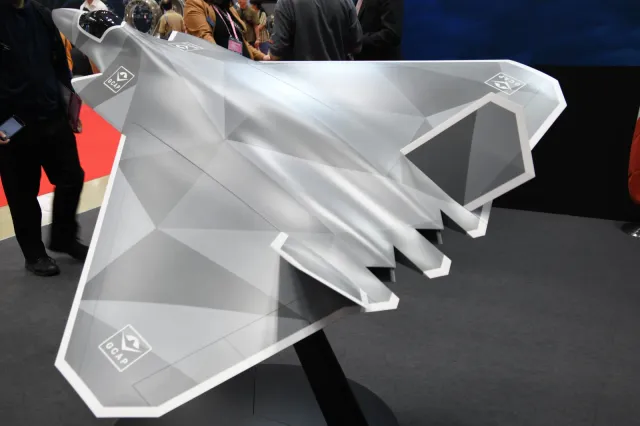
Fighter aircraft
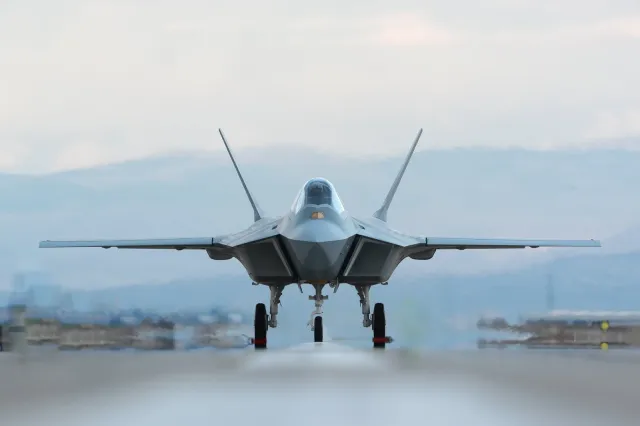
GCAP Tempest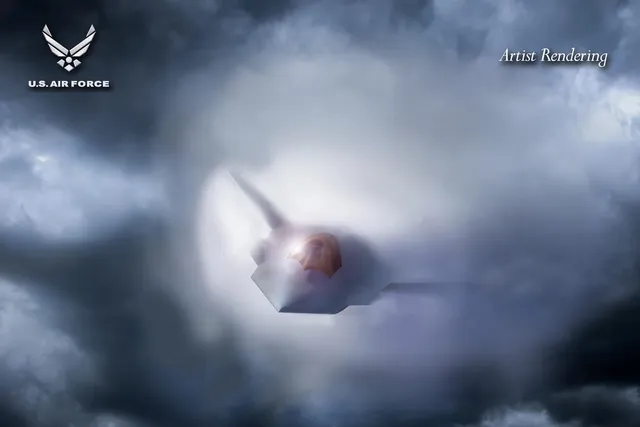
Fighter aircraft
Su-75 Checkmate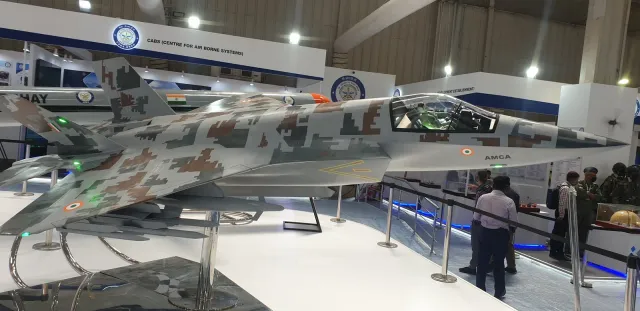
Frequently asked questions
What is GCAP, and who is building it? +
The Global Combat Air Programme is a trilateral sixth-generation fighter jet program between the United Kingdom, Italy, and Japan, developed through Edgewing, a joint venture of BAE Systems, Leonardo, and Japan Aircraft Industrial Enhancement Co. It also carries the UK's Tempest name and targets a 2035 in-service date, replacing the Eurofighter Typhoon in UK and Italian service and Japan's Mitsubishi F-2.
How much money has actually been committed to GCAP, and what phase does it cover? +
The three governments signed a £4.6 billion ($6.1 billion) contract through Edgewing on July 3, 2026, covering an 18-month Aircraft Concept and Assessment phase ahead of full development. The UK separately holds a £708 million contract extension for its own sovereign technologies, a broader £8.6 billion commitment over four years through the 2029-30 fiscal year, and an earlier £686 million stopgap contract from April 2026. Italy has approved 8.8 billion euros for annual disbursement through 2037, and Japan allocated about 206.6 billion yen, roughly $1.27 billion, for fiscal year 2026. These figures cover different scopes and time windows and should not be added into one total.
Does the £4.6 billion / $6.1 billion contract include the cost of building the jets? +
No. That contract funds the Aircraft Concept and Assessment phase, design and engineering work, not aircraft production. None of the disclosed GCAP figures, national or trilateral, represent a per-unit or flyaway cost, and no such figure has been published by any of the three governments.
How does GCAP compare to the other next-generation fighter programs on cost disclosure? +
Of the eight next-generation fighter programs still listed as announced rather than in service in WeaponSpecs' database, GCAP is the only one with real, government-published contract figures attached to specific dates. The United States' F-47 carries only an unofficial press estimate of its production cost that neither the Air Force nor Boeing has confirmed. Russia's Su-75 Checkmate carries a price range stated by Rostec's own chief executive, an unverified state claim with no confirmed export orders. India's AMCA, Turkey's Kaan, India's Tejas Mk2, and China's J-36 and J-50 have not published cost figures at all, and China has not even confirmed that the J-36 and J-50 programs exist.
Why does it matter that Italy's early GCAP cost estimate roughly tripled? +
Early planning-stage estimates put Italy's cost at around 6 billion euros before it grew to roughly 18.6 billion euros over five years, according to program history compiled on the Global Combat Air Programme's Wikipedia page. That growth happened well before any unit-cost figure exists for the aircraft itself, a reminder that even a program with unusually good disclosure can still carry serious cost-growth risk long before a single jet reaches production pricing.
Related reading


