No US Drone Fills the Gap Between Munition and Reaper
WeaponSpecs' UAV database shows an 11x price cliff, $90,000 to $1,000,000, with zero priced systems in between, the exact gap the Air Force needs filled.

U.S. Air Force photo by Staff Sgt. Brian Ferguson, public domain, via Wikimedia Commons
The Air Force wants a new attritable ISR drone because it just lost 45 MQ-9 Reapers over Iran, and WeaponSpecs’ own spec database shows exactly why building one is hard. Of the 101 UAV-type systems we track, only 19 publish a unit cost, and those 19 split into two tiers with an 11-fold price cliff between them. The cheapest expendable one-way munition tops out at $90,000. The cheapest reusable ISR-capable platform starts at $1,000,000. Nothing anywhere in our database, American, allied, or adversary, is priced in between.
How many Reapers did the Iran war actually cost the Air Force?
At least 45 MQ-9 Reapers were destroyed during Operation Epic Fury, roughly 25% of the pre-war fleet and more than $1.3 billion in aircraft value, based on Washington Post reporting on unnamed US officials that put individual unit value at $30 to 50 million (The Defense Post, Aug 17, 2026). That is not a rounding-error loss: a quarter of a high-endurance ISR fleet gone means the aircraft that normally watches a target for 27 hours straight simply isn’t there for a stretch of missions, and everything downstream of that coverage (strike cueing, pattern-of-life tracking, convoy overwatch) thins out with it.
The fleet-level number is worse than the raw loss count suggests. The Air Force’s total MQ-9 inventory fell to 135 aircraft, 54 below the service’s own established 189-aircraft operational minimum (Air Force Times, May 13, 2026). Below that floor, squadrons can’t rotate crews and airframes through maintenance, training, and combat commitments without gaps opening somewhere, and MQ-9A production has already ended, so there’s no factory line to simply speed up. Every replacement aircraft has to come from a program that doesn’t fully exist yet, or from the newer MQ-9B the Air Force has shifted its focus toward.
“We are concerned about how they’ve attrited, and we’re looking at options to buy back as many of the MQ-9As as we possibly can right now,” said Lt. Gen. David Tabor, Deputy Chief of Staff for Plans and Programs, testifying to the Senate Armed Services Subcommittee on Airland (Air Force Times, May 13, 2026).
“Buy back” is a telling phrase for a discontinued production line: the fastest fix is finding used or stalled airframes, not ordering new ones, while the real long-term answer gets defined from scratch.
What does the Air Force mean by “cheap enough to lose”?
The Air Force Life Cycle Management Center issued a formal Request for Information (tracking number FA8629-26-RFI-4ISR) for an “Attritable ISR Aircraft” on April 14, 2026, with responses due May 1, 2026. The requirements document was approved that same month. The performance bar it sets: up to 1,500 km (932 miles) of range, 20 hours of endurance, and a design life of roughly 100 missions, at what the RFI calls “low-to-medium acquisition cost” without naming a dollar figure (TWZ).
Maj. Gen. Christopher Niemi, Acting Military Deputy for Air Force Futures, described the goal as a “more flexible” aircraft built on open architectures, flown “in a more attritable way,” using modern production methods to build “in mass numbers” rather than the small, hand-finished batches that defined the Reaper line. It isn’t asking for a smaller Reaper, it’s asking for a different manufacturing philosophy: an aircraft designed from the outset to be produced fast and lost without triggering a fleet crisis like the one 45 missing airframes just caused. Initial iterations are targeted for fielding in 2026 or 2027, with additional solutions expected by 2030 (TWZ).
That range and endurance bar is not trivial. 1,500 km and 20 hours sits well above small tactical drones and squarely into MALE (medium-altitude, long-endurance) UAV territory, the same performance class as the aircraft the program is trying to move away from on price.
Does anything in WeaponSpecs’ own database already sit in that gap?
We checked. WeaponSpecs tracks 101 systems classified as UAVs, and only 19 of them, 18.8%, publish a unit cost at all. Sorted by price, those 19 systems fall into two clean tiers with nothing between them.
Bars are drawn on a log scale; a linear chart would render every bar except MQ-4C Triton as an invisible sliver next to it. The real finding is the gap between rows one and two: nothing in WeaponSpecs' priced UAV population sits between Switchblade 600's $90,000 and Wing Loong I's $1,000,000, an eleven-fold jump with no system in between, which is exactly the price band the Air Force's Attritable ISR Aircraft program is trying to invent. Wing Loong I (marked *) is a Chinese export-price estimate, not an independently audited figure.
The full 19-system census, sorted ascending, shows the same gap in table form:
| System | Country | Role | Unit Cost | Weapons Payload |
|---|---|---|---|---|
| Lancet-3 | Russia | Loitering munition | $35,000 (Russian state/manufacturer claim, unverified) | n/a, one-way munition |
| RQ-11 Raven | United States | Hand-launched mini-ISR | $35,000 | n/a, unarmed |
| Shahed-136 | Iran | Loitering munition | $50,000 (Iranian state/manufacturer claim, unverified) | n/a, one-way munition |
| Switchblade 300 | United States | Loitering munition | $52,914 | n/a, one-way munition |
| Fire Point FP-1 | Ukraine | Loitering munition | $55,000 | n/a, one-way munition |
| Switchblade 600 | United States | Loitering munition | $90,000 | n/a, one-way munition |
| Wing Loong I | China | MALE ISR/strike | $1,000,000 (Chinese export-price estimate, unverified) | 200 kg |
| CH-4 (Caihong-4) | China | MALE ISR/strike | $4,000,000 (Chinese export-price estimate, unverified) | 345 kg |
| MQ-1 Predator | United States | MALE ISR/strike (legacy, out of production) | $4,000,000 | 204 kg |
| Bayraktar TB2 | Turkey | MALE ISR/strike | $5,000,000 | 150 kg |
| ANKA-S | Turkey | MALE ISR/strike | $15,000,000 | 200 kg |
| Wing Loong II | China | MALE ISR/strike | $15,000,000 (Chinese export-price estimate, unverified) | 480 kg |
| MQ-1C Gray Eagle | United States | MALE ISR/strike | $17,000,000 | 488 kg |
| MQ-9B SkyGuardian | United States | MALE ISR/strike | $25,000,000 | 2,155 kg |
| X-BAT | United States | Pre-production ISR/air-superiority (announced, not yet flown) | $27,000,000 | n/a |
| Bayraktar Akinci | Turkey | HALE ISR/strike | $30,000,000 | 1,500 kg |
| MQ-9A Reaper | United States | MALE ISR/strike | $32,000,000 | 1,700 kg |
| RQ-4 Global Hawk | United States | HALE ISR (unarmed) | $140,000,000 | n/a, no weapons |
| MQ-4C Triton | United States | HALE maritime ISR (unarmed) | $300,000,000 | n/a, no weapons |
Read down that table and the shape of the problem is obvious. Six systems sit at or under $90,000, all one-way munitions with no reusable airframe to recover. Thirteen sit at $1,000,000 or above, all reusable ISR or strike platforms designed to fly hundreds of sorties. There is no eleventh system splitting the difference. The RFI is asking industry to build something reusable enough to be worth calling an aircraft and cheap enough to be worth losing, and that combination does not exist yet in any priced system we track.
One entry in that table deserves a direct correction before anyone reads it as an answer. WeaponSpecs tags the RQ-11 Raven “isr” in our database, and at $35,000 it looks like it might be the cheapest ISR platform around. It isn’t a real candidate for this gap. The Raven is a 1.9 kg hand-launched mini-UAV with a 10 km range and roughly 1.25 hours of endurance, built for a squad to toss into the air and watch the next ridgeline over. The RFI’s bar is 1,500 km and 20 hours, two orders of magnitude past that on both axes. Sharing a database tag does not make a backpack drone and a MALE-class ISR aircraft the same vehicle class, and treating the Raven’s low price as evidence the gap is already filled would be a straightforward category error.
This is a different question from the one-way pricing race we covered in our own coverage of the Pentagon’s $2,000 drone target: that story tracked expendable attack drones racing toward a rock-bottom price with no expectation of getting the airframe back. This story is about the tier above it, a reusable ISR-capable aircraft that still comes home, and that tier’s floor currently sits at $1,000,000 with nothing built to compete under it. Anyone comparing prices across the full field can build a side-by-side view in the full UAV database.
Is Wing Loong I actually the answer?
Not really. Wing Loong I proves the target price point is physically achievable: China fielded a MALE-class platform in that performance envelope back in 2008. It does not prove Wing Loong I is a usable substitute for what the Air Force is trying to replace.
Two problems sit under that $1,000,000 figure. First, it’s a Chinese export-price estimate tied to a state-linked manufacturer, not an independently audited number (the same caveat that applies to every PRC-sourced cost figure in our database), and even setting price aside, a US purchase would run straight into export-control and security barriers that make it a non-starter. Second, and more concretely, Wing Loong I clears the RFI’s range and endurance bar without matching what the Reaper actually does on a mission: it carries 200 kg of weapons payload across 2 hardpoints, against Reaper’s 1,700 kg across 7, an 8.5x payload gap. Reaper’s $32,000,000 price, 32 times Wing Loong I’s, partly buys that extra weapons flexibility rather than reflecting pure inefficiency.
The requirement the Air Force wrote in April is not chasing cheapness for its own sake. It wants an aircraft cheap enough to risk in numbers a $32,000,000 platform never could be, while still doing real ISR work, and nothing in WeaponSpecs’ 101-system UAV census threads that needle yet. Readers tracking how any eventual competitor stacks up against Reaper, Wing Loong I, or the rest of the field can run their own comparison in WeaponSpecs’ UAV systems tools.
Sources
Systems in this comparison
Every system covered above, with its photo and, where available, a video. Tap a card to open the full spec sheet.
Compare these side by side →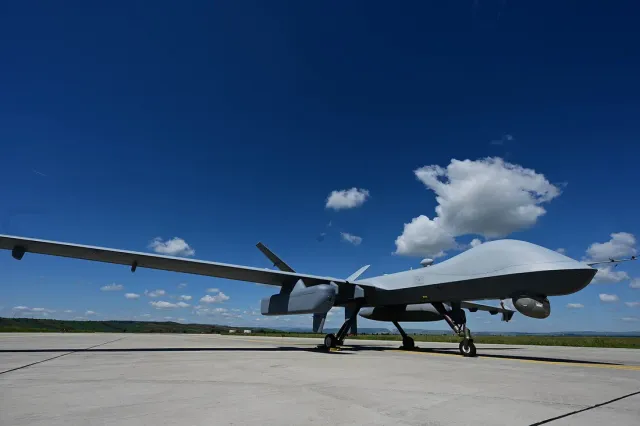
UAV / drone
MQ-9A Reaper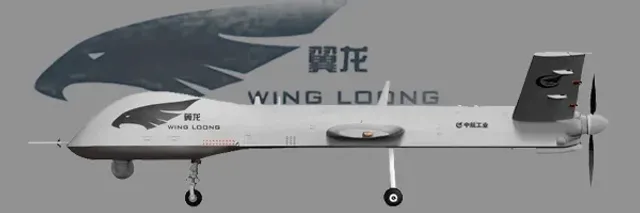
UAV / drone
Wing Loong I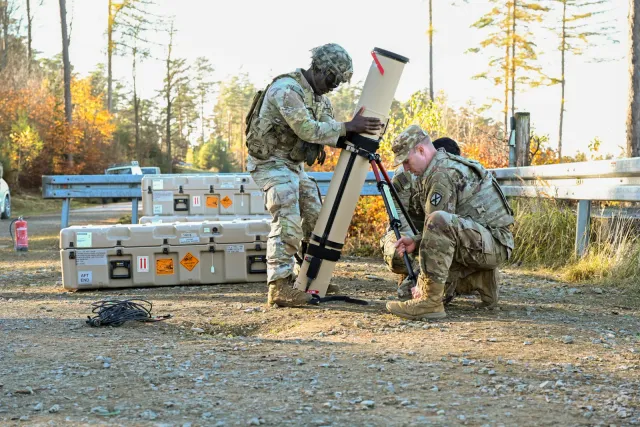
UAV / drone
Switchblade 600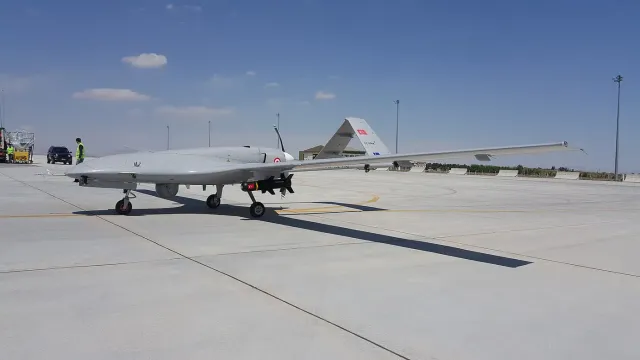
UAV / drone
Bayraktar TB2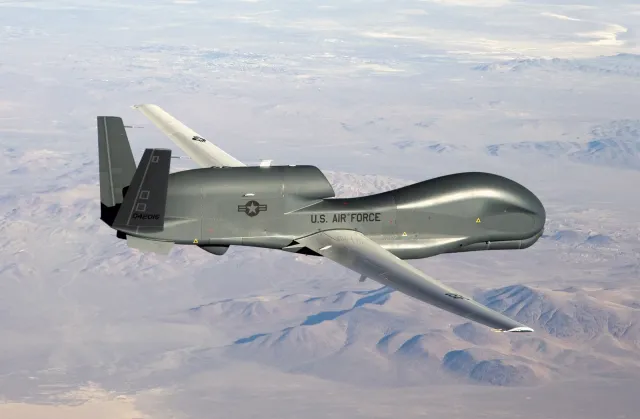
UAV / drone
RQ-4 Global Hawk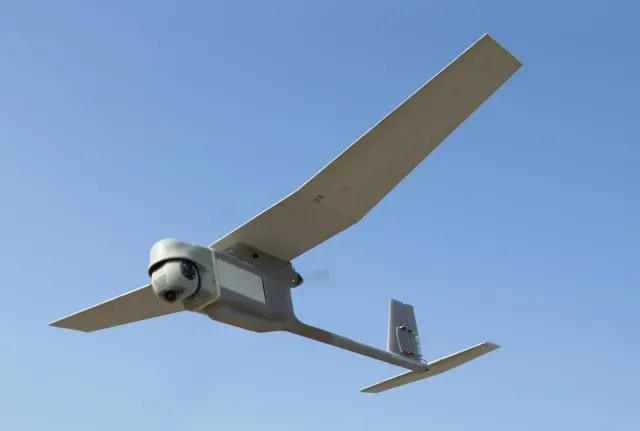
UAV / drone
RQ-11 RavenFrequently asked questions
What does the Air Force mean by an 'attritable' drone? +
An attritable aircraft is one deliberately designed to be cheap enough that losing it in combat is an acceptable operational cost, unlike a $32 million MQ-9A Reaper, whose loss triggers real fleet-readiness consequences. The Air Force's Attritable ISR Aircraft requirements call for up to 1,500 km range, 20-hour endurance, and roughly 100 missions of service life at 'low-to-medium acquisition cost.'
How many MQ-9 Reapers has the US lost in the 2026 Iran war? +
At least 45 MQ-9 Reapers were destroyed during Operation Epic Fury, about 25% of the pre-war fleet and over $1.3 billion in aircraft value, according to Washington Post reporting on unnamed US officials. The Air Force's total MQ-9 fleet fell to 135 aircraft, 54 below its established 189-aircraft operational minimum.
Is the RQ-11 Raven a cheap substitute for the MQ-9 Reaper? +
No. The RQ-11 Raven is priced at $35,000 and is tagged 'isr' in WeaponSpecs' database, but it is a 1.9 kg hand-launched mini-UAV with 10 km range and 1.25-hour endurance, nowhere near the RFI's 1,500 km / 20-hour bar. It is a different vehicle class entirely, not a budget answer to the Attritable ISR Aircraft requirement.
Could the US just buy China's Wing Loong I instead of building something new? +
No, for two reasons. Wing Loong I's $1,000,000 price is a Chinese state-linked export estimate that has never been independently audited, and the US would face real export-control and security barriers actually acquiring one. It also carries only 200 kg of weapons payload on 2 hardpoints versus Reaper's 1,700 kg on 7, so even at the right price it isn't a drop-in Reaper replacement.
When will the Attritable ISR Aircraft actually be fielded? +
The Air Force Life Cycle Management Center issued its RFI on April 14, 2026, with responses due May 1, 2026, and approved the requirements document in May 2026. Initial iterations are targeted for fielding in 2026/2027, with additional solutions expected by 2030.
Related reading


