The Airlift Math That Killed the M10 Booker
Every tank and IFV in WeaponSpecs' database fits a C-17 by weight. Two M10 Bookers didn't, and that math killed a $2.6B Army program.

U.S. Air National Guard photo by Staff Sgt. Reanna Hartgrove, public domain, via Wikimedia Commons
All 133 tanks and infantry fighting vehicles in the WeaponSpecs database, from a 2,750 kg German Wiesel up to a 70,000 kg Leopard 2A8, clear a C-17 Globemaster III’s cargo weight limit on their own. That fact is not why the Army canceled the M10 Booker on May 5, 2025 after spending more than $2.6 billion on it. The Army wanted two Bookers per C-17 sortie, and by the time the vehicle reached production weight, two of them together weighed more than the aircraft could carry. One Booker always cleared the bar. Two of them broke the arithmetic the whole program was built on.
How much can each airlifter actually carry?
Three aircraft matter for moving armor: the tactical C-130J Super Hercules, the medium-lift A400M Atlas, and the strategic C-17 Globemaster III. Each publishes a maximum payload weight, and that number, not fuselage length or ramp angle, is the first filter any armored vehicle has to clear before a load planner even opens a cargo diagram.
| Airlifter | Max payload | Class |
|---|---|---|
| C-130J Super Hercules | 19,051 kg (42,000 lb) | Tactical |
| A400M Atlas | 37,000 kg | Medium |
| C-17 Globemaster III | 77,519 kg (170,900 lb) | Strategic |
Those three figures set the tiers the rest of this piece uses: a vehicle either fits a C-130J outright, needs an A400M’s larger hold, or needs the C-17 class and nothing smaller. Russia’s IL-76MD-90A, a comparable strategic airlifter, publishes a 60,000 kg payload, roughly 17,500 kg less headroom than the C-17 despite occupying the same operational niche.
Which armored vehicles actually fit inside those limits?
Our analysis of the WeaponSpecs database sorted all 133 systems tagged as a tank or IFV with a recorded combat weight into those three tiers. Thirty-six vehicles, 27 percent, weigh at or under the C-130J’s payload and can move on a single tactical sortie. Thirty-seven more, 28 percent, clear the A400M’s threshold but not the C-130J’s, so they need the medium-lift aircraft instead. The remaining sixty, 45 percent, exceed the A400M’s limit and need the C-17 class, meaning nearly half the database’s armor requires a strategic airlifter to move at all. Every one of those sixty still fits inside a C-17. Zero of the 133 systems exceed its payload.
Every tier holds all the way up to the C-17 class, and none of the 133 systems fails the weight test outright, which is exactly why the M10 Booker's failure had to be about arithmetic rather than the vehicle itself.
The named vehicles below show what those tiers mean in practice, and where the margins get thin.
| Vehicle | Country | Combat weight | Smallest class that lifts it |
|---|---|---|---|
| Wiesel | Germany | 2,750 kg | C-130J, with room for six more alongside it |
| M1126 Stryker | United States | 19,000 kg | C-130J, by a 51 kg margin (0.3%) |
| M2A4 Bradley | United States | 36,287 kg | A400M, by a 713 kg margin |
| M10 Booker / Griffin | United States | 40,000 kg | C-17 class only (exceeds the A400M’s limit) |
| M1A1 Abrams | United States | 63,100 kg | C-17 class only |
| M1A2 SEP v3 Abrams | United States | 66,800 kg | C-17 class only |
| Leopard 2A8 | Germany | 70,000 kg | C-17 class only, the database’s heaviest, still 7,519 kg under the limit |
The Stryker row is the one worth pausing on. The Army’s Interim Brigade Combat Team requirement, the program that eventually became the Stryker family, was written explicitly around C-130 transportability, and the database shows the production vehicle landing at 19,000 kg against a 19,051 kg payload limit. A margin under 51 kg on a multi-ton combat vehicle is not luck. It is a spec that was engineered to a transport ceiling and stopped there.
The Booker was supposed to work the same way. Reporting from the program’s earlier stages put its target weight around 38 US tons, roughly 34,500 kg, explicitly to keep it C-130-deployable. It never got there. The WeaponSpecs database records its production combat weight at 40,000 kg, already past the A400M’s 37,000 kg ceiling and nowhere near the C-130J’s. Reported figures for the Booker vary elsewhere, commonly cited as either “38 tons” at an earlier design stage or “42 tons” at cancellation, and U.S. defense reporting is not always consistent about whether “tons” means short tons or metric tonnes. This piece uses the WeaponSpecs database’s 40,000 kg figure for every calculation that follows, and treats the wider reported range as context rather than a discrepancy to explain away.
So why did the M10 Booker still fail?
The Army’s plan called for two Bookers on every C-17 sortie. At 40,000 kg apiece, two of them together weigh 80,000 kg, which is 2,481 kg over the C-17’s 77,519 kg payload limit. That overage, not any inability to fly at all, is why the Air Force could only certify one Booker per aircraft instead of two, cutting the program’s planned airlift throughput in half before a single unit reached the field. This isn’t a story about whether one tank fits a plane. It’s about what happens when the deployment plan needs two.
“We got a heavy tank,” said Dan Driscoll, Secretary of the Army, on the M10 Booker’s cancellation (ClearanceJobs, May 5, 2025).
Driscoll was blunter still about the decision itself, telling reporters the same day, “We made a mistake, this didn’t turn out right. We’re going to stop. We’re going to own it.” (per ClearanceJobs, May 5, 2025). The Army also cited a battlefield increasingly shaped by drones and loitering munitions, a separate strike against a mid-weight vehicle. But the two-per-C-17 shortfall is the specific, quantifiable failure that shows up nowhere in a brochure and everywhere in a load plan.
As of this writing in 2026, the surviving Booker fleet sits mostly in storage at Anniston Army Depot, with at least one unit placed on museum display, after a program that ran past $2.6 billion in total cost, according to 19FortyFive. The vehicles work. They fire, they drive, they armor their crews. What they no longer have is a program.
What does “airlift-compatible” leave out?
Everything in this piece is a payload-weight comparison, and that is a real limitation, not a footnote. Fitting inside a maximum payload figure says nothing about whether a vehicle actually fits inside the cargo bay’s physical envelope, clears the ramp angle, or leaves room for the tie-down hardware a loadmaster needs to secure it in flight. The WeaponSpecs database tracks combat weight for every tank and IFV in it. It does not currently track cargo-bay length, width, or height for any of the three airlifters compared here, so a vehicle that clears every weight threshold in this piece could still fail a real load plan on dimensions alone.
Weight constraints do not end at the ramp, either. Getting a “light” vehicle onto an airfield in the first place can depend on bridge and road weight limits at the posts and installations it has to cross to reach a runway, a separate infrastructure question from anything an aircraft’s payload spec can answer. A vehicle can be airlift-compatible by every number in this piece and still be hard to deploy for reasons a spec sheet never captures.
That is the honest boundary here: it answers “does the weight work,” not “does the whole deployment work.” For the Booker, the weight question alone was enough to end the program, since two-per-sortie arithmetic left no room for error once production weight came in high. Treat this as a first filter, not the last word.
Run your own weight and mission profile against these systems in the Advisor before assuming a spec sheet number settles the deployment question.
Sources
- Army to Cease Procurement of M10 Booker Combat Vehicles
- The Pentagon Just Canceled the M10 Booker. Here's Why
- Army Gets Rid of Booker Light Tank as It Flirts With Drones and Robots
- Canceled Army Assault Vehicle M10 Booker Outgrew Its Worth
- 'What a Mistake': The US Army Spent $2,616,495,000 on the 42-Ton M10 Booker
- M10 Booker
Systems in this comparison
Every system covered above, with its photo and, where available, a video. Tap a card to open the full spec sheet.
Compare these side by side →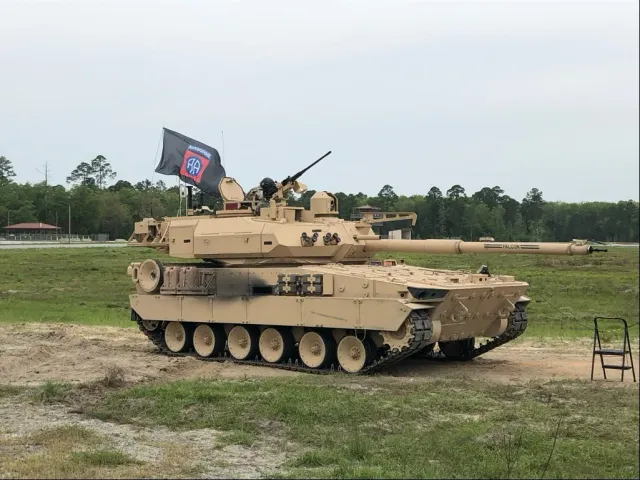
Main battle tank
M10 Booker (Griffin II / MPF)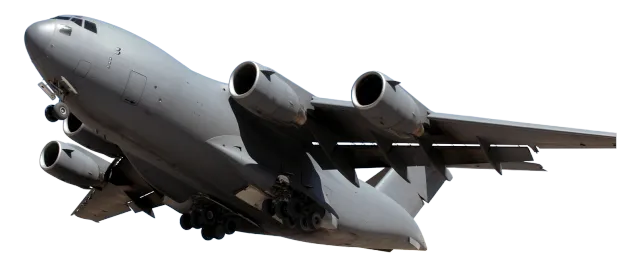
Transport & tanker
C-17 Globemaster III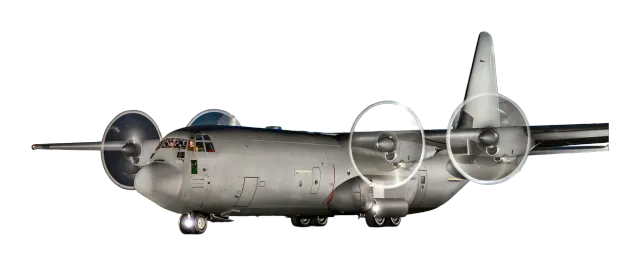
Transport & tanker
C-130J Super Hercules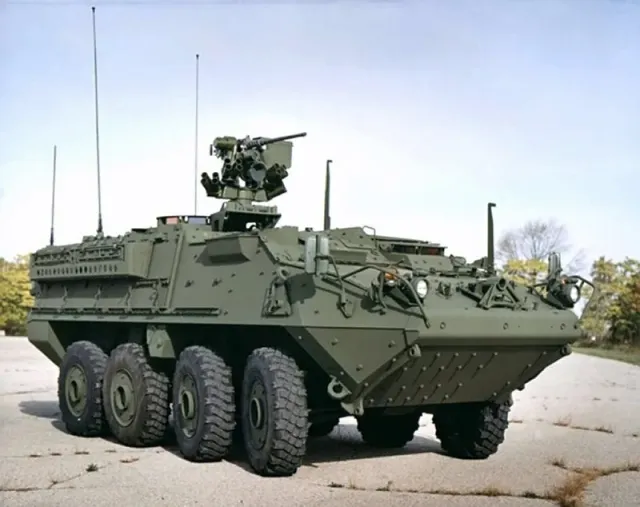
IFV / APC
M1126 Stryker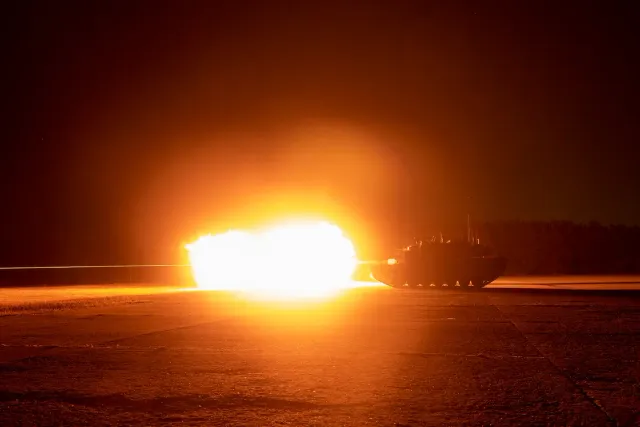
Main battle tank
M1A2 SEP v3 Abrams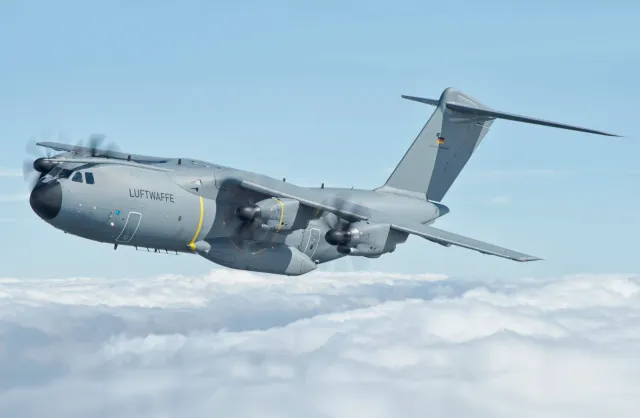
Transport & tanker
A400M AtlasFrequently asked questions
What is the C-17 Globemaster III's maximum payload? +
77,519 kg (170,900 lb), per the aircraft's WeaponSpecs database entry. That is enough to carry any single tank or IFV in the WeaponSpecs database on its own, including the heaviest, the 70,000 kg Leopard 2A8, with 7,519 kg of margin left over.
Why was the M10 Booker canceled? +
The Army ended its Mobile Protected Firepower program on May 5, 2025 after spending more than $2.6 billion, citing weight growth that broke the vehicle's original transport plan. At a recorded 40,000 kg combat weight, two Bookers together exceeded the C-17's payload limit, so the Air Force could only certify one vehicle per sortie instead of the planned two, cutting the program's airlift throughput in half.
Does this analysis account for cargo-bay space, not just payload weight? +
No, and that is the key limit on what this piece can claim. Every number here is a payload-weight check only. Real load planning also needs cargo-bay length, width, height, ramp angle, and tie-down point layout, none of which the WeaponSpecs database currently tracks. A vehicle can clear every weight threshold in this piece and still fail to physically fit or load safely without that additional data.
Which vehicle in the database comes closest to failing a C-130J's payload limit? +
The M1126 Stryker, and by design. It weighs 19,000 kg against the C-130J's 19,051 kg payload, a margin of about 51 kg, roughly 0.3 percent. The Army's original Interim Brigade Combat Team requirement was written around C-130 transportability, and the production Stryker landed almost exactly on that line.
How many tanks and IFVs in the WeaponSpecs database exceed a C-17's payload limit? +
Zero. All 133 systems tagged as a tank or IFV with a recorded combat weight, from the 2,750 kg Wiesel to the 70,000 kg Leopard 2A8, fit under the C-17's 77,519 kg limit individually. What killed the Booker program was never a single vehicle failing to fit an aircraft. It was two of them needing to fit at once.
Related reading


