DARPA Wants a Cheaper, Faster Hypersonic Cruise Missile
DARPA's new RFI seeks a scramjet cruise missile sustaining Mach 5-plus across 250 to 2,000 nautical miles, affordable enough to mass-produce for a peer fight.
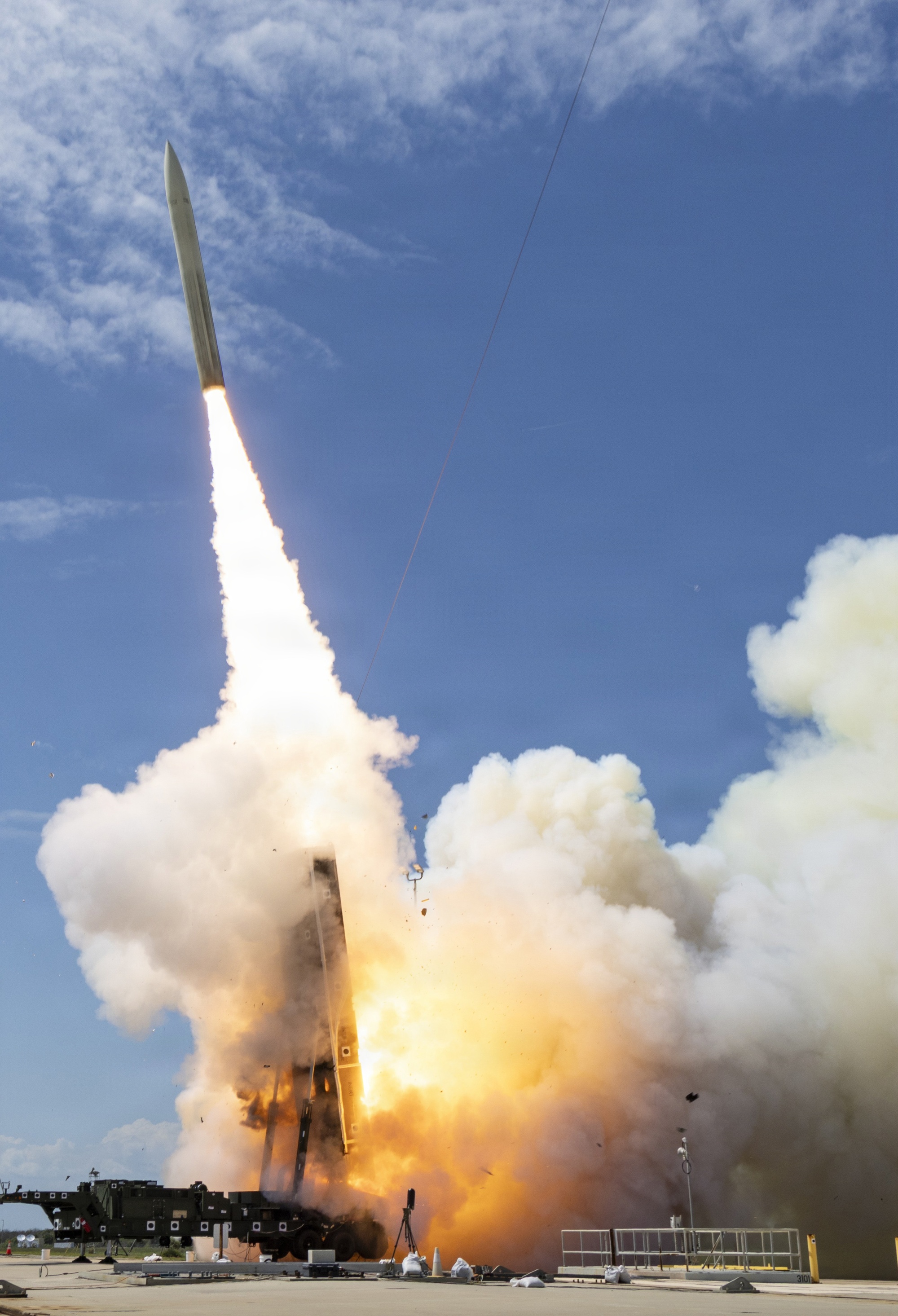
Darrell Ames, DVIDS, DoD public domain.
DARPA issued a Request for Information on Aug. 7 seeking industry concepts for a Next Generation Hypersonic Cruise Missile, an air-breathing scramjet weapon meant to sustain Mach 5-plus across 250 to 2,000 nautical miles while costing far less to build than the exquisite hypersonic programs the Pentagon has funded over the past decade.
A requirement document, not a missile
The RFI comes from DARPA’s Tactical Technology Office and carries an Oct. 6, 2026 response deadline, with an industry day scheduled for September in Arlington, Virginia, according to DefenseScoop. Nothing about NGHCM exists as hardware today. The document lays out performance goals, scramjet propulsion sustaining Mach 5 or faster, a range window of 250 to 2,000 nautical miles (roughly 460 to 3,700 kilometers), and packaging flexible enough to fit inside a fighter’s internal weapons bay in some configurations or scale up for external carriage on a bomber, according to Breaking Defense. No named DARPA official has attached a personal quote to the program in any outlet’s reporting to date; every technical detail here traces directly to the RFI’s own language as relayed by the four outlets cited.
The word doing the most work is “unconstrained”
DARPA’s language breaks from how the agency has typically pitched hypersonic work. The RFI asks explicitly for “unconstrained, radical new subsystem concepts,” covering novel propulsion architectures, high-energy-density fuels and thermal management approaches, rather than incremental upgrades to existing scramjet designs, per Stars and Stripes. The document goes further, calling legacy hypersonic manufacturing approaches “too expensive and complex to produce at the scale required for peer conflict,” and it strongly encourages non-traditional defense contractors and emerging technology firms to respond alongside the usual primes. DARPA also wants what it calls an “optimized, accelerated schedule,” explicit language contrasting with what the RFI itself terms “traditional, sluggish acquisition.” The rationale ties back to a specific outside analysis: the RFI references an October 2025 Atlantic Council report on operating in “highly contested environments,” pointing to the spread of increasingly capable adversary integrated air defense systems as the reason a faster, cheaper strike option matters now.
Russia's 3M22 Zircon (Mach 9) and China's YKJ-1000 (Mach 7-plus) figures are state claims that have not been independently verified, while Tomahawk Block V's Mach 0.74 shows the performance gap NGHCM is meant to close for the United States, if its Mach 5-plus target survives from RFI to fielded hardware.
What the US doesn’t have today
The United States currently fields no affordable, air-breathing hypersonic cruise missile. Tomahawk Block V, the Navy’s workhorse long-range strike weapon at roughly $2 million per unit, tops out at Mach 0.74, subsonic by a wide margin. Prior American hypersonic efforts have mostly taken a different technical path and struggled regardless: the Air Force’s AGM-183A ARRW, a boost-glide rocket rather than a scramjet, went through a troubled test history and was ultimately curtailed. NGHCM’s emphasis on manufacturability over pure performance reads as a direct response to that history, an attempt to avoid building another exquisite weapon the Pentagon can only afford in small numbers.

Adversary numbers to treat with caution
Russia’s 3M22 Zircon is officially claimed at Mach 9 with a 1,000 km range, a figure that comes from Russian Ministry of Defense statements, a state claim, not independently verified, rather than confirmed third-party testing. China’s YKJ-1000 carries a similarly unverified claim of Mach 7-plus and 1,300 km range from state and press sources, also a state claim, not independently verified; no WeaponSpecs database slug exists for it because too little independently confirmed specification data has surfaced. Both numbers are useful as a rough sense of what adversaries say they are building, not as a benchmark DARPA or anyone else should treat as an established performance floor to beat.
Cost, not speed, is the open question
Nothing in the RFI commits DARPA to a program of record, a budget line, or a timeline beyond the October response deadline. What it commits to is a philosophy: that the next American hypersonic cruise missile needs to be something the Pentagon can build in quantity for a sustained conflict, not a boutique weapon fielded by the dozen. Whether “unconstrained, radical” propulsion and fuel concepts from non-traditional contractors can actually deliver Mach 5-plus performance at Tomahawk-like production economics is exactly the question industry now has until October to answer on paper, well before any prototype exists to test it against.
Sources
- Pentagon innovation agency wants faster, more nimble hypersonic cruise missile — Stars and Stripes, Aug 14, 2026
- DARPA seeks 'unconstrained, radical' concepts for next-gen hypersonic cruise missile — Breaking Defense, Aug 12, 2026
- DARPA looking to develop 'foundation' of next-generation hypersonic missile work — DefenseScoop, Aug 10, 2026
- DARPA Eyes Next-Gen Hypersonic Cruise Missile Demo Program — Air & Space Forces Magazine, Aug 11, 2026
Systems mentioned
Every system named in this story, with its photo and, where available, a video. Tap a card to open the full spec sheet.
Compare these side by side →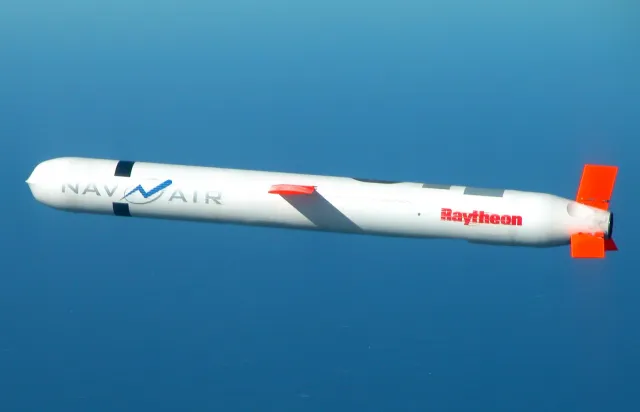
Missile
Tomahawk Block V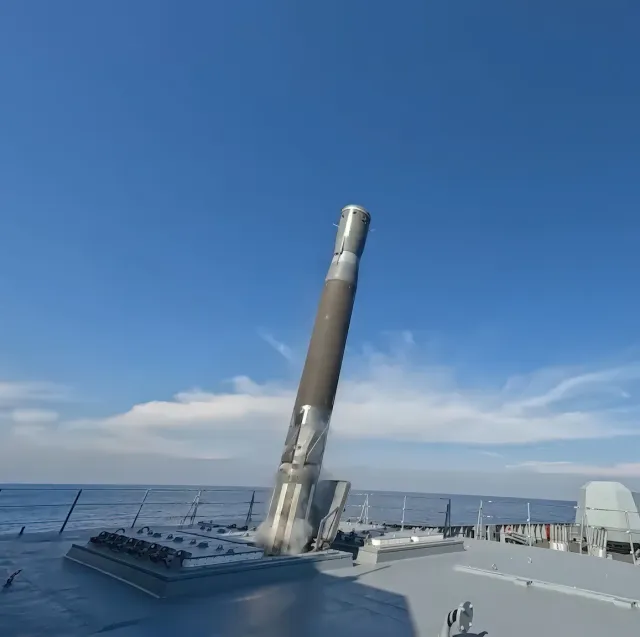
Missile
3M22 ZirconFrequently asked questions
What is NGHCM? +
The Next Generation Hypersonic Cruise Missile, an air-breathing scramjet cruise missile concept DARPA's Tactical Technology Office issued a Request for Information on Aug. 7, 2026. It exists only as a paper requirement right now, no prototype or hardware has been built.
What speed and range is DARPA asking for? +
Sustained Mach 5-plus propulsion with a range of 250 to 2,000 nautical miles, roughly 460 to 3,700 kilometers, small enough in some configurations to fit inside a fighter's internal weapons bay or scaled up for external carriage on bombers.
Why does DARPA want a cheaper design instead of a faster one? +
The RFI explicitly calls legacy hypersonic manufacturing approaches too expensive and complex to produce at the scale a peer conflict would require. After years of exquisite but unaffordable programs like the AGM-183A ARRW, DARPA is prioritizing manufacturability and unit cost alongside speed.
When are responses due and who can bid? +
Responses are due Oct. 6, 2026, with an industry day planned for September in Arlington, Virginia. DARPA is explicitly encouraging non-traditional defense contractors and emerging technology firms, not just the established primes, to submit 'unconstrained, radical' subsystem concepts.
More news


