Army Tests Driverless Launcher That Swaps Missiles Mid-Mission
DeepFires let soldiers fire a 1,600km Tomahawk, then reload the truck for Patriot air defense, no crew aboard, in Army tests through late July.

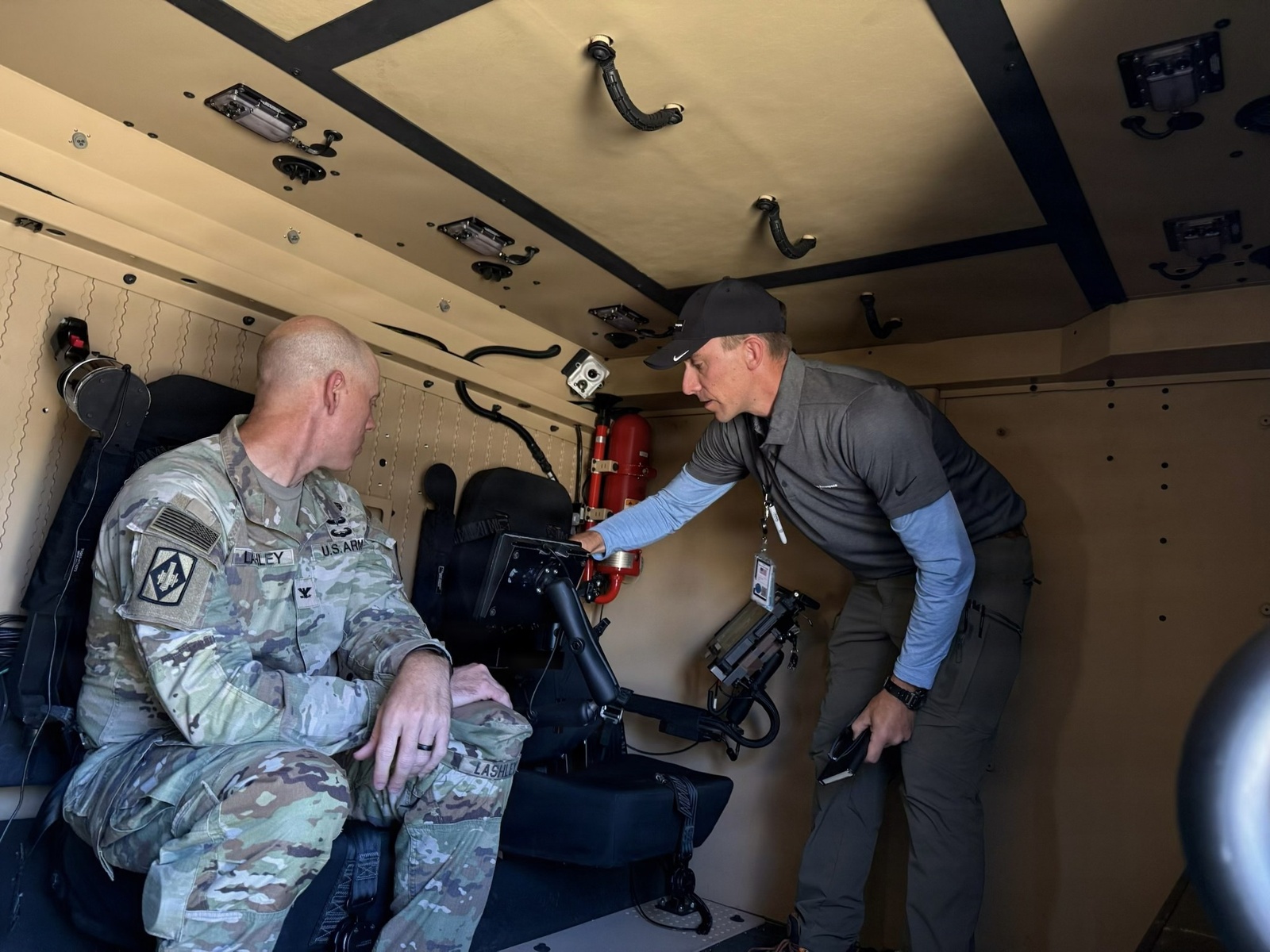
U.S. Army photo by Maj. Abner J. Gonzalez, DVIDS, Public Domain
A US Army field battalion spent nine days at Fort Irwin, California, testing a truck-mounted launcher that drives itself to a firing position, fires either a long-range cruise missile or an air-defense interceptor, and repositions with no soldier aboard for the exposed portions of the mission. The system, called DeepFires and built by RTX subsidiary Raytheon with three other contractors, was evaluated by 2nd Battalion, 18th Field Artillery Regiment during Project Convergence Capstone 6 from July 15 to July 24, 2026.
What was tested, and by whom
DeepFires is built by Raytheon, the RTX subsidiary, working with Forterra for the autonomous-driving software, Oshkosh Defense for the FMTV A2 6x6 truck chassis, Corvid Technologies, and Collins Aerospace, according to Army Recognition’s reporting on the evaluation. The unit that ran the field test, 2nd Battalion, 18th Field Artillery Regiment of the 75th Field Artillery Brigade, exercised the launcher at the National Training Center as part of Project Convergence Capstone 6, the Army’s recurring experimentation event, over a nine-day window in mid-to-late July. The Army’s own account of the event, published August 1 by DVIDS, describes the launcher alongside a robotic ammunition resupply vehicle and a manned JUMPS C2 command vehicle, short for Joint Unmanned Autonomous System Multi-Payload System Command and Control. Under Secretary of the Army Michael Obadal and Army Futures Command leadership visited the unit on July 24 to observe the test directly.
The launcher can carry either Tomahawk cruise missiles for long-range strike or Patriot interceptors for air defense on the same chassis, without a soldier riding aboard for the drive, emplacement, firing or repositioning sequence. That reconfigurability is the point: rather than building and crewing two separate dedicated launcher fleets, one for offense and one for air defense, the Army is testing whether a single production line and a single crew-training pipeline can cover both roles. The Army’s stated future goal, per the DVIDS release, is one manned JUMPS C2 vehicle eventually controlling up to four autonomous launchers plus resupply vehicles simultaneously, a substantial multiplier on how much firepower a small crew can direct at once if the concept scales past this early testing.
“This is a tremendous capability and it allows leaders to provide a higher quality training to the Soldiers with increased ROI. Now Section Chiefs can theoretically plan for, operate, and supervise multiple launchers from one JUMPS C2 vehicle,” said Maj. Abner Gonzalez, executive officer, 2nd Battalion, 18th Field Artillery Regiment, 75th Field Artillery Brigade (DVIDS, Aug. 1, 2026).
Why the Army wants the crew off the vehicle
The push to remove soldiers from the launcher itself is a direct lesson from Ukraine, where counter-battery radar and loitering munitions have made it increasingly dangerous for an artillery crew to remain near their launcher after firing. DeepFires answers that by handling the highest-risk portions of the mission, the drive to a firing position, emplacement, the shot itself, and repositioning, without anyone aboard, while keeping a human in a separate, less-exposed JUMPS C2 vehicle in charge of the actual engagement decision. That division, autonomy for the dangerous physical tasks and a human for the targeting authority, is what the Army calls its Human-Machine Integration concept, and this test was framed explicitly as validating it under field conditions rather than in a lab. Two more soldiers who took part in the exercise, per DVIDS, spoke to the same shift in role: 2nd Lt. Elizabeth Jones, a platoon leader with 2-18 FA, said having the chance to “affect the future of artillery in such a meaningful way by integrating technology that will save Soldiers’ lives feels amazing,” while Staff Sgt. Baylee Hopper, a section chief with the unit, described the change more plainly: “It essentially removes our role from the equipment physically altogether, and all we need to think about is how to emplace the equipment.”
The system’s lineage runs back to March 2025, when Raytheon first showed a narrower single-missile version at an earlier Project Convergence event under the name DeepStrike, according to The War Zone’s coverage. The renamed and expanded DeepFires configuration adds the dual Tomahawk/Patriot payload flexibility and brings in Oshkosh, Forterra, Corvid and Collins as named partners, a broader industry team than the original demonstration used. Defence Blog’s reporting on the July field test frames it as the system having “passed” its evaluation, though neither that outlet nor any other source cited here specifies formal pass/fail criteria the Army applied.
A prototype, not a program
It is worth being precise about what this test does and does not represent. DeepFires has no contract award, no disclosed unit cost, and no announced production timeline in any source reviewed for this story. This was a soldier-touchpoint evaluation inside a recurring experimentation exercise, not a fielding decision or a program-of-record milestone, and none of the coverage claims otherwise. The two payload roles the launcher demonstrated sit at very different scales: Tomahawk’s published strike range runs to roughly 1,600 kilometers, while Patriot’s engagement range tops out around 60 kilometers, a roughly 27-fold gap that reflects two entirely different mission sets, deep strike against fixed targets far behind enemy lines versus intercepting inbound aircraft or missiles close to the defended area, sharing one vehicle rather than one performance envelope.
Sources
- U.S. Army Evaluates DeepFires Autonomous Launcher for Future Long Range Precision Fires — Army Recognition
- Autonomous Launchers Make Impact As Army Requirements Grow — The War Zone
- 75th Field Artillery Brigade Leads Continuous Transformation at Project Convergence — DVIDS / U.S. Army, Aug 1, 2026
- Raytheon's autonomous launcher passes major U.S. Army field test — Defence Blog
Systems mentioned
Every system named in this story, with its photo and, where available, a video. Tap a card to open the full spec sheet.
Compare these side by side →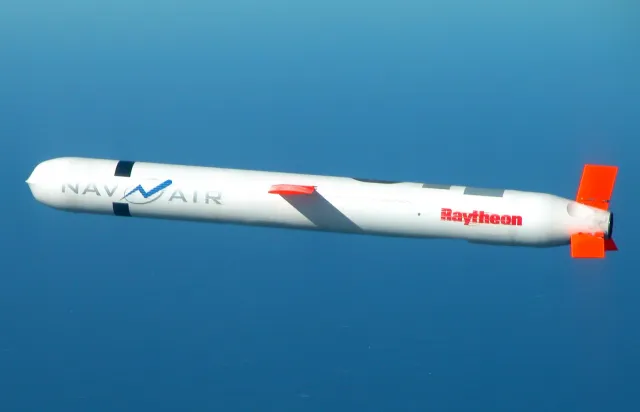
Missile
Tomahawk Block V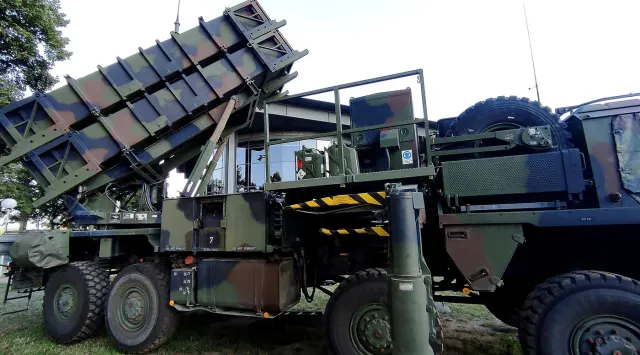
Air defense system
Patriot PAC-3Frequently asked questions
Is DeepFires actually driving itself with no one aboard? +
Yes, for the highest-risk tasks: driving to position, emplacing, firing and resupply run on Forterra's autonomous-driving system aboard an Oshkosh truck chassis. A human command element in a separate JUMPS C2 vehicle still holds authority over the actual fire decision.
Can one launcher really fire both a cruise missile and an air-defense interceptor? +
Yes. It is a modular launcher that reconfigures between Tomahawk cruise missiles for long-range strike and Patriot interceptors for air defense, rather than a dedicated single-role vehicle built for only one mission.
Is this a real Army program with a contract, or still experimental? +
Still experimental. No source reports a program-of-record decision, a contract award, or a disclosed production unit cost. This was a soldier-touchpoint field evaluation during a training exercise, not a fielding announcement.
Why does the Army want fewer soldiers physically on the launcher? +
Counter-battery radar and loitering munitions have made it increasingly dangerous for a crew to stay with a rocket launcher after firing. Removing the crew from the vehicle for the most exposed parts of the mission cuts casualty risk while a human still makes the actual engagement decision from a safer position.
More news


