Senate Passes Graham's Russia Sanctions Bill, 86-11
The Senate's bipartisan 86-11 vote targets Russia's defense-industry supply chains and shadow-fleet oil sales, with tariffs up to 100% on Russian energy buyers.

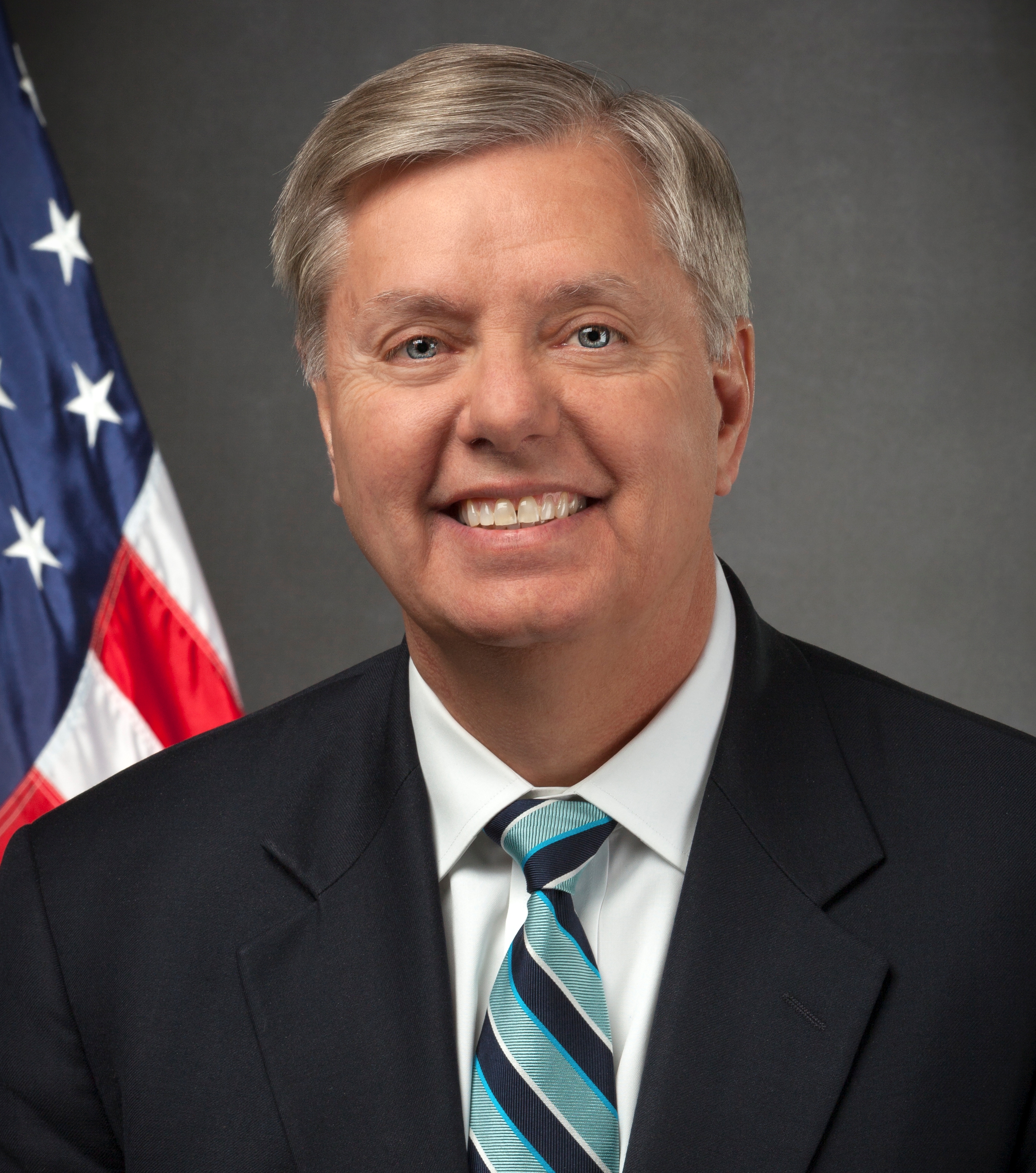
Architect of the Capitol, via Wikimedia Commons, public domain
The Senate passed a sweeping Russia sanctions bill by an 86-11 vote on Friday, Aug. 7, a bipartisan supermajority that eluded the legislation for roughly a year and a half until its chief author, Sen. Lindsey Graham, died suddenly weeks after finally striking a deal with the White House to move it. The bill, informally named for Graham, targets the supply chains behind Russia’s defense industry and the shadow fleet of tankers that moves its sanctioned oil, and gives the president authority to impose tariffs on the countries that keep buying that oil anyway.
A rare 86-11 margin, after 18 months of nothing
The vote itself is the headline number, but the margin is what makes it notable. Eighty-six votes is more than enough to override a presidential veto, and only 11 senators voted no, a level of bipartisan agreement that Washington rarely produces on any Russia-related legislation this far into the war. The bill had been effectively stalled since early 2025, caught between competing views in the Senate over how aggressively to tie the White House’s hands on tariff policy while diplomatic talks with Moscow continued on and off.
A companion effort to weaken the bill failed by a wider margin than the bill itself passed by. Sens. Rand Paul (R-Ky.) and Ron Wyden (D-Ore.), an unusual ideological pairing, offered an amendment to strip out the tariff authority entirely, arguing it handed the executive branch too much unilateral trade power. It was rejected 32-64, a signal that the Senate wanted the tariff leverage in the bill, not just the sanctions.
What the bill actually authorizes
The mechanism is broader than a simple sanctions list. It authorizes penalties on individuals and institutions, in Russia and in other countries, that support Russia’s defense programs, its energy industry, or its sanctions-evasion networks, explicitly naming the shadow fleet of tankers that has let Russian oil keep moving around Western price caps since 2022. Separately, it gives the president authority to impose tariffs on the world’s top five purchasers of Russian oil and gas, a list that explicitly includes China and India, with an exemption for any country importing less than 15% of its gas from Russia. Outlets differ on the tariff ceiling itself, some report a cap as high as 100%, others as high as 200%, and rather than pick one, both figures are reported here because the underlying bill text has not been independently reconciled against both claims.
Sen. Richard Blumenthal (D-Conn.), who co-authored the bill with Graham after the two senators traveled to Ukraine together, framed the vote as a direct message to Moscow:
“Today we say to the people of Ukraine, you are not alone. And we say to Vladimir Putin, you will not conquer Ukraine,” said Sen. Richard Blumenthal (D-Conn.) (Roll Call, Aug. 7, 2026).
Sen. Raphael Warnock (D-Ga.) was blunter about the target: “Putin is a war criminal, and his war machine must be stopped,” he said, though Warnock had also pushed back on the tariff provisions specifically, arguing senators “should not have to choose between putting a check on Putin’s aggression and putting a check on this president’s tariff regime.” His support ultimately came after US Trade Representative Jamieson Greer gave him a written commitment that the administration would implement the tariff authority lawfully, as written, rather than stretch it beyond the bill’s text.
Why a stalled bill moved now
The proximate cause of this week’s vote is not hard to trace. Graham, the bill’s chief architect and one of the Senate’s most persistent voices for tougher Russia sanctions, died suddenly on July 11, one day after announcing that he and the White House had finally reached a deal to revive the long-stalled legislation. Public reporting has pointed to a likely aortic tear as the cause. A bipartisan group of senators reached the agreement that actually unstuck the bill on July 28, roughly two and a half weeks after his death, and named the resulting legislation for him. The timing matters for understanding why this bill passed now rather than at any point in the previous year and a half: it took both a genuine White House concession on the tariff structure and the symbolic weight of finishing what its author had just died having negotiated.
What happens next, and what this complements
The bill’s path forward is not guaranteed. The House is in recess until Aug. 31 and has not signaled whether it will take up this version. The chamber already passed a narrower Russia sanctions bill in June, one without the Senate’s tariff authority, and Rep. Gregory Meeks (D-N.Y.) has voiced opposition specifically to the Senate’s tariff provisions, setting up a real reconciliation fight whenever the House returns.
The bill is worth reading alongside WeaponSpecs’ own Aug. 9 coverage of the Pentagon’s production-acceleration memo, which covers the supply-side scramble inside the US defense industrial base to rebuild interceptor stockpiles. That story and this one are not the same development, but they sit on opposite sides of the same conflict: one is about arming Ukraine and restocking US inventories faster, the other is about squeezing the revenue and supply chains that keep Russia’s own war machine funded and supplied.
Sources
- Long-stalled Russia sanctions bill passed by Senate — Roll Call, Aug 7, 2026
- Senate passes Russia sanctions bill named in honor of the late Sen. Lindsey Graham — CNN, Aug 7, 2026
- Senate passes sweeping Russia sanctions bill negotiated by the late Sen. Lindsey Graham — PBS NewsHour, Aug 7, 2026
Frequently asked questions
What does this bill do to Russia's defense industry? +
It authorizes sanctions on individuals and institutions, in Russia and elsewhere, that support Russian defense programs, energy exports, or sanctions evasion such as the shadow tanker fleet used to move Russian oil around Western price caps.
Will it become law soon? +
Not immediately. The House is in recess until Aug. 31 and has not signaled whether it will take up this Senate version, which is broader than the narrower bill the House already passed in June.
Why is the bill named after Lindsey Graham? +
Graham championed tougher Russia sanctions for years and had just struck a deal reviving the stalled bill with the White House when he died suddenly on July 11, 2026, one day after announcing it.
What tariffs could this trigger? +
Tariffs on the world's top five buyers of Russian oil and gas, explicitly including China and India. Sources differ on whether the ceiling is 100% or 200%, so both figures are reported here rather than picking one.
More news


