Zero of Anduril's 23 Systems Publish a Price
Anduril's 23 database entries span 8 of WeaponSpecs' 23 categories, matching decades-old primes in reach, but none of the 23 publish a price.

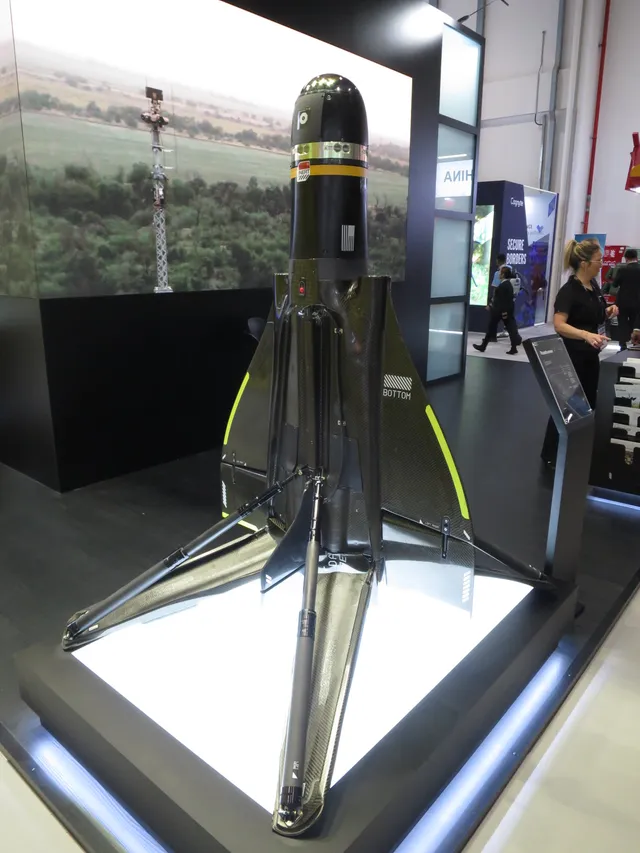
Mztourist, CC BY 4.0, via Wikimedia Commons, Anduril Roadrunner at IDEX 2025
Anduril Industries has 23 systems catalogued in the WeaponSpecs database, spanning eight of the database’s 23 systemType categories, a breadth that ties century-old primes Leonardo and Northrop Grumman. Of those 23 systems, zero publish a unit cost. Every other major prime we checked discloses a price for at least some of its catalogued systems, at rates from 11 percent to 68 percent. The gap isn’t a hole in our data, it’s a structural fact about how Anduril is contracted: mostly fixed-price and Other Transaction Authority (OTA) deals, a model built to sidestep the cost-plus reporting pipeline that puts a unit cost on legacy programs of record in the first place.
How many of the database’s 23 categories does Anduril’s product line actually span?
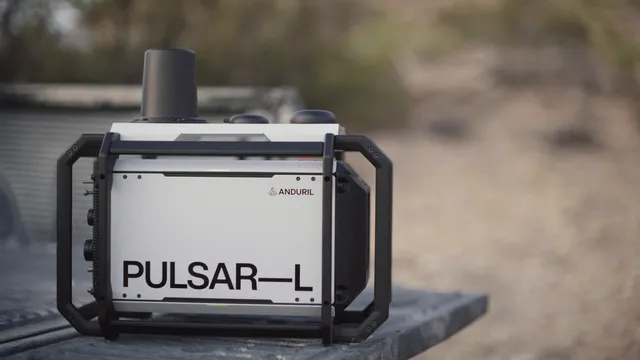
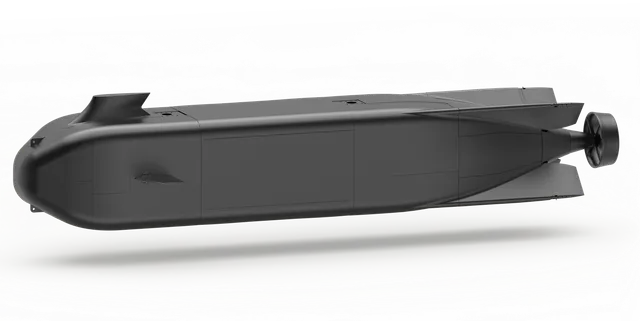
Eight. Roadrunner-M sits in air defense, Pulsar in electronic warfare, Barracuda-500M in missiles, Lattice in software, three Dive-series craft in the submarine category (more on that label below), seven products in a category called subsystem, and six drones and aircraft in uav. That’s eight of the 23 systemType buckets the database uses to sort 1,143 systems, and it puts Anduril in a tie for fifth-broadest reach of any brand on the site, behind only BAE Systems, Boeing, Saab, and Lockheed Martin.
| Brand | Systems in DB | Categories spanned | Avg. release year | Unit-cost disclosure |
|---|---|---|---|---|
| BAE Systems | 26 | 11 | 2004 | 19% (5/26) |
| Boeing | 36 | 10 | 1998 | 64% (23/36) |
| Saab | 17 | 9 | 2003 | 29% (5/17) |
| Lockheed Martin | 31 | 9 | 2010 | 68% (21/31) |
| Leonardo | 15 | 8 | 2001 | 27% (4/15) |
| Northrop Grumman | 14 | 8 | 2001 | 43% (6/14) |
| Anduril | 23 | 8 | 2023 | 0% (0/23) |
| Rheinmetall | 19 | 7 | 2002 | 11% (2/19) |
The “so what” here isn’t just that Anduril shows up in eight columns instead of two or three. It’s who it’s standing next to. BAE Systems, Boeing, Saab, and Lockheed Martin all trace back 30-plus to over 100 years, through constituent companies founded between the late 19th and early 20th centuries. Anduril was founded in 2017. A procurement officer comparing Anduril’s category footprint to Leonardo’s or Northrop’s isn’t comparing two similarly-built companies, they’re comparing a nine-year-old firm against firms that had roughly a century’s head start to diversify their catalogues.
How fast did it get there?
Anduril’s average system release year across its 23 catalogued entries is 2023. Every other brand in the table above averages somewhere between 1998 and 2010. That’s not a small gap, it means the typical Anduril product in this database is younger than most legacy primes’ newest single offering, not their oldest.
Zoom in further and the pattern gets sharper: of Anduril’s 23 systems with a published release year, 67 percent launched in 2024 or later. The next-highest brand on that same measure is BAE Systems, at 16 percent. No other prime in the comparison set comes close. Anduril isn’t diversifying slowly across a long product history, it’s stacking new categories in a compressed window of two or three years.
The clearest evidence of that speed is a category that didn’t exist eight months ago. WeaponSpecs added a “subsystem” systemType in July 2026 to hold thin-spec hardware, C4 kits, edge-compute nodes, wearables, passive sensors, undersea nodes, that didn’t fit the site’s existing comparison-tool categories built around platforms like tanks, aircraft, or missiles. All seven systems currently filed under it are Anduril products: EagleEye, Menace-I, Menace-T, Menace-X, Seabed Sentry, Voyager Gateway 1, and Wisp. Zero non-Anduril systems occupy that category. One of WeaponSpecs’ 23 taxonomy buckets exists, structurally, because of a single company’s product line, and that line is barely two years old on average.
The full Anduril catalogue
| Model | Category | Status | Release year | Price published? | Operators |
|---|---|---|---|---|---|
| Roadrunner-M | air-defense | active | 2,023 | No | 1 |
| Pulsar | electronic-warfare | active | 2,024 | No | - |
| Barracuda-500M | missile | active | 2,024 | No | 1 |
| Sentry Tower | other | active | 2,018 | No | - |
| Spark | other | active | 2,025 | No | - |
| Spyglass | other | active | 2,025 | No | - |
| Lattice | software | active | 2,018 | No | - |
| Dive-LD | submarine (UUV) | active | 2,022 | No | - |
| Copperhead | submarine (UUV) | active | 2,025 | No | - |
| Dive-XL | submarine (UUV) | active | 2,025 | No | - |
| EagleEye | subsystem | announced | 2,025 | No | - |
| Seabed Sentry | subsystem | announced | 2,025 | No | - |
| Voyager Gateway 1 | subsystem | active | 2,026 | No | - |
| Menace-I | subsystem | active | - | No | - |
| Menace-T | subsystem | active | - | No | - |
| Menace-X | subsystem | active | - | No | - |
| Wisp | subsystem | active | - | No | - |
| Anvil | uav | active | 2,021 | No | - |
| Ghost-X | uav | active | 2,022 | No | - |
| Bolt-M | uav | active | 2,024 | No | - |
| Omen | uav | active | 2,025 | No | 1 |
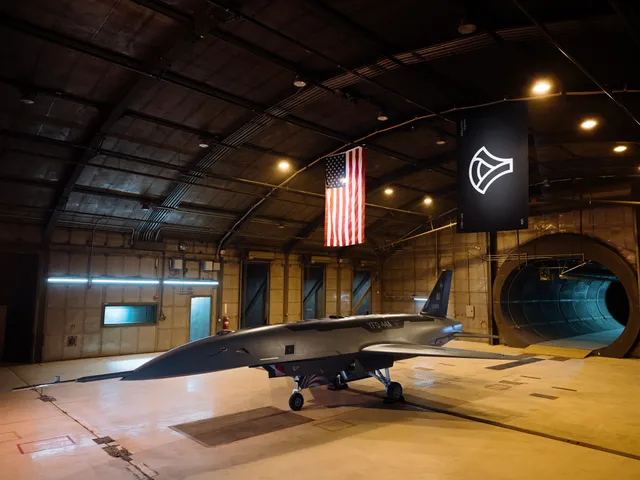
| Fury (YFQ-44A) | uav | announced | 2,025 | No | 1 |
| ALTIUS-600 | uav | active | - | No | - |
Worth flagging directly: the “submarine” systemType label on Dive-LD, Copperhead, and Dive-XL is a database taxonomy shorthand, not a literal description. These are uncrewed underwater vehicles (UUVs), not crewed submarines, and the table above is noted that way so nobody reads three entries as a crewed undersea fleet that doesn’t exist. It’s the same kind of category-blending the database applies elsewhere, and it’s worth checking before citing any single row.
So why can’t you find a single Anduril unit price?
Every other prime in this analysis publishes a price for at least some fraction of its catalogue. Anduril publishes one for none of its 23.
Even Rheinmetall, the lowest of the seven legacy primes, still discloses a price on roughly 1 in 9 catalogued systems. Anduril discloses on none.
The reason isn’t secrecy for its own sake, it’s the contracting structure underneath. Legacy primes’ public unit costs mostly come from cost-plus contracts and programs of record, where the Federal Acquisition Regulation requires certified cost or pricing data that eventually surfaces in budget documents, GAO reports, and congressional testimony. Anduril has deliberately built its business around fixed-price agreements and Other Transaction Authority deals instead, contracting tools designed to move fast and reward efficiency rather than generate a paper trail of cost breakdowns.
“It very rarely incentivises the right behaviour, and often penalises those who figure out how to cut timelines and do things more efficiently,” said Palmer Luckey, Anduril founder, on why the company avoids traditional cost-plus Pentagon contracts (Janes Defence Intelligence, Pat Host, 6 October 2020).
That’s the mechanism, not an excuse. A cost-plus program generates a unit cost as a byproduct of how it’s priced and audited. A fixed-price or OTA prototype agreement doesn’t produce that same paperwork, so there’s no public number for a WeaponSpecs entry, or any other public tracker, to cite in the first place.
Does that mean Anduril’s spending is secret?
No, and this distinction matters for anyone benchmarking the company. In March 2026, the U.S. Army awarded Anduril a $20 billion enterprise agreement for Lattice AI deployment. That figure is real, public, and large. It’s also a total contract ceiling, not a per-unit price attached to any of the 23 systems in the table above. Total spend and per-unit cost answer different questions, and conflating them is exactly the mistake this database’s own zero percent figure is meant to prevent.
The opacity at the per-unit level isn’t purely Anduril’s choice, either. A House proposal in the FY2026 NDAA would have required Pentagon reporting on OTA follow-on agreements, the exact contracting vehicle Anduril and similar firms lean on. It did not make it into the final bill. Congress had a live opportunity to close part of this reporting gap in the last budget cycle and passed on it, which means the structural information gap documented here is current policy, not an oversight anyone is actively fixing.
What does this mean for whoever has to write the requirement?
Benchmarking Anduril against a legacy prime on unit cost doesn’t currently work, because the number doesn’t exist in public form for any of its 23 catalogued systems. Benchmark instead against what is actually disclosed: total contract ceilings like the $20 billion Army agreement, delivery cadence, and operator counts where published (three of Anduril’s 23 systems show one, a thinner signal than price but a real one).
Expect that to shift over time, not stay this way forever. Unit costs tend to surface once a fixed-price or OTA prototype converts into a formal program of record, where FAR cost-reporting obligations start to apply. Watching which Anduril systems, Lattice and Roadrunner-M are furthest along, make that transition is a better predictor of real per-unit numbers than waiting on a voluntary disclosure the company’s contracting model was built to avoid.
Compare Anduril’s catalogued systems directly against legacy primes in the Compare tool, browse the full Anduril brand page, or read more on the database’s price-disclosure patterns in Why Only 22% of Weapons Publish a Price and Which Military C2 Systems Actually Speak Link 16?.
Sources
Systems in this comparison
Every system covered above, with its photo and, where available, a video. Tap a card to open the full spec sheet.
Compare these side by side →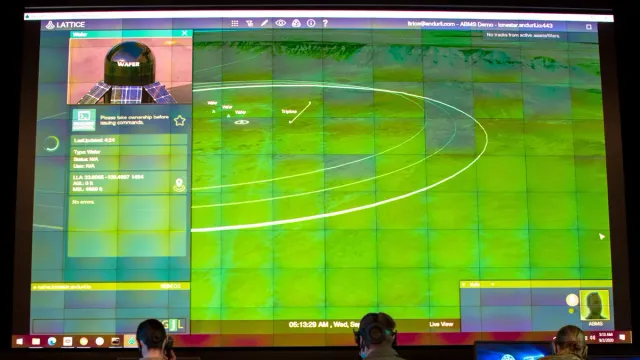

Frequently asked questions
How many system categories does Anduril span in the WeaponSpecs database? +
Anduril's 23 catalogued systems span eight of the WeaponSpecs database's 23 systemType categories, tying Leonardo and Northrop Grumman and trailing only BAE Systems, Boeing, Saab, and Lockheed Martin, each of which built that reach over multiple decades.
Why doesn't Anduril publish unit prices for its products? +
Anduril builds mostly on fixed-price and Other Transaction Authority (OTA) contracts rather than the traditional cost-plus model that generates the disclosed per-unit costs seen on legacy programs of record. Founder Palmer Luckey has said cost-plus contracting rarely incentivizes efficient work, explaining the company's preference for a structure that does not carry the same public cost-reporting requirements.
Is Anduril's contract spending public even if unit prices aren't? +
Yes. The U.S. Army's $20 billion enterprise agreement with Anduril for Lattice AI deployment, awarded in March 2026, is public. That figure is a total contract ceiling, though, not a per-unit price for any of the 23 systems catalogued here, and the two are not the same disclosure.
Which legacy defense prime discloses the fewest unit prices? +
Among the primes examined, Rheinmetall has the lowest nonzero unit-cost disclosure rate, publishing prices for 2 of its 19 catalogued systems, or 11 percent. Anduril's own rate is lower still, at zero.
What is WeaponSpecs' 'subsystem' category and why was it created? +
WeaponSpecs added a subsystem systemType category in July 2026 to house thin-spec hardware, such as C4 kits, edge-compute nodes, and passive sensors, that didn't fit the site's existing comparison categories. All seven systems currently in it, EagleEye, Menace-I, Menace-T, Menace-X, Seabed Sentry, Voyager Gateway 1, and Wisp, are Anduril products.
Related reading


