State of the Arsenal 2026
An audit of WeaponSpecs' own 1,143-system database: zero records are independently verified, and the full catalogue is now downloadable as CSV.

Photo by Carol M. Highsmith, Public domain, via Wikimedia Commons
WeaponSpecs now tracks 1,143 defense systems from 42 countries, and as of this audit exactly zero of them carry the site’s own independent-verification flag. That is not a confession, it is the same skepticism this column applies to every manufacturer’s brochure number, turned on the database itself. The full dataset behind this piece, every record, every field, is now downloadable at /data/ as CSV or JSON, so none of the numbers below have to be taken on faith.
What’s actually in the database?
Air and land systems carry the catalogue: 393 air systems (34.4 percent) and 363 land systems (31.8 percent) together account for two out of every three records. Naval trails at 160 (14.0 percent), infantry at 127 (11.1 percent), multi-domain systems (missiles, C4ISR platforms that span more than one environment) at 82 (7.2 percent), and software, autonomy stacks and command-and-control platforms like Anduril Lattice or Shield AI Hivemind, at just 18 (1.6 percent).
That software slice is the tell. It is the newest category in the database and the smallest by a wide margin, but it is also the fastest-growing one this year, which says less about how few software-defined defense systems exist and more about how recently the industry has started publishing anything specific enough to catalogue. A fighter jet has had a public spec sheet for decades; a targeting-autonomy stack has had one for a few years at most.
Which countries build what’s tracked here?
By raw system count, the United States leads with 226 (19.8 percent), followed by Russia at 149 (13.0 percent), China at 100 (8.7 percent), Turkey at 82 (7.2 percent), Israel at 70 (6.1 percent), France at 62 (5.4 percent), Germany at 60 (5.2 percent), the United Kingdom at 46 (4.0 percent), South Korea at 43 (3.8 percent), and Iran at 38 (3.3 percent). Those ten countries account for the majority of the catalogue’s 42 total countries of origin.
But catalogue count answers “who builds the most systems we track,” not “whose systems actually reach the most militaries.” Only 710 of 1,143 systems (62.1 percent) publish an operator-country count at all, and among those that do, the reach leaderboard is entirely Cold War-era small arms: the AK-47 (Russia) leads at 106 operator countries, then Glock 17 (Austria) at 100, FN FAL (Belgium) and Uzi (Israel) tied at 90, AKM (Russia) and M240 (Belgium) tied at 80, Barrett M82 (US) and M249 SAW (Belgium) tied at 75, BM-21 Grad (Russia) at 60, and G3 (Germany) at 60.
A handful of rifle and machine-gun designs, most of them decades old, sit in more national armories than any fighter jet, tank, or air-defense system the database tracks ever will. Manufacturing volume and battlefield ubiquity run on an entirely different axis than R&D sophistication, and a buyer’s-guide mindset that only looks at frontier hardware misses where a design actually proliferates.
How much of the arsenal actually exists?
Status splits four ways: 994 systems (87.0 percent) are active, 97 (8.5 percent) are legacy, 51 (4.5 percent) are announced, and 1 (0.1 percent) is discontinued. The number that matters is the 4.5 percent: roughly 1 in 20 systems in the catalogue has never flown a sortie or fired a shot in service anywhere. It exists as a publicly disclosed program, a set of stated specifications, and nothing more.
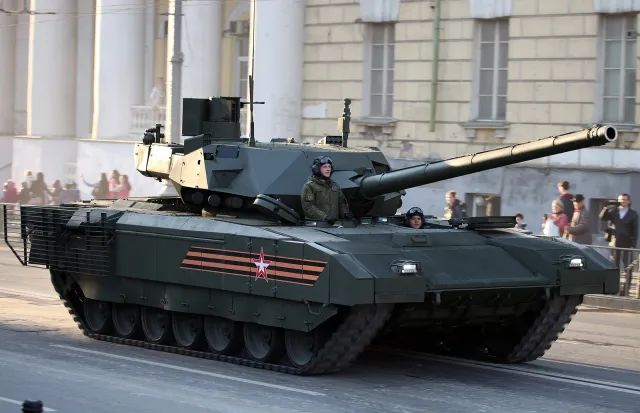
That group includes India’s AMCA fighter and Arjun Mk2 tank, Turkey’s GURZ air-defense system, Sweden’s A26 Blekinge-class submarine, and France’s Akeron LP/RCH170/RCX50 missile and UAV family. Russia’s T-14 Armata belongs on that list too, and our dedicated look at systems still announced, not fielded covers that specific case in depth. The point of the aggregate number here is broader than any one program: a spec sheet published before first delivery is a statement of intent, not a demonstrated capability, and a database that doesn’t flag the difference is quietly overstating what’s actually in the field.
How old is the hardware still in service?
884 of 1,143 systems (77.3 percent) publish a release year, spanning from 1933 to 2035, with a median of 2011. By decade: 1930s, 2; 1940s, 1; 1950s, 10; 1960s, 12; 1970s, 50; 1980s, 83; 1990s, 100; 2000s, 164; 2010s, 278; 2020s, 181; 2030s, 3.
Half the catalogue by release year postdates 2011, but the tail runs a full century deep. The oldest design still tracked is the Tokarev TT-33 pistol, fielded by Tula Arms in 1933, with the Browning Hi-Power (1935) and the AK-47 itself (1949) close behind, all three still in service decades after release. At the other end, the newest system in the catalogue does not exist operationally yet: the UK/Italy/Japan GCAP Tempest fighter carries a planned 2035 in-service date, alongside the UK’s Dreadnought and Hunter-class submarines and frigates at 2031.
How much of this can we actually verify?
Zero. Of 1,143 systems in the database, zero carry WeaponSpecs’ own verified: true flag as of this audit.
That number is the most important one in this piece, and it is not an embarrassment to bury. “Verified” on WeaponSpecs has a specific, deliberately high meaning: a record has been independently cross-checked against a second authoritative source beyond the original manufacturer or government citation. No system has cleared that bar yet, because clearing it honestly takes real analyst time, per system, and claiming it prematurely would be exactly the kind of unearned confidence this entire audit is arguing against. Every record still carries its own dataSource citation, visible on its page and now present in the downloadable CSV’s sourceUrl column, so nothing in the database is unsourced. It is simply not yet cross-verified, and the honest label for that state is zero, not a checkmark.
Full methodology, including how systems get added, sourced, and eventually would clear a verification bar, is at /methodology/. Readers who want to check sourcing themselves, at scale, can now do it directly against the CSV rather than trusting a badge.
How exposed is the catalogue to unverified state claims?
288 of 1,143 systems (25.2 percent) originate from Russia (149), China (100), Iran (38), or North Korea (1), the four origins WeaponSpecs’ own methodology flags for a mandatory state-claim caveat on manufacturer or government-published figures.
One in four records in the database needs that caveat applied somewhere in its spec sheet. That is not an accusation about any of the four countries, it is a structural feature of who controls the primary sourcing for those programs: state media, state-owned manufacturers, and no independent domestic press verifying a performance claim the way a NATO-market program gets vetted by trade press, competing bidders, and legislative budget oversight. This is a different problem from the verified-flag number above, and the two overlap only partially: a NATO-origin system can also be unverified simply because nobody has cross-checked it yet, and a state-claim-flagged system can, in principle, still carry a citation from a credible third party. The CSV lets a reader filter for both conditions independently rather than assuming one implies the other.
What is all this hardware actually for?
Systems can carry more than one application tag. The top ten by count: deep-strike, 202; infantry-combat, 197; anti-armor, 146; ISR, 133; air-defense, 125; close-air-support, 97; air-superiority, 81; multirole-combat, 44; anti-ship, 43; command-control, 24.
Strike and anti-armor roles dominate the tagging, and that’s worth reading carefully rather than at face value. It says as much about what WeaponSpecs has prioritized cataloguing, systems with clean, publishable performance specs tend to be strike-oriented hardware, as it does about actual global force structure or real-world procurement demand. A neutral census of “what militaries actually need” would need to weight by budget, by fielded quantity, and by doctrine, none of which this table does. Treat the ranking as a map of the catalogue, not a map of the battlefield.
Methodology and the download
Every figure here comes from WeaponSpecs’ own structured system records, compiled exclusively from public manufacturer, government, and reference sources, never classified or leaked data, the same ethos that governs every comparison this column publishes. The full dataset behind this analysis, all 1,143 records across roughly 65 fields, is downloadable at /data/ as CSV or JSON under a CC BY 4.0 license, with a data dictionary and a per-record source link in the sourceUrl column. Full sourcing and verification methodology is at /methodology/.
Any number here can be checked, recomputed, or extended by the reader against the raw file. If you’re comparing specific systems rather than auditing the whole catalogue, the comparison tool and the Advisor turn the same records into a side-by-side or requirements-driven search. Start with the download at /data/, it’s the same file this piece was built from.
Sources
Systems in this comparison
Every system covered above, with its photo and, where available, a video. Tap a card to open the full spec sheet.
Compare these side by side →
Main battle tank
T-14 Armata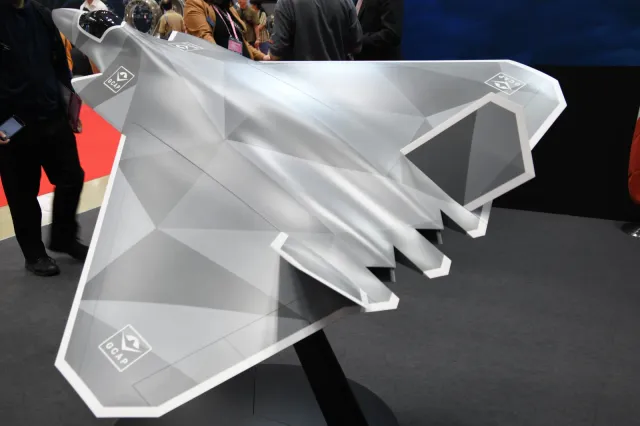
Fighter aircraft
GCAP Tempest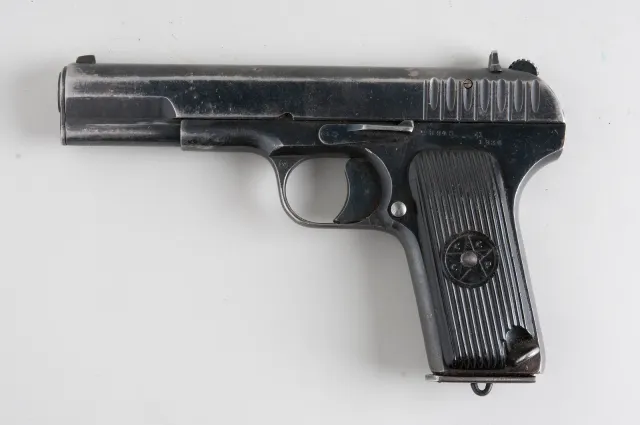
Pistol & sidearm
Tokarev TT-33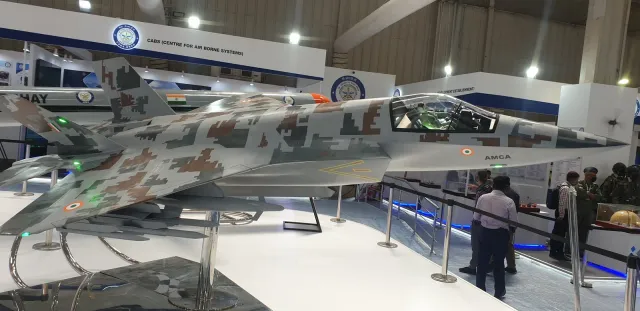
Frequently asked questions
How many systems are in the WeaponSpecs database? +
1,143 systems from 42 countries, as of this audit in August 2026. That spans air, land, naval, infantry, multi-domain, and software systems, cross-referenced from public manufacturer, government, and reference sources.
How much of the WeaponSpecs database is independently verified? +
Zero of 1,143 systems carry the site's verified:true flag as of this audit. That flag means a record has been independently cross-checked against a second authoritative source beyond the original citation, a high bar the site has deliberately not yet cleared for any record. It is not a bug, it is an honest accounting of work not yet done, and every record still carries its own sourced citation.
Can I download the WeaponSpecs database? +
Yes. The full dataset, all 1,143 records, is downloadable at /data/ as CSV or JSON under a CC BY 4.0 license, with a data dictionary and per-record source links.
How many systems in the database are still unfielded? +
51 of 1,143 (4.5 percent) carry status: announced, meaning the program has been publicly disclosed but has not yet entered service anywhere.
What share of the database rides on state-controlled figures? +
288 of 1,143 systems (25.2 percent) originate from Russia, China, Iran, or North Korea, the four origins WeaponSpecs' own methodology flags for a mandatory state-claim caveat on manufacturer or state-published figures.
Related reading


