Houthis Claim 8th Saudi Tanker Hit, Threaten Northern Red Sea Next
A ballistic-missile strike on the tanker Wafa off Yanbu marks the eighth Saudi vessel hit since Yemen's Houthis declared a blockade July 22.

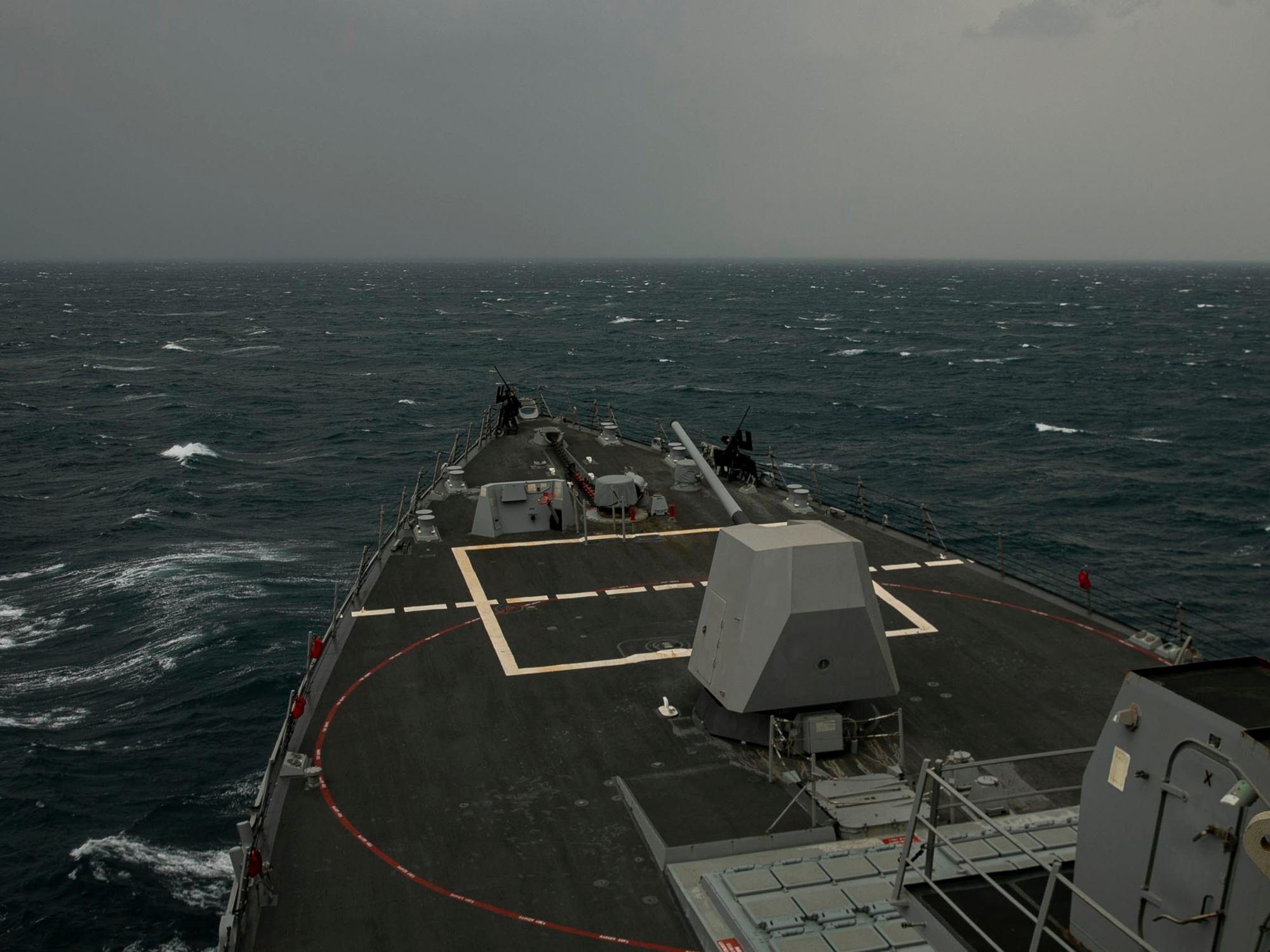
U.S. Navy photo by Petty Officer 1st Class Jonathan Word, DVIDS, public domain
Yemen’s Houthi movement claims it struck the Saudi-linked oil tanker Wafa with multiple ballistic missiles off the port of Yanbu on Aug. 5, what Houthi military spokesman Yahya Saree says is the eighth Saudi-linked tanker targeted since the group declared a maritime blockade on Saudi Arabia on July 22. Saudi Arabia has not confirmed the strike, the vessel’s damage, or any casualties. Every detail in this account beyond the blockade’s existence traces back to a Houthi statement, not an independent source, and should be read that way.
What the Houthis are claiming, and what’s actually confirmed
Saree said the Wafa was struck with “several ballistic missiles” in the northern Red Sea near Yanbu, Saudi Arabia’s key Red Sea export port, and that the group would now extend its campaign further north to retaliate for Saudi Arabia’s rerouting of shipping away from the Bab el-Mandeb chokepoint. None of that, the strike itself, the missile count, the retaliation framing, has been confirmed by Saudi authorities or any neutral party. It is a claim from a combatant with an obvious interest in projecting reach, and this piece treats it as exactly that: a claim, not an independently verified event.
The Wafa strike follows two other Houthi actions claimed in the same 48 to 72 hours. On Aug. 4, the group said it struck the main radar installation at Najran Regional Airport in southern Saudi Arabia with a drone, an unconfirmed claim that reportedly coincided with a suspension of airport operations. Separately, and with more independent corroboration, the Indian-flagged vessel MSV Faize Noore Oliya sank off Yemen’s coast on Aug. 4; all 14 crew members, 13 of them Indian nationals, were rescued. That rescue is the one fact in this cluster of events that carries meaningfully more independent confirmation than the tanker and airport claims, since a rescue operation and crew nationality count are harder to fabricate wholesale than a strike claim with no independent verification available.
Why the northern expansion threat matters
The blockade campaign has grown since its July 22 declaration from sporadic strikes to a stated intent to widen the target zone northward, a real escalation in geographic scope regardless of how many of the underlying strike claims eventually check out. Saudi Arabia has been routing roughly 4 million barrels a day of oil exports through the Red Sea port of Yanbu, a volume the Council on Foreign Relations describes as up roughly 400% from pre-Iran-war levels. That surge happened precisely because a parallel disruption in the Strait of Hormuz, tied to the separate Iran conflict, pushed more Saudi export flow through the Red Sea route instead. A credible northern Red Sea threat therefore endangers the alternate corridor Saudi Arabia had been leaning on to route around its other chokepoint problem.
The Red Sea corridor overall carries an estimated 15% of global maritime commerce and roughly 30% of global container traffic, so a widening threat zone here has consequences well beyond Saudi oil exports specifically. It is also worth being explicit about what this is not: it is a different actor and a different waterway than the Strait of Hormuz standoff WeaponSpecs covered earlier this week involving the tanker GasLog Shanghai. The Houthis are not Iran, and the Red Sea is not the Strait of Hormuz, but Saudi Arabia is now facing pressure on both of its main export corridors in close succession, which is the actual strategic significance here, not any single strike claim on its own.
“The Houthis, who are Iranian allies, could theoretically shut off the Bab el-Mandeb and basically make it so that Saudi Arabia doesn’t have any way to export oil,” said Edward Fishman, an expert at the Council on Foreign Relations, in the organization’s Red Sea analysis (Council on Foreign Relations).
One unverified claim to flag explicitly
A separate claim circulating about the Aug. 4 Najran radar strike, that it hit facilities housing Patriot and other air-defense systems, comes from a pro-Russian-framing outlet with a track record this desk does not consider reliable, and is not repeated here as fact. It illustrates a broader pattern worth naming plainly: every figure and claim attributed to Yahya Saree in this story, the Wafa strike, the “eighth tanker” count, the Najran radar claim, and the stated intent to expand into the northern Red Sea, originates with the Houthi movement itself and has not been independently verified by Saudi Arabia or any neutral party. Readers should weigh this story’s operational details accordingly; the strategic backdrop, the blockade’s existence, the Red Sea’s trade volume and Saudi Arabia’s Hormuz-driven rerouting, rests on firmer, independently sourced ground.
Sources
- Saudi Arabia slams Houthi blockade: How will rest of world be impacted? — Al Jazeera, Jul 21, 2026
- Another Hormuz? What to Know About the Houthi Threat to the Red Sea — Council on Foreign Relations, Jul 22, 2026
- The Houthis just announced a blockade on Saudi Arabia. What does it mean for the global economy? — Atlantic Council, Jul 22, 2026
- Houthis Claim Eighth Saudi Tanker Strike As Yemen Rebels Escalate Red Sea Blockade Threat — HNGN, Aug 5, 2026
- Houthis claim new attack against Saudi oil tanker — SAFETY4SEA, Aug 5, 2026
- Yemen's Houthis Say They'll Target Tankers in Northern Red Sea — Insurance Journal, Aug 5, 2026
- Two Saudi Oil Tankers Targeted as Houthi Blockade Disrupts Red Sea Shipping — OilPrice.com
Frequently asked questions
How many Saudi vessels has the blockade affected so far? +
Per the Houthis' own count, which Saudi Arabia has not confirmed, eight tankers have been struck since the blockade was declared July 22, 2026. This figure is a Houthi claim, not independently verified.
Why does Yanbu matter specifically? +
It is Saudi Arabia's main Red Sea oil-export outlet, handling an estimated 4 million barrels a day, a figure that rose sharply because a separate Strait of Hormuz disruption pushed more Saudi exports through the Red Sea route instead.
Has Saudi Arabia confirmed any of these strikes? +
No. As of this reporting, Saudi officials have not confirmed the Wafa tanker strike, the Najran airport radar strike, or damage from either. All operational details come from Houthi statements.
Is this connected to the Strait of Hormuz situation covered earlier this week? +
No. It is a different actor, the Houthis rather than Iran, and a different waterway, though both now threaten Saudi Arabia's export capacity at the same time.
More news


