Army Fires Hypersonic Warhead From a Revived 'Doomsday Gun'
Yuma Proving Ground fired a full-scale hypersonic warhead from cannon hardware salvaged from the killed Strategic Long-Range Cannon program, a cheaper way to test warheads than flying whole missiles.

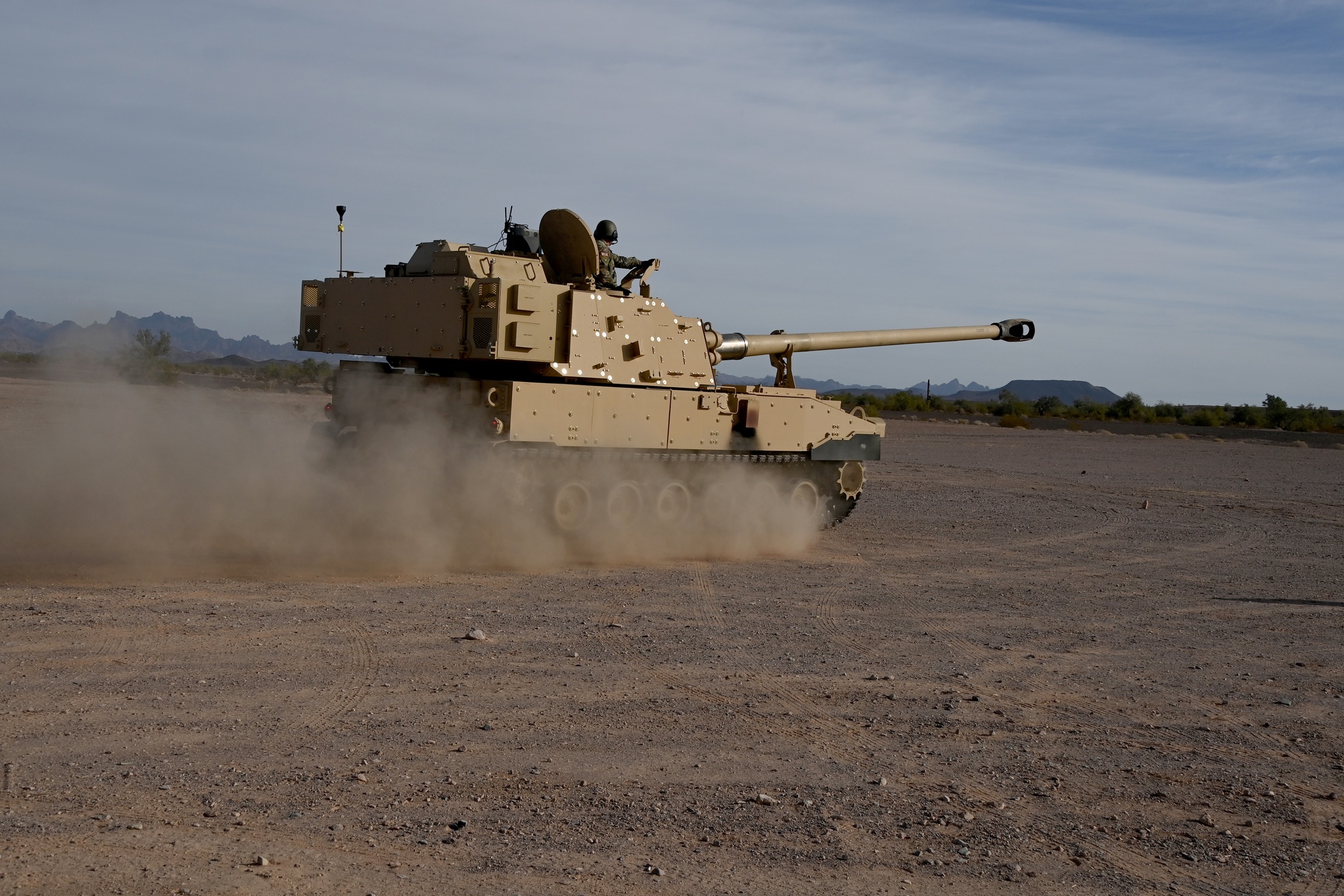
U.S. Army photo by Spc. Karleshia Gater, via DVIDS, public domain (LRHW prototype delivery ceremony, Joint Base Lewis-McChord, Oct. 7, 2021)
The U.S. Army has fired a full-scale hypersonic warhead out of a cannon for the first time, using hardware salvaged from a “doomsday gun” program Congress killed four years ago, and the point was never to build a gun that shoots hypersonic rounds. It is a cheap, repeatable way to find out what a hypersonic warhead actually does when it hits something, without the expense of flying a complete missile every time.
From a $1,000-mile gun to a warhead test rig
The hardware behind this test has an unusual history. The Strategic Long-Range Cannon, sometimes nicknamed a “doomsday gun” in defense press coverage, was an Army program aimed at building an artillery piece that could hit targets more than 1,000 miles away, a range that would have put it in the same conversation as cruise missiles rather than conventional field artillery. Congress was not persuaded. The fiscal year 2022 defense appropriations act zeroed out the program’s funding and redirected the money into a broader advanced-technology development account, effectively ending the SLRC before it produced a fielded weapon.
What did not happen was the hardware getting scrapped. Over the past two years, a joint team from the Army’s Combat Capabilities Development Command Armaments Center, known as DEVCOM-AC and based at Picatinny Arsenal, and Lawrence Livermore National Laboratory reworked the SLRC’s gun-launch hardware into something called the Heavy Artillery Test System, or HATS, now installed as a static test rig at Yuma Proving Ground in Arizona. The idea: instead of building a gun that fires 1,000 miles, use the gun’s raw ability to accelerate a heavy projectile to extreme velocity for a completely different purpose, testing hypersonic warheads.
What the test actually proved
Hypersonic weapons, whether Dark Eagle-class ground-launched systems or an air-launched glide vehicle, derive a large share of their destructive effect from sheer kinetic energy: mass moving at more than five times the speed of sound carries enormous energy on impact even before any explosive charge detonates. That means engineers need real data on how a warhead behaves at those velocities and how it performs against a target, work traditionally done by strapping a warhead to a booster and glide body and flying the whole assembly downrange on an instrumented test range. That is also the expensive part. A single hypersonic missile flight test, complete with booster, guidance and control systems, is a multimillion-dollar event, and each one only yields one data point.
HATS separates the two problems. A gun can get a warhead to hypersonic velocity without any of the booster, guidance or aerodynamic engineering a real missile needs, which means engineers can isolate what the Army calls “terminal effects,” what the warhead does when it arrives, from “getting there,” the much more expensive problem of guiding a glide body across hundreds of miles. According to the Yuma Proving Ground’s own account of the test, published in the post’s official newspaper The Outpost, the goal was “a high throughput, alternative method for assessing terminal effects at velocity and scale.” That phrase, high throughput, is the real story here: a test method that can be run many times, cheaply, rather than a handful of times a year at tens of millions of dollars a shot.
The August 3 test itself followed a scripted sequence. A specialized sabot package, engineered jointly by DEVCOM-AC and Lawrence Livermore to survive the extreme acceleration forces inside a gun barrel, carried the warhead. A DEVCOM-AC electronic safe-and-arm fuzing device, also purpose-built for this application, had to be proven capable of surviving that same shock before it could be trusted with a live payload. Engineers loaded the warhead and propelling charge into the gun, personnel withdrew to bunkers, and the shot was fired on command. Yuma’s account describes cheers on the range once high-speed camera data confirmed the shot had gone as planned. It was not the first time this exact hardware had fired: an inert proof-of-concept round, carrying no real warhead, preceded the live shot and generated the engineering data that let the team move to a live payload.
Why a test tool matters as much as a weapon
It is worth being precise about what did and did not happen here, because “hypersonic warhead fired from a cannon” invites an obvious but wrong reading. The Army is not building a gun-launched hypersonic weapon. HATS is a fixed test rig, not a mobile or deployable system, and nothing about this test changes how any hypersonic weapon actually gets fielded or used in combat. What it changes is the pace and cost of the engineering work behind those weapons. The U.S. hypersonic-weapons portfolio, which includes the Army’s ground-launched Dark Eagle, formally the Long Range Hypersonic Weapon, and the shared Conventional Prompt Strike round used by the Navy on Zumwalt-class destroyers and Virginia-class submarines, has for years been constrained by exactly this bottleneck: full-system flight tests are rare and expensive, and each failure or delay draws public scrutiny precisely because so few shots happen in a given year. A test method that decouples warhead lethality testing from full-missile flight testing means engineers can gather far more terminal-effects data per dollar, catching design problems earlier and with less political exposure than a failed missile flight test generates.
That is also why, per Yuma’s own account, the test has already drawn interest from other hypersonic development programs looking to fold cannon-launch testing into their own evaluation plans. If HATS becomes a standard tool across the Army and other services’ hypersonic efforts, its real legacy will not be this single successful shot but a change in how often and how cheaply the U.S. can generate hard data on a class of weapon it has spent years trying to field at scale.
Sources
- Army Revives Giant Cannon to Advance Hypersonic Testing — The War Zone, Aug 4, 2026
- U.S. Army fires hypersonic warhead from a cannon — Defence Blog, Aug 4, 2026
- Historic Milestone Achieved: Joint Force successfully executes Cannon-Launched Hypersonic Warhead lethality test (The Outpost, Vol. 75 No. 15) — U.S. Army Yuma Proving Ground / DVIDS, Aug 3, 2026
Systems mentioned
Every system named in this story, with its photo and, where available, a video. Tap a card to open the full spec sheet.
Strategic missiles
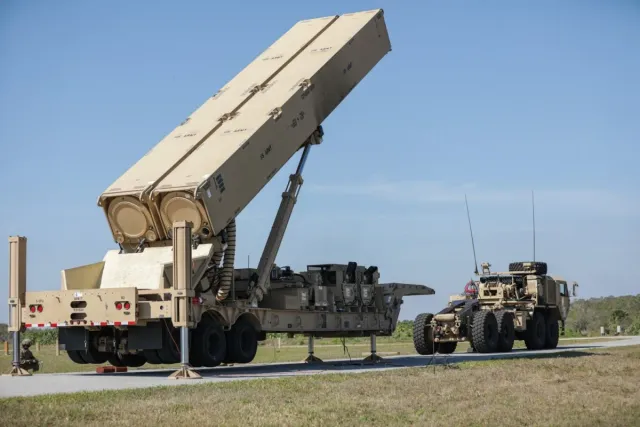
Dark Eagle (LRHW)Frequently asked questions
Is this the same as the Army's 'Dark Eagle' hypersonic missile? +
No. Dark Eagle, formally the Long Range Hypersonic Weapon, is a fielded, ground-launched operational missile with a roughly 3,500 km range. The Yuma test used a stationary cannon rig to fire just a warhead for lethality testing. It is a ground-test tool, not a weapon the Army intends to field.
What happened to the Strategic Long-Range Cannon program? +
Congress terminated its funding in the fiscal year 2022 defense appropriations act and redirected the money to a general advanced-technology development account. Rather than scrapping the physical test hardware, the Army and Lawrence Livermore National Laboratory repurposed it over the following two years into the Heavy Artillery Test System.
Why fire a warhead from a cannon instead of testing a complete missile? +
It is far cheaper to accelerate just the warhead to high speed with a gun than to flight-test an entire missile, booster and glide body included, every time engineers want data on how a warhead performs on impact. A single hypersonic missile flight test can run tens of millions of dollars; a cannon shot does not carry that cost.
What is 'terminal effects' testing? +
It means measuring what a warhead actually does when it hits a target, its blast, penetration and fragmentation pattern, as distinct from testing whether the missile that carries it can fly and navigate to the target. HATS isolates the first question from the second.
More news


