What Guidance Type Means on a MANPADS Spec Sheet
7 of 9 MANPADS in our database fire-and-forget on infrared; only 2 use laser beam-riding, which keeps the gunner exposed until the missile hits.
Of the 9 genuine man-portable air-defense missiles in the WeaponSpecs database with disclosed range and guidance data, 7 (78%) fire-and-forget on infrared or imaging-infrared seekers, meaning the gunner gets a lock tone, fires, and can duck for cover while the missile finds its own way to the target. Only 2, Sweden’s RBS 70 and the UK’s Starstreak, use laser beam-riding SACLOS guidance, which requires the operator to keep a laser trained on the target for the missile’s entire flight. That split is not a footnote on a spec sheet, it is the difference between a shooter who moves the instant the trigger is pulled and one who stays exposed, stationary, and visible until the missile lands.
What’s actually different between a Stinger and a Starstreak?
Both are shoulder-fired missiles that kill aircraft, but the guidance section of their spec sheets describes two different jobs for the person holding the tube.
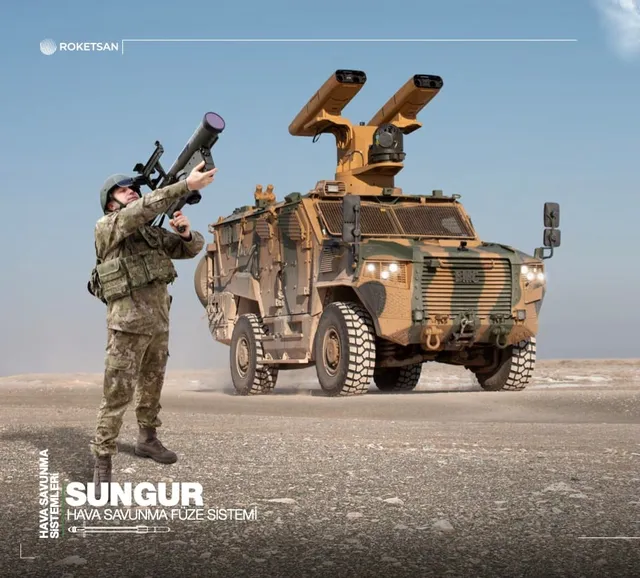
A fire-and-forget system like the FIM-92 Stinger carries an infrared (or imaging-infrared) seeker in its nose. Before launch, the gunner points the tube, waits for an audible tone confirming the seeker has locked onto the target’s heat signature, and fires. From that instant, the missile is on its own, correcting its own course toward the heat source while the gunner is free to relocate, reload, or take cover. Seven of the 9 systems in this sample work this way: Stinger, 9K38 Igla, Grom, Piorun, Misagh-2, Mistral 3, and Sungur.
A laser beam-riding SACLOS system like RBS 70 or Starstreak works differently. There is no heat seeker in the missile. Instead, the launcher projects a laser beam and the missile flies inside it, correcting its position to stay centered on the beam all the way to impact. That means the operator must keep the laser pointed at the target, continuously, for the entire time of flight, sometimes several seconds at long range. The gunner cannot fire and move. They have to track.
Does guidance type actually buy more range?
It used to be more of a clean split, and the data still shows a lean in that direction, but it is not an absolute rule anymore.
RBS 70 sits at the top of this ranking because laser beam-riding was, for decades, the only way to push a shoulder-fired missile's range past what a simple infrared seeker could reliably chase. Turkey's Sungur ties it at 8.0 km using a modern imaging-infrared seeker that is still fire-and-forget, evidence that better seekers, not just continuous guidance, have closed the range gap. *Russia's 9K38 Igla and Iran's Misagh-2 figures are state/manufacturer claims, not independently verified.
The table below carries the full census: all 9 systems, their published range and top speed, and the guidance type behind each number.
| System | Country | Range | Speed (Mach) | Guidance Type | Status |
|---|---|---|---|---|---|
| Sungur | Turkey | 8 km | 3 | Imaging infrared seeker (fire-and-forget) | Active |
| RBS 70 | Sweden | 8 km | 2 | Laser beam-riding SACLOS (continuous guidance) | Active |
| Starstreak | United Kingdom | 7 km | 4 | Laser beam-riding SACLOS (continuous guidance) | Active |
| Piorun | Poland | 7 km | 3 | Infrared homing (fire-and-forget) | Active |
| Mistral 3 | France | 7 km | 3 | Imaging infrared homing (fire-and-forget) | Active |
| Grom | Poland | 6 km | 2 | Infrared homing (fire-and-forget) | Legacy |
| 9K38 Igla | Russia* | 5 km | 2 | Infrared homing (fire-and-forget) | Active |
| Misagh-2 | Iran* | 5 km | 2 | Passive infrared homing (fire-and-forget) | Active |
| FIM-92 Stinger | United States | 5 km | 2 | Infrared/ultraviolet homing (fire-and-forget) | Active |
*Russian and Iranian figures are state/manufacturer claims, not independently verified.
Starstreak is worth a second look on its own: it is the fastest MANPADS in this database at Mach 3.5, and it does not carry a single warhead but three tungsten sub-munitions that separate after launch and ride the beam independently into the target. Two excluded systems are worth naming here too, because their exclusion is the point, not an oversight. Russia’s “Igla-V” is an air-launched helicopter variant, not a shoulder-fired weapon, so it is not a MANPADS despite the family name. Ukraine’s AT-1K Raybolt and South Korea’s Enforcer both carry “man-portable” in their category tags, but they are anti-tank missiles, not air-defense weapons; a shared adjective is not evidence of a shared mission, and the correct test for this census is air-defense role, not the keyword “man-portable.”
What does laser guidance cost the person holding the missile?
Range and flare-immunity are what beam-riding buys. The bill comes due in training and exposure time, and it is a real one.
Picture the two jobs side by side. A Stinger gunner points, gets a tone, fires, and is already moving to a new position before the missile has covered half its flight path. An RBS 70 or Starstreak gunner has to keep the sight’s crosshair on the target, without losing it, for however many seconds the missile takes to close the distance, standing in roughly the same spot the whole time while everyone downrange can trace exactly where that laser is coming from.
When the UK sent Starstreak to Ukraine in March 2022, that training burden became a real operational constraint, not a theoretical one. RUSI research fellow Jack Watling explained why:
“Ukrainians don’t have a simulator. So we could give them the good stuff, but they couldn’t use it,” said Jack Watling, research fellow at the Royal United Services Institute (RUSI), quoted by the Institute for War & Peace Reporting.
Watling was not criticizing Starstreak’s capability. He was describing the cost of the guidance method underneath it: standard UK training runs roughly 1,000 simulator rounds before a soldier is qualified to use Starstreak in combat, because tracking a moving target with a laser for a full time of flight is a perishable, practiced skill in a way that pointing a seeker and waiting for a lock tone is not. That training pipeline is the same continuous-tracking skill that keeps the gunner exposed on the battlefield, the two costs are one and the same.
Why has fire-and-forget stayed the default for 40+ years?
The Stinger entered service in 1981. It is still active, still in production, and it is the only system in this 9-system sample with a publicly disclosed unit cost, roughly $400,000 by the database’s own commercial data, an approximate FMS figure that includes the grip stock (the missile round alone runs lower). It also has by far the largest disclosed production run and operator base of any system here: about 70,000 units built for 40 operator nations.
That combination, oldest design in the sample, still fielded, largest scale, is not a coincidence. Fire-and-forget simplicity is what lets a system be issued widely and trained quickly, the opposite of the 1,000-simulator-round pipeline Watling described for beam-riding. A missile that a soldier can be taught to use in days rather than months is a missile that can be handed to 40 different militaries and mass-produced at 70,000 units. Continuous-guidance systems buy real capability, longer effective range in some cases and total immunity to the flare countermeasures that threaten every infrared seeker on this list, but they do not scale the same way, and that tradeoff, not raw range, is what has kept fire-and-forget the default MANPADS architecture for four decades.
The bottom line for procurement
Guidance type is not a technical footnote buried under range and speed, it is the variable that decides whether a gunner shoots and moves or shoots and stays. Buyers prioritizing rapid fielding, large operator pools, and minimal training overhead land on fire-and-forget infrared homing, which is why 7 of 9 systems here use it. Buyers who can absorb the training cost and need flare-proof reliability against an adversary already fielding countermeasures have a narrower, more demanding option in laser beam-riding. Neither is a strictly better spec sheet, they answer different procurement questions.
Compare these systems’ full published envelopes directly in the Range Envelope tool, or run a broader threat profile through the Advisor to see how MANPADS stack up against the rest of the air-defense category on WeaponSpecs.
Sources
Systems in this comparison
Every system covered above, with its photo and, where available, a video. Tap a card to open the full spec sheet.
Compare these side by side →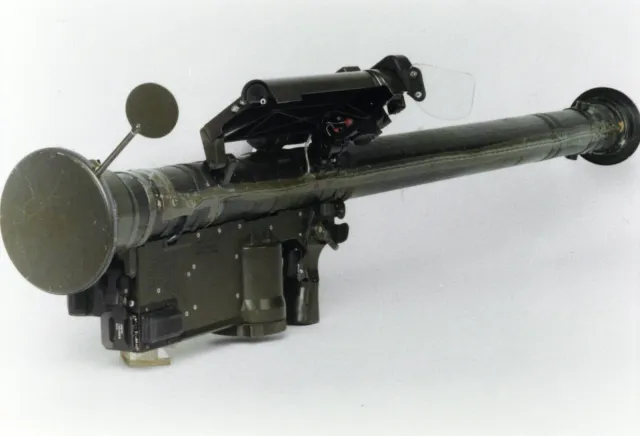
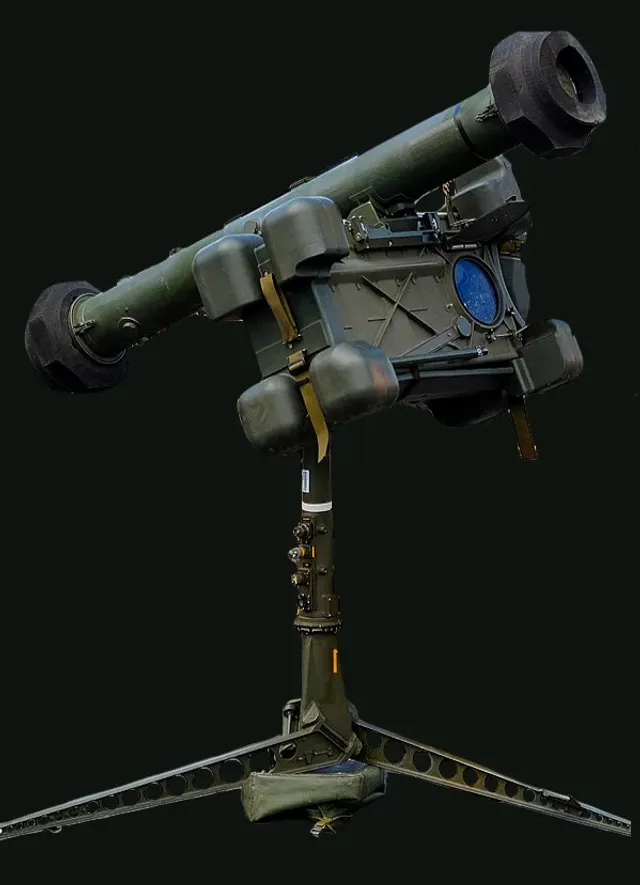
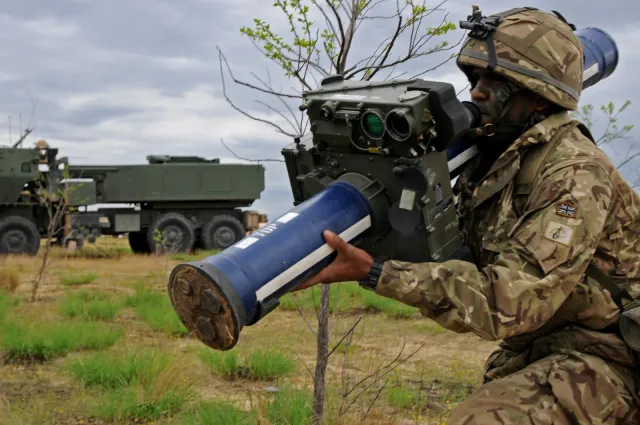

Frequently asked questions
What's the difference between fire-and-forget and laser beam-riding guidance? +
Fire-and-forget missiles use an infrared or imaging-infrared seeker that locks onto the target's heat signature before launch; once fired, the missile guides itself and the operator can move immediately. Laser beam-riding SACLOS (Semi-Automatic Command to Line Of Sight) requires the operator to keep a laser trained on the target for the missile's entire flight, staying exposed and stationary until impact.
Why do only 2 of 9 MANPADS in the WeaponSpecs database use laser beam-riding? +
Fire-and-forget infrared homing dominates because it is simpler to train and lets the operator shoot and immediately displace. Laser beam-riding systems, RBS 70 and Starstreak, trade that convenience for immunity to infrared flare decoys, since there is no heat-seeking sensor for a flare to spoof.
Can flares defeat a laser beam-riding missile like Starstreak? +
No. Starstreak and RBS 70 follow a laser beam rather than a heat signature, so infrared decoy flares, which are designed to spoof heat-seeking seekers, have no effect on their guidance.
Which MANPADS has the longest published range? +
Sweden's RBS 70 and Turkey's Sungur are tied at 8.0 km in the WeaponSpecs database, the longest published range among the 9 genuine man-portable air-defense missiles tracked. Sungur reaches that figure with a modern imaging-infrared seeker while still being fire-and-forget.
Why has the Stinger stayed in frontline service for over 40 years? +
The FIM-92 Stinger, a 1981 design, remains active because fire-and-forget simplicity scales: it is the only system in this sample with a disclosed unit cost (about $400,000) and by far the largest production run and operator base in the database, roughly 70,000 units built for 40 operator nations.
Related reading


