Australia validates ground-launched SM-2 in Woomera live-fire
Australia disclosed a June live-fire trial pairing a homegrown CEA radar with a virtualised Aegis system and an SM-2 missile to kill a cruise-missile target from a trailer launcher.
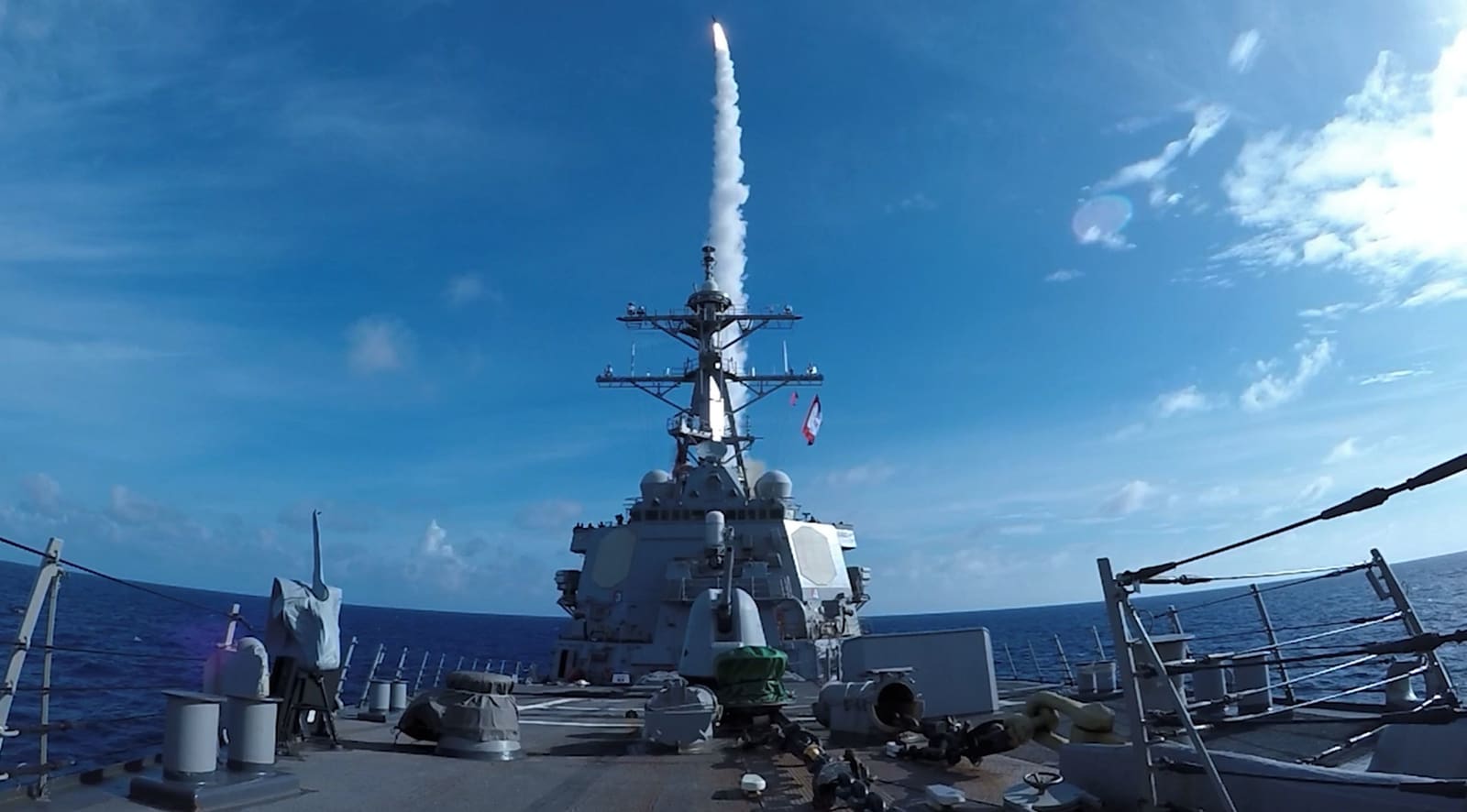
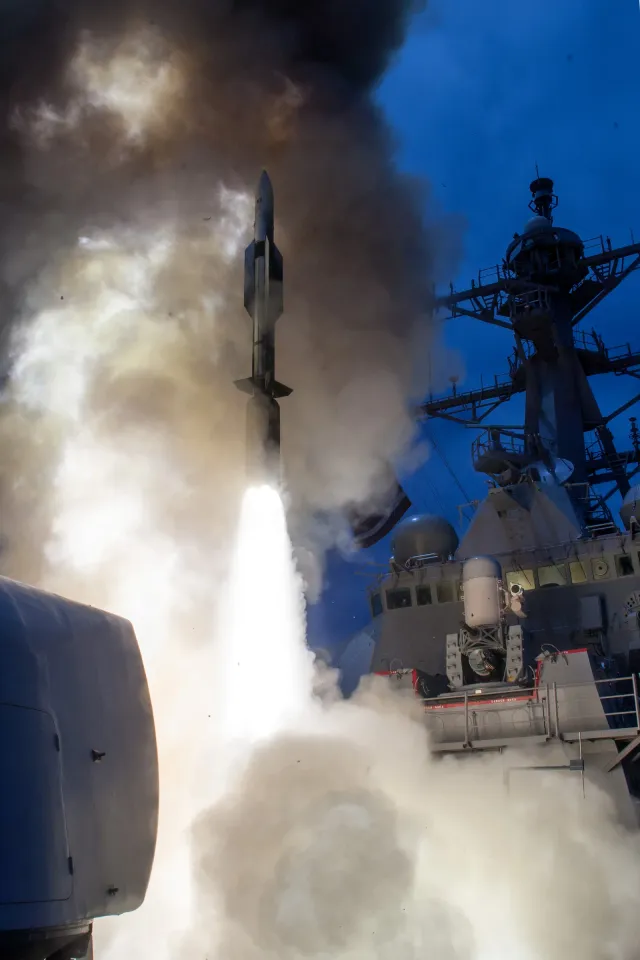
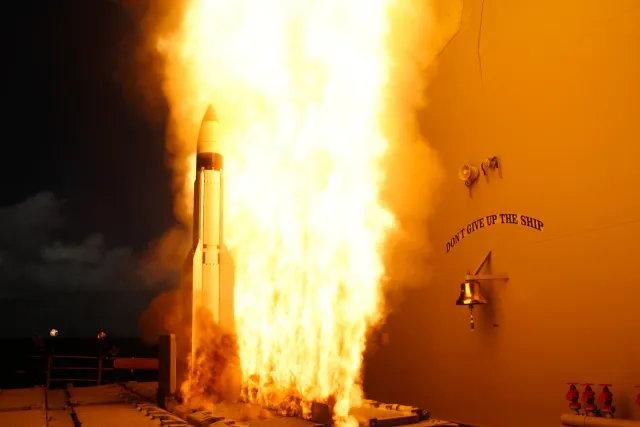
U.S. Navy photo, DVIDS, public domain
By the numbers
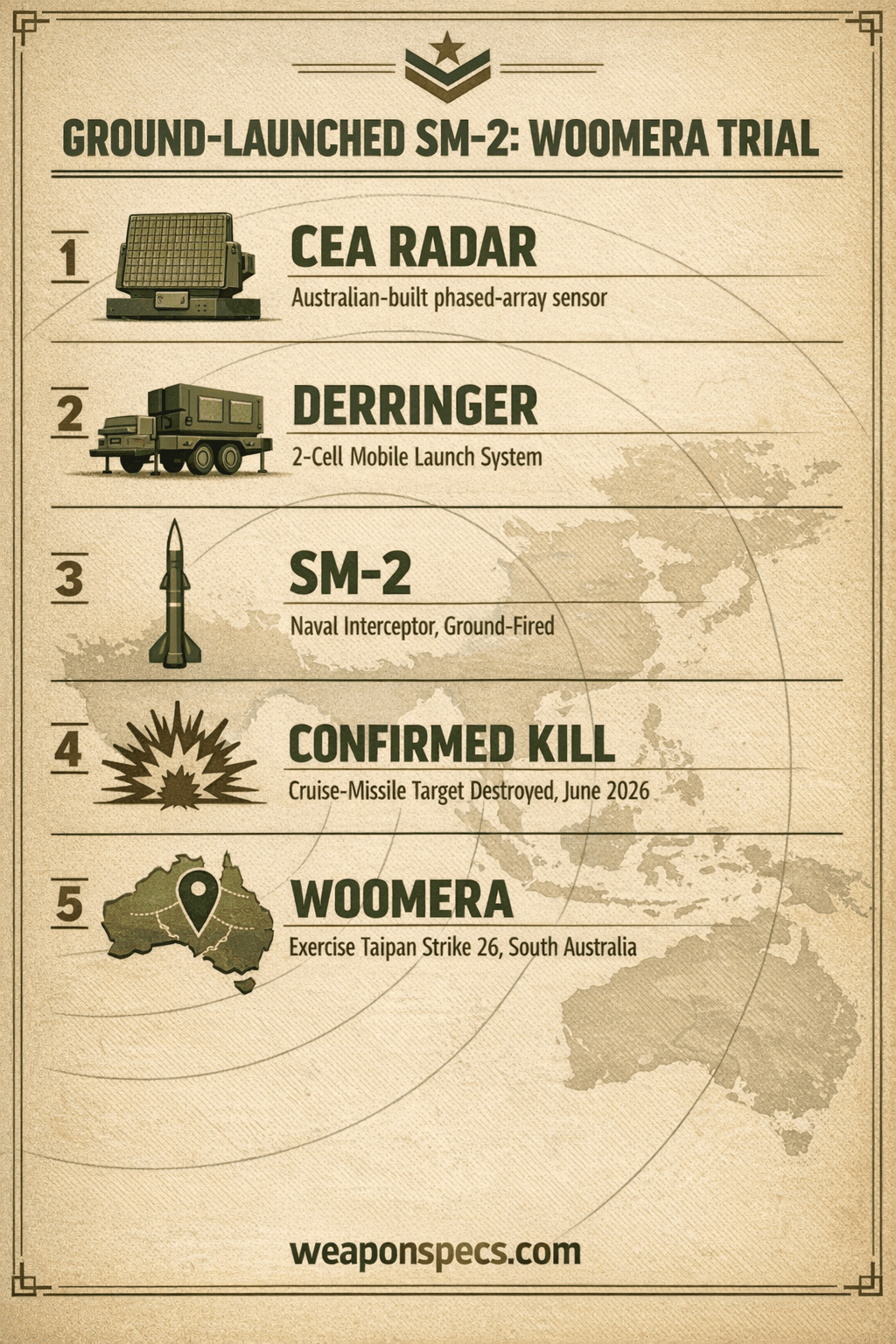
Infographic: WeaponSpecs News Desk
Australia’s Department of Defence disclosed on July 9 that a prototype ground-based air-defense system successfully intercepted an airborne cruise-missile target during a live-fire trial at the Woomera Test Range in South Australia in late June, according to Army Recognition and confirmed by Jane’s. The system paired an Australian-built CEA Technologies phased-array radar with a virtualised version of the U.S. Aegis Combat System and a trailer-mounted launcher to fire a Standard Missile-2, the first time this specific combination has destroyed a target in a ground-launched configuration. Defence officials were explicit that the test is a capability milestone, not an operational fielding: no contract, unit count or delivery timeline has been announced.
The trial ran during Exercise Taipan Strike 26, an air and missile defense activity that unfolded across roughly June 22 to July 1 alongside separate allied exercises in Guam, the Northern Mariana Islands and Japan. Woomera itself, one of the largest land-based test ranges in the world, has hosted Australian and allied missile trials for decades, giving the Royal Australian Air Force and Navy a controlled environment to run a full end-to-end intercept without the logistical complexity of an at-sea shot.
What the sensor-to-shooter chain actually proved
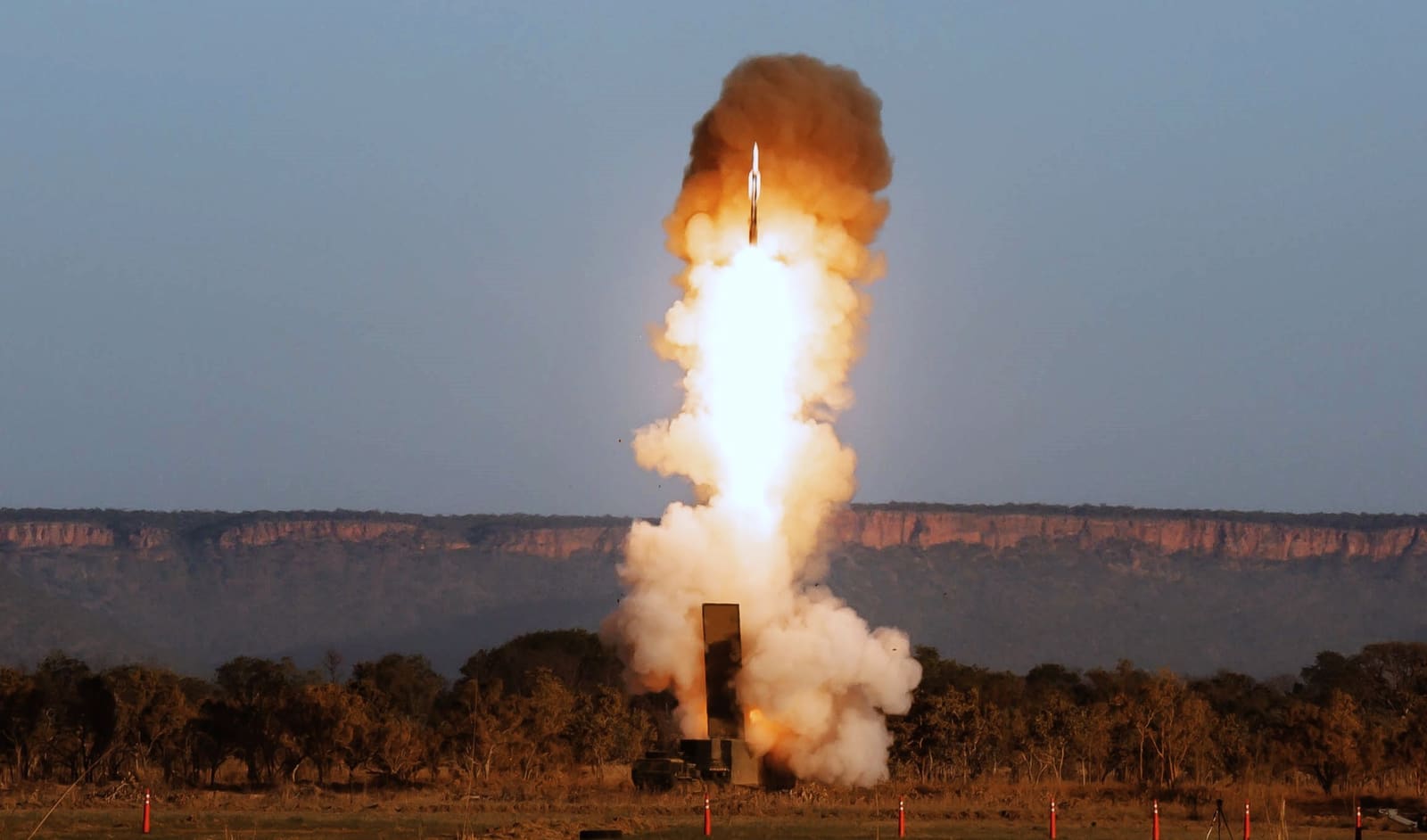
The core achievement, as both outlets describe it, was integrating three previously separate pieces of hardware into one working kill chain. CEA Technologies’ active phased-array radar, the same Australian-designed sensor family fitted to the Anzac-class frigate upgrade and studied for the Hobart-class destroyer, detected and tracked the incoming cruise-missile target. That track data was handed to a virtualised Aegis Combat System, the software-defined descendant of the combat management system that has anchored U.S. Navy and allied Aegis destroyers and cruisers for four decades. Aegis computed the engagement solution and cued the shot, and the missile itself launched from Derringer, a two-cell Expeditionary Launch System mounted on a road-mobile trailer rather than a warship’s vertical launch cells. The interceptor was a Standard Missile-2 drawn from the Royal Australian Navy’s existing inventory, the same missile family that arms Australia’s Hobart-class destroyers at sea.
None of the individual components is new. What the test validated is that they can talk to each other and complete a full detection-to-kill sequence, “detection, tracking, fire-control data exchange, engagement planning, missile launch and target destruction,” in the Australian government’s own description of the event, when reconfigured into a mobile ground system. Jane’s reporting frames this as the first confirmed integration between a CEA radar and the Aegis Combat System specifically, a pairing that had been discussed as a candidate architecture for Australian medium-range air defense but not previously demonstrated in a live intercept.
Why Australia wants a ground version of a ship missile
The strategic logic is straightforward: Australia has exposed, geographically dispersed bases across the north of the country and in the Indo-Pacific, including facilities like RAAF Tindal in the Northern Territory and RAAF Learmonth in Western Australia, that currently lack organic, mobile defense against cruise-missile attack. Building an entirely new interceptor and command system from scratch would take years and carry significant technical risk. Adapting SM-2 and Aegis, both mature, combat-proven naval systems already in Australian and allied service, to a road-mobile launcher lets Canberra pursue a deployable base-defense capability without waiting on a clean-sheet missile program. The approach mirrors, in miniature, the same logic behind the U.S. Army’s Typhon Mid-Range Capability launcher, which fires the naval SM-6 missile from a ground-based Mk 41-derived system, and the layered air and missile defense architecture the U.S. is separately building around interceptors like SM-3 Block IIA for longer-range, exo-atmospheric threats.
Defence officials cautioned that this remains a prototype validation intended specifically to reduce technical and integration risk ahead of any future acquisition decision, and cautioned that considerably more work remains before the architecture could credibly defeat faster, harder threats such as ballistic missiles, hypersonic weapons or a coordinated saturation attack involving many inbound missiles at once. An SM-2 intercepting a single subsonic cruise-missile target in a scripted test is a meaningfully lower bar than defending a base against a real, multi-axis strike package, and neither source reviewed for this story claims the Woomera trial closes that gap.
What is not yet decided
No contract has been signed, no unit or launcher count has been announced, and no fielding timeline exists in either the Army Recognition or Jane’s coverage. The test’s stated purpose was explicitly to inform a future medium-range air-defense acquisition decision, positioning this as one candidate configuration among what could be several options Australia evaluates before committing funding. The collaboration involved the Royal Australian Air Force as lead, working alongside the Navy, Australia’s Capability Acquisition and Sustainment Group, U.S. government agencies and industry partners from both countries, an interoperability signal in its own right given how central U.S.-Australian defense-industrial cooperation has become under AUKUS and related programs.
Sources
- Australia's Ground-Launched SM-2 Test Shows Potential to Protect Allied Bases Across the Indo-Pacific — Army Recognition, Jul 9, 2026
- Australia tests SM-2/Aegis ground-based air-defence capability — Jane's, Jul 9, 2026
Systems mentioned
Every system named in this story, with its photo and, where available, a video. Tap a card to open the full spec sheet.
Compare these side by side →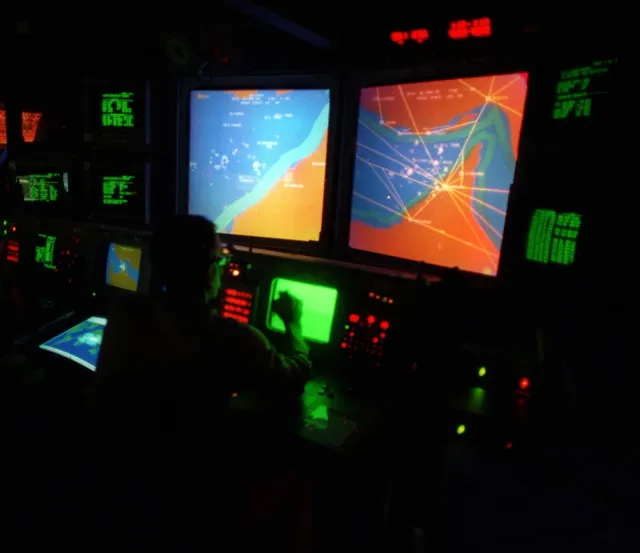
Frequently asked questions
Is this a new weapon system Australia is buying? +
No. Australia has not signed a contract or committed to a timeline. The June test at Woomera was a prototype demonstration meant to retire technical risk and inform a future acquisition decision, not an operational fielding.
What actually happened during the test? +
An Australian CEA Technologies phased-array radar detected an airborne cruise-missile target and passed tracking data to a virtualised Aegis Combat System, which computed a fire-control solution and launched a Standard Missile-2 from a two-cell Derringer trailer launcher. The missile destroyed the target, validating the full sensor-to-shooter chain.
Why does Australia want a ground-launched version of a ship missile? +
The SM-2 and Aegis Combat System are mature, combat-proven naval technology. Adapting them to a mobile, land-based launcher gives Australia a deployable medium-range air-defense option to protect exposed bases in the Indo-Pacific, such as RAAF Tindal and Learmonth, against cruise-missile attack without waiting for a new missile to be developed.
How does this compare to the U.S. Army's Typhon system? +
Both are land-based launchers adapted from naval missile technology, but Typhon fires Tomahawk and SM-6 missiles from a Mk 41-derived launcher, while Australia's Derringer system in this test fired the shorter-range SM-2. The two programs are separate, though both reflect the same broader shift toward mobile, ground-launched versions of ship-based interceptors and strike missiles across the Indo-Pacific and Europe.
More news