Dassault Flies NAMIB Anti-Radar Drone Alongside a Rafale F4
A NAMIB-equipped drone detected and geolocated a radar dozens of kilometers away, cueing a Rafale F4 simulated strike in Dassault's first collaborative EW flight.
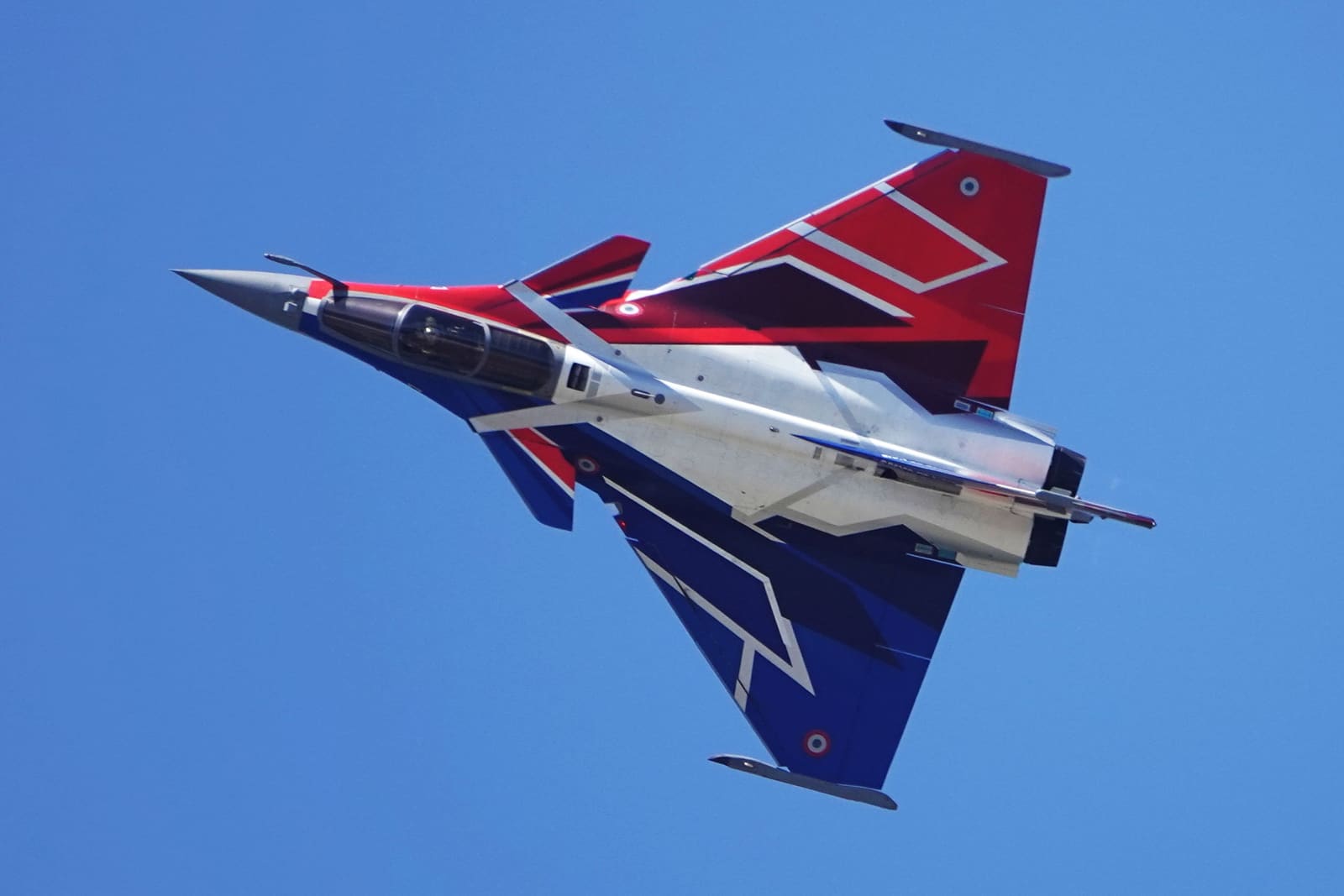
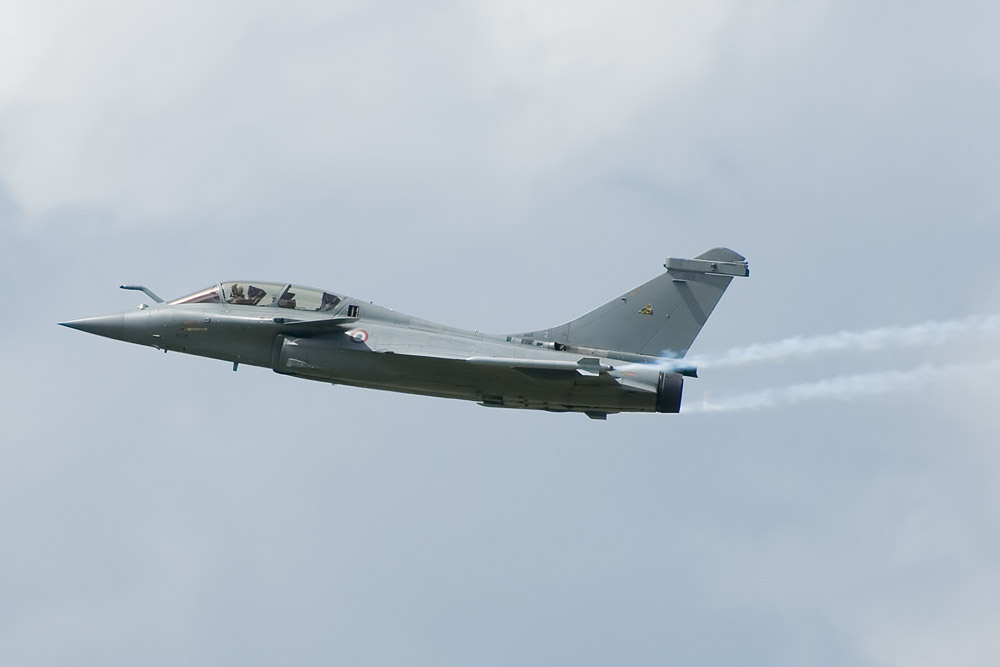
Dassault Rafale, photo by Ibex73, via Wikimedia Commons, CC BY 4.0
Dassault Aviation and French AI firm Harmattan AI flew a drone carrying a new electronic-warfare payload called NAMIB alongside a production-standard Rafale F4 on July 13, 2026, in what the companies describe as the first collaborative in-flight engagement between the two aircraft types. In the test, the drone passively detected, identified, and geolocated a radar emission several dozen kilometers away, then passed the target’s position to the Rafale, which carried out a simulated strike, an end-to-end sensor-to-shooter chain linking an uncrewed sensor aircraft to a manned fighter, according to Dassault Aviation’s press kit.
What NAMIB is built to do
NAMIB is a passive electronic support measures payload, meaning it listens for radio-frequency emissions rather than transmitting its own signal, a design choice that keeps the drone carrying it quiet and harder to detect while it works. According to the joint announcement carried on GlobeNewswire, the system is built to detect, identify, and geolocate electromagnetic emissions, most relevantly the radars that anchor modern air-defense networks, and it is engineered to be light and compact enough to fly across a wide range of drone airframes, from small quadcopters up through longer-endurance fixed-wing uncrewed aircraft. Harmattan AI, the French startup behind the payload’s processing and autonomy software, began developing NAMIB in January 2026, a roughly six-month span from program start to a flight demonstration with a frontline fighter, according to trade-press coverage from Janes.
The mission profile itself follows a pattern defense planners call SEAD and DEAD, suppression and destruction of enemy air defenses. Modern integrated air-defense systems layer long-range surface-to-air missile batteries, shorter-range point defenses, and networked early-warning radars so that no single aircraft can approach without being detected by something in the network. Defeating that network traditionally means either jamming or physically striking its radars, and doing so usually falls to aircraft built specifically to survive the attempt, historically specialized SEAD platforms or low-observable stealth designs that can penetrate the defended airspace before being tracked. NAMIB’s pitch is different: instead of making the strike aircraft itself harder to see, push a cheap, attritable drone forward as the sensor, let it find and locate the radar from a stand-in position, and hand that location back to a fighter that never has to get close enough to be at serious risk from the system it is targeting.
Why Dassault is framing this around the Rafale F4
That framing matters specifically for the Rafale F4, which is a 4.5-generation aircraft rather than a stealth design. Dassault’s own specification sheet lists the F4 with a Thales RBE2 active electronically scanned array radar, two Safran M88-2 afterburning turbofans, a combat radius of roughly 1,850 kilometers, and 14 hardpoints capable of carrying weapons including Meteor and MICA air-to-air missiles and the AASM Hammer precision-guided bomb. The jet already carries the SPECTRA electronic-warfare suite, an integrated system combining radar warning, jamming, and decoy dispensing that has long been one of the Rafale’s signature survivability features. NAMIB does not replace SPECTRA, it extends what the aircraft can sense before it is even in range of a threat, adding an off-board, forward-deployed detection layer that a self-contained onboard suite cannot match on its own.
Dassault’s argument, laid out in its press materials, is that this kind of manned-unmanned teaming lets a non-stealth fighter contribute meaningfully to suppressing dense air defenses, a mission set that has increasingly been associated with fifth-generation aircraft designed around low radar cross-sections. Rather than trying to make the Rafale itself stealthier, the company is pairing it with an expendable forward sensor node, an approach that keeps the far more expensive crewed jet farther from the threat while still closing the sensor-to-shooter loop quickly enough to be tactically useful.
Where this fits in France’s broader autonomy push
The flight is also a data point in a wider partnership between Dassault and Harmattan AI aimed at integrating autonomous and AI-enabled capabilities into France’s future air-combat systems, coverage from Defence Industry Europe notes. That effort sits alongside, but is distinct from, France’s separate Système de Combat Aérien du Futur program, the next-generation fighter effort Dassault leads with European partners. NAMIB is better understood as near-term work to extend what an already-fielded aircraft, the Rafale F4, can do today by teaming it with expendable autonomous platforms, rather than a component of the next-generation jet itself.
Sources
- NAMIB, the New Electronic Warfare Payload, Successfully Completes a Collaborative Flight with a Rafale — Dassault Aviation, Jul 13, 2026
- NAMIB, the New Electronic Warfare Payload, Successfully Completes a Collaborative Flight with a Rafale — GlobeNewswire, Jul 13, 2026
- Dassault, Harmattan AI Fly New EW Collaborative UAV for Rafale — Janes, Jul 13, 2026
- Dassault Aviation and Harmattan AI Test NAMIB Electronic Warfare Payload in Rafale F4 Drone-Supported Mission — Defence Industry Europe, Jul 13, 2026
Systems mentioned
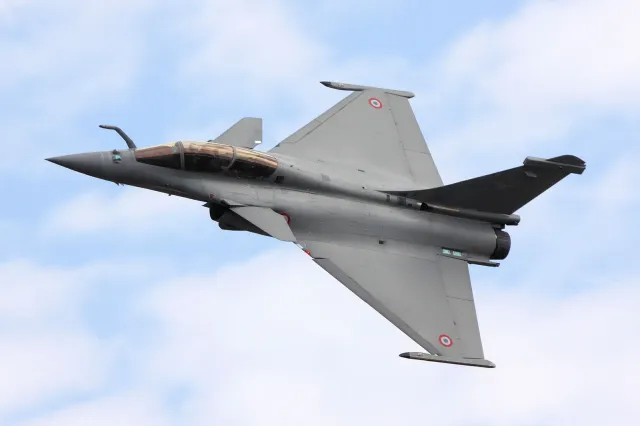
Every system named in this story, with its photo and, where available, a video. Tap a card to open the full spec sheet.
Frequently asked questions
What actually happened in the test? +
A drone carrying the NAMIB payload passively detected, identified, and geolocated a radar emitter several dozen kilometers away, transmitted its position to a Rafale F4, which then ran a simulated strike, an end-to-end sensor-to-shooter loop between an uncrewed sensor and a manned fighter.
What is NAMIB? +
A passive electronic-warfare payload, development begun in January 2026 by Harmattan AI with Dassault Aviation, that detects, identifies, and locates electromagnetic emissions, notably air-defense radars, light enough to fly on tactical drones ranging from quadcopters to fixed-wing UAS.
Why does it matter for the Rafale F4? +
Dassault positions it as letting a non-stealth Rafale F4 help suppress dense, layered air defenses using an expendable forward sensor, narrowing the capability gap with fifth-generation stealth aircraft without changing the jet's own radar signature.
Who built it and how does it fit French strategy? +
NAMIB is a product of the Dassault Aviation and Harmattan AI partnership, aimed at integrating autonomous and AI-enabled capabilities into France's next-generation air-combat systems, work that runs alongside but is distinct from the separate SCAF next-generation fighter program.
More news