Space Force accepts Meadowlands, its newest satellite jammer, for duty
U.S. Space Force Combat Forces Command formally accepted L3Harris's Meadowlands Counter Communications System on June 8, a compact, trailer-mounted jammer meant to reversibly deny an adversary's satellite links.
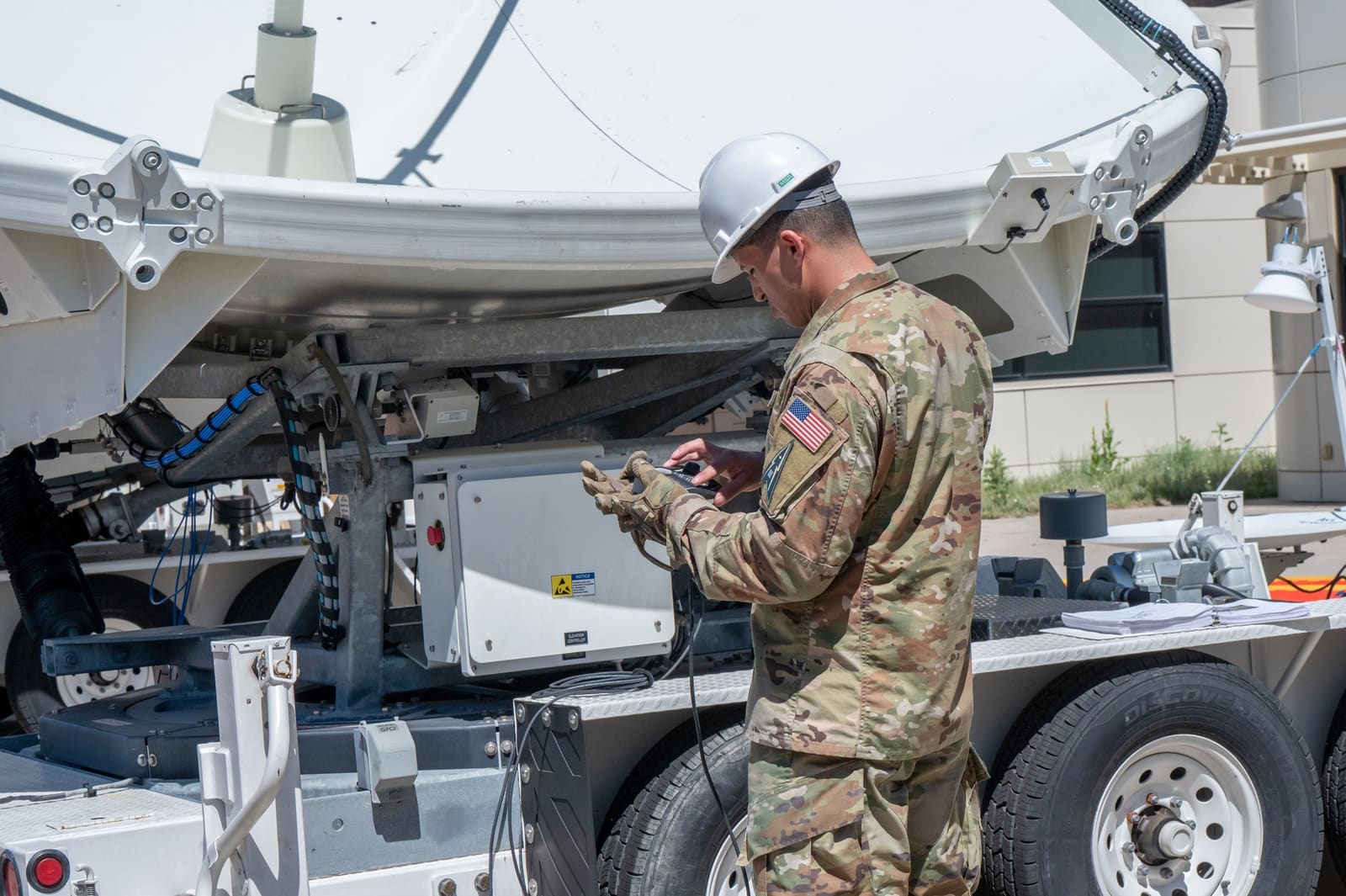
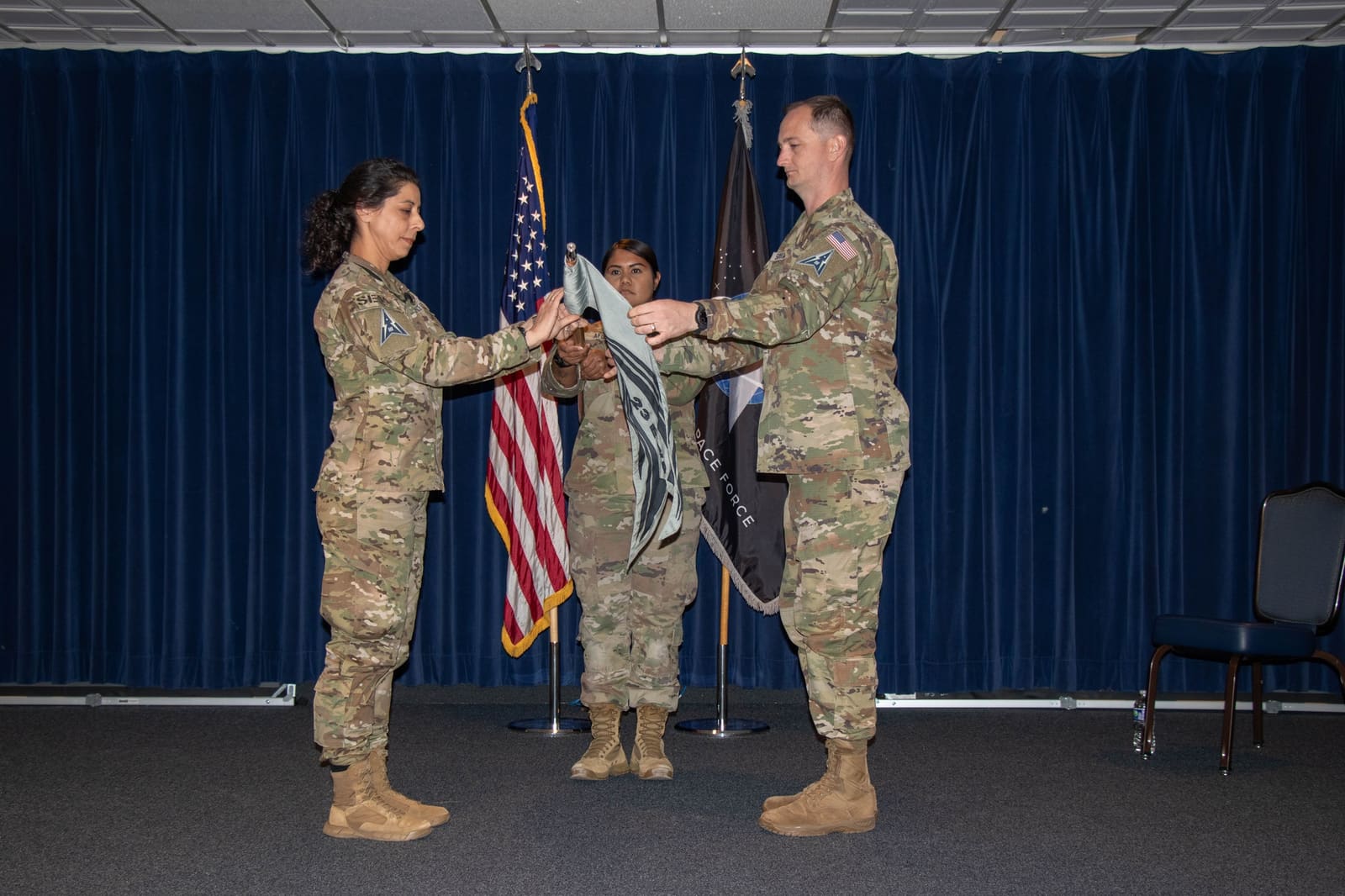
U.S. Space Force photo by Amber Mullins, via DVIDS, public domain
By the numbers
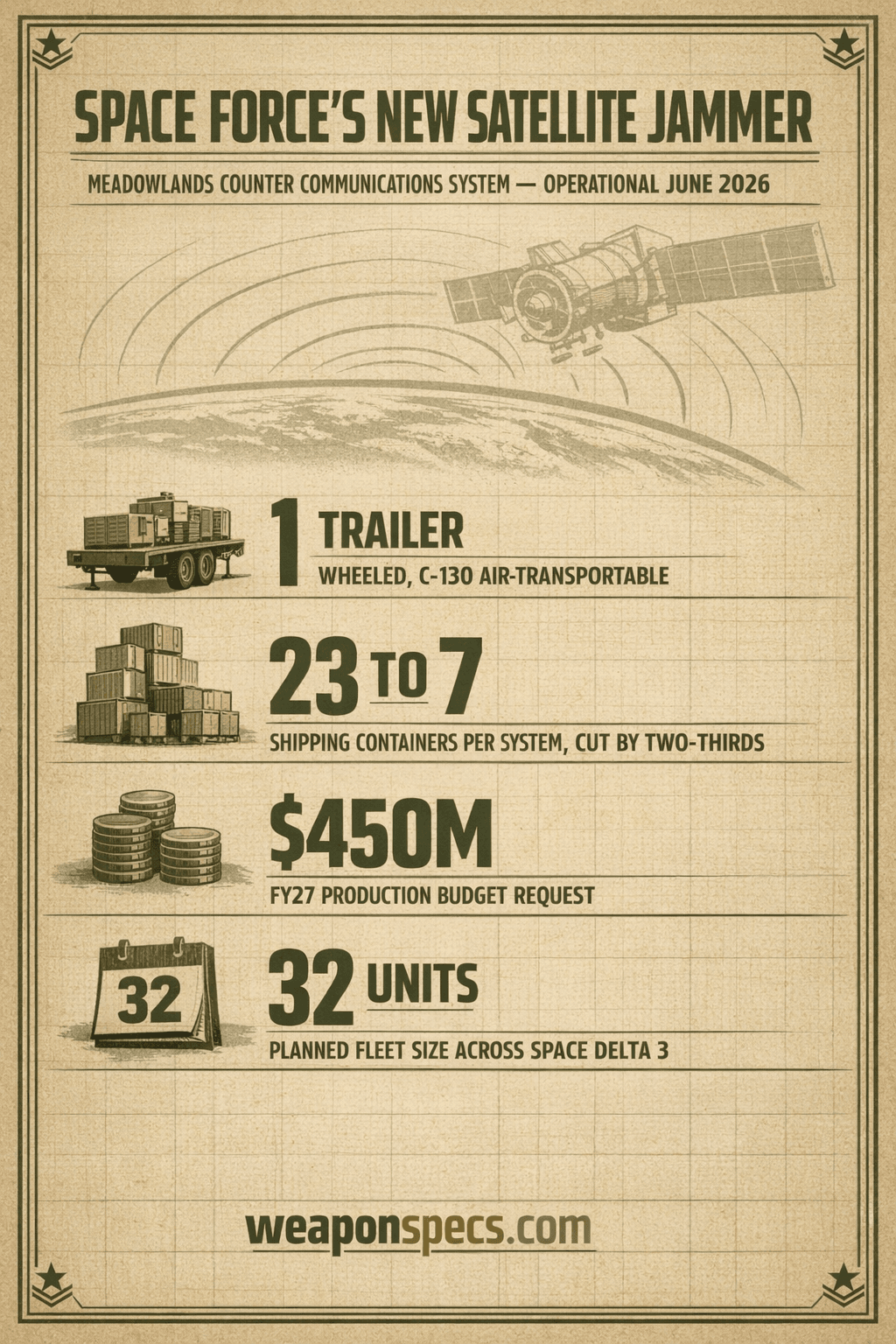
Infographic: WeaponSpecs News Desk
U.S. Space Force Combat Forces Command formally accepted the Meadowlands Counter Communications System for operational use on June 8, 2026, according to SpaceNews, fielding a more compact, more automated version of the ground-based jammer the service has used to deny adversary satellite links since 2004. Built by L3Harris Technologies, Meadowlands is a wheeled, trailer-mounted system designed to be loaded aboard a C-130 or larger transport aircraft, and it replaces the Block 10.2 Counter Communications System that entered service in 2020.
The system’s job is narrow and specific: jam the radio-frequency signals an adversary satellite uses to send or receive data, either by overwhelming its uplink from a ground station or by blasting interference directly at a downlink terminal on the ground. That is a reversible effect. L3Harris and Space Force officials describe it as non-destructive, meaning operators can stop transmitting and the target link comes back, in contrast to a kinetic anti-satellite weapon that destroys a spacecraft outright and leaves debris in orbit for years. The Counter Communications System line has been described by L3Harris as “the Space Force’s only ground-based space control platform providing an offensive electronic warfare capability in space,” a company characterization rather than an independently verified claim about the full universe of U.S. counterspace tools, several of which remain classified.
A smaller footprint built for faster deployment
The headline change in Meadowlands is not raw jamming power but logistics. According to Air & Space Forces Magazine, the redesign cuts the number of shipping containers needed to move a complete system from 23 down to seven, a reduction the Space Force says lets a unit deploy faster and with a smaller airlift footprint than its predecessor. The system also incorporates a more open software architecture and added automation, which the service says reduces the number of personnel required to operate it, and it can jam across a broader range of frequencies than Block 10.2.
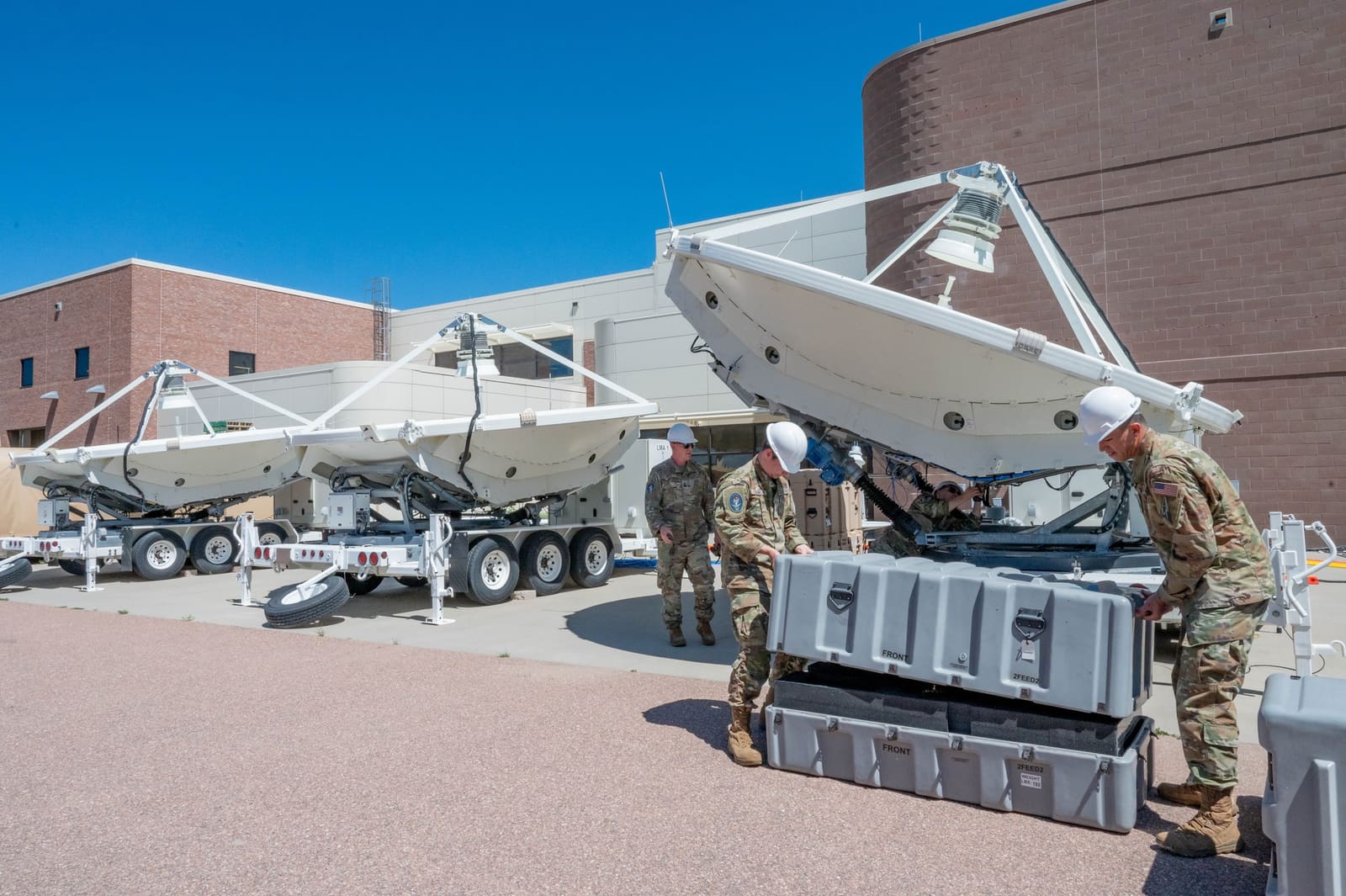
L3Harris delivered the first production Meadowlands unit in late 2025 and has said it is working toward a delivery cadence of roughly one unit per month. The company passed its System Verification Review for the program in April 2025, according to an L3Harris release, the formal engineering checkpoint that precedes operational fielding.
Space Delta 3 runs the jamming mission
Meadowlands and the rest of the Counter Communications System fleet fall under Space Delta 3, the Space Force’s Space Electromagnetic Warfare unit headquartered at Peterson Space Force Base, Colorado. Space Delta 3 activated its fifth subordinate unit, the 23rd Electromagnetic Warfare Squadron, in an October 2023 ceremony, and the delta’s squadrons, including the 4th Electromagnetic Warfare Squadron, have trained on Counter Communications System hardware at Peterson in the years since. L3Harris has also secured Foreign Military Sales export approval to supply the system to Five Eyes intelligence partners, extending the same reversible-jamming capability to allied electromagnetic warfare units, per SpaceNews.
The Space Force’s public budget documents put real money behind the program. The service’s fiscal 2027 request seeks $450 million specifically to produce Meadowlands units, on top of $40 million requested for the broader Counter Satellite Communications System research and development line that funds the program Meadowlands belongs to, according to Air & Space Forces Magazine’s review of the budget submission. The Space Force has said it eventually wants a fleet of 32 Meadowlands units, though that target and the associated FY28-31 funding line, reported at roughly $605 million in additional systems, are budget projections rather than signed contracts, and are subject to the normal congressional appropriations process before any of it is finalized.
Why a reversible jammer is the tool Space Force wants more of
Meadowlands fits into a broader Space Force emphasis on what the service calls “responsible counterspace” capabilities: tools that can deny an adversary’s use of space-based communications without generating orbital debris or triggering the kind of escalation a destructive anti-satellite test invites. China’s 2007 anti-satellite missile test and Russia’s 2021 equivalent both left large debris fields still being tracked today, incidents that have shaped how Western space commands talk about acceptable counterspace tools. A ground-based, reversible jammer sidesteps that problem entirely: it degrades or denies an adversary satellite’s communications link for as long as the operator chooses to transmit, then the link returns to normal once jamming stops, with no wreckage and no permanent damage to the target spacecraft.
That reversibility is also a limitation. Meadowlands cannot destroy a satellite, degrade its sensors, or deny its use permanently, and it depends on line-of-sight and sufficient power to overwhelm the specific frequency band a target satellite uses, meaning a well-engineered or frequency-agile satellite communications system can in principle resist or route around the interference. The system’s real value is tactical and reversible: shutting down an adversary’s satellite-relayed command links, targeting data, or imagery feeds for the duration of a specific operation, then allowing that link to resume once the mission need has passed.
Sources
- Space Force fields mobile satellite-jamming system — SpaceNews, Jun 30, 2026
- Space Force Approves New Satellite Jammer for Operational Use — Air & Space Forces Magazine, Jun 26, 2026
- Counter Communications System — L3Harris Technologies
Frequently asked questions
What does the Meadowlands system actually do? +
It is a ground-based radio-frequency jammer that disrupts an adversary satellite's ability to send or receive communications, either at the satellite's uplink or at a ground terminal's downlink. The effect is reversible: operators can stop transmitting and restore the target link, which distinguishes it from a kinetic anti-satellite weapon that permanently destroys a spacecraft and scatters debris.
Is Meadowlands a new weapon or an upgrade? +
It is an upgrade to the existing Counter Communications System line the Space Force has operated since 2004, replacing the Block 10.2 version fielded in 2020. L3Harris says Meadowlands cuts the number of shipping containers needed to move a system from 23 to seven and adds automation that reduces the crew required to operate it.
How many units will the Space Force field, and what will it cost? +
The service's public fiscal 2027 budget request seeks $450 million to produce Meadowlands units and a further $40 million for the underlying Counter Satellite Communications System research and development line, with the fleet projected to eventually reach 32 units. Those are the requested figures in the president's FY27 budget submission, not a finalized appropriation.
Who operates it, and does the U.S. share it with allies? +
Space Delta 3, the Space Force's electromagnetic warfare unit headquartered at Peterson Space Force Base, Colorado, operates the Counter Communications System family through its subordinate squadrons. The Space Force has also approved Foreign Military Sales export of the system to Five Eyes intelligence partners.
More news