Rafael's Iron Beam laser reaches operational status with the IDF
Israel's Iron Beam became the world's first high-energy laser to reach full operational status when Rafael transferred the first unit to the IDF on December 28, 2025; Rafael showcased it at Farnborough this week.
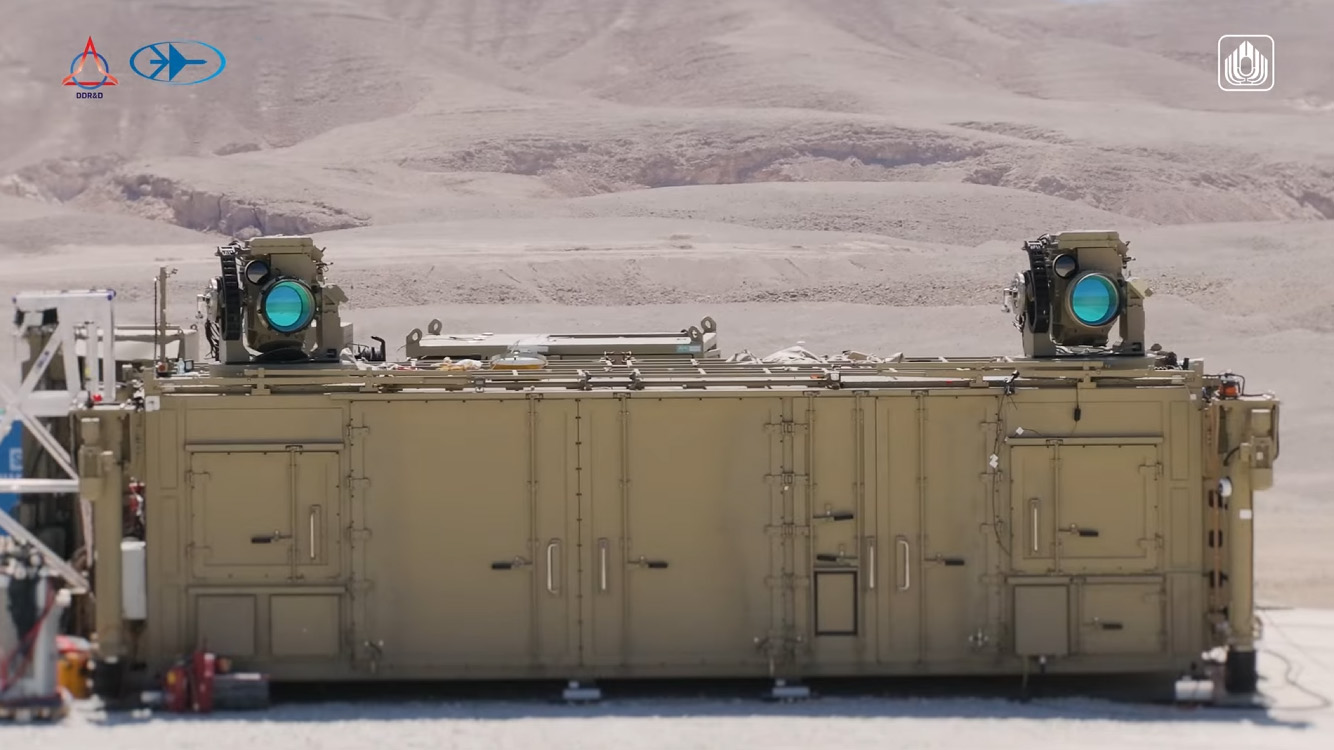
Spokesperson and Public Relations Division of the Ministry of Defense of Israel, via Wikimedia Commons, CC BY-SA 4.0
Israel’s Iron Beam laser became the first high-energy directed-energy air-defense system to reach full operational status with any military when Rafael Advanced Defense Systems and Israel’s Ministry of Defense transferred the first production unit to the Israel Defense Forces on December 28, 2025, at a ceremony at Rafael’s headquarters in northern Israel. Rafael showcased the system, along with two new variants, at the Farnborough International Airshow this week, presenting it to European procurement officials as proof that a technology defense planners have chased since the 1960s finally works outside a lab.
Defense Minister Israel Katz called the December handover a historic moment, noting that no country had fielded a high-power laser interceptor before Israel did that day, according to Tech Times. The delivery marked a transition rather than a debut: Israel had covertly used an earlier, adapted version of the system against Hezbollah drones starting in October 2024, and defense officials disclosed in June 2025 that it had shot down roughly 40 drones in that period, per the Jerusalem Post’s reporting cited by Tech Times. December’s ceremony moved Iron Beam from that crash-program prototype into a production-standard system formally integrated into the Israeli Air Force’s air defense command.
What took four decades to solve
Laser weapons have been a recurring fixture of defense research roadmaps since the 1960s, consistently stalled by atmospheric physics: a laser beam heats the air along its path, scattering as it goes in a phenomenon called thermal blooming, and the problem worsens with power, making it hard to keep enough energy focused on a target at useful range. Iron Beam’s answer, according to Rafael’s own description reported by Tech Times, is a multi-beam design that fires not one wide beam but hundreds of small, coin-sized beams simultaneously, each facing far less atmospheric scattering than a single large beam would. When onboard tracking detects that one beam has struck the target, the system redirects additional beams to that point, concentrating energy until the target burns through, a mechanism Rafael calls adaptive optics.
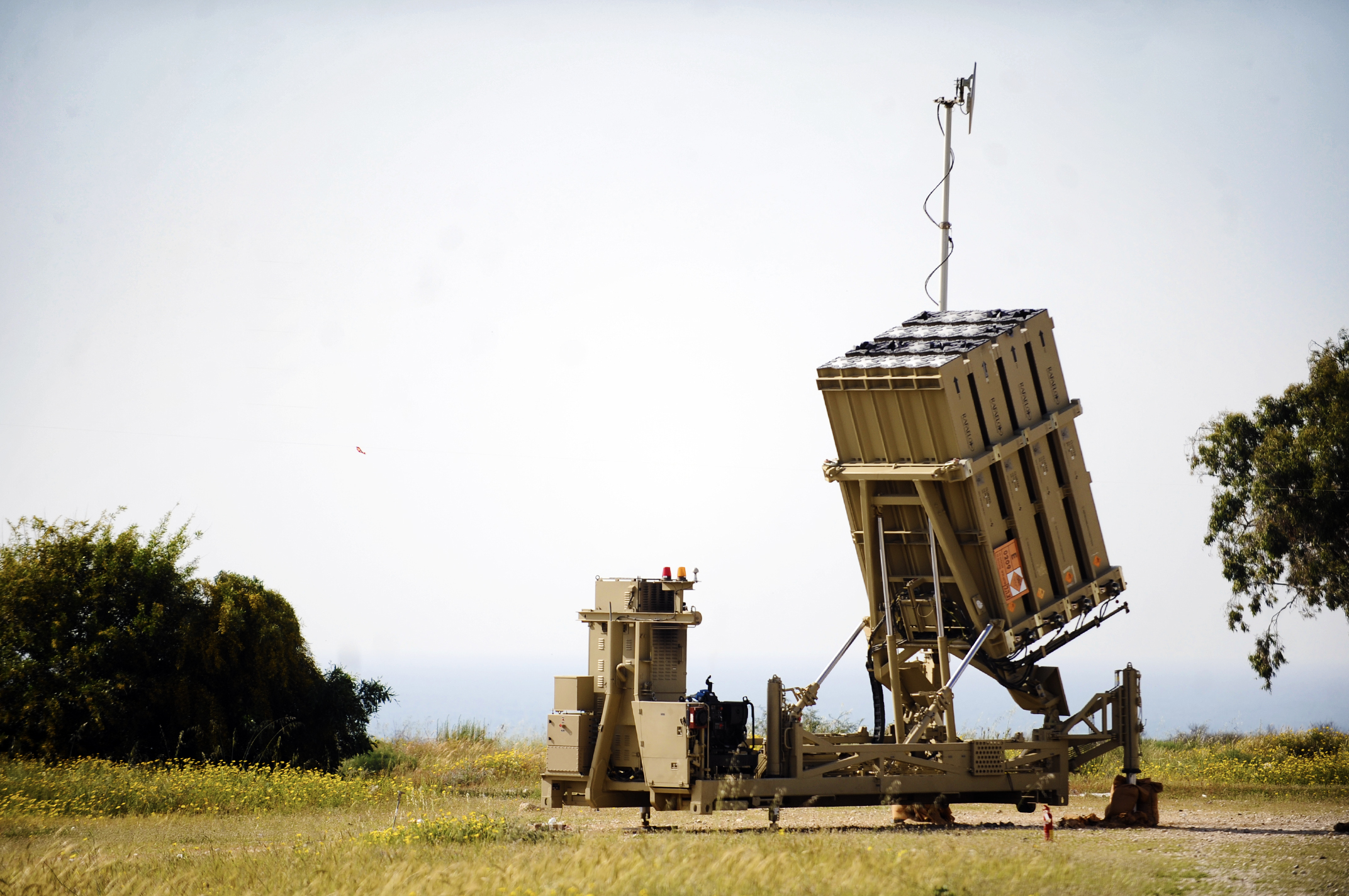
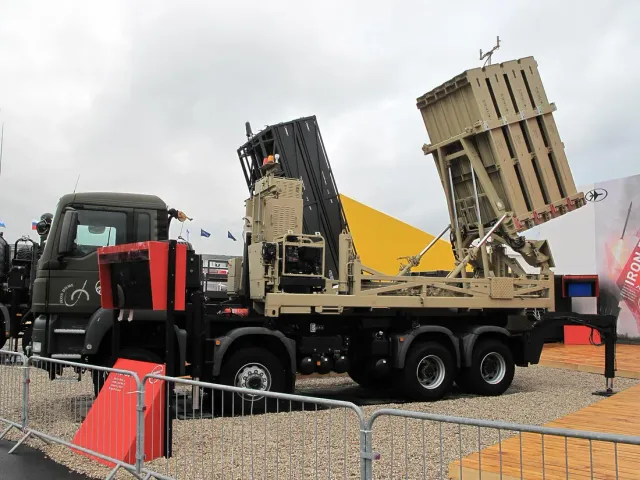
The economics are what turned four decades of stalled research into a fielded system European defense ministries are now studying closely. A Tamir missile, the interceptor Iron Dome fires, costs between $40,000 and $100,000 per shot. Iron Beam’s own per-interception cost, according to Rafael CEO Yoav Tourgeman speaking at the AUSA conference, is “the interception cost is just a few dollars,” reflecting the electricity needed to fire the laser rather than a physical round. That is not a marginal saving, it is a difference of four to five orders of magnitude, the kind of gap that makes intercepting a swarm of cheap drones economically survivable for the first time rather than a budget-draining last resort. Iron Beam is not a replacement for Iron Dome: it engages at ranges up to 10 kilometers, shorter than Iron Dome’s coverage, and Rafael’s MiCAD battle-management software routes each incoming threat to whichever system, missile or laser, fits the target type and conditions in real time.
The full portfolio, and a NATO claim that needs correcting
Rafael is showcasing three directed-energy configurations at Farnborough: Iron Beam 450, an upgraded fixed system first shown publicly at London’s DSEI exhibition in September 2025; Iron Beam-M, a mobile variant; and LITE BEAM, a smaller system built for individual forward positions rather than area coverage, according to Defence Industry Europe. Together they let Rafael offer customers anything from a fixed national installation down to a unit small enough to move to a single position.
One figure attached to Rafael’s Farnborough coverage needs a direct correction: several outlets have circulated a “$2.3 billion NATO deal” alongside the Iron Beam news, but that figure belongs to an entirely separate Rafael contract, a SPYDER short-range air-defense system sale to Romania signed June 24, 2026, covering Python-5 and Derby interceptor missiles, not lasers. It is a real and large contract, the largest single deal in Rafael’s history, but it has nothing to do with Iron Beam, and no signed or credibly reported NATO purchase of the laser system exists as of publication. European interest in directed-energy air defense is real, Rafael’s Farnborough pitch is explicitly aimed at procurement ministries watching the same drone-saturation threat that has strained Ukraine’s own missile-based defenses, but it remains at the showcase and evaluation stage for now, not a signed order.
“Proven performance and reliable delivery are now the baseline requirements, not differentiators,” said Yoav Tourgeman, CEO and president of Rafael Advanced Defense Systems (Defence Industry Europe, July 18, 2026).
That framing, proven over promised, is the throughline of Rafael’s entire Farnborough pitch, and it is also why the U.S. Department of War’s own new Joint Laser Weapon System program, which is still at the 150-kilowatt prototype stage with production platforms years away, invites a direct comparison: Israel has already fielded operationally what the Pentagon is still trying to prove works reliably against fast, hardened targets.
Sources
- Rafael Brings World's First Operational Laser and $2.3B NATO Deal to Farnborough — Tech Times, Jul 18, 2026
- Rafael brings combat-proven air defence, precision strike and counter-drone systems to Farnborough amid global rearmament — Defence Industry Europe, Jul 18, 2026
- Israeli companies show off battle-proven systems at Farnborough Airshow — The Jerusalem Post, Jul 20, 2026
- Pentagon taps Lockheed Martin and nLIGHT for Joint Laser Weapon System — WeaponSpecs News Desk, Jul 20, 2026
Systems mentioned
Every system named in this story, with its photo and, where available, a video. Tap a card to open the full spec sheet.
Compare these side by side →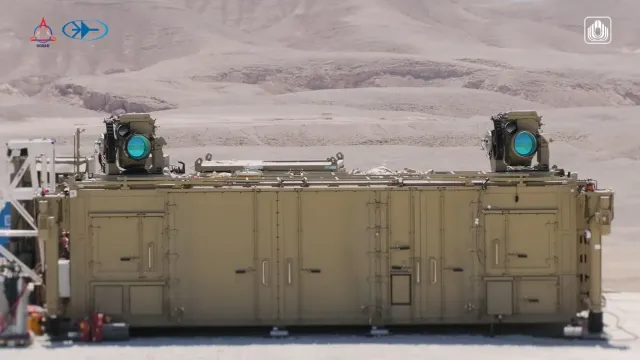
Frequently asked questions
When did Iron Beam actually become operational, and what does that mean? +
Israel's Ministry of Defense and Rafael formally transferred the first production-standard Iron Beam system to the Israel Defense Forces on December 28, 2025, at a ceremony at Rafael's headquarters in northern Israel. That made it the first high-energy laser air-defense system fielded by any military anywhere, moving Iron Beam from a crash-program prototype into a system formally integrated into the Israeli Air Force's air defense command.
How much does it cost to shoot down a target with Iron Beam versus a missile interceptor? +
Rafael CEO Yoav Tourgeman said at the AUSA conference that Iron Beam's interception cost is 'just a few dollars,' reflecting the price of the electricity needed to fire the laser rather than the cost of a physical interceptor. By comparison, a Tamir missile, the interceptor Iron Dome fires, costs between $40,000 and $100,000 per shot. That is a difference of roughly four to five orders of magnitude, not a marginal saving.
Is there really a $2.3 billion NATO deal for Iron Beam? +
No, and this is a common point of confusion in coverage of Rafael's Farnborough appearance. The $2.3 billion figure refers to a separate Rafael contract, a SPYDER short-range air-defense system sale to Romania signed June 24, 2026, unrelated to Iron Beam or any laser system. No signed or reported NATO purchase of Iron Beam exists as of this story's publication; European interest in the laser system remains at the showcase and evaluation stage.
Was this the first time Iron Beam has been used against a real threat? +
Not entirely. Israel covertly used an earlier, adapted version of the system against Hezbollah drones starting in October 2024, and defense ministry officials disclosed in June 2025 that it had shot down roughly 40 Hezbollah drones during that period, according to the Jerusalem Post. The December 2025 delivery marked the shift from that adapted prototype to a production-standard system formally fielded by the IDF.
More news