Marines fire Iron Dome-derived MRIC live on Guam for first time
III MEF intercepted an aerial target June 30 with the Medium-Range Intercept Capability, filling a 30-year gap between Stinger and Patriot for expeditionary Marine units.

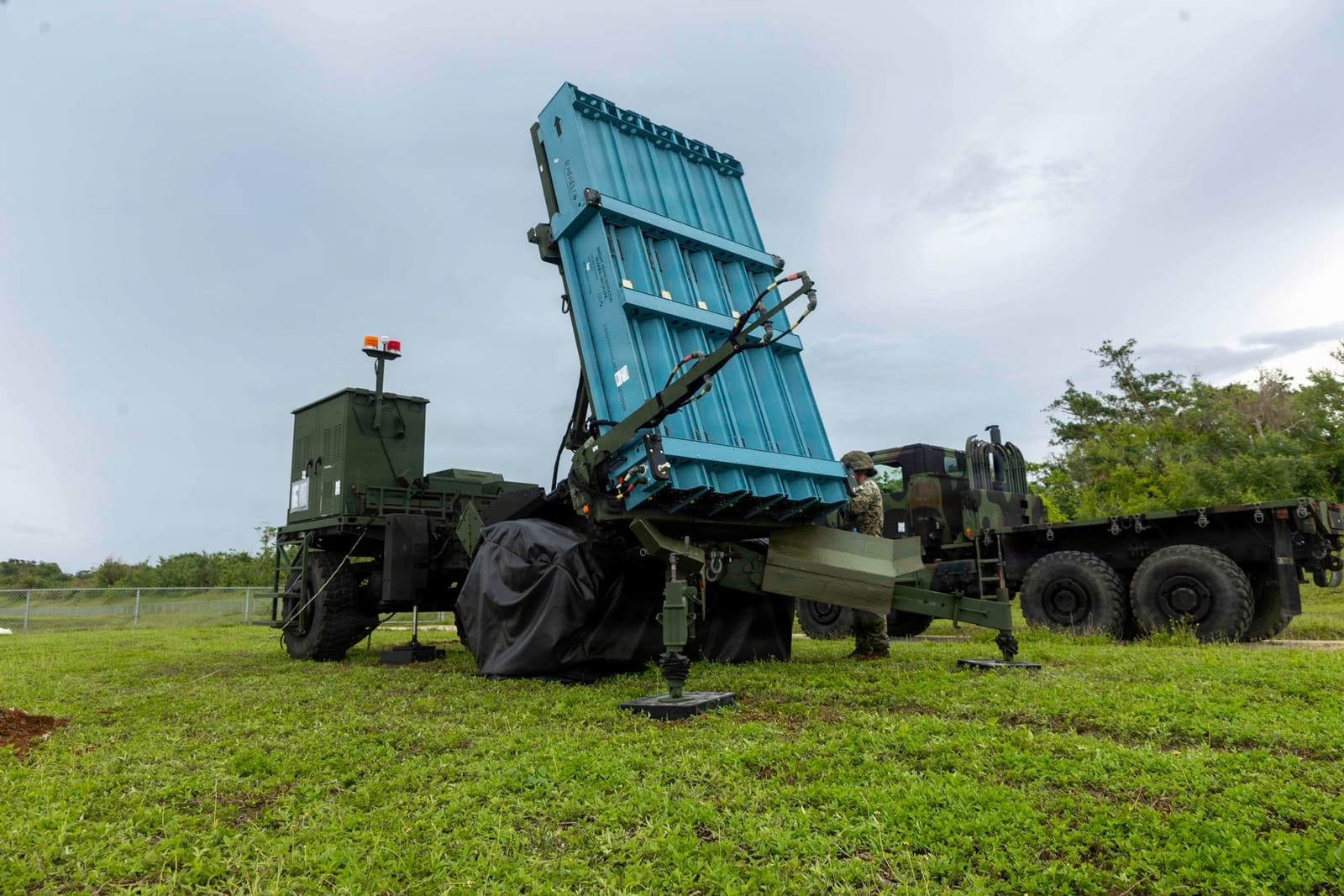
U.S. Marine Corps photo by Gunnery Sgt. Scott Smolinski, DVIDS, public domain
By the numbers
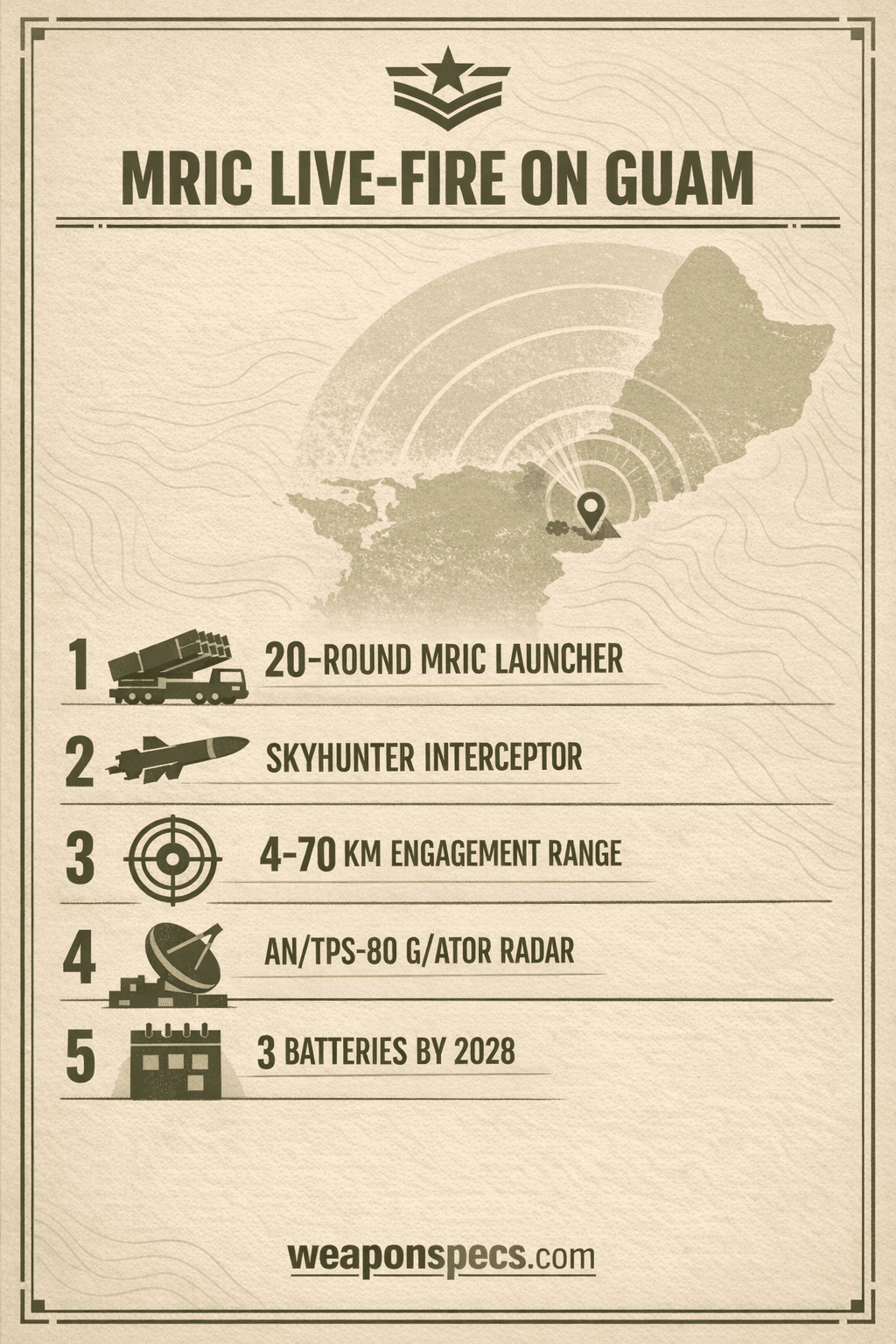
Infographic: WeaponSpecs News Desk
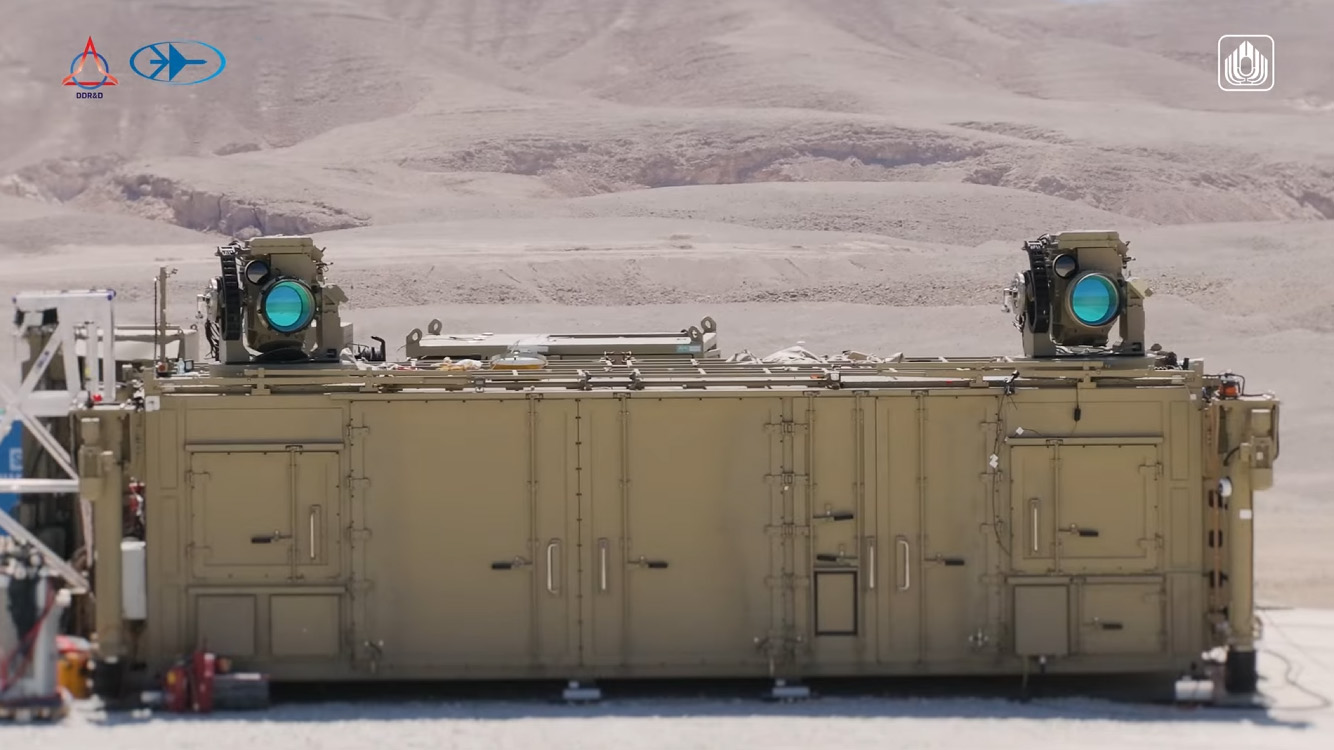
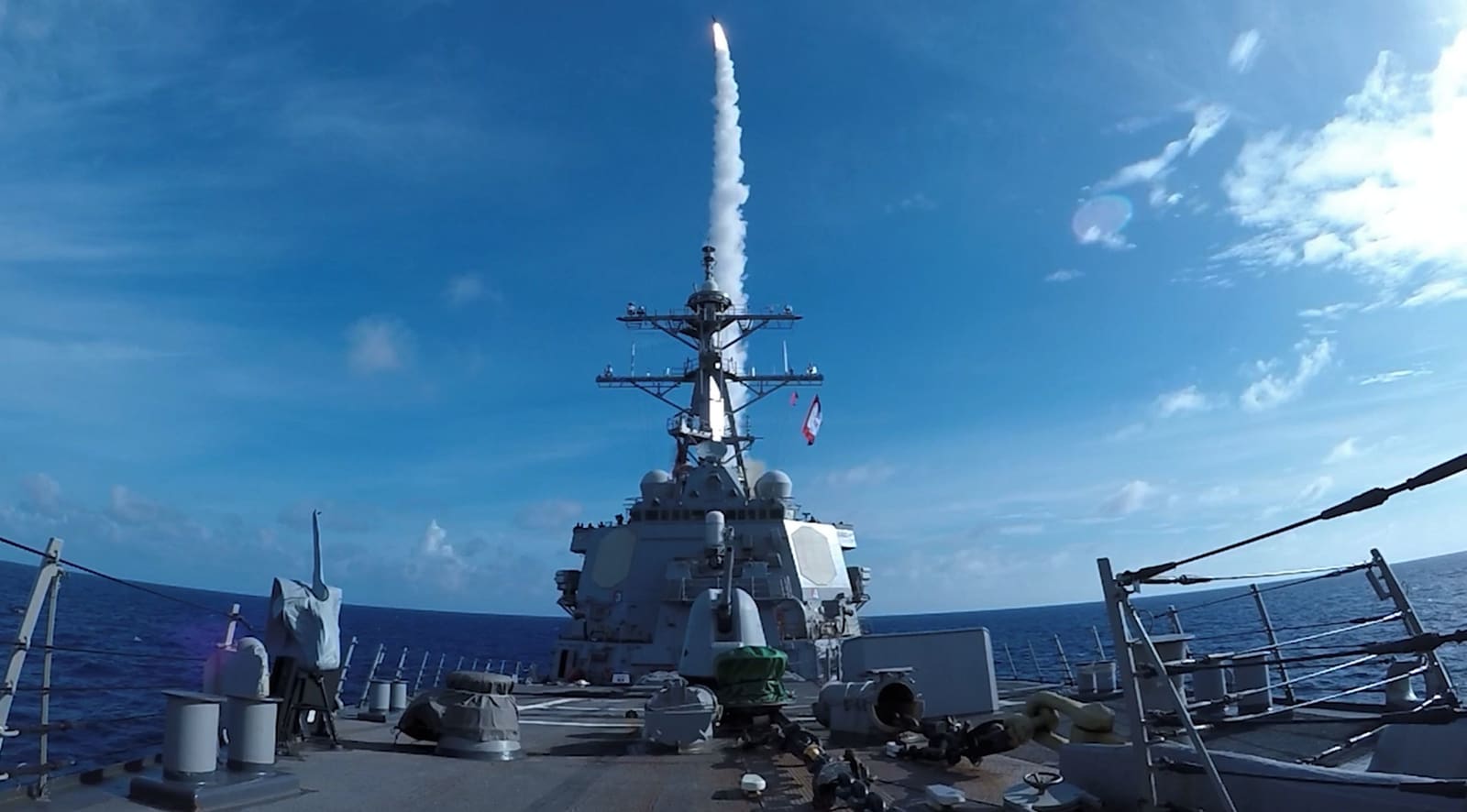
U.S. Marines with III Marine Expeditionary Force fired the Medium-Range Intercept Capability live for the first time on Guam on June 30, successfully intercepting an aerial target during Exercise Valiant Shield 2026, according to DVIDS, the Defense Department’s own public-affairs distribution service, and confirmed by Defense News and Army Recognition. The system, known as MRIC, is a trailer-mounted, Iron Dome-derived launcher that fires up to 20 SkyHunter interceptors and represents the Marine Corps’ first medium-range air-defense capability since it divested the HAWK missile system in the 1990s.
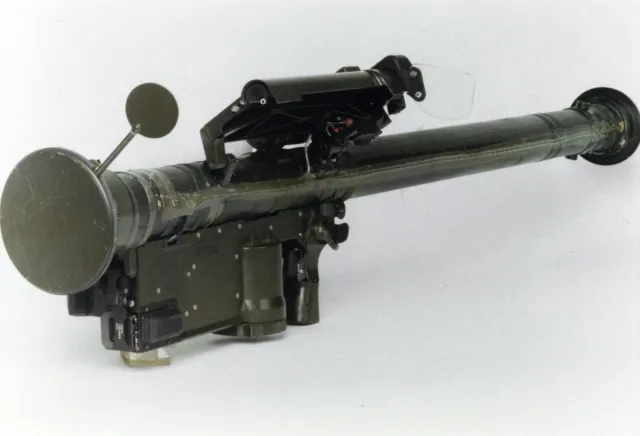
The test took place at Mason Range within Marine Corps Base Camp Blaz, following roughly two weeks of setup and refinement by 1st Marine Aircraft Wing personnel. Marines had spent nearly two years training on the system before this live-fire, according to Maj. Emi Gutierrez, who commanded the firing battery. “Before the MRIC, we were primarily a short-range air defense capability,” Gutierrez said, describing the older Stinger man-portable system Marine air-defense units have relied on for decades. “The MRIC fits into expeditionary warfare perfectly.”
Filling the gap between Stinger and Patriot
MRIC’s purpose is narrow and specific: it exists to defend forward-deployed Marine positions, airstrips and forward arming and refueling points against threats that outrange the shoulder-fired Stinger, whose effective range tops out at only a few kilometers, but do not justify committing an Army Patriot battery, an asset in chronically short supply worldwide. Sgt. Nicholas Hulitt Jr., one of the Marines involved in the test, put the rationale plainly: “It allows us to defend against the current warfare threats that we see with drones and missiles.” That framing matters for a service whose Force Design 2030 concept pushes small, dispersed Marine units across the Pacific’s first and second island chains, positions that would previously have had no organic defense against a cruise missile or a coordinated drone attack beyond a handful of Stinger gunners.
The interceptor itself, SkyHunter, is the U.S.-produced derivative of Rafael’s Tamir missile, the same interceptor family that has intercepted thousands of rockets and drones for Israel’s Iron Dome system since it entered service. Raytheon and Rafael jointly manufacture SkyHunter domestically, including at a production facility in East Camden, Arkansas that received a $33 million capital investment, under a $1.25 billion Tamir/SkyHunter production contract signed in November 2025. The first batch of interceptors reached the Marine Corps in May 2026, roughly a month before the Guam test. MRIC’s launcher carries up to 20 rounds per trailer and engages targets across a range band both Defense News and Army Recognition place at roughly 4 to 70 kilometers, feeding off Northrop Grumman’s AN/TPS-80 Ground/Air Task-Oriented Radar (G/ATOR) and the Common Aviation Command and Control System for target detection and fire-control.
Why Guam, and why now
Guam sits at the center of the Marine Corps’ Pacific posture, hosting Camp Blaz, the service’s first new base in decades, and increasingly serving as a proving ground for the layered air-defense architecture the joint force wants across the island chain. Exercise Valiant Shield, a biennial, multi-domain Pacific exercise involving all branches of the U.S. military plus allied forces, gave III MEF a realistic setting to validate MRIC against an actual aerial target rather than a purely developmental range shot. Separately, Lockheed Martin’s Skunk Works division has been working to link MRIC with the Army’s Patriot batteries and the Marine Corps’ own MADIS counter-drone systems into a unified command-and-control network for Guam, an indication that this single live-fire is part of a broader push to knit together the island’s air and missile defenses rather than a standalone Marine Corps program running in isolation.
None of this makes MRIC a finished program of record. The Marine Corps’ Force Design 2030 plan calls for three MRIC batteries fielded by 2028, but the June 30 test was a validation event during an exercise, not a declared initial operational capability, and no service has announced a specific unit stand-up date, per-battery cost or total procurement quantity beyond the November 2025 interceptor production contract. What the test does confirm is that the individual pieces, the SkyHunter interceptor, the G/ATOR radar, the trailer launcher and the CAC2S fire-control chain, work together against a real aerial target under field conditions, the same kind of end-to-end validation milestone that has become common across several allied programs adapting proven interceptors to new mobile launchers this year.
Sources
- III MEF successfully intercepts aerial targets with Medium-Range Intercept Capability system — DVIDS / U.S. Marine Corps, Jul 10, 2026
- US Marines successfully test-fire new medium-range air defense system — Defense News, Jul 10, 2026
- U.S. Marines Test Iron Dome-Derived MRIC on Guam to Defend Island Forces from Drones and Missiles — Army Recognition, Jul 10, 2026
Systems mentioned
Every system named in this story, with its photo and, where available, a video. Tap a card to open the full spec sheet.
Missile
FIM-92 StingerFrequently asked questions
What is the Medium-Range Intercept Capability? +
MRIC is a trailer-mounted, mobile air-defense system that fires up to 20 SkyHunter interceptors, the U.S.-produced version of Israel's Tamir missile used in Iron Dome. It is designed to defend expeditionary Marine positions, airfields and forward arming and refueling points against cruise missiles, drones and other aerial threats at ranges roughly between 4 and 70 kilometers.
How is MRIC related to Iron Dome? +
MRIC uses the SkyHunter interceptor, a jointly produced derivative of Rafael's Tamir missile, the same interceptor family that arms Israel's Iron Dome batteries. Raytheon and Rafael manufacture SkyHunter domestically in the United States, including at a facility in East Camden, Arkansas, under a $1.25 billion production contract signed in November 2025. MRIC's launcher, radar and command-and-control architecture are Marine Corps-specific and distinct from Iron Dome's own battery configuration.
What gap does this fill for the Marine Corps? +
The Marine Corps retired its last medium-range air-defense system, the HAWK missile, in the 1990s, leaving a capability gap between the short-range, shoulder-fired Stinger and the Army's long-range Patriot. MRIC is the service's first fielded system to close that gap, giving Marine units organic protection against threats that outrange Stinger but do not require a Patriot battery.
When will MRIC be fully fielded? +
The Marine Corps' Force Design 2030 plan calls for three MRIC batteries by 2028. The June 30 Guam test was a live-fire validation during a major Pacific exercise, not a declared initial operational capability; no specific date for the first operational battery has been announced.
More news