US Sea Drones Strike Iran Sub Base in Combat First
Three Saronic Corsair unmanned surface vessels hit Bandar Abbas Naval Base on July 12, striking a Ghadir-class submarine under maintenance in the first US combat use of attritable sea drones.
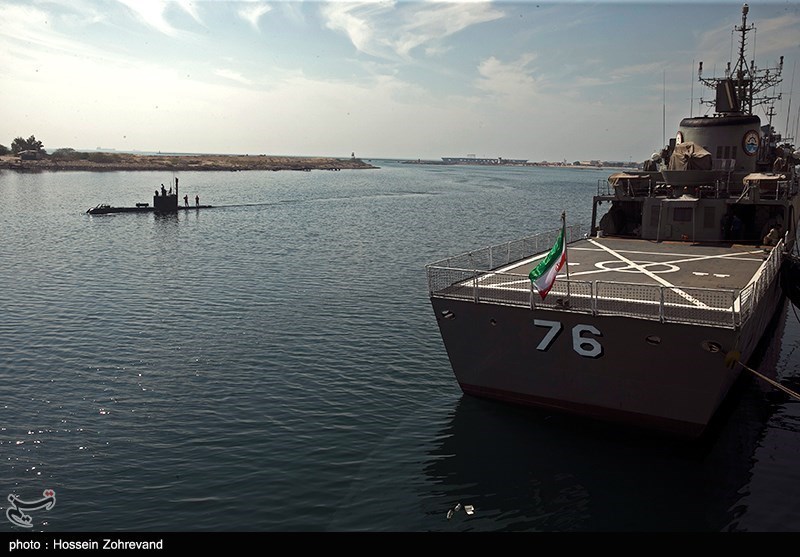
Photo by Hossein Zohrevand, Tasnim News Agency, CC BY 4.0, via Wikimedia Commons
Three Saronic Corsair unmanned surface vessels struck Bandar Abbas Naval Base on July 12, hitting a Ghadir-class midget submarine positioned under a maintenance gantry, in what US Central Command and four independent outlets confirm is the first time American forces have employed sea drones in direct combat. CENTCOM said the strike was intended to “degrade Iran’s ability to continue attacking commercial shipping” in the Strait of Hormuz, according to reporting by Naval News and The Aviationist. No independently verified figures on submarine damage or casualties have been released; Iran has made no public statement confirming or denying an impact as of publication.
The strike lands in the middle of the broader Iran conflict that WeaponSpecs has tracked since the Strait of Hormuz escalation two days earlier, and alongside Washington’s decision to reinstate a naval blockade of Iranian shipping. It is also a milestone in its own right: a US one-way-attack sea drone, built by a company that did not exist before 2024, hitting a fixed enemy naval facility on the far side of a war zone with no crew aboard and, per CENTCOM, no advance warning to the target.
What actually happened at Bandar Abbas
Bandar Abbas is Iran’s primary naval hub on the Strait of Hormuz, home to submarine pens, ship-maintenance facilities, and the bulk of the regular navy’s surface and subsurface assets. According to Army Recognition, overhead footage released alongside the strike showed the three Corsairs approaching the submarine’s maintenance dock from multiple angles before detonating their payloads. The target, a Ghadir-class boat, is Iran’s smallest and most numerous submarine type: a roughly 117-ton, 29-meter midget submarine carrying a crew of about seven and armed with two 533mm torpedo tubes, designed for shallow-water operations in the Gulf and Strait rather than blue-water patrols. It was reportedly undergoing maintenance, not on an active patrol, when the strike hit.
CENTCOM has not said which command actually launched the mission, though Military Times and other outlets note the operation was conducted directly under CENTCOM’s authority rather than through the Navy’s dedicated unmanned-surface-vessel unit, Task Force 59, which has spent several years testing similar platforms in the Gulf without previously using one in an armed strike.
The Corsair, and why an attritable drone changes the math
The Corsair is built by Saronic Technologies, a Texas-based company founded in 2024 that has quickly become one of the more closely watched entrants in the US Navy’s push toward smaller, cheaper, autonomous surface combatants. The base platform is a 24-foot autonomous vessel with a published range exceeding 1,000 nautical miles, a top speed above 35 knots, roughly 1,000 pounds of payload capacity, and mission-level autonomy that lets it operate with minimal remote piloting. Saronic has stated it produced more than 300 Corsair units since the company’s founding, a figure that comes from the company itself and has not been independently audited. None of the four sources reviewed for this story disclose the price of a combat-configured Corsair, though earlier public reporting on the base platform has put unit costs in the low single-digit millions of dollars, an order of magnitude below the roughly $2 billion cost of an Arleigh Burke-class destroyer or the far higher cost of manned carrier air power.
That cost gap is the point. An attritable platform, one cheap and expendable enough that losing it in combat is an acceptable and planned-for outcome, lets a military attempt exactly this kind of strike against a defended, fixed target without risking a crewed hull or aircrew. It also lets the vessel operate in the kind of contested, shallow, mine-and-small-boat-threatened water around a place like Bandar Abbas that a large surface combatant would approach only reluctantly. Iran’s coastal air-defense network is built to detect and engage larger, slower, or more predictable threats: aircraft on inbound flight paths, missiles on ballistic or cruise trajectories. A small, fast, low-radar-signature surface drone hugging the water is a materially harder detection and engagement problem, one reason the US, Ukraine, and other militaries have all accelerated one-way-attack USV programs over the past two years.
First combat use, not first deployment
It matters that this is being described specifically as the first combat use of a US sea drone, not the first deployment. Task Force 59 and allied navies have run USVs on patrol, surveillance, and logistics missions in the Gulf for several years as risk-reduction and concept-of-operations testing. What changed on July 12 is the step from testing and surveillance to an actual armed strike on an enemy facility, the same evolution one-way-attack aerial drones went through roughly a decade earlier before becoming a standard part of modern warfare. Naval analysts have generally expected this transition for surface drones to happen eventually; what is notable here is the specific context, a live shooting war with an adversary whose coastline and chokepoint geography make attritable USVs unusually well suited to the mission.
Sources
- CENTCOM: Saronic Corsair USVs strike Iranian submarine at Bandar Abbas — Naval News, Jul 13, 2026
- US USV in combat for the first time — The Aviationist, Jul 14, 2026
- Sea drones strike Iranian port in combat first for US Navy — Military Times, Jul 13, 2026
- US Corsair one-way attack sea drones redefine naval strike warfare in first combat use against Iran — Army Recognition, Jul 14, 2026
Frequently asked questions
Why use unmanned surface vessels instead of a manned warship or aircraft? +
A Corsair is attritable: reporting on the program puts a combat-configured unit in the low single-digit millions of dollars, versus tens of billions for a destroyer or carrier air wing, so losing one in a strike carries far less cost and no risk to a crew. Its shallow draft and small radar signature also let it approach a fixed port facility like Bandar Abbas more closely than a manned surface ship would risk doing under Iranian coastal defenses.
Did Iran have any warning the strike was coming? +
None has been reported. CENTCOM has not disclosed operational details beyond confirming the strike and its target, consistent with standard operational-security practice for a first-of-its-kind mission.
How many Corsairs does the US Navy actually have? +
Saronic Technologies, the Texas-based builder, has said it produced more than 300 Corsair units since the company's 2024 founding, a company claim not independently audited. CENTCOM has not disclosed how many were allocated to this operation beyond the three confirmed at Bandar Abbas.
Can Iran defend its coastline against USV swarms? +
Iran's coastal air defenses are built around detecting and engaging larger, slower, or more predictable targets: aircraft, missiles, larger vessels. A small, fast, low-signature surface drone approaching at speed presents a harder targeting problem, one reason militaries have accelerated attritable-USV programs in recent years.
More news