US Reinstates Iran Blockade as Hormuz Ceasefire Collapses
The US began a blockade of Iranian-flagged shipping at 4pm ET July 14 after a June ceasefire collapsed, dropping a 20% cargo toll a day after proposing it.
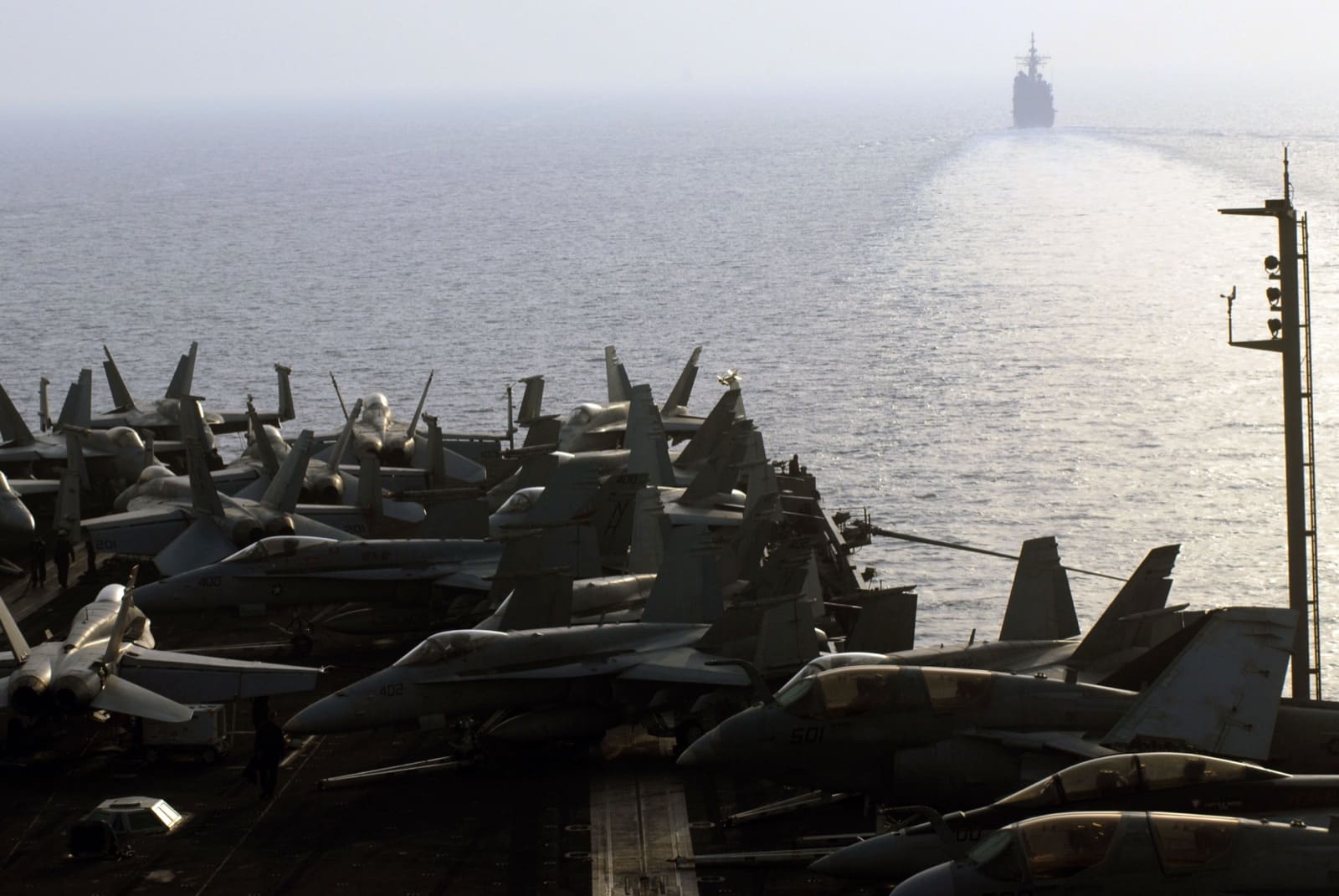
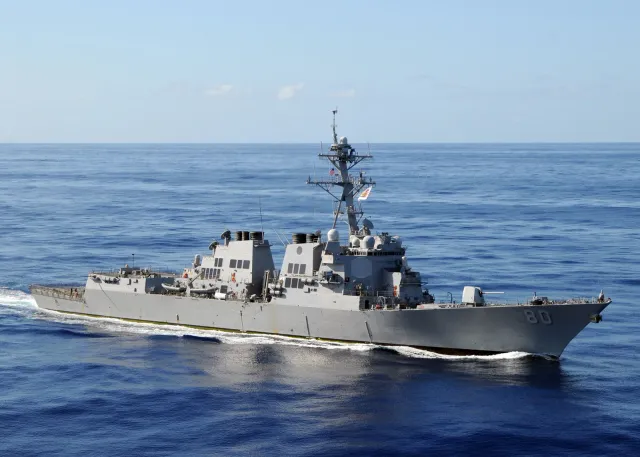
US Navy photo, public domain, via Wikimedia Commons
The United States began a naval blockade of Iranian-flagged ships and their customers at 4pm ET on July 14, after a roughly 60-day ceasefire agreed in June effectively collapsed over the preceding weekend. President Trump announced the blockade and, in the same July 13 post, a 20% cargo toll on other nations’ ships transiting the Strait of Hormuz, then dropped the toll a day later in favor of unspecified investment pledges from Gulf states, according to NPR and a follow-up NPR report. Trump separately notified Congress under the War Powers Resolution of renewed military action, a procedural notice, not a formal declaration of war, which under the US Constitution only Congress can issue.
This is a fast-moving turn in a conflict WeaponSpecs has covered since the Strait of Hormuz gulf escalation two days earlier, and it lands the same day as the first US combat use of Saronic Corsair sea drones against an Iranian submarine facility. It also follows this morning’s separate coverage of Europe’s new anti-ballistic-missile coalition and renewed Russian strikes on Kyiv, part of the same volatile week but with no direct link to Iran.
How the ceasefire actually broke down
The US and Israel’s war on Iran began February 28, 2026. In June, the two sides signed a 14-point memorandum of understanding establishing a roughly 60-day ceasefire and a framework to negotiate a final deal, including language on safe passage for commercial vessels through the strait. That truce “all but collapsed over the weekend,” per NPR, when Iran attacked a commercial vessel transiting the strait on Saturday, July 11, and the US retaliated with strikes. By Monday, CENTCOM said it had launched “the third consecutive night of strikes against Iran,” meant to “continue imposing a heavy cost on Iranian forces and degrade their ability to attack innocent civilians and commercial shipping.” Iran’s Revolutionary Guard said, through state media, that it had struck US allies including Bahrain, Jordan, Kuwait, and Qatar, and separately claimed to have hit “two non-compliant” supertankers in the strait, a claim not independently verified.
The dispute traces to ambiguous wording in the June memorandum itself. Michael Singh of the Washington Institute for Near East Policy told NPR that Paragraph 5 commits Iran only to “best efforts for the safe passage of commercial vehicles,” language Tehran reads as recognizing its authority over the strait and Washington reads as reaffirming international waters. Iran’s parliament speaker and negotiator, Mohammad Bagher Ghalibaf, posted the disputed clause on social media, writing “the era of one-sided deals is OVER.” The US had, prior to reinstating the blockade, urged ships onto a southern route hugging Oman’s coast, which Iran said itself violated the memorandum.
The blockade, the toll, and why the toll didn’t survive a day
Trump’s July 13 post described the policy as “reinstating THE IRANIAN BLOCKADE, so named because it is only stopping Iran’s ships or customers from entering or leaving,” alongside a 20% “reimbursement” fee on other countries’ cargo, framing the US as “THE GUARDIAN OF THE HORMUZ STRAIT” providing security it said had gone uncompensated for 50 years. CENTCOM said the blockade itself would begin at 4pm ET on July 14 and directed mariners approaching the strait to contact US naval forces on bridge-to-bridge channel 16. It is not the first such blockade this year: NPR reports the US had previously worked to block Iranian maritime traffic from April 13 to June 18, the same window bookending the collapsed ceasefire.
The toll proved far less durable. Secretary of State Marco Rubio had said in June that “no country is allowed to charge tolls or fees on an international waterway,” and the International Maritime Organization publicly rejected the idea, saying it “stands firmly against charging fees for passage through straits used for international navigation.” By Tuesday, Trump told reporters in the Oval Office he had reversed course after calls from Gulf Arab leaders: “I was called by different people, different countries, kings and emirs… they said we’d love to do it a different way.” He said Saudi Arabia, the UAE, Qatar, Bahrain, and Kuwait would instead make unspecified investments in the United States, “this way, there’s no fee.” No details on the size of those investments have been disclosed. The blockade itself, targeting only Iranian ships and customers, stayed on its original July 14 timeline.
A war without a declaration, and a leadership already once decapitated
Trump’s War Powers Resolution letter to Congress, sent July 10 according to Reason, informed lawmakers of “a new war between the U.S. and Iran” and his intent to take “military action consistent with my responsibility to protect Americans and United States’ interests both at home and abroad.” That notice starts a 60-day clock for continued operations without a separate congressional vote, a mechanism distinct from an actual declaration of war, which the Constitution reserves to Congress and which has not occurred here.
The conflict’s toll at the top of Iran’s government underlines why this collapse is serious rather than routine brinkmanship. According to NPR, Iran’s longtime Supreme Leader Ayatollah Ali Khamenei was killed in US-Israeli airstrikes at the war’s start in February, and his son, Mojtaba Khamenei, has since assumed the position and vowed through state media to avenge his father’s death. Qatar’s foreign minister, mediating alongside Oman and Pakistan, said ceasefire talks would resume after last week’s funeral for the elder Khamenei, though the state of those negotiations is unclear.
The shipping numbers that are actually confirmed
Shipping-data firm Kpler recorded just 22 vessels crossing the Strait of Hormuz on July 9, compared with 147 crossings the day before the war began on February 28, figures reported by NPR and not contradicted elsewhere in this story’s sourcing. The strait typically carries roughly one-fifth of the world’s oil and LNG trade by volume, which is why sustained disruption there tends to move energy markets even without a full closure. No independently confirmed Brent or WTI price figures specific to this week’s escalation turned up across the sources reviewed, so none are cited here.
Figures as reported by shipping-data firm Kpler via NPR, not independently re-verified against Kpler's raw data. The gap reflects roughly an 85% drop in transits during the war's most acute flare-ups, before this week's blockade took effect.
Sources
- The US strikes Iran after Trump announces a renewed blockade and tolls in Hormuz — NPR, Jul 13, 2026
- Trump scraps his Hormuz shipping charge idea but presses ahead with an Iran blockade — NPR, Jul 14, 2026
- Meet the New War — Reason, Jul 14, 2026
- Trump's Strait of Hormuz blockade erases the last concession to Iran in preliminary deal — ABC News, Jul 13, 2026
Systems mentioned
Every system named in this story, with its photo and, where available, a video. Tap a card to open the full spec sheet.
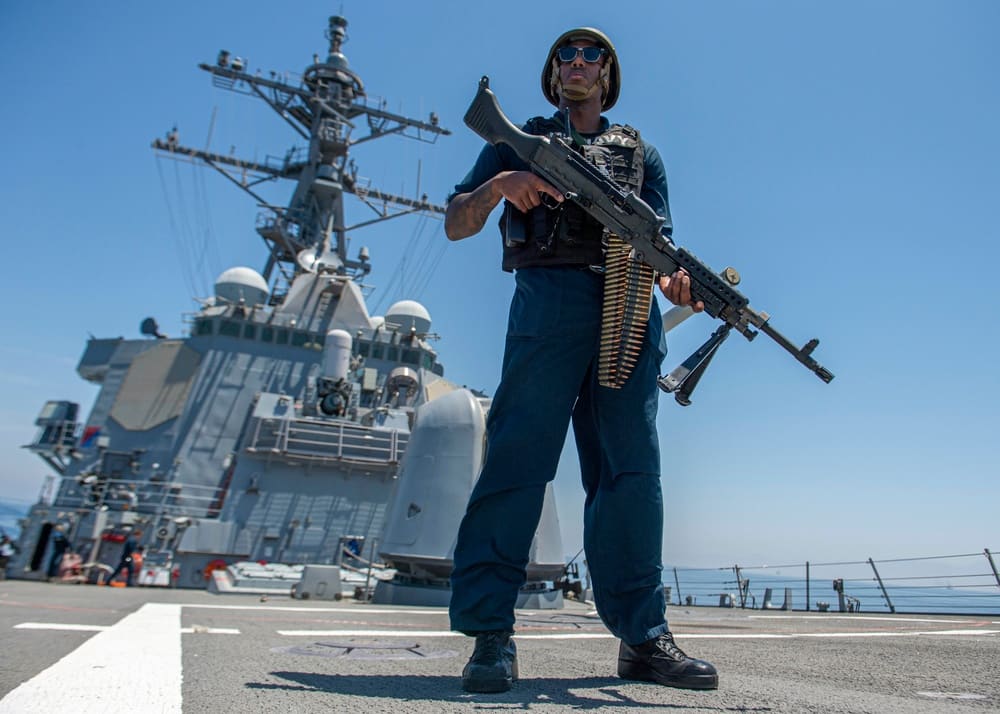
Warship
Arleigh Burke-class DestroyerFrequently asked questions
Why did the US reinstate the blockade now? +
Trump announced the renewed blockade on July 13 after a roughly 60-day ceasefire agreed in June effectively broke down: Iran attacked a commercial vessel transiting the Strait of Hormuz on July 11 and claimed to have closed the strait, and the US retaliated with strikes that continued into a third consecutive night by July 13, according to NPR. CENTCOM said the blockade on Iranian-flagged ships and their customers would begin July 14 at 4pm ET.
What happened to the 20% shipping toll Trump proposed? +
Trump announced the toll and the blockade in the same July 13 post, but dropped the toll the next day, saying he would replace it with unspecified "Trade and Investment Deals" from Gulf states after, by his own account, being called by Gulf leaders who objected. Secretary of State Marco Rubio and the International Maritime Organization had both said charging fees for transit through an international strait has no legal basis.
Is this the same as a declaration of war? +
No. Trump notified Congress under the War Powers Resolution of renewed military action against Iran, a procedural step that starts a 60-day clock for continued operations without separate congressional authorization. Only Congress can formally declare war under the US Constitution, and no such declaration has been made.
What is the economic impact on shipping and oil? +
Shipping-data firm Kpler recorded just 22 vessels crossing the Strait of Hormuz on July 9, compared with 147 crossings the day before the US-Israel war on Iran began on February 28, according to NPR. The strait normally carries roughly one-fifth of the world's oil and LNG trade; specific oil-price figures for this week have not been independently confirmed and are not cited here.
More news