US Completes Sixth Wave of Strikes on Iran, Bridges Hit
CENTCOM struck five bridges, an airport and logistics sites in a sixth straight night of strikes on Iran, as Tehran hit back at Bahrain, Kuwait and Qatar.
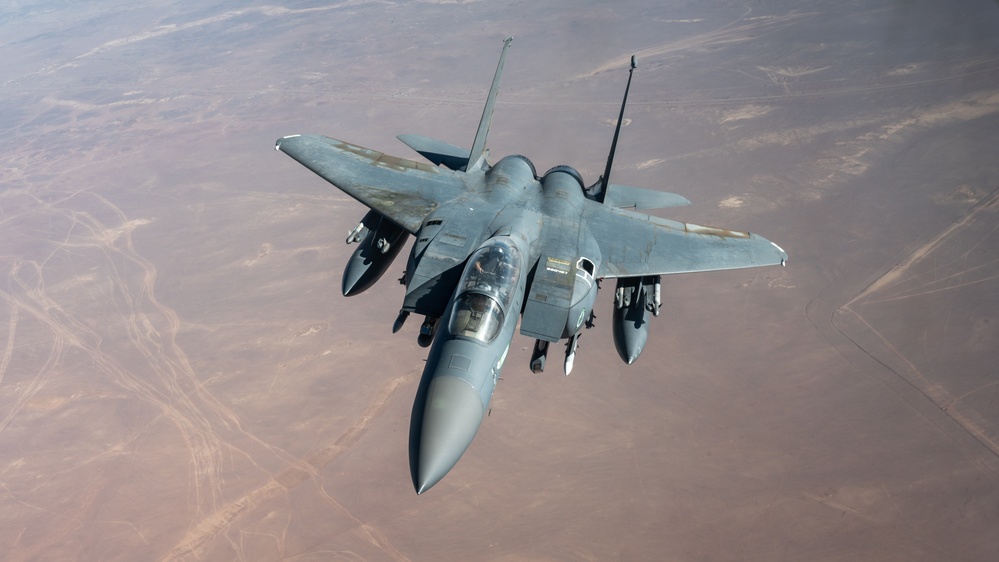
U.S. Air Force photo by Senior Airman Zachary Willis, U.S. Air Forces Central (AFCENT), DVIDS, public domain
U.S. Central Command completed its sixth consecutive night of strikes on Iran early Friday, hitting five bridges in Hormozgan province, Iranshahr airport, and coastal surveillance, air-defense and logistics infrastructure, according to Iran Focus and the Jerusalem Post, both citing CENTCOM’s own strike announcement. The campaign ran from roughly 9:30 p.m. Iran time Thursday to 5:10 a.m. Friday, and Iran answered with retaliatory strikes reaching three separate US Gulf partners: Bahrain, Kuwait and Qatar.
Six nights, a widening target set
This is not a new war opening. It is the latest wave in a bilateral US-Iran war that began February 28, 2026 and has already outlasted two negotiated ceasefires, the most recent a 60-day truce signed in Versailles on June 17 that collapsed within three weeks after Iran struck a commercial vessel in the Strait of Hormuz around July 11. WeaponSpecs reported the resulting naval blockade on Iranian-flagged shipping on July 14; this strike wave is the continuation of the same campaign, not a separate escalation, and CENTCOM’s own stated objective for the sixth round, per Iran Focus, is “further degrading Iranian military capabilities and holding Iran accountable for recent attacks on commercial shipping,” language that ties directly back to the tanker incident that broke the ceasefire.
The named targets cluster around transportation infrastructure rather than population centers. Iran Focus’s sourcing to Iran’s own Fars News Agency lists specific damaged crossings: a bridge on the Bandar Abbas-Khamir-Lar route near Bandar Khamir, two bridges on the Kahourestan-Lar route, an unfinished bridge on the Bandar Khamir-Keshar-Bandar Abbas road, and a bridge near Marou village in Khamir County, in addition to a crossing over the Shur River and Iranshahr airport further east. Bandar Abbas itself is Iran’s largest southern port and the historical anchor of its naval presence on the Strait of Hormuz; every named bridge sits on a route feeding into or out of that province, consistent with a campaign aimed at Iran’s ability to move military logistics inland rather than at holding territory or striking cities directly.
Casualties from the strikes are reported only through Iranian state channels so far: Iran’s IRNA news agency, citing Hormozgan University of Medical Sciences, reported seven people killed in the Bandar Khamir bridge strikes, with several more wounded. That is a state-linked casualty figure from a party to the conflict, not an independently verified count, and CENTCOM has not published its own assessment of the strikes’ effects on the ground.
Retaliation spread across three US partners
Iran’s response reached beyond its own borders into three separate Gulf states hosting American forces. Drones targeted Sakhir Air Base in Bahrain, missile and drone attacks were claimed against US bases in Kuwait, and a missile fired toward Qatar was intercepted by Qatari air defense, though shrapnel from the intercept injured a child on the ground, according to both Iran Focus and the Jerusalem Post. None of the three outlets’ reporting, nor NPR’s or NBC News’s same-day coverage of the strikes, which WeaponSpecs curl-verified but could not fully read due to bot-blocking, supports a claim that Iran struck targets in Syria as part of this retaliatory wave; that claim, which appears in one outlet’s article URL slug, is not corroborated in any article body reviewed for this story and is deliberately omitted here.
CENTCOM’s own messaging, per Iran Focus, emphasized the scale of the US regional footprint underpinning this campaign: more than 50,000 US service members remain stationed across the Middle East. That basing network is also what gives Iran’s retaliatory options their reach, every Gulf state hosting a significant American presence, Bahrain (Fifth Fleet headquarters), Kuwait (Ali Al Salem and Camp Arifjan) and Qatar (Al Udeid Air Base), has already absorbed at least one Iranian strike or intercepted attack since the war opened in February.
What comes next
Neither government has signaled an imminent third ceasefire attempt. President Trump has previously called the collapsed Versailles agreement “a waste of time,” and Iran has maintained a functionally unenforced claim that the Strait of Hormuz remains closed since the June truce broke down. Six consecutive nights of strikes, without an intervening pause, marks a faster tempo than the campaign’s earlier phases, when strikes came in discrete waves separated by days rather than nightly.
Sources
- US completes 6th wave of strikes on Iran, hits bridges, airport — The Jerusalem Post, Jul 17, 2026
- CENTCOM Announces End of Sixth Round of Strikes on Military Targets in Iran — Iran Focus, Jul 17, 2026
- U.S. strikes bridges in Iran; Tehran targets U.S. bases in the Gulf — NPR (via Houston Public Media), Jul 17, 2026
- U.S. strikes bridges in Iran — NBC News, Jul 17, 2026
Systems mentioned
Every system named in this story, with its photo and, where available, a video. Tap a card to open the full spec sheet.
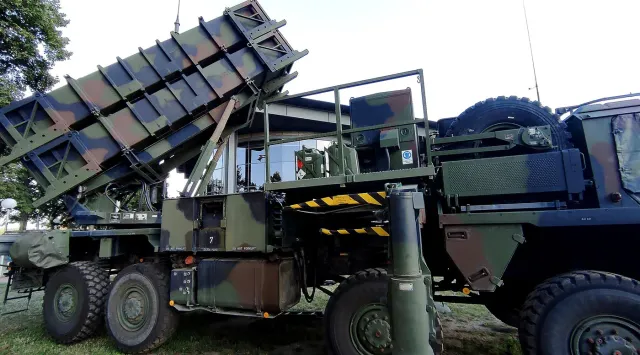
Air defense system
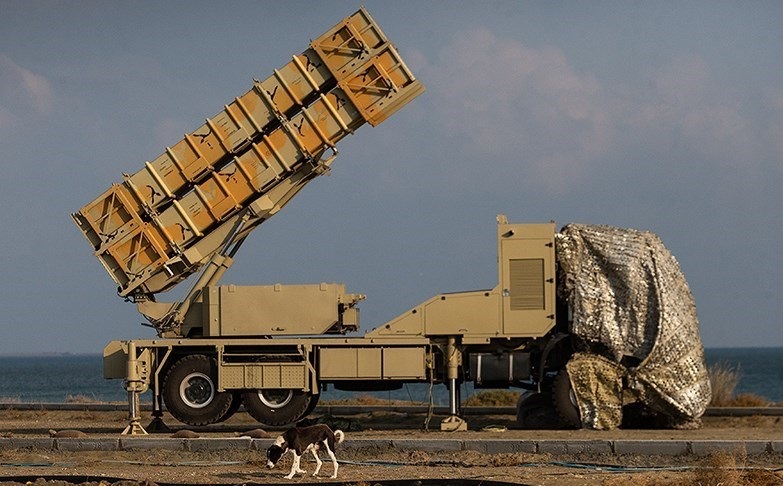
Patriot PAC-3Frequently asked questions
Why is CENTCOM targeting bridges instead of only military bases? +
The bridges hit sit on routes linking Bandar Abbas, Iran's largest southern port and naval base, to Hormozgan province's interior, including the Bandar Abbas-Khamir-Lar corridor and a crossing over the Shur River. Cutting those links degrades Iran's ability to move military logistics and reinforcements inland without striking population centers directly, a chokepoint strategy rather than an attempt to seize or hold ground.
Has Iran's retaliation for this strike wave reached beyond Iranian territory? +
Yes. Iran Focus and the Jerusalem Post both report Iranian retaliation reached three separate US Gulf partners: drones targeted Sakhir Air Base in Bahrain, missile and drone attacks were claimed against US bases in Kuwait, and a missile fired at Qatar was intercepted by Qatari air defense, though shrapnel from the intercept injured a child on the ground.
How does this connect to the Strait of Hormuz blockade WeaponSpecs covered on July 14? +
It's the same conflict, not a separate escalation. The naval blockade on Iranian-flagged shipping that WeaponSpecs reported on July 14, following the collapse of a June ceasefire, has run in parallel with this strike campaign the entire time; CENTCOM has explicitly tied the current strikes to "recent attacks on commercial shipping," the same underlying dispute that broke the ceasefire in the first place.
Is this the start of a new war, or a declaration of war? +
Neither. This is a continuation of a bilateral US-Iran war that opened February 28, 2026 and has already survived two collapsed ceasefires; the current strikes are the sixth consecutive night of a CENTCOM campaign under existing War Powers Resolution notification to Congress, not a new conflict and not a formal declaration of war, which only Congress can issue and has not.
More news