US strikes 90 Iranian targets; Iran retaliates across Gulf
Ceasefire between Washington and Tehran collapses after 48 hours of tit-for-tat airstrikes and ballistic-missile attacks on allied bases.

Photo by Masoud Shahrestani, Tasnim News Agency, CC BY 4.0
By the numbers

Infographic: WeaponSpecs News Desk
A ceasefire between the United States and Iran that had held for roughly a month collapsed over July 8 and 9, when US forces struck approximately 90 Iranian military sites and Iran responded with ballistic missiles, one-way attack drones and cruise missiles against three separate Gulf allied installations, according to CNN’s rolling coverage. The exchange marks the sharpest escalation since the original ceasefire took hold, and it comes with no independently verified account of which side fired first in the 48-hour breakdown, only a public declaration from President Trump that the truce was “over” ahead of the strike surge, per NBC News.
The US strikes concentrated on logistics depots, drone and missile storage, and coastal defense infrastructure, primarily in Bushehr province and at Gulf ports, with targets reported near the Asaluyeh/South Pars gas field and around the perimeter of the Bushehr nuclear plant. Iranian state media reported no detonations inside the plant itself, according to Al Jazeera’s reporting on the exchange. That distinction matters operationally: striking storage and logistics nodes degrades Iran’s ability to sustain a prolonged missile campaign without triggering the far graver escalation risk, radiological release and near-certain regional war footing, that a strike inside an active nuclear facility’s perimeter would carry.
Iran’s retaliation spanned three countries in one night
Iran’s Islamic Revolutionary Guard Corps answered with a layered response across the Gulf rather than a single strike. The IRGC fired 10 ballistic missiles at Muwaffaq Salti Air Base near Azraq, Jordan, a facility that hosts US, German, Belgian and French personnel as a legacy hub from the 2014-2017 counter-ISIS campaign and remains a working node for US Central Command air operations. Jordan’s air defenses reportedly intercepted eight of the ten inbound missiles, according to US News, an 80% intercept rate against a salvo that size, though no official Jordanian government statement independently confirms that count beyond the wire reporting cited here.
Iran separately sent one-way attack drones and cruise missiles at a Patriot air-defense battery stationed in Kuwait, an early-warning radar installation in Qatar, and a fuel and logistics depot in Bahrain, according to the Washington Times’ account of the exchange. Targeting a Patriot battery specifically, rather than only fixed infrastructure, signals an Iranian intent to test or attrite the air-defense architecture protecting other US and allied assets in the region, a more aggressive target set than the earlier phase of the conflict produced.
Iran’s Health Ministry claims 14 people were killed and 78 wounded in the US strikes on its territory. That is a state claim from the Iranian government, not independently verified by outside observers, and it should be read with that caveat, consistent with how casualty figures from Tehran have been treated throughout this conflict. Iranian officials have also characterized their retaliatory strikes as a “proportional response” and the IRGC has claimed some of the strikes hit unspecified “command centers,” both framings that are Iran’s own characterization of its actions rather than confirmed by independent reporting.
Why the missile inventory matters here
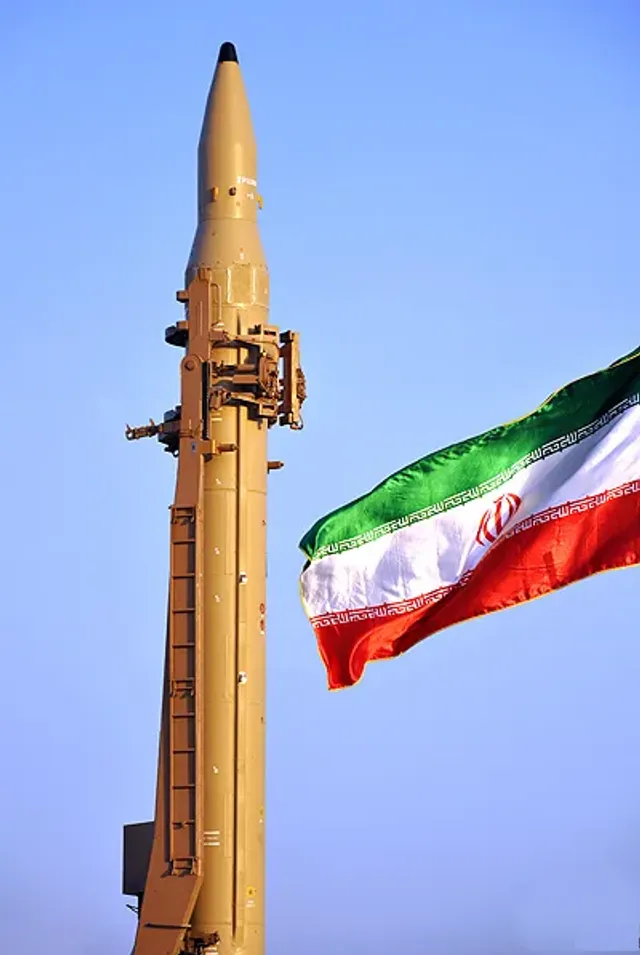
The Fateh-110 is understood to be the likely primary missile type used in the Azraq strike: a 300-kilometer-range, road-mobile ballistic missile carrying a roughly 450-kilogram high-explosive fragmentation warhead, with inertial guidance supplemented by terminal electro-optical guidance on later production variants. It is one of Iran’s most widely proliferated systems, having been transferred to regional proxies including Houthi forces in Yemen, which is part of why a strike using this missile type on a base hosting multiple NATO-adjacent nationalities carries broader alliance implications beyond the US-Iran bilateral track. A longer-range alternative in Iran’s inventory, the Qiam-1, reaches roughly 750 kilometers and could not be ruled out as a possible weapon used in strikes against more distant targets, though reporting reviewed for this story does not specify which missile type struck which target with certainty.
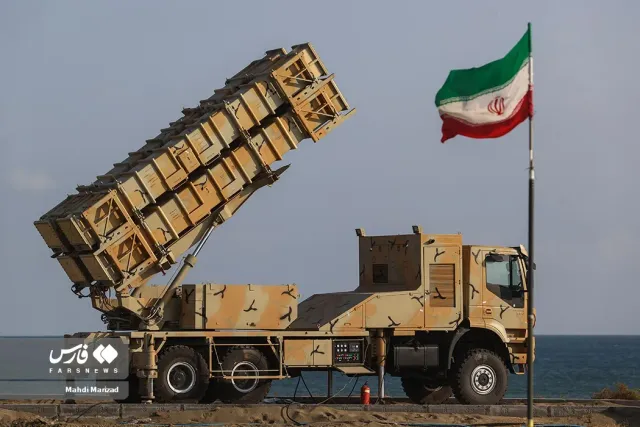
Iran’s 15 Khordad mobile air-defense system, the country’s most advanced fielded platform of its kind, factors into this episode less as an offensive weapon and more as a marker of what Iran is trying to protect: its own layered defense against further US and allied strikes. Iran’s government claims a 120-kilometer engagement range for the system. That figure is an Iranian government claim, not independently verified, and should be treated with the same caveat applied to Tehran’s other public statements in this conflict.
These bars aren't measuring the same thing: 15 Khordad's figure is a defensive engagement range, not a strike range, so plotting it beside two offensive missiles understates how differently each system is actually used.
The Strait of Hormuz kept moving, for now
Despite the strikes hitting coastal defense infrastructure and the wider escalation, more than 13 commercial vessels transited the Strait of Hormuz in a 24-hour window during the exchange, according to MarineTraffic vessel-tracking data cited in wire reporting. That traffic level indicates the strait, which carries roughly one-fifth of global oil and LNG trade, has not yet been closed or effectively blockaded, even as fighting escalated on land and in the air around it. Whether that holds if the exchange continues is one of the clearest near-term indicators to watch, since a strait closure or even a credible mining threat would move global energy markets far more sharply than the strikes themselves have so far.
Pakistan and Qatar are attempting to mediate a return to the original memorandum-of-understanding framework that underpinned the now-collapsed ceasefire, according to Al Jazeera. Neither government has publicly specified preconditions for resuming talks, and there is no independent mechanism reported to verify compliance with any renewed agreement, a gap that also afflicted the ceasefire that just broke down.
Sources
- US-Iran ceasefire crumbles as fresh strikes rock Middle East (CNN, Jul 9, 2026)
- US, Iran launch more attacks as mediators urge both sides to uphold MoU (Al Jazeera, Jul 9, 2026)
- The U.S. launches new airstrikes on Iran and Tehran fires back at Gulf Arab states (NPR, Jul 9, 2026)
- U.S. and Iran exchange intense new attacks after Trump says ceasefire is 'over' (NBC News, Jul 9, 2026)
- Iran digs outs from U.S. strikes, sprays missiles across Gulf region as the peace process teeters (Washington Times, Jul 9, 2026)
Systems mentioned
Every system named in this story, with its photo and, where available, a video. Tap a card to open the full spec sheet.
Compare these side by side →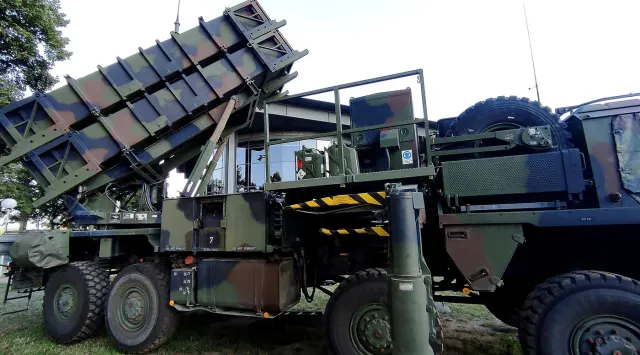
Air defense system
Patriot PAC-3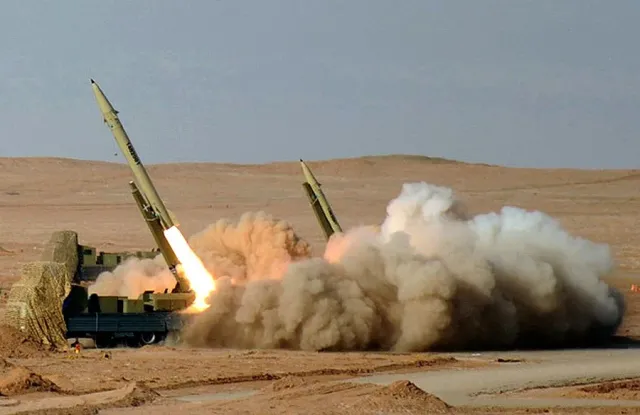
Air defense system
15th KhordadFrequently asked questions
Why is the Azraq base important? +
Muwaffaq Salti Air Base at Azraq, Jordan hosts US, German, Belgian, and French personnel as part of the counter-ISIS mission and serves as a key regional hub for US Central Command air operations, a legacy facility from the 2014-2017 anti-ISIS campaign.
Are the Fateh-110 missiles a significant threat? +
Fateh-110 ballistic missiles have a 300 km range, sufficient to strike targets across the Persian Gulf and Iraq, and carry 450 kg warheads. They are a primary component of Iran's offensive ballistic-missile arsenal and have been transferred to regional proxies including Houthi forces in Yemen.
What does the Strait of Hormuz disruption mean for oil markets? +
The Strait of Hormuz handles roughly one-fifth of global oil and LNG trade, so even temporary disruptions or perceived threats tend to move energy markets. No verified figure for a specific price move in this episode has been independently confirmed as of publication, and none is cited here.
Can the US and Iran restart negotiations? +
Pakistan and Qatar are currently attempting to mediate a return to talks under the existing memorandum-of-understanding framework, though no preconditions for resumption have been publicly stated and compliance verification remains opaque.
More news


